
As you gaze up at the night sky, have you ever wondered about the mysterious objects hurtling through space? Asteroid trackers are powerful tools that help astronomers locate and monitor these celestial bodies. For centuries, humans have been fascinated by asteroids, and their study has revolutionized our understanding of the solar system. With asteroid tracking methods becoming increasingly sophisticated, scientists can now predict asteroid paths with remarkable accuracy. This comprehensive guide will take you through the history of asteroid tracking, its benefits for astronomy and space exploration, and the challenges that still lie ahead. You’ll learn about various tracking techniques, including radar and optical observations, and how they’re used to identify potential hazards like near-Earth asteroids. By the end of this article, you’ll be able to understand the significance of asteroid trackers in advancing our knowledge of the cosmos and potentially saving lives on Earth.
What are Asteroids and Why Track Them?
Asteroids have been a source of fascination for centuries, but what exactly are they, and why do scientists work tirelessly to track their movements across our solar system? Understanding asteroids is crucial.
Defining Asteroids and Their Importance
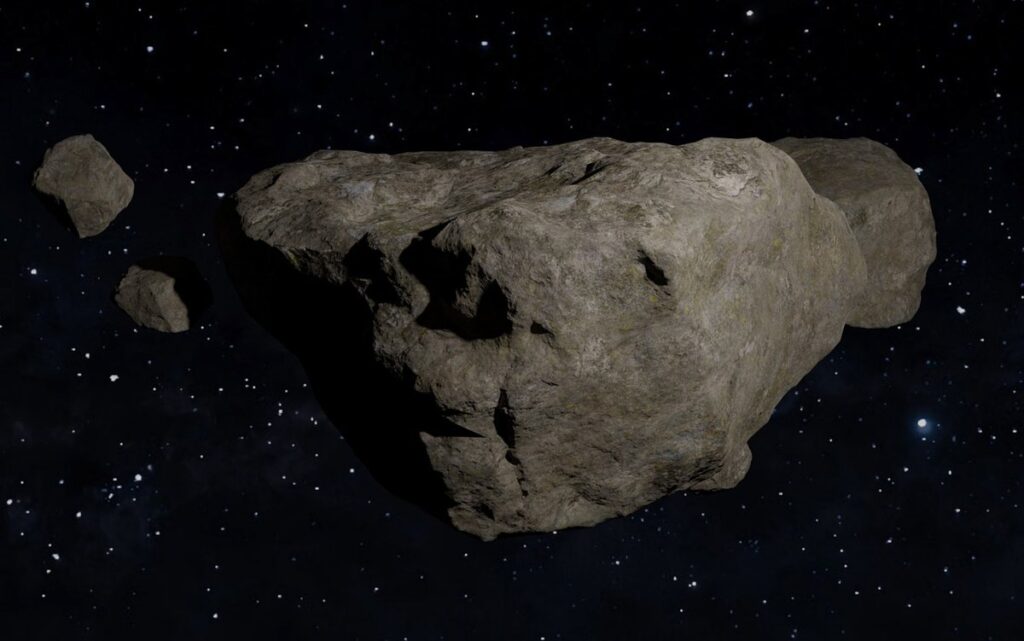
Asteroids are small, rocky objects that orbit the Sun, ranging from a few meters to hundreds of kilometers in diameter. They’re primarily composed of metal and rock, with some containing organic materials and water. The importance of tracking asteroids lies in their potential impact on Earth’s surface. A large asteroid impact could cause massive destruction, while smaller ones can still damage infrastructure and pose a threat to human life.
There are two main types of asteroids: near-Earth objects (NEOs) and main-belt asteroids. NEOs have perihelia within 1.3 astronomical units (AU) from the Sun, making them more susceptible to Earth’s gravitational pull. Main-belt asteroids, on the other hand, reside between Mars and Jupiter.
Tracking asteroids is crucial for predicting potential impact events. By monitoring their orbits, scientists can identify objects that may be on a collision course with our planet. This information helps governments and space agencies develop strategies for deflection or disruption. The data also contributes to ongoing research in asteroid composition and formation, providing valuable insights into the early solar system’s evolution.
Types of Asteroids and Their Characteristics
There are several main types of asteroids, each with distinct characteristics. The stony asteroids, also known as S-types, are composed primarily of silicate minerals and metals like iron and nickel. These asteroids are often found in the asteroid belt between Mars and Jupiter. Metallic asteroids, or M-types, contain high concentrations of metal, such as iron and nickel, making them denser than rocky asteroids.
Icy asteroids, also known as C-types, have a surface composition that is rich in water ice mixed with darker organic material. These are often found in the outer reaches of the asteroid belt and can be remnants from the early days of the solar system when temperatures were cooler. Lastly, there’s the rare P-type, which has a mix of both stony and metallic components.
When using an asteroid tracker to locate and identify asteroids, it’s essential to understand their characteristics, including size, shape, and orbit. Knowing that some asteroids may be composed primarily of metal or ice can help predict their behavior in different environments. For instance, if an asteroid is too small, it might disintegrate upon entering Earth’s atmosphere, but a larger one with a metallic composition could potentially cause significant damage.
History of Asteroid Tracking: From Ancient Times to Modern Methods
The history of asteroid tracking spans thousands of years, from ancient civilizations observing shooting stars to modern-day astronomers using cutting-edge technology.
Early Observations and Predictions
Ancient civilizations were surprisingly adept at observing comets and meteors, often recognizing patterns and attempting to predict their paths. The ancient Greeks, for example, tracked the periodic appearances of Halley’s Comet, which they associated with omens and prophecies. Similarly, Chinese astronomers recorded comet sightings as far back as 2400 BCE.
As civilizations developed a sense of temporal continuity, early attempts at predicting asteroid paths began to emerge. In the 2nd century CE, the Greek mathematician and astronomer Ptolemy proposed a model for celestial motion that accounted for the paths of comets and meteors. This work laid the groundwork for later astronomers who sought to apply similar principles to asteroids.
Early predictions were often based on observations of the asteroid’s initial appearance or its behavior over short periods. For instance, Chinese astronomers noted that some comets seemed to follow predictable patterns, reappearing at regular intervals. By studying these patterns, they hoped to anticipate future appearances and potentially even predict collisions. While their methods were rudimentary by today’s standards, these early efforts demonstrate a basic understanding of the complex dynamics involved in tracking asteroids.
Development of Astronomical Techniques and Tools
The development of astronomical techniques has been instrumental in advancing our ability to track asteroids. One significant breakthrough was the introduction of spectroscopy, which allows astronomers to analyze the light emitted by celestial objects and determine their composition and velocity. By studying the spectral lines of asteroids, scientists can identify specific minerals and gases present on their surface, providing valuable information about their origin and evolution.
Another crucial technique is photometry, which involves measuring the brightness of asteroids over time. By monitoring changes in an asteroid’s reflectivity, astronomers can infer its rotation period, size, and shape. This data is essential for predicting asteroid orbits and identifying potential hazards.
The combination of spectroscopy and photometry has greatly enhanced our understanding of asteroids. For example, scientists have used these techniques to study the composition of Ceres, a dwarf planet in the asteroid belt, and determine that it has a surface rich in water ice. By continuing to develop and refine these astronomical techniques, we can improve our ability to track and predict the behavior of asteroids, ultimately enhancing our understanding of these enigmatic objects.
How Asteroid Trackers Work: Understanding the Technology Behind Them
Asteroid trackers rely on complex algorithms and astronomical data to detect and predict asteroid paths, making them a crucial tool for scientists and researchers. Next, we’ll take a closer look at how these systems work their magic.
Overview of Tracking Methods (Visual, Radar, Optical)
Asteroids are typically tracked using three primary methods: visual observations, radar technology, and optical telescopes. Visual observations involve skilled astronomers manually tracking asteroids through binoculars or small telescopes, often over long periods of time to gather accurate data. This method is often used for smaller asteroids and provides valuable information on their orbital patterns.
Radar technology uses high-frequency radio waves to bounce off asteroids, allowing scientists to determine their size, shape, and speed with great precision. By analyzing the echoes returned from the asteroid’s surface, researchers can refine their estimates of its trajectory and composition.
Optical telescopes use advanced cameras and sensors to capture detailed images of asteroids as they pass near Earth or other celestial bodies. This method is particularly useful for detecting potentially hazardous asteroids (PHAs) that pose a threat to our planet. Optical telescopes can also provide valuable information on an asteroid’s size, shape, composition, and orbital characteristics. By combining data from these three tracking methods, scientists can achieve highly accurate predictions of an asteroid’s trajectory and behavior.
Software and Algorithms Used in Asteroid Tracking
Asteroid trackers rely on sophisticated software and algorithms to detect, track, and predict asteroid orbits. Machine learning tools are particularly effective for identifying asteroids in large datasets, as they can learn to recognize patterns in asteroid shapes, sizes, and motion. Software like STILTS (Spectroscopic Techniques In Large Telescope Surveys) is used for data analysis, allowing scientists to process vast amounts of information from various telescopes and sensors.
Some notable algorithms employed in asteroid tracking include:
- The SExtractor algorithm, which helps identify asteroids by filtering out background noise and detecting faint objects
- The Astrometrica software, which uses machine learning to improve the accuracy of asteroid positions and velocities
- The OrbFit program, which calculates asteroid orbits using observations from multiple sources
These tools enable astronomers to analyze large datasets quickly and accurately, making it possible to detect asteroids earlier in their orbits. For example, NASA’s Near-Earth Object Program uses software like STILTS to track potentially hazardous asteroids and predict their paths with high accuracy. By understanding the software and algorithms used in asteroid tracking, researchers can improve detection rates and better prepare for asteroid encounters.
Benefits and Applications of Asteroid Tracking
Asteroids have numerous practical uses, from helping us better understand our solar system to enabling scientists to study celestial objects up close. We’ll explore some of the key benefits and applications of asteroid tracking in this section.
Scientific Research and Discovery
Asteroid tracking has far-reaching implications for scientific research and discovery. By monitoring the orbits and compositions of asteroids, astronomers can gain valuable insights into the formation and evolution of our solar system. One significant benefit is the discovery of new asteroids, which often reveals unknown properties about their composition and behavior. For instance, the asteroid 16 Psyche, discovered in 1852, is now believed to be a metal-rich asteroid that could provide clues about the early stages of planetary formation.
Asteroid tracking also helps scientists understand the differences between various types of asteroids, such as stony, carbonaceous, or metallic. This knowledge can shed light on the geological processes that shaped our solar system and inform strategies for future space exploration missions. Furthermore, studying asteroid composition allows researchers to better comprehend the conditions under which planets formed and evolved, ultimately advancing our understanding of the universe’s history. By integrating data from various tracking methods, scientists can refine their models and gain a more comprehensive picture of asteroid behavior and distribution.
Practical Applications (Space Missions, Defense)
Asteroid tracking has numerous practical applications in space missions, defense, and asteroid deflection strategies. For instance, accurate tracking data is crucial for mission planning, particularly when it comes to selecting suitable landing sites or rendezvous points with asteroids. This information also helps scientists design more efficient trajectories, minimizing fuel consumption and reducing the risk of mission failure.
In terms of asteroid deflection strategies, precise tracking data enables astronomers to identify potential threats and develop effective mitigation plans. One such strategy involves using gravitational tractors – spacecraft designed to gently pull an asteroid off its course through gravitational forces. However, this approach requires highly accurate tracking to ensure the tractor is positioned correctly relative to the asteroid.
Space agencies also rely on asteroid tracking for defense purposes. By monitoring near-Earth asteroids (NEAs), scientists can identify potential impact risks and take preventative measures. This includes deflection strategies or even deploying a dedicated defense system to mitigate damage from an incoming asteroid.
Challenges and Limitations in Asteroid Tracking
Asteroid tracking isn’t always easy, and there are several challenges that can make it difficult to accurately predict an asteroid’s path. We’ll explore some of these limitations next.
Obstacles and Difficulties in Tracking Small or Far-Away Objects
Tracking small asteroids or those at great distances from Earth comes with its own set of unique challenges. One major issue is the limited resolution and sensitivity of most tracking systems, which can struggle to detect objects smaller than a few meters in diameter. This makes it difficult to accurately predict their trajectories and orbits.
At greater distances, the signal-to-noise ratio decreases significantly, making it harder to distinguish between actual asteroids and background noise or other celestial bodies. Furthermore, the effects of atmospheric interference and light pollution can also impede tracking efforts. For instance, a small asteroid passing close to Earth might be partially obscured by our planet’s atmosphere, reducing the accuracy of its observed position.
In such cases, astronomers often rely on simulations and modeling to estimate an object’s trajectory and orbit. However, these predictions are only as good as the available data, and errors can quickly accumulate with each iteration. To overcome these challenges, researchers may employ advanced algorithms and machine learning techniques that can compensate for limited data quality and provide more robust tracking results.
Potential Biases and Sources of Error in Tracking Data
Observational limitations are a significant source of error in asteroid tracking data. For instance, optical observations can be affected by atmospheric conditions such as cloud cover, which can obstruct the view of faint or distant objects. Similarly, radar systems may struggle to detect asteroids with low albedo (reflectivity), leading to inaccuracies in orbital predictions. Furthermore, the resolution and sensitivity of telescopes used for asteroid tracking can also impact data quality.
Algorithmic flaws are another potential source of bias in asteroid tracking data. Machine learning algorithms, which are commonly used in asteroid tracking software, can be prone to overfitting or underfitting if not properly calibrated. This can result in inaccurate predictions or poor performance when faced with novel or edge cases. Additionally, the selection and weighting of input features can also introduce biases, particularly if certain characteristics are given undue importance.
To mitigate these issues, asteroid tracking software developers often employ techniques such as data augmentation and feature normalization to improve robustness and accuracy. Users can also benefit from understanding the underlying algorithms and limitations, enabling them to make more informed decisions when interpreting results or selecting tracking tools.
The Future of Asteroid Tracking: Emerging Technologies and Trends
Recent advancements in space technology have led to the development of more sophisticated asteroid tracking systems, enabling scientists to predict orbits with unprecedented accuracy.
These cutting-edge tools are set to revolutionize our understanding of near-Earth asteroids.
Advances in Space-Based Observatories and Telescopes
Advances in space-based observatories and telescopes are poised to significantly enhance asteroid tracking capabilities. One notable example is the James Webb Space Telescope (JWST), which features a 6.5-meter primary mirror and advanced optics capable of detecting faint objects at vast distances. Its improved sensitivity will allow astronomers to identify and track smaller asteroids that were previously too faint or distant for detection.
The Square Kilometre Array (SKA) telescope, currently under development, promises even greater gains in sensitivity and resolution. With its unprecedented collecting area, SKA will enable the detection of asteroidal objects with diameters as small as 10 meters. This increased accuracy will be particularly valuable for tracking near-Earth asteroids, which pose a higher risk to human populations.
In addition to improved optics and sensitivity, next-generation space-based observatories will also feature advanced data processing capabilities, enabling faster and more accurate analysis of asteroid orbits. For instance, the European Space Agency’s (ESA) Gaia mission has demonstrated the power of combining precise astrometry with machine learning algorithms to predict asteroid trajectories with high accuracy.
Integration with Other Space-Related Disciplines (Space Weather, Planetary Defense)
Asteroid tracking is increasingly being integrated with other space-related disciplines to enhance our understanding of near-Earth objects and improve collision risk assessments. One key area of collaboration is space weather, which studies the effects of solar activity on Earth’s magnetic field and upper atmosphere. By combining asteroid tracking data with space weather information, scientists can better predict how asteroids might be affected by solar radiation pressure or other environmental factors.
This interdisciplinary approach has already led to some notable discoveries, such as the identification of a previously unknown asteroid that was temporarily captured by the Moon’s gravitational influence due to a close encounter with Earth during a solar flare. Researchers are now exploring ways to incorporate space weather data into their tracking algorithms to improve prediction accuracy and response times in case of potential collisions.
For example, NASA’s Planetary Defense Coordination Office is working with space weather experts to develop new tools that can integrate asteroid tracking data with real-time space weather forecasts. These tools will help astronomers predict how asteroids might be affected by solar activity and inform decision-making for planetary defense strategies.
Frequently Asked Questions
Can I use asteroid tracking software to predict the path of a specific asteroid?
Yes, many asteroid tracking software programs allow you to input an asteroid’s identifier or coordinates and receive its predicted path. This feature is particularly useful for astronomers and space enthusiasts who want to observe specific asteroids.
What if I’m trying to track an asteroid that’s too small or faint to be detected by most instruments? Are there any specialized methods or tools available?
For tracking extremely small or faint asteroids, researchers often employ specialized software and algorithms that can detect subtle changes in brightness or movement. Additionally, some space agencies and research institutions offer access to more sensitive detection systems.
Is it possible for amateur astronomers to contribute to asteroid tracking efforts, or is this primarily the domain of professional astronomers?
While professionals typically handle complex data analysis and research, amateur astronomers can significantly contribute to asteroid tracking by providing visual observations and helping with data collection. Many online platforms and communities facilitate collaboration between amateurs and professionals in the field.
Can I use asteroid tracking data for any personal or commercial purposes, or are there restrictions on its use?
Asteroid tracking data is generally available for non-commercial use under open-source licenses or public domain agreements. However, specific datasets may have usage restrictions or require permission from the creators or funding agencies. Be sure to review any applicable terms of use before utilizing asteroid tracking data.
When would it be necessary to involve authorities or emergency response teams in an asteroid tracking situation?
If an asteroid is predicted to potentially impact Earth within a short timeframe (e.g., days or weeks), astronomers and space agencies often collaborate with emergency response teams, governments, and international organizations to develop contingency plans and coordinate responses.