
Identifying different types of quartz can be a daunting task for even the most experienced mineral enthusiasts. With so many varieties to choose from, it’s easy to get confused about which one you’re actually holding in your hand. From rose quartz to amethyst, each type has its own unique characteristics that set it apart from others. But what if you want to know more than just whether or not a piece of quartz is genuine? What if you want to be able to determine the exact type of quartz and even estimate its value?
This guide will walk you through the basic visual techniques for identifying quartz, as well as advanced methods like chemical tests and X-ray fluorescence (XRF) analysis. By the end of this resource, you’ll know how to identify various types of quartz with confidence, saving you time and money in the long run.
Understanding Quartz Basics
Quartz is a complex mineral, and understanding its basic characteristics is essential for accurate identification. We’ll start by breaking down the fundamental properties of quartz that will help you distinguish it from similar minerals.
What is Quartz?
Quartz is a mineral with a unique combination of chemical and structural properties. Its chemical composition is primarily silicon dioxide (SiO2), which makes up about 12% of the Earth’s crust by weight. This oxide compound forms a crystalline structure, where silicon atoms are bonded to oxygen atoms in a repeating pattern. The result is a highly stable and versatile mineral that can occur naturally in many different forms.
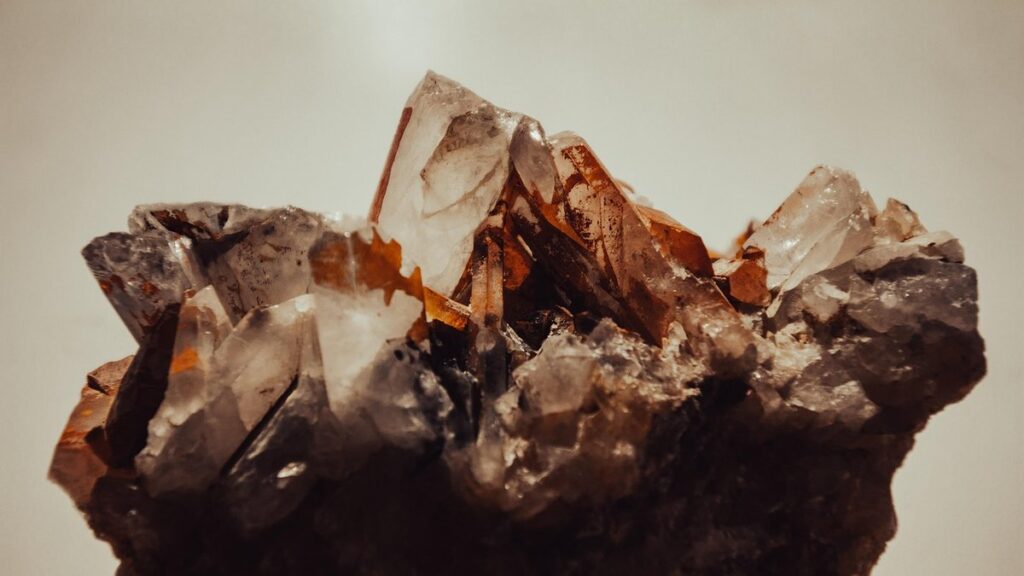
One key aspect of quartz’s crystal structure is its ability to form hexagonal prisms with six-sided crystals. These prismatic shapes can be extremely long or short, and often exhibit distinct growth patterns. In some cases, quartz will also grow as tabular crystals or clusters, showcasing its remarkable diversity. Quartz’s piezoelectric properties – its ability to generate an electric charge in response to mechanical stress – are another notable feature of this mineral.
Understanding quartz’s chemical composition and crystal structure provides a foundation for identifying it in various environments. By recognizing these fundamental characteristics, collectors and enthusiasts can better navigate the complexities of quartz identification and appreciate the intricate details that distinguish one type from another.
Types of Quartz
Quartz is a diverse mineral group with many distinct types, each possessing unique characteristics and properties. One of the most recognizable types is amethyst, a purple quartz variety resulting from iron impurities. Its distinctive coloration can range from pale lilac to deep violet.
Citrine is another popular type of quartz, often associated with its vibrant orange-yellow hue. This coloration arises from aluminum and iron impurities. Smoky quartz, on the other hand, owes its dark brown or grayish color to significant amounts of aluminum oxide. These colors can be uniform or display a range of shades.
Other notable types include rose quartz, characterized by its delicate pink to reddish-pink appearance due to manganese impurities, and clear or white quartz, often referred to as “rock crystal.” The latter is prized for its clarity and ability to form large crystals. When identifying these varieties, it’s essential to note that color can be influenced by both internal inclusions and external environmental factors.
These distinct types of quartz are not only visually striking but also offer valuable insights into the geological processes that formed them. By recognizing these differences, mineral enthusiasts can deepen their understanding of this fascinating mineral group.
Common Quartz Forms
Prismatic crystals are a common and striking form of quartz. These long, thin crystals often grow in clusters or as single, isolated specimens. Their crystal faces are typically smooth and flat, reflecting light beautifully. Amethyst geodes are another type of prismatic crystal, with their deep purple coloration due to iron impurities.
Tabular crystals have a more compact, plate-like shape than prismatic ones. They often occur in clusters or as part of a larger quartz mass. The flat faces of tabular crystals can be smooth or covered in small pyramidal points.
Massive quartz is the most common form of quartz found in nature. It occurs when many small quartz crystals grow together to form a large, solid mass. Massive quartz often has a distinctive “sugar-like” or “salt and pepper” appearance due to its mixture of white and dark minerals.
These three forms can help you identify quartz more easily. For example, if you find a long, thin crystal with smooth faces, it’s likely a prismatic crystal.
Identifying Quartz in the Field
When searching for quartz in its natural state, one of the first things you’ll want to look for is the crystal’s shape and clarity. Does it have a prominent hexagonal formation?
Visual Identification Techniques
When examining a potential quartz specimen in the field, there are several visual cues you can use to determine if it’s indeed quartz. One of the most distinctive features is its typical colors and luster. Quartz crystals often display a range of colors, including clear, white, pink, yellow, or purple, depending on the presence of impurities or inclusions. The luster can also vary from vitreous (glassy) to resinous or waxy.
Look for crystal habits that are characteristic of quartz, such as prismatic crystals with pyramidal terminations or equant crystals with square or rectangular faces. Quartz often forms clusters or aggregates, and its crystals may be striated or have distinctive growth patterns. When observed in different lighting conditions, you may notice a “pleochroism” effect, where the color appears to change under varying angles of incidence.
In many cases, quartz will exhibit these visual characteristics, but it’s essential to note that other minerals can also display similar features. Therefore, a positive identification requires a combination of visual examination and potentially further analysis using specialized tools or techniques.
Using a Hand Lens and Microscope
When examining quartz under magnification, a hand lens and microscope can be invaluable tools for identification. A hand lens is a simple yet effective way to zoom in on details, allowing you to inspect quartz crystals up close without the need for a microscope.
A 10x or 20x hand lens is ideal for initial observations, as it provides sufficient magnification to identify key features such as crystal shape, size, and growth patterns. When examining quartz with a hand lens, look for distinctive features like hopper crystals, pyramidal terminations, and etched surfaces.
A microscope offers even greater magnification (typically 40x to 100x), revealing the intricate details of quartz crystals. When using a microscope, focus on observing the crystal’s morphology, including its shape, size, and any inclusions or imperfections. Pay particular attention to the presence of growth zones, which can indicate the crystal’s formation history.
When examining quartz with either tool, it’s essential to note that the sample must be properly prepared. This means cleaning the surface of any debris and ensuring the quartz is securely mounted on a slide or platform for stable observation.
Distinguishing Quartz from Similar Minerals
When examining quartz specimens in the field, you may encounter minerals with similar appearances. Feldspar and calcite are two common minerals often mistaken for quartz due to their crystal structures and optical properties. To distinguish quartz from these lookalikes, consider the mineral’s cleavage pattern. Quartz exhibits a conchoidal fracture when broken, whereas feldspar tends to have a more irregular or striated appearance.
Calcite, on the other hand, typically displays rhombohedral cleavage, which can be observed by splitting the crystal along its flat faces. If you’re still unsure, examine the mineral’s luster and color. Quartz often exhibits a glassy luster, while feldspar and calcite may appear more dull or earthy.
Another key characteristic of quartz is its lack of twinning, whereas some feldspars can exhibit complex twinning patterns. When observing your specimen under magnification, take note of any inclusions, growth habits, or other distinguishing features that might indicate the presence of quartz. By carefully considering these factors and comparing them to known characteristics of feldspar and calcite, you’ll be better equipped to accurately identify quartz in the field.
Advanced Identification Techniques
Once you’ve gained a solid understanding of quartz basics, it’s time to dive deeper into more complex identification techniques that will take your knowledge to the next level.
Chemical Tests for Quartz
Chemical tests can be an effective way to confirm the presence of quartz. One common acid test involves applying hydrochloric acid (HCl) to a crushed sample of quartz. If the mineral is pure quartz, it will resist etching by HCl and show no significant reaction. However, if the sample contains significant amounts of iron or aluminum impurities, the acid may cause the quartz to etch, resulting in a characteristic honeycomb pattern.
The flame test can also be used to identify quartz. When heated in a Bunsen burner flame, pure quartz emits a blue or violet glow due to its high silica content. This is known as the “quartz arc” and is often accompanied by a faint yellowish or greenish tint. If the sample exhibits this characteristic coloration when exposed to heat, it’s likely to be quartz.
When performing chemical tests for quartz, it’s essential to use proper technique and follow safety protocols. This includes wearing protective gear such as gloves and goggles, working in a well-ventilated area, and handling acids with caution.
X-Ray Fluorescence (XRF) Analysis
X-Ray Fluorescence (XRF) Analysis provides a highly accurate method for identifying quartz and distinguishing it from other minerals. This technique works by bombarding a sample with X-rays, which causes the atoms to emit characteristic fluorescent radiation. The unique energy signature of this radiation can be used to identify the elemental composition of the sample.
One of the key advantages of XRF is its ability to analyze samples in their natural state without requiring extensive preparation or destruction. This makes it an ideal technique for identifying quartz specimens that are valuable or difficult to obtain. However, it’s essential to note that XRF analysis may not be able to distinguish between different types of quartz, such as alpha and beta quartz.
When selecting a laboratory for XRF analysis, look for one with experience in analyzing mineral samples. Be sure to ask about their calibration procedures and the accuracy of their results. It’s also crucial to understand that XRF analysis can be affected by factors such as sample size, matrix effects, and interference from other elements. By choosing a reputable laboratory and understanding the limitations of XRF analysis, you can rely on accurate results for your quartz identification needs.
Microscopic Examination of Quartz Inclusions
When examining quartz under a microscope, one of the most valuable tools for identification is the analysis of inclusions within the crystal. Inclusions are foreign particles trapped inside the quartz during its formation, and they can provide crucial clues about the mineral’s origin and composition. The most common types of inclusions found in quartz include fluid inclusions, solid inclusions, and gas bubbles.
Fluid inclusions typically contain a liquid or gel-like substance that is often visible as a dark spot within the crystal. These inclusions can be particularly informative if they contain a small amount of a mineral’s own chemical signature, allowing researchers to pinpoint its origin. Solid inclusions, on the other hand, are usually tiny fragments of other minerals or rocks that were trapped inside the quartz during its growth.
By examining these inclusions closely under magnification, you can gain valuable insights into the crystal’s geological history and composition. For example, if a quartz sample contains inclusions of specific minerals like calcite or pyrite, it may indicate that the quartz formed in a hydrothermal environment.
Quartz Growth Environments
Quartz growth environments can be diverse, ranging from high-temperature hydrothermal veins to low-temperature groundwater systems. Understanding these conditions is crucial for accurate identification.
Hydrothermal Activity
Hydrothermal activity plays a significant role in the formation of quartz crystals. In geological settings such as hot springs and geothermal areas, high temperatures and chemical-rich fluids interact with existing rocks, creating an environment conducive to crystal growth. For example, the famous quartz deposits at Radium Hill in South Australia were formed through hydrothermal activity, where mineral-rich fluids rose from deep beneath the Earth’s surface.
In these environments, minerals such as silicon dioxide, aluminum oxide, and iron oxides are dissolved in water and carried upwards by rising currents of hot fluid. As the fluid cools, the minerals precipitate out, often in the form of quartz crystals. This process can occur over a long period, allowing for the growth of large, well-formed crystals.
The presence of hydrothermal activity can be inferred from the formation of quartz deposits with characteristic textures and growth patterns. For instance, crystals formed through hydrothermal activity may exhibit distinctive striations or “growth tubes” on their surface, indicating that they grew in a specific orientation within the surrounding rock.
Magmatic Processes
When magma cools and solidifies, it can create unique environments for quartz growth. This process is known as magmatic crystallization. In these high-temperature conditions, quartz crystals often grow rapidly and develop distinct characteristics.
One key feature of magmatically grown quartz is its typically large size. Due to the abundance of dissolved silica in magma, quartz crystals can reach impressive sizes, sometimes exceeding several centimeters in diameter. Their shape is also often more irregular than that of hydrothermally grown quartz, with prominent growth faces and a rugged texture.
The chemical composition of magmatic quartz can vary depending on the specific magma type. For example, quartz grown from mafic (dark-colored) magma may contain higher levels of iron and magnesium impurities compared to quartz grown from felsic (light-colored) magma. These differences in chemistry can be used to infer the original magma type and provide valuable information for identification.
When examining magmatically grown quartz, look for these distinctive features: large size, irregular shape, prominent growth faces, and a rugged texture.
Metamorphic Environments
In metamorphic environments, quartz formation is a result of intense pressure and temperature transformations. When rocks are subjected to high-grade metamorphism, the existing minerals recrystallize into new minerals, including quartz. The high pressure causes the mineral crystals to deform and reorient, while the elevated temperatures provide the energy for recrystallization.
This process often results in the growth of coarse-grained or pegmatitic quartz aggregates. In some cases, the metamorphic rocks may exhibit a preferred orientation of quartz crystals, indicating the direction of maximum pressure during the deformation process. The texture and morphology of quartz in metamorphic environments can be quite different from those found in hydrothermal veins or magmatic bodies.
Practically, recognizing quartz growth in metamorphic rocks requires attention to the crystal size, shape, and arrangement, as well as the presence of other metamorphic minerals such as mica, garnet, or staurolite. Experienced collectors can use these characteristics to identify potential sources of high-quality quartz crystals, often associated with areas of high-grade metamorphism in mountainous regions.
Applications of Quartz Identification
Now that you know how to identify quartz, let’s explore its practical applications and how they impact various industries from construction to electronics.
Gemstone Trade and Market
Accurate quartz identification plays a crucial role in the gemstone trade, where market pressures and challenges can be significant. In the high-stakes world of gemstone buying and selling, misidentification can result in substantial financial losses for both buyers and sellers.
The gemstone market is driven by demand, with prices fluctuating based on factors like rarity, quality, and provenance. Quartz, being one of the most common minerals, can be particularly problematic when it comes to identification. Some quartz varieties, such as amethyst or citrine, are highly prized for their distinct colors and inclusions.
However, market pressures often lead gemstone dealers to prioritize speed over accuracy, which can result in misidentification. This issue is further complicated by the fact that some quartz varieties may exhibit characteristics similar to those of more valuable minerals. For example, smoky quartz can resemble tourmaline or garnet due to its dark color and inclusion patterns.
To navigate these challenges, gemstone buyers and sellers must prioritize thorough identification methods, including chemical tests and microscopic examination. By taking the time to accurately identify quartz varieties, market participants can avoid costly mistakes and ensure that their transactions are legitimate.
Geological Research and Education
Precise quartz identification is a crucial component of geological research, enabling scientists to better comprehend Earth’s processes and evolution. By accurately identifying different types of quartz, researchers can reconstruct ancient environments and understand the conditions under which they formed. This information is essential for understanding plate tectonics, volcanic activity, and other geological phenomena.
In studying quartz growth environments, researchers often rely on precise identification to distinguish between hydrothermal, magmatic, and metamorphic deposits. For instance, identifying the presence of certain inclusions or growth patterns can indicate whether a quartz sample formed as a result of high-temperature magmatic activity or low-temperature hydrothermal processes. This distinction is vital for reconstructing ancient geological events and understanding the Earth’s internal dynamics.
By improving our knowledge of quartz growth environments, researchers can also better understand how minerals interact with their surroundings and influence each other’s formation. This information has significant implications for fields such as geochemistry and geobiology, where a deeper understanding of mineral interactions is crucial for predicting and mitigating environmental impacts.
Personal Collection and Hobbyist Communities
Quartz enthusiasts often rely on identification resources to verify the authenticity and value of their finds. Online forums and social media groups dedicated to mineralogy provide a platform for community involvement and knowledge sharing. These platforms allow collectors to showcase their specimens, ask questions, and receive feedback from experienced hobbyists.
For example, websites like Mindat.org and MineralCollectors.org facilitate connections between collectors, dealers, and researchers. Members can upload images of their quartz specimens, share information about the location where they were found, and discuss various identification techniques. This collective knowledge benefits both novice and seasoned collectors, as it raises awareness about newly discovered species or characteristics.
In addition to online communities, local rockhounding clubs and mineral shows also play a crucial role in promoting quartz identification. These events provide opportunities for enthusiasts to network with experts, learn from hands-on workshops, and gain insight into the latest research and discoveries. By participating in these activities, collectors can refine their identification skills and expand their knowledge of quartz varieties.
Frequently Asked Questions
Can I use this quartz identification guide for educational purposes?
Yes, the comprehensive resource can be used in classrooms and educational settings to teach students about mineralogy and geology. The detailed explanations and examples make it an excellent teaching tool for both beginners and advanced learners.
How do I choose between XRF analysis and chemical tests for identifying quartz in my collection?
When deciding between XRF analysis and chemical tests, consider the type of quartz you’re working with and your available equipment. If you have access to a reliable XRF analyzer, it’s often faster and more accurate for large-scale identification. However, if you’re dealing with small samples or want to supplement XRF results, chemical tests can provide valuable additional information.
What are some common mistakes I should avoid when examining quartz under magnification?
Avoid using low-quality hand lenses or microscopes that may distort images or lack sufficient magnification power. Also, be cautious not to contaminate samples during handling and preparation for microscopic examination. Regularly calibrate your equipment to ensure accurate results.
Can I apply the techniques described in this guide to identify other minerals besides quartz?
The principles and methods outlined in this resource are applicable to a broader range of minerals with similar crystal structures and properties. However, it’s essential to consult specific guides or resources for each mineral type you’re interested in identifying, as their characteristics can differ significantly from those of quartz.
How do I store and preserve my quartz collection for long-term identification purposes?
To maintain the integrity of your quartz samples, store them in a cool, dry place away from direct sunlight. Use acid-free materials and containers to prevent chemical reactions that could damage or alter the mineral composition. Regularly inspect your collection for signs of deterioration or contamination, and consider consulting with experts if you’re unsure about preservation methods.