
Quartz crystal is one of the most abundant minerals on Earth, yet its unique properties make it an essential component in a wide range of industries. From semiconductors to solar panels, quartz crystals are used in emerging technologies due to their exceptional piezoelectric and optical characteristics. But did you know that there are several types of quartz crystals, each with its own distinct properties? For instance, alpha-quartz has the highest piezoelectric activity, while beta-quartz exhibits unique optical properties. In this article, we’ll explore the various types of quartz crystals, their industrial applications, and how they’re used in electronics, optics, and other emerging technologies. By the end of this article, you’ll understand the significance of these crystals and be able to identify the different types based on their properties.
Overview of Quartz Crystals
Quartz crystals are a fundamental type of crystal, and understanding their basic properties is essential for appreciating their unique characteristics. Let’s begin by exploring what makes quartz crystals so special.
What are Quartz Crystals?
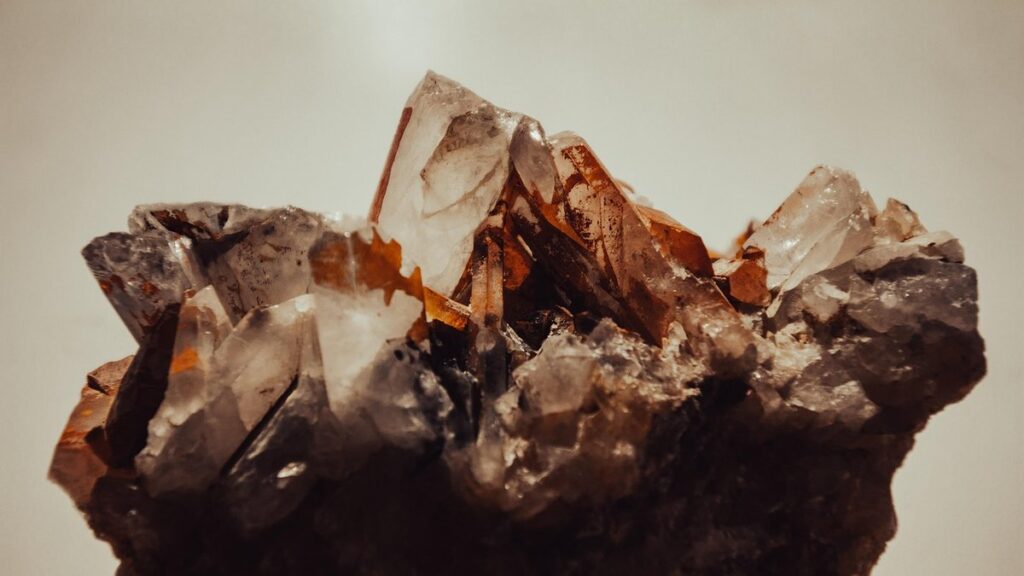
Quartz crystals are one of the most abundant minerals on Earth, making up a significant portion of the planet’s crust. Composed primarily of silicon and oxygen atoms, quartz is a type of silicate mineral that crystallizes in a specific repeating pattern. This unique structure gives quartz its distinctive properties and makes it a crucial component in various industries.
Quartz crystals are often found in igneous rocks, such as granite, or in sedimentary deposits like sandstone. Their widespread presence is due to the fact that they can form through both high-temperature magmatic processes and lower-temperature hydrothermal activities. As a result, quartz is an incredibly versatile mineral with diverse applications.
One of the key reasons quartz is so valuable is its piezoelectric properties, which allow it to generate an electric charge when subjected to mechanical stress or pressure. This characteristic makes quartz crystals essential for use in electronics and computing, where they are used as oscillators, filters, and resonators. In addition to their technical applications, quartz crystals have also been prized for centuries for their beauty and rarity, with many types being highly sought after by collectors.
Classification of Quartz Crystals
Quartz crystals are classified based on their crystal structure, chemical composition, and physical properties. The most significant factor in classification is the atomic arrangement within the crystal lattice. Quartz crystals have a trigonal (hexagonal scalenohedral) crystal system, with each silicon atom bonded to four oxygen atoms, forming a continuous three-dimensional framework.
The hexagonal crystal structure of quartz contributes to its unique optical and electrical properties. The symmetry of the crystal lattice affects the way light interacts with the crystal, resulting in distinct pleochroism patterns. Additionally, the arrangement of silicon and oxygen atoms influences the crystal’s thermal conductivity and piezoelectric properties.
Quartz crystals can be further classified into different types based on their chemical composition. For example, alpha-quartz (α-quartz) has a slightly distorted crystal lattice compared to beta-quartz (β-quartz). This distortion affects the crystal’s optical and electrical behavior. Understanding the atomic structure and its impact on the crystal’s properties is crucial for selecting the right type of quartz for specific applications.
Common Types of Quartz Crystals
Quartz crystals come in a wide range of types, each with its own unique properties and characteristics. Let’s explore some of the most common types found in nature.
Alpha Quartz (α-quartz)
Alpha quartz, also known as α-quartz, is one of the most common forms of quartz crystals. It has a unique set of properties that make it highly valued in industry and technology. One of its key characteristics is high thermal conductivity, which allows it to efficiently transfer heat away from electronic components, making it an ideal material for use in cooling systems.
In addition to its thermal conductivity, alpha quartz also exhibits strong piezoelectric properties. This means that when subjected to mechanical stress or pressure, it generates an electric charge. This property is crucial in the production of quartz crystals used in electronics, where it serves as a critical component in frequency control devices and oscillators.
Alpha quartz’s unique combination of thermal conductivity and piezoelectric properties make it an essential material in various industries. It is widely used in the production of electronic components, such as microprocessors and memory chips, due to its ability to maintain stability over a wide range of temperatures. Its use in cooling systems also helps to extend the lifespan of these components by preventing overheating.
Beta Quartz (β-quartz)
Beta quartz has several distinct features that set it apart from alpha quartz. One notable difference is its higher density, which can range from 2.65 to 2.66 g/cm³. This increased density makes beta quartz more suitable for certain applications where weight and stability are crucial.
In materials science and engineering, beta quartz is often used in the production of high-strength components due to its exceptional hardness and resistance to thermal shock. Its higher density also makes it an attractive choice for applications where vibration damping or low-frequency noise reduction is required.
Beta quartz’s unique properties have led to its use in various industrial settings, including the manufacture of ceramic components, cutting tools, and even certain types of glass. For instance, beta quartz can be used as a reinforcement material in composite ceramics, enhancing their strength and durability.
The increased density of beta quartz also makes it more susceptible to hydrothermal growth, allowing for larger crystals to form under specific conditions. This characteristic is particularly valuable for researchers seeking to create large-scale quartz crystals with precise control over their physical properties.
Other Notable Types of Quartz Crystals
Let’s look at some lesser-known but equally impressive types of quartz crystals, including smoky quartz and amethyst, each with its unique properties. These varieties showcase the crystal’s incredible diversity.
Macrocrystalline Quartz
Macrocrystalline quartz boasts a unique crystalline structure that makes it particularly valuable for applications requiring precision and stability. Unlike microcrystalline quartz, which consists of tiny crystals, macrocrystalline quartz features larger, more distinct crystal formations. This distinct structure allows it to exhibit superior optical clarity and thermal conductivity.
In the realm of optics, macrocrystalline quartz is often used in telescopes and binoculars due to its ability to minimize distortion and maximize light transmission. Its high stability also makes it an ideal material for precision mechanics, where small variations can have significant effects on performance.
One notable advantage of macrocrystalline quartz over other types is its resistance to thermal shock. This means that it can withstand extreme temperature fluctuations without compromising its structural integrity or optical properties. As a result, macrocrystalline quartz is also used in electronics, particularly in high-frequency applications where stability and reliability are paramount.
In practice, choosing macrocrystalline quartz over other types often requires consideration of the specific application’s requirements. For example, if thermal conductivity is crucial, macrocrystalline quartz may be a better choice than alpha quartz. By understanding the unique properties of macrocrystalline quartz, manufacturers and engineers can make informed decisions about which type of quartz crystal to use in their projects.
Microcrystalline Quartz (Mq)
Microcrystalline quartz (Mq) is a type of quartz crystal characterized by its high thermal conductivity and electrical resistivity. These unique properties make Mq particularly useful for applications involving heat management, insulation, and energy storage. For instance, Mq’s high thermal conductivity allows it to efficiently transfer heat away from sensitive electronic components, making it an essential material in the production of heat sinks.
In addition to its use in electronics, Mq is also used in construction materials for its insulating properties. Its ability to resist electrical currents makes it an ideal component in capacitors and other energy storage devices. In some cases, Mq is combined with other materials to enhance its performance in these applications.
Mq’s benefits are further amplified when compared to other types of quartz crystals. For example, its high thermal conductivity surpasses that of macrocrystalline quartz, making it a preferred choice for certain industrial applications. Furthermore, Mq’s electrical resistivity is significantly higher than alpha and beta quartz, which reduces the risk of electrical discharges in sensitive equipment. As a result, Mq has become an essential component in various industries, where its unique properties can be leveraged to improve performance and efficiency.
Synthetic and Treated Quartz Crystals
Synthetic quartz crystals are engineered to mimic the properties of natural quartz, while treated crystals undergo alterations to enhance their characteristics. We’ll explore how these modifications affect their unique properties and uses.
High-Purity Quartz (HPQ)
High-purity quartz (HPQ) is a type of synthetic quartz crystal renowned for its exceptionally high-quality crystal structure. This exceptional purity makes HPQ an essential component in the production of semiconductors, solar panels, and fiber optic communications equipment. The importance of HPQ lies in its ability to minimize impurities, which can compromise the performance and efficiency of these technologies.
HPQ’s superior quality is achieved through a rigorous manufacturing process that involves careful selection of raw materials and strict quality control measures. This attention to detail enables the production of quartz crystals with minimal defects or impurities, making them ideal for use in high-performance applications.
In emerging technologies like 5G communication systems and next-generation solar panels, HPQ plays a critical role in advancing their capabilities. Its ability to maintain stability and precision even under extreme conditions makes it an indispensable component in these cutting-edge applications. As research and development continue to push the boundaries of technological innovation, the demand for high-purity quartz crystals like HPQ is likely to remain strong.
Radiation-Resistant Quartz (RRQ)
Radiation-Resistant Quartz (RRQ) is a type of synthetic quartz crystal engineered to withstand radiation damage. This enhanced resistance is achieved through a controlled doping process, which introduces impurities into the crystal structure to stabilize it against ionizing radiation. As a result, RRQ exhibits improved thermal conductivity and reduced radiation-induced defects compared to natural quartz crystals.
In high-radiation environments, such as nuclear reactors or space exploration missions, RRQ’s properties make it an attractive choice for applications like cooling systems, sensors, and communication devices. Its ability to withstand prolonged exposure to ionizing radiation ensures the stability and reliability of these critical components. Medical devices also benefit from RRQ’s radiation resistance, particularly in diagnostic equipment that requires precise temperature control.
Compared to natural quartz crystals, RRQ offers a significant advantage in terms of durability and performance under harsh conditions. While natural quartz has limited radiation tolerance, RRQ can withstand doses that would otherwise cause degradation or failure. This makes RRQ an essential material for industries where radiation exposure is inherent, such as nuclear power generation and space exploration.
Quartz Crystal Applications
Quartz crystal applications range from electronic devices and oscillators to filters and resonators, where their unique properties are leveraged for precision timing. Let’s take a closer look at how these crystals are used in various industries.
Electronics and Computing
Quartz crystals play a crucial role in modern electronics, particularly in devices requiring precise timing and frequency control. One of their primary functions is to stabilize clock signals, which is essential for maintaining accurate timekeeping in clocks, watches, and smartphones. This is achieved through the quartz crystal’s ability to vibrate at a specific frequency when an electric current is applied, creating a stable oscillator.
In radios, quartz crystals are used to control the frequency of the receiver, ensuring that it tunes into the desired station without interference or drift. The stability of these crystals also enables high-speed data transmission in smartphones and other wireless devices. Their compact size and low power consumption make them ideal for use in portable electronics.
The quality of a quartz crystal is often measured by its frequency stability and temperature coefficient. A stable oscillator is critical in applications where timing accuracy is essential, such as in telecommunications networks or scientific research equipment. When selecting a quartz crystal for electronic devices, manufacturers typically look for crystals with low phase noise and high Q-factor values.
Optics and Photonics
Quartz crystals play a pivotal role in optics and photonics due to their unique optical properties. In lasers, quartz is often used as a component for beam splitters, polarizers, and compensators because of its high transparency across the visible spectrum. This property allows for precise control over light transmission and manipulation, which is essential for applications such as material processing, spectroscopy, and medical treatments.
In addition to laser technology, quartz crystals are also critical in optical fiber systems. Due to their piezoelectric properties, quartz crystals can be used to modulate light signals within the fibers. This enables high-speed data transmission over long distances with minimal signal degradation.
Quartz crystals are also employed in various types of sensors, including interferometers and optical detectors. These sensors rely on the crystal’s ability to detect subtle changes in light intensity or polarization, which is crucial for applications such as spectroscopy, microscopy, and quality control.
The importance of quartz crystals in high-speed data transmission and processing cannot be overstated. Their precise optical properties and piezoelectric characteristics make them an essential component in numerous applications across the optics and photonics industry.
Conclusion
In conclusion, understanding the different types of quartz crystals is essential for harnessing their unique properties and utilizing them effectively. Each type has its distinct characteristics, making some more suitable for specific applications than others. For instance, amethyst quartz is prized for its calming energy and is often used in jewelry, while citrine quartz is valued for its ability to amplify positive energy and is frequently used in healing rituals.
When selecting a quartz crystal, it’s crucial to consider the intended use and choose a type that aligns with your needs. This might involve researching the metaphysical properties of various crystals or consulting with an expert to determine the most suitable option. By taking the time to explore the different types of quartz crystals and their uses, you can unlock their full potential and incorporate them into your life in meaningful ways.
Frequently Asked Questions
Can I use quartz crystals in high-temperature applications?
Yes, some types of quartz crystals like macrocrystalline and microcrystalline quartz have high thermal conductivity, making them suitable for high-temperature applications. However, it’s essential to consider the specific properties of the quartz crystal and ensure that it can withstand the temperature requirements.
How do I choose between alpha and beta quartz for my electronics project?
The choice between alpha and beta quartz depends on your project’s specific needs. Alpha quartz has better piezoelectric properties but lower thermal conductivity, while beta quartz has higher density and is more suitable for high-frequency applications. Consider the frequency range, temperature requirements, and power handling capacity of your device to decide which type of quartz crystal is best.
Can I grow my own quartz crystals at home?
Growing high-quality quartz crystals can be challenging, even for experienced researchers. While it’s possible to attempt growing quartz crystals at home, the process often requires specialized equipment and controlled conditions that are difficult to replicate outside a laboratory setting. It’s generally recommended to source high-purity quartz crystals from reputable suppliers.
What if I need to use radiation-resistant quartz in a device with limited space?
Radiation-resistant quartz (RRQ) is an excellent option for applications where radiation resistance is crucial, such as in nuclear reactors or space exploration missions. However, RRQ can be more expensive and challenging to work with due to its enhanced properties. Consider using alternative designs or materials that take advantage of the available space while still meeting the radiation requirements.
Can I use quartz crystals in conjunction with other materials for even better performance?
Yes, combining quartz crystals with other materials can enhance their performance in various applications. For example, pairing quartz crystals with specialized coatings or substrates can improve their thermal conductivity, optical properties, or electrical resistivity. Researching and experimenting with different combinations of materials can help you achieve the desired results in your specific project.