
The American robin is one of North America’s most beloved birds, with its distinctive red breast making it a staple in backyards across the continent. But there’s more to this charming bird than meets the eye. Beyond its vibrant plumage, the American robin has adapted to thrive in a wide range of habitats, from forests to urban parks. In this comprehensive guide, we’ll delve into the fascinating world of the American robin, exploring its behavior, habitat preferences, and conservation status. You’ll learn about the unique characteristics that set it apart from other species, as well as the challenges it faces in today’s changing environment. Whether you’re a seasoned birder or just starting to explore the world of birds, this article will give you a deeper understanding of these incredible creatures and why they’re so important to our ecosystem.
Physical Characteristics and Identification
When identifying an American Robin, understanding its physical characteristics is essential. This includes examining the bird’s size, plumage patterns, beak shape, and other distinctive features.
Recognizing the American Robin’s Plumage
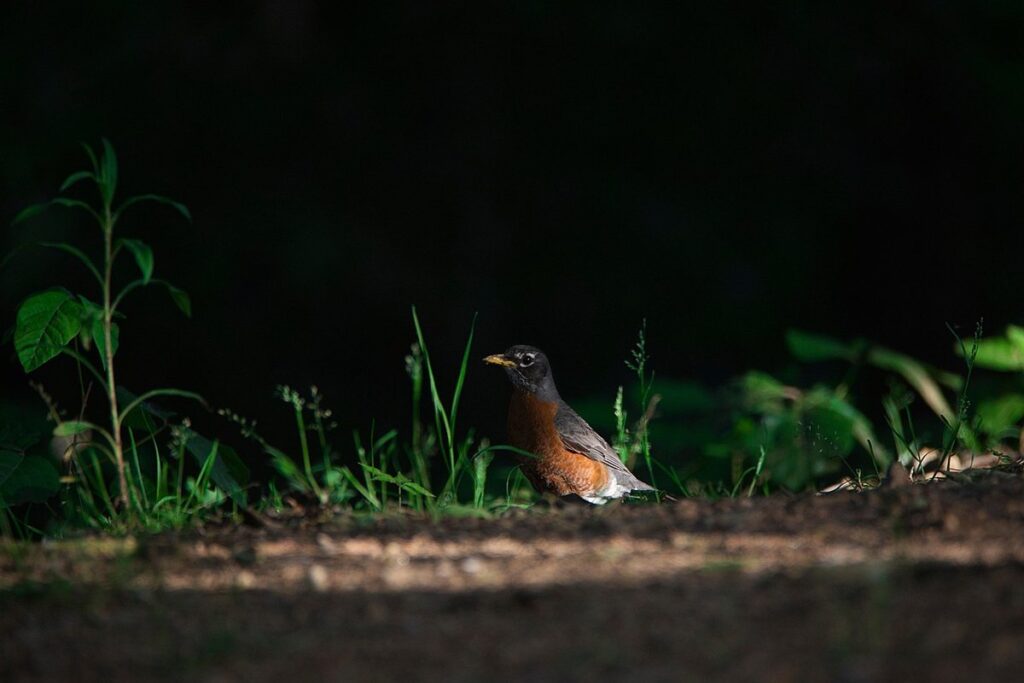
One of the most recognizable features of the American Robin is its distinctive plumage. The bird’s breast is a vibrant red color, while its back and wings are a warm brown hue. This striking combination makes it relatively easy to identify the robin among other bird species.
When identifying robins, pay close attention to the red breast. It should be a deep, rich shade, not a pale pinkish-red. The brown back and wings can vary in intensity from one individual to another, but they typically have a more muted tone than the bright red of the breast. To distinguish robins from other birds with similar plumage, such as the Varied Thrush or the Red-winged Blackbird, look for the robin’s distinctive white eye ring and grayish-white face mask.
In particular, note that juvenile American Robins have a more subdued breast coloration than adults, often appearing more pinkish-red. With practice, you’ll become familiar with this subtle difference and be able to confidently identify robins based on their plumage alone.
Key Field Marks for Easy Identification
When observing an American Robin, there are several key field marks to look for that will help you identify it with ease. One of the most distinctive features is its white eye ring, which surrounds its dark brown eyes and gives a clean, refined appearance to its face. The grayish-brown head is another notable characteristic, often distinguished by a subtle sheen or “glaze” that catches the light.
The American Robin’s tail feathers are also a crucial identification mark. Long and rounded at the tip, these feathers can be quite striking when spread, especially in flight or when perched on a branch. To get a clear view of these features, look for the bird from directly above or slightly angled – this will help you appreciate its facial markings and tail shape more effectively.
In terms of size, American Robins tend to appear somewhat slender, particularly when compared to other species in their family. But it’s worth noting that their bodies are actually quite robust, with a sturdy build that belies their slender appearance.
Habitat and Distribution
The American Robin’s habitat and distribution patterns are as diverse as they are widespread, spanning across North America from Canada to Mexico. Let’s take a closer look at where you can spot this bird.
Exploring the American Robin’s Geographic Range
The American Robin’s geographic range spans across much of North America, from Canada to Mexico and as far east as the Atlantic coast. When it comes to native habitats, these birds can be found thriving in a variety of environments.
Forests are one of their preferred habitats, particularly deciduous and mixed forests with dense undergrowth where they can forage for earthworms, insects, and other small invertebrates. Woodlands with scattered trees and shrubs also provide suitable habitat for the American Robin. In addition to natural areas, these birds have adapted well to urban environments and can be commonly spotted in backyards, parks, and even city centers.
In fact, a study by the Cornell Lab of Ornithology found that urban robins tend to thrive in areas with mature trees, shrubs, and lawns with dense grass. By incorporating some of these characteristics into your own yard or neighborhood green space, you can create an inviting habitat for American Robins to visit and reside in. Whether in a forest, woodland, or urban setting, the American Robin’s remarkable adaptability is truly impressive.
How Urbanization Affects American Robin Populations
As urbanization continues to shape America’s landscape, its impact on American Robin populations is undeniable. Habitat loss and fragmentation are two critical consequences of human activity that have far-reaching effects on these birds’ survival.
Urban expansion has led to widespread destruction of natural habitats, forcing robins to adapt to new environments. Suburban areas often offer an abundance of food sources, such as lawns and gardens, but they also lack the forest edges and woodlands that robins typically require for breeding and nesting. This mismatch between habitat availability and robin needs can lead to reduced population sizes.
For instance, a study in Illinois found that urbanization led to a 25% decline in American Robin populations over two decades. Similarly, research in Massachusetts revealed that robins are more likely to thrive in areas with higher levels of tree cover and green spaces. This highlights the importance of preserving and creating habitats that cater to robins’ specific needs.
As we strive to coexist with urban robins, it’s essential to recognize the role we play in shaping their populations. By incorporating native plant species, reducing pesticide use, and protecting existing woodlands, we can create a more robin-friendly environment.
Behavior and Migration Patterns
American Robins are known for their impressive migrations, traveling thousands of miles each year to escape harsh winter conditions. Let’s explore how these birds behave during migration and what patterns they follow.
Understanding the American Robin’s Social Structure
American Robins are known for their complex social behavior, which plays a crucial role in their survival and success. One of the most interesting aspects of their social structure is their monogamous relationships. Unlike many other bird species, American Robins form long-term pair bonds that can last up to 20 years or more.
These pairs work together to defend their territory from potential intruders, including other robins, predators, and even rival males. To establish dominance, robins engage in elaborate territorial displays, which involve singing, aggressive posturing, and ritualized courtship behaviors. This intricate dance of song and display allows robins to communicate with each other and reinforce their bond.
For example, a pair of robins will often sing duets together, harmonizing their songs to create a unique melody that serves as a identifier for the territory. By understanding these social cues, you can get a glimpse into the lives of American Robins, from courtship rituals to territorial defense.
The Great Migrations: Why American Robins Travel So Far
American robins are renowned for their remarkable migratory journeys, traversing thousands of miles each year to reach their summer and winter habitats. But what drives these birds to travel such vast distances? The primary reasons behind the robin’s migratory patterns lie in the availability of food and climate changes.
Each spring, as the snow melts and days grow longer, American robins begin their northward migration in search of sustenance. They are attracted to areas with an abundance of insects, worms, and other invertebrates that thrive during this time. The robins’ keen eyesight allows them to locate these food sources, which are often scarce in their wintering grounds.
In contrast, as summer draws to a close, the robins begin their southward journey to escape harsh weather conditions. Prolonged periods of rain and cold temperatures can decimate insect populations, making it difficult for the robins to survive. By migrating to warmer regions with more favorable climates, they ensure their survival until the next breeding season.
In fact, studies have shown that American robins that migrate to areas with high food availability tend to be healthier and have higher reproductive success. So, if you’re lucky enough to host these birds in your backyard during their migratory journey, make sure to provide a welcoming environment by offering food sources like mealworms or suet cakes.
Diet and Foraging Habits
When it comes to surviving and thriving, American Robins rely on a varied diet that includes earthworms, insects, and fruits. Let’s take a closer look at their foraging habits and dietary needs.
What Do American Robins Eat?
American robins are opportunistic omnivores, which means they’ll eat just about anything they can find. Insects make up a significant portion of their diet, and you might be surprised at the variety of bugs they consume. Caterpillars, grubs, beetles, and even spiders are all fair game for these birds. In fact, one study found that American robins feed on over 90 different species of insects.
But it’s not just insects – fruits are also a vital part of an American robin’s diet. They love berries, cherries, and crabapples, and will often visit gardens and backyards in search of these tasty treats. In the spring, when worms are abundant, robins will feast on earthworms to help build up their strength after a long winter.
If you’re trying to attract American robins to your yard, be sure to plant some fruit-bearing trees or shrubs, like dogwood or hawthorn. You can also try setting up a bird feeder with mealworms or suet to entice these birds to visit. Just remember to keep your feeder clean and well-stocked – American robins are frequent visitors!
Effective Foraging Strategies Employed by American Robins
American Robins employ various effective foraging strategies to locate food. One of their key techniques is using ground-penetrating abilities to find underground food sources. They use their powerful legs and strong feet to dig into the soil, allowing them to uncover insects, worms, and other invertebrates. This skill is particularly useful during breeding season when they need to feed their young.
American Robins also use visual cues to locate potential foraging sites. They often focus on areas with high concentrations of earthworms, such as lawns, meadows, or fields with loose soil. When foraging, robins tend to scratch the ground lightly, creating small holes in search of prey. Their keen eyesight allows them to detect movement beneath the surface.
As you observe American Robins, note that their foraging behavior changes depending on the season and food availability. By understanding these strategies, you can better appreciate their resourcefulness and adaptability when it comes to finding sustenance.
Nesting and Breeding Habits
American Robins are devoted parents, carefully selecting and preparing nesting sites that provide optimal protection for their eggs and chicks. Let’s take a closer look at their unique mating and incubation habits.
The Art of Nest Building: A Closer Look at American Robin Nests
When it comes to building nests, American Robins are meticulous architects. They carefully select and arrange materials to create a safe haven for their eggs and chicks. The primary materials used in building nests include twigs, grasses, and mud.
Twigs, typically 1-2 inches long, serve as the framework of the nest. Robins often collect them from nearby trees or shrubs, choosing those with flexible branches that can be easily shaped to fit the nest’s design. Grasses, on the other hand, are used to line the nest and provide insulation. These delicate blades are carefully woven together to create a soft and cushioned surface.
Mud is another essential component of American Robin nests. It’s used to bind twigs and grasses together, creating a stable structure that can withstand harsh weather conditions. In fact, studies have shown that mud plays a critical role in the construction process, accounting for up to 30% of the nest’s total weight.
If you’re lucky enough to spot an American Robin building its nest, take note of the intricate details. Pay attention to how it carefully selects and arranges each twig and grass blade, creating a masterpiece of avian engineering.
Parental Care and Incubation: Raising Young Robins Successfully
When it comes to raising their young, American Robins are devoted parents. Both males and females take turns incubating eggs and caring for their chicks. The female robin lays an average of 3-5 eggs per clutch, which she will carefully incubate for about 12-14 days.
During this time, the male robin is responsible for finding food and protecting the nest from predators. He’ll bring back earthworms, insects, and fruits to feed his mate and their growing chicks. Once the eggs hatch, both parents take on brooding duties, keeping the young warm and safe in the nest.
As the chicks grow, they begin to fledge at around 14-16 days old. The parents continue to care for them, teaching essential survival skills like hunting and flying. It’s not uncommon to see Robin families foraging together in backyards and parks during this period. If you’re fortunate enough to have a Robin nesting nearby, be sure to observe from a distance and appreciate the dedicated parental care on display.
To attract Robins with young, consider creating a nursery-friendly habitat with native plants, birdhouses, or a birdbath.
Conservation Status and Threats
The American Robin is facing some concerning threats, including habitat loss and climate change, which affect their populations and survival rates. Let’s explore these issues in more detail.
Assessing the American Robin’s Population Trends
The American robin’s population trends have been a subject of interest among ornithologists and conservationists. According to data from the North American Breeding Bird Survey (BBS), the species has experienced a decline in its population over the past few decades. Between 1966 and 2015, the BBS reported a loss of approximately 34% in the robin’s breeding population.
Several factors contribute to this decline, including habitat loss and fragmentation, climate change, and pesticide use. The increased availability of food sources such as worms and insects has also led to an over-reliance on these resources by robins, making them more vulnerable to changes in their ecosystem. Furthermore, the species’ adaptability to urban environments may be both a benefit and a drawback, as it allows them to thrive in human-dominated landscapes but also exposes them to potential risks associated with human activity.
It is essential for bird enthusiasts and landowners to take steps to mitigate these threats by creating robin-friendly habitats that provide a balanced diet of food sources. This can include incorporating native plants, reducing pesticide use, and maintaining healthy wetland areas.
Efforts to Protect and Conserve American Robin Populations
Ongoing conservation efforts aim to safeguard the American Robin’s habitat through restoration and protection initiatives. The Audubon Society, for instance, has established a network of local chapters that work together to restore habitats and reduce urban sprawl. These efforts focus on creating “bird-friendly” spaces by planting native vegetation, eliminating invasive species, and promoting sustainable gardening practices.
The National Wildlife Federation also plays a crucial role in protecting the American Robin’s habitat through its Community Wildlife Habitat program. This initiative encourages communities to adopt environmentally friendly practices and create wildlife habitats that support native birds like the robin. By implementing rain gardens, reducing pesticide use, and creating bird-friendly water sources, these community efforts contribute significantly to conserving American Robin populations.
Moreover, organizations like the Cornell Lab of Ornithology work with landowners and farmers to develop sustainable agriculture practices that minimize habitat destruction and promote biodiversity. These collaborative efforts demonstrate the power of collective action in safeguarding the American Robin’s future.
Frequently Asked Questions
What are the best ways to attract American robins to my backyard?
American robins can be attracted to backyards with native plants, trees, and shrubs that provide food and shelter. Consider planting fruit-bearing bushes like dogwood or blueberries, which produce berries that robins love. You can also try installing a birdbath or small pond to provide water for drinking and bathing.
Can American robins be considered an invasive species in certain regions?
While American robins are native to North America, their adaptability and ability to thrive in various habitats has led some to consider them an invasive species in areas with existing bird populations. In these cases, the introduction of non-native species like American robins can displace local birds from food sources and nesting sites.
What should I do if I see an injured or orphaned American robin?
If you encounter an injured or orphaned American robin, contact a local wildlife rehabilitation center for assistance. These centers have trained staff and facilities to care for injured birds until they can be released back into the wild. Never attempt to handle or care for a wild bird yourself, as this can cause more harm than good.
How long do American robins typically stay in their nests?
American robins typically lay 3-5 eggs per clutch, which incubate for around 12 days before hatching. After hatching, both parents take turns feeding and caring for the young, which leave the nest after about 14-16 days.
Can I feed American robins directly, or is it better to provide alternative food sources?
While it may be tempting to hand-feed an American robin, this can actually harm the bird in the long run. Instead, provide alternative food sources like mealworms, sunflower seeds, or fresh fruits, which allow the birds to forage naturally and maintain their natural feeding habits.