
The sky is not always as clear-cut as we think. With millions of asteroids floating through space, some of them pose a significant threat to our planet. Near-earth asteroids (NEAs) are particularly concerning because of their proximity to Earth and potential for causing catastrophic damage if they were to collide with us. These small, rocky objects zip past our planet all the time, but scientists are working tirelessly to detect and track them before it’s too late. In this article, we’ll delve into the world of NEAs, exploring detection methods, mitigation strategies, and what these celestial bodies can tell us about our solar system. By the end of this comprehensive guide, you’ll have a deeper understanding of near-earth asteroids and their potential impact on our planet.
What are Near-Earth Asteroids?
Let’s start by understanding what near-earth asteroids are, and how they differ from other types of asteroids that orbit our solar system.
Definition and Characteristics
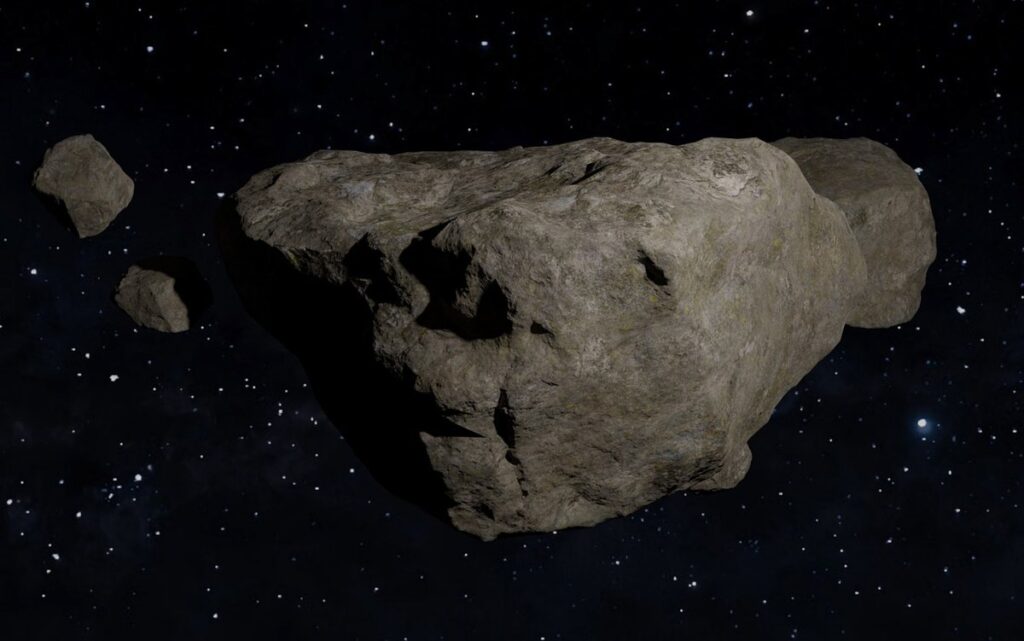
Near-earth asteroids (NEAs) are small, rocky objects that orbit the Sun at close proximity to our planet. These space rocks can be as small as a basketball or as large as a skyscraper, with sizes ranging from 1 meter to over 100 meters in diameter. In terms of composition, NEAs are primarily made up of rock and metal, often found in their primitive, unaltered state. This is because they have undergone little to no geological processing since their formation billions of years ago.
The orbital characteristics of NEAs set them apart from other asteroids. Their proximity to Earth means that these objects can potentially cross our planet’s orbit, posing a threat to global safety. In fact, it’s estimated that there are over 20,000 known NEAs in our solar system, with many more yet to be discovered. The close proximity of NEAs also makes them vulnerable to atmospheric drag, which can cause their orbits to decay and eventually lead to an impact on Earth. Understanding the characteristics of NEAs is crucial for mitigating this threat and developing strategies for asteroid detection and deflection.
Types of NEAs
When it comes to Near-Earth Asteroids (NEAs), there are several distinct categories that astronomers use to classify these celestial bodies. These classifications help us understand the different types of NEAs and their potential impact on our planet.
One of the most significant categories is Apollo asteroids, which have a perihelion (closest approach to the Sun) greater than 1 AU (astronomical unit). This means that these asteroids are coming from the outer reaches of the solar system. An example of an Apollo asteroid is 1950 DA, a 4-kilometer-wide asteroid that came within 1.5 million kilometers of Earth in 2000.
Another category is Amor asteroids, which have a perihelion less than 1.3 AU but greater than 1 AU. These asteroids are closer to the inner solar system and include objects like 1221 Las Carlas. Atens asteroids, on the other hand, have a perihelion less than 1 AU, making them one of the most Earth-like categories of NEAs. Understanding these different types is crucial for predicting potential asteroid impacts and taking necessary precautions to protect our planet.
These classifications also help us identify potential threats and prioritize research efforts. By studying each category, scientists can better comprehend the behavior of NEAs and develop effective strategies for mitigating their impact.
Detection Methods for Near-Earth Asteroids
So, how are we supposed to find these asteroids lurking in our celestial neighborhood? We’ll take a closer look at the detection methods used by astronomers to locate near-Earth asteroids.
Ground-Based Telescopes and Surveys
Ground-based telescopes have been essential tools for astronomers studying near-Earth asteroids (NEAs). These surveys use a combination of existing and new technologies to detect potentially hazardous objects. One example is the Catalina Sky Survey, which utilizes two telescopes located in Arizona and Australia to scan the sky for NEAs. This survey has been responsible for detecting many large and small asteroids, including several that have come within 1 astronomical unit (AU) of Earth.
Another notable example is the Pan-STARRS survey, which uses a network of eight telescopes on Haleakala volcano in Hawaii to monitor the skies for asteroids. These surveys not only detect NEAs but also help astronomers determine their orbits and predict potential close approaches. With the help of these ground-based telescopes, scientists can gather valuable data on the size, shape, and composition of NEAs, enabling them to better understand the risks they pose. By continuously monitoring the skies with these powerful tools, we can improve our chances of detecting potentially hazardous asteroids before they become a threat to our planet.
Space-Based Observatories and Missions
Space-based observatories and missions have played a crucial role in detecting Near-Earth Asteroids (NEAs). NASA’s Wide-field Infrared Survey Explorer (WISE) is a prime example. Launched in 2009, WISE was designed to survey the entire sky at infrared wavelengths. Its primary mission was to study the properties of asteroids and comets, but it also made significant contributions to NEA detection.
Between 2010 and 2011, WISE discovered over 33,000 new asteroids, including many that are now classified as NEAs. This is because WISE’s sensitive infrared detectors allow it to spot objects that reflect or emit very little light. The European Space Agency’s Gaia mission has also made notable contributions to NEA detection. Launched in 2013, Gaia’s main objective is to create a highly accurate 3D map of the Milky Way galaxy. However, its precise measurements have enabled scientists to identify many NEAs that were previously unknown.
These space-based missions demonstrate how critical and efficient they can be for detecting NEAs.
Risks Associated with Near-Earth Asteroids
One of the most pressing concerns surrounding near-earth asteroids is their potential to cause catastrophic damage, and we’ll explore some of the risks associated with these space objects.
Impacts and Consequences
A large Near-Earth Asteroid (NEA) impact would have catastrophic consequences for our planet. The effects would be far-reaching and devastating, extending beyond the immediate area of impact to affect global infrastructure, ecosystems, and human populations.
Damage to infrastructure would be extensive, with potential destruction of cities, roads, bridges, and other critical infrastructure. The impact could also trigger massive earthquakes, tsunamis, and volcanic eruptions, further exacerbating the damage. For instance, the Chelyabinsk meteor in 2013 exploded over Russia, injuring over 1,000 people and causing widespread property damage.
The loss of life would be staggering, with estimates suggesting that a large asteroid impact could claim hundreds of thousands to millions of lives. The environmental disruption caused by an NEA impact would also be severe, leading to long-term changes in global climate patterns, soil quality, and water resources. In the aftermath of such an event, human societies might struggle to recover, highlighting the importance of proactive asteroid detection and deflection strategies to mitigate these risks.
Historical Near-Earth Asteroid Close Calls
The threat of near-earth asteroids (NEAs) is not just theoretical; there have been several close calls that demonstrate their potential danger. Take for example the Chelyabinsk meteor, which exploded over Russia in 2013, injuring over a thousand people and causing widespread damage. The asteroid was estimated to be about 20 meters in diameter, relatively small compared to others, but its impact was still significant.
Another notable close call involved asteroid 2011 AG5, discovered by NASA’s Catalina Sky Survey. Initially predicted to have a 1 in 600 chance of impacting Earth in 2040, astronomers were able to closely monitor the asteroid and ultimately determine it would safely pass by our planet at a distance of about 9 million kilometers.
These examples illustrate the importance of monitoring near-earth asteroids to prevent potential collisions. By detecting NEAs early on, scientists can provide critical warning times for governments and international organizations to take action.
Strategies for Mitigating Near-Earth Asteroids
If a near-earth asteroid is on a collision course with our planet, what can we do to prevent disaster? In this critical discussion, we’ll explore potential strategies for deflecting and mitigating these threats.
Deflection and Disruption Methods
Deflecting an NEA is a complex task that requires precise calculations and technological advancements. One method being explored is the gravity tractor approach. This technique involves placing a spacecraft near the asteroid to create a gravitational pull, slowly changing its trajectory over time. For example, NASA’s concept for deflecting the potentially hazardous asteroid (PHA) 2000 SG344 used a gravity tractor.
Another option is kinetic impactors, which involve crashing a spacecraft into the NEA at high speeds to alter its path. This method has been tested in simulations and has shown promising results. The European Space Agency (ESA) is currently developing a mission concept that utilizes this approach for deflecting a small asteroid.
Solar sails are also being considered as a deflection method, where a large reflective material is deployed near the NEA to harness solar radiation pressure, slowly pushing it off course. These techniques have been studied in detail and are still under development. While there’s no definitive solution yet, continued research aims to refine these methods and make them viable for actual asteroid mitigation.
Detection and Tracking Challenges
Detecting and tracking near-earth asteroids (NEAs) is a complex task, particularly for small or faint objects. These asteroids are often difficult to spot due to their size and proximity to Earth, making it challenging to accurately predict their orbits and potential impact risks.
A major challenge in detecting NEAs is their relatively small size, which can make them invisible to most telescopes. Additionally, their proximity to Earth means they can move quickly across the sky, requiring frequent observations to track their movements. In fact, a study by the European Space Agency found that up to 30% of NEAs are currently undetected due to their faintness.
To improve detection capabilities, astronomers and engineers have developed advanced techniques such as surveying large areas of the sky simultaneously using multiple telescopes. For example, the Pan-STARRS (Panoramic Survey Telescope & Rapid Response System) system in Hawaii uses a network of four 1.8-meter telescopes to monitor a wide area of the sky for moving objects.
Another solution is the development of more sensitive detectors and advanced data analysis algorithms that can detect faint signals from NEAs. For instance, the Catalina Sky Survey uses a combination of robotic telescopes and machine learning algorithms to identify potential threats. By combining these strategies, astronomers aim to improve detection rates and provide earlier warnings for potentially hazardous asteroids.
Asteroid Redirect Missions and Other Initiatives
Several initiatives aim to mitigate the threat posed by near-Earth asteroids, including asteroid redirect missions that demonstrate technology for deflecting potentially hazardous objects. One such mission is currently in development.
NASA’s ARTEMIS Program
NASA’s current plans for asteroid redirect missions are centered around its ambitious ARTEMIS (Acceleration, Reversal, and Employment of Magnetics for Improved Situational awareness) program. The primary goal of this initiative is to learn more about the composition and behavior of Near-Earth Asteroids (NEAs). To achieve this, NASA plans to send an uncrewed spacecraft to a small asteroid, where it will collect samples and return them to Earth for analysis.
The ARTEMIS mission aims to provide valuable insights into the formation and evolution of our solar system. By studying the composition of NEAs, scientists can gain a better understanding of their potential threats to our planet. The mission also involves testing technologies that could be used in future asteroid deflection missions. For example, NASA plans to use a “gravity tractor” approach, where the spacecraft’s gravitational pull is used to slowly and steadily nudge the asteroid off its course.
By advancing our knowledge of NEAs through the ARTEMIS program, we can better prepare ourselves for potential asteroid threats.
International Cooperation on Near-Earth Asteroids
International cooperation on near-earth asteroids (NEAs) is crucial for ensuring our collective safety and understanding of these celestial bodies. Space agencies worldwide have been working together to develop detection, tracking, and mitigation strategies. The United Nations Committee on the Peaceful Uses of Outer Space (COPUOS) has been instrumental in facilitating international collaboration on NEA issues.
For instance, NASA and the European Space Agency (ESA) have partnered on several initiatives, including the Asteroid Terrestrial-impact Last Alert Supplement (ATLAS) project. This system allows for rapid detection and tracking of near-earth asteroids, providing critical time for evacuation or deflection efforts if necessary.
Similarly, the Planetary Society’s B612 Foundation has been working with international partners to develop a dedicated asteroid-hunting telescope that will enhance our understanding of NEAs’ orbits and compositions. This collaboration underscores the importance of sharing knowledge and resources in addressing the threat posed by near-earth asteroids.
The Future of Near-Earth Asteroid Research
As we continue exploring near-earth asteroids, researchers are now turning their focus to the long-term implications of these celestial bodies on our planet’s future. What does this mean for human civilization?
New Missions and Technologies
Upcoming missions like NASA’s Double Asteroid Redirection Test (DART) and European Space Agency’s Hera mission are designed to better understand and mitigate the threat of near-Earth asteroids. The DART mission, scheduled for launch in 2022, will intentionally collide with a small asteroid, Dimorphos, to test the effectiveness of asteroid deflection techniques. By studying this collision, scientists hope to develop strategies for preventing potentially hazardous asteroids from impacting Earth.
The Hera mission, set to launch in 2024, will follow up on DART’s findings by sending an orbiter to study the effects of the impact on Dimorphos. This will provide valuable insights into the asteroid’s composition and the aftermath of the collision. Emerging technologies like advanced telescopes and radar systems are also being developed to improve our ability to detect and track near-Earth asteroids.
These missions and technologies represent a crucial step forward in preparing for potential asteroid threats. By understanding more about these objects, we can better protect our planet from the risks they pose.
Public Awareness and Education Initiatives
As we continue to explore and learn more about near-earth asteroids, it’s essential that we also educate the public about these potential threats. The consequences of not being prepared for a large asteroid impact could be catastrophic, making public awareness and education initiatives crucial components of our research efforts.
The importance of educating the public cannot be overstated. A survey conducted by the Planetary Society found that 60% of respondents were unaware of the possibility of an asteroid impact on Earth, highlighting the need for increased awareness and education. This is where public outreach and engagement come into play. Initiatives such as asteroid-hunting games, like NASA’s Asteroid Watch program, can help make complex scientific concepts more accessible to a broader audience.
To raise awareness, scientists and researchers are also partnering with museums, science centers, and planetariums to develop interactive exhibits and programs that showcase the importance of near-earth asteroids. For example, the European Space Agency’s (ESA) “Asteroid Day” campaign aims to educate people about asteroid impacts and promote a global response to this threat. By working together, we can empower individuals to take an active role in understanding and mitigating the risks associated with near-earth asteroids.
Frequently Asked Questions
How do scientists detect near-earth asteroids with such small sizes?
Scientists use a combination of ground-based telescopes, space-based observatories, and sophisticated algorithms to detect near-earth asteroids. These detection methods involve tracking the asteroid’s orbital path and measuring its brightness and size. For smaller NEAs, detection can be challenging due to their faintness and proximity to Earth, but astronomers continue to develop more advanced detection techniques.
What are some common risks associated with near-earth asteroids?
The primary risk associated with near-earth asteroids is the potential for catastrophic damage upon impact. The consequences of an asteroid collision can range from significant regional damage to global devastation, depending on the size and composition of the asteroid. Scientists also consider other hazards like meteoroids (small asteroid fragments) entering Earth’s atmosphere.
Can any individual contribute to near-earth asteroid research or tracking?
Yes, individuals can contribute by reporting unusual astronomical observations or participating in citizen science projects. Organizations like NASA’s Asteroid Terrestrial-impact Last Alert System (ATLAS) and the European Space Agency’s (ESA) Space Situational Awareness program engage volunteers in detecting and tracking asteroids.
How do scientists differentiate between near-earth asteroids and other types of space debris?
Scientists distinguish between NEAs, comets, and meteoroids based on their orbital characteristics, composition, and entry point into Earth’s atmosphere. For instance, NEAs have a semi-major axis close to 1 astronomical unit (AU), while comets originate from the outer solar system.
What are some current initiatives or missions focused on mitigating near-earth asteroid threats?
NASA’s Planetary Defense Coordination Office (PDCO) and various international collaborations aim to detect, track, and potentially deflect NEAs. Some notable initiatives include NASA’s Double Asteroid Redirection Test (DART) mission and the European Space Agency’s (ESA) AIM (Asteroid Impact Mission).