
Globular clusters have long been a source of fascination for astronomers, offering a unique window into the early universe. These dense collections of stars are found in the halos of galaxies, and their study has led to significant advances in our understanding of galaxy evolution and dark matter. As we explore these ancient star clusters, we’re not only uncovering secrets about their own formation but also gaining insights into the cosmos as a whole. In this article, we’ll delve into the world of globular clusters, tracing their origins from the Big Bang to the present day. We’ll examine how these celestial objects contribute to our understanding of galaxy evolution and dark matter, shedding light on some of the universe’s most enduring mysteries.
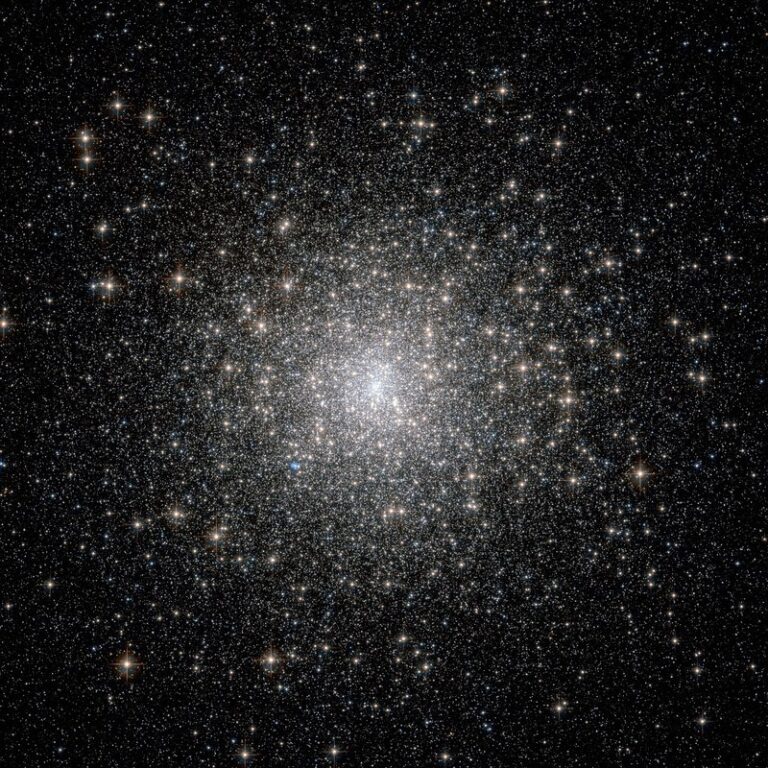
What are Globular Clusters?
Globular clusters are dense aggregations of stars that can be found at the outskirts of galaxies, and understanding what they are is a great place to start our exploration of these cosmic wonders. Let’s take a closer look!
Formation and Structure
Globular clusters are among the oldest and most enduring structures within our galaxy. Their formation is thought to have occurred during the early universe’s star-forming era. Specifically, this period is associated with the reionization of gas clouds that led to the creation of massive stars. These young stars eventually exploded as supernovae, dispersing heavy elements throughout their surroundings.
As matter accumulated in dense regions, gravity sparked the formation of globular clusters. The first stars within these clusters ignited hydrogen fusion through nuclear reactions. This process marked a pivotal moment in cosmic history – it laid the groundwork for subsequent star birth and death events that continue to shape our galaxy’s structure today.
The chemical makeup of modern globular clusters reflects their ancient origins, with elements forged during supernovae explosions serving as building blocks for new stars.
Characteristics and Types
Globular clusters are remarkable astronomical entities that exhibit distinct characteristics setting them apart from other star cluster types. One of their most striking features is their spherical shape, which is a result of their high density and large mass. This density leads to a relatively small size compared to other galaxies, with diameters ranging between 10-100 light-years.
Another key characteristic is the metallicity of globular clusters, which refers to the abundance of elements heavier than hydrogen and helium within these objects. Globular clusters tend to have lower metallicity compared to open clusters, meaning their constituent stars are often composed mostly of hydrogen and helium. This low metallicity results from the rapid star formation that occurred in the early universe.
Globular clusters can be broadly classified into two main types: young globulars, which contain a high proportion of blue stragglers and show evidence of recent star formation, and old globulars, characterized by their predominantly red giant populations. These classifications are essential for understanding the complex evolutionary histories of these celestial bodies.
Observations and Discoveries
As we venture deeper into the world of globular clusters, let’s take a closer look at some fascinating observations and discoveries that have shed new light on these cosmic wonders.
History of Discovery
Globular clusters have been fascinating astronomers for centuries. The earliest recorded observation of these massive star clusters dates back to ancient civilizations, with the Greek philosopher Aristotle being one of the first known individuals to note their existence around 350 BCE.
Fast-forwarding to modern times, the discovery of globular clusters continued to captivate scientists. In the 17th century, Galileo Galilei used his telescope to observe M13 in Hercules and described it as a “hive or cluster” of stars. This marked one of the first systematic studies of globular clusters.
However, it wasn’t until the 20th century that astronomers began to truly understand the nature and significance of these star clusters. The discovery of dark matter in the 1970s led to a new appreciation for globular clusters as gravitational probes of galaxy evolution. Today, astronomers use advanced telescopes like Hubble and Chandra to study globular clusters, gaining insights into their formation, structure, and interactions with their host galaxies.
As we continue to explore and understand globular clusters, researchers are now using observations from space-based missions like Gaia and LSST to refine our understanding of these ancient structures. By studying the history of globular cluster discovery, we can appreciate the remarkable journey that has led us to this point in time, with much still to be uncovered about these enigmatic objects.
Key Features and Properties
Globular clusters are complex and fascinating objects that continue to intrigue astronomers and astrophysicists. At their core, they possess several key features and properties that set them apart from other celestial bodies.
In terms of size, globular clusters can vary greatly, ranging from a few light-years in diameter to over 150 light-years across. For instance, Omega Centauri, the largest known globular cluster, spans an impressive 150 light-years in diameter, containing hundreds of thousands of stars. On the other hand, some smaller globular clusters may have diameters as small as 10 light-years.
As for mass, globular clusters are often much more massive than they appear to be, with some containing a staggering amount of dark matter that makes up nearly half their total mass. This unique property allows them to hold onto stars and maintain their structure despite the intense gravitational forces at play within the cluster.
Their luminosity is another defining characteristic, as globular clusters can shine with incredible brightness due to the collective light of their constituent stars. Some estimates suggest that the brightest globular clusters emit as much light as an entire galaxy!
Importance and Implications
Understanding the importance of globular clusters is crucial, as they can reveal secrets about the universe’s formation and evolution, and their study has far-reaching implications for astronomy.
Role in Understanding Galaxy Evolution
Globular clusters play a crucial role in understanding galaxy evolution. These ancient collections of stars offer a unique window into the early universe’s structure and chemistry. By studying globular clusters, astronomers can gain insights into how galaxies formed and evolved over billions of years.
One key aspect is that globular clusters are thought to have formed during the earliest stages of galaxy formation. Their chemical composition provides a snapshot of the universe’s metallicity at the time of their birth. This makes them an essential tool for understanding the early universe’s structure, including the distribution of gas and dust.
Furthermore, globular clusters can also inform us about the merger history of galaxies. The similarities in chemical composition between globular clusters in different galaxies suggest that they may have shared a common progenitor. By analyzing these similarities, astronomers can reconstruct the evolutionary history of our galaxy and others.
In practical terms, studying globular clusters can help refine models of galaxy evolution. For example, observations of the globular cluster system of the Milky Way can be used to constrain models of how our galaxy formed and evolved over time.
Connection to Dark Matter and Dark Energy
Globular clusters have long been recognized as more than just fascinating cosmic entities; they also serve as crucial tools for unraveling the mysteries of dark matter and dark energy. These enigmatic components make up approximately 95% of the universe’s mass-energy budget, yet their nature remains shrouded in mystery.
The connection between globular clusters and dark matter is rooted in their gravitational interactions. By studying the dynamics of these clusters, astronomers can infer the presence and distribution of dark matter within them. For instance, observations have revealed that the rotation curves of many globular clusters are affected by unseen mass – a clear indication of dark matter at play.
Furthermore, some researchers believe that globular clusters may be key to understanding dark energy, which is thought to drive the accelerating expansion of the universe. By examining the evolution and structure of these clusters over cosmic timescales, scientists can gain insights into how dark energy impacts the large-scale distribution of matter.
While much remains to be discovered about dark matter and dark energy, globular clusters offer a valuable opportunity for researchers to make new connections between theory and observation.
Examples and Case Studies
Let’s dive into some real-world examples of globular clusters, highlighting their unique features and characteristics that set them apart from other celestial formations.
Famous Globular Clusters
Globular clusters are like cosmic cities, with hundreds of thousands to millions of stars densely packed together. Among these stellar aggregations, some stand out for their exceptional characteristics and the groundbreaking discoveries made from studying them. Let’s take a closer look at three famous globular clusters: Omega Centauri, 47 Tucanae, and M13.
Omega Centauri (NGC 5139) is the largest known globular cluster in the Milky Way, containing an estimated 10 million stars. Its sheer size and mass make it an ideal target for astronomers studying the evolution of galaxies. Researchers have discovered multiple stellar populations within Omega Centauri, suggesting a complex history of star formation.
47 Tucanae (NGC 104) is one of the brightest globular clusters in the sky, located near the Large Magellanic Cloud. Its high concentration of stars makes it an ideal laboratory for studying stellar interactions and the effects of tidal forces on star clusters. The cluster’s unique properties have also provided insights into the formation and evolution of globular clusters.
M13 (NGC 6205), also known as the Hercules Cluster, is a prominent globular cluster located in the constellation Hercules. With over 200,000 stars, M13 offers a glimpse into the structure and dynamics of these massive stellar aggregations. Astronomers have used M13 to study the distribution of stars within globular clusters and the role of dark matter in their evolution.
These three globular clusters not only showcase the diversity and complexity of our galaxy but also offer valuable opportunities for astronomers to advance their understanding of star formation, evolution, and the behavior of massive stellar systems. By studying these cosmic wonders, scientists can gain insights into the history and fate of galaxies like our own Milky Way.
Observational Challenges and Opportunities
Observing globular clusters comes with its own set of challenges. One significant issue is observational bias due to the Earth’s atmosphere. As light from these distant clusters passes through our atmosphere, it can be distorted and scattered, affecting the accuracy of observations. Moreover, technical limitations such as telescope resolution and sensitivity also play a crucial role in accurately capturing data.
Despite these challenges, there are opportunities for breakthroughs in instrumentation or data analysis techniques that could revolutionize how we observe globular clusters. For instance, advancements in spectroscopy have enabled scientists to analyze the chemical composition of stars within clusters more precisely than ever before. Similarly, new imaging techniques and software tools can help mitigate the effects of atmospheric distortion.
To overcome these limitations, astronomers often employ sophisticated data analysis methods that account for bias and uncertainty. This involves using algorithms to correct for instrumental and atmospheric effects, allowing researchers to extract valuable information from observations that would otherwise be unreliable.
Research and Future Directions
As we explore the mysteries of globular clusters, let’s dive into what scientists are currently researching and discover the exciting directions they’re taking to further our understanding of these cosmic wonders.
Current Research Frontiers
As we delve into the wonders of globular clusters, it’s essential to acknowledge that research is an ongoing process. Current research frontiers are pushing the boundaries of our understanding of these cosmic structures. One area of investigation is their role in galaxy formation simulations. Scientists use globular clusters as tracers of ancient star-forming events and mergers that have shaped the Milky Way over billions of years.
Researchers are also exploring the study of stellar populations within globular clusters, shedding light on the evolution of stars and their environments. This research has implications for our understanding of galactic archaeology, where scientists use globular clusters to reconstruct the history of galaxy formation. Another area of investigation is the unique properties of globular cluster’s massive black holes, offering insights into the growth and feeding mechanisms of these cosmic monsters.
These ongoing research initiatives highlight the importance of continued study in globular cluster science. By exploring their role in simulations and stellar populations, scientists can gain a deeper understanding of galaxy evolution, shedding new light on the formation and development of our cosmos.
Potential Breakthroughs and Future Prospects
As we delve into the mysteries of globular clusters, it’s essential to consider the potential breakthroughs that lie ahead. With continued advancements in observational techniques and theoretical models, our understanding of these ancient relics will undoubtedly evolve. One promising area of research is the development of more sophisticated spectroscopic analysis tools. By harnessing the power of advanced telescopes and algorithms, scientists can gain deeper insights into the composition and dynamics of globular clusters.
Imagine being able to map the intricate networks of dark matter within a cluster or pinpoint the exact moment when a star was born in one of these dense aggregations. These advancements will not only refine our understanding of globular clusters but also shed light on their role within the larger cosmic tapestry. Theoretical models, such as numerical simulations and analytic frameworks, will continue to play a crucial role in interpreting observational data and making predictions about the behavior of these enigmatic systems. By exploring new frontiers in research, we’ll undoubtedly uncover fresh perspectives on the evolution, structure, and place within the universe of globular clusters.
Frequently Asked Questions
How can I apply my knowledge of globular clusters to better understand galaxy evolution?
You can use the understanding of globular clusters’ formation and structure to better comprehend galaxy evolution by considering how these dense star clusters are connected to dark matter and dark energy. This involves recognizing that globular clusters are among the oldest structures within galaxies, serving as a window into the early universe’s star-forming era. By studying their properties and characteristics, you can gain insights into the complex processes shaping galaxy evolution.
Can I observe globular clusters without expensive equipment?
Yes, while professional-grade telescopes provide detailed views of globular clusters, observing these celestial objects is not limited to expert astronomers or those with extensive resources. With a good pair of binoculars or a small telescope, you can still appreciate the beauty and majesty of these star clusters on clear nights.
How do I distinguish between different types of globular clusters?
When attempting to identify various globular cluster types, focus on their distinct characteristics such as size, color, and brightness. Certain clusters may appear smaller, while others will be more densely packed with stars. Additionally, some may exhibit specific patterns or features that can help in their classification.
What are the common challenges when researching globular clusters?
Common challenges include dealing with vast distances between Earth and globular clusters, making direct observation difficult. Furthermore, the need for accurate distance measurements often requires complex calculations involving astronomical data and sophisticated algorithms.
Are there any notable examples of globular clusters that I can study further?
Yes, the Milky Way galaxy contains over 150 known globular clusters, with many more awaiting discovery in our own and other galaxies. Some of the most notable examples include Omega Centauri, M13, and M22, each offering unique insights into the formation and evolution of these celestial objects.