
Collecting or simply appreciating fine silverware can be a daunting task, especially when it comes to identifying and valuing pieces from esteemed patterns like Kings. This classic design has been adorning tables for over 150 years, with its intricate etchings and ornate details making it highly sought after by collectors. However, with so many reproductions flooding the market, discerning buyers must be able to identify authentic Kings pattern silverware. In this article, we’ll delve into the origins of the design, explore methods for authenticating pieces, provide expert care techniques, and offer guidance on building a valuable collection. By the end of this guide, you’ll be equipped with the knowledge to not only spot rare pieces but also properly care for your own Kings pattern silverware to preserve its beauty for generations.
A Brief History of Kings Pattern Silverware
The story of Kings Pattern silverware begins in 19th century England, where it quickly gained popularity among upper-class households. Its elegant design has been a staple of fine dining ever since.
Origins and Evolution
Kings pattern silverware originated in England during the mid-19th century. It was popularized by firms such as William and John Barnard of Birmingham, who produced intricate designs featuring foliage, scrollwork, and other motifs. The style quickly gained popularity among the British aristocracy and middle class.
Notable examples from this era include a circa 1850 dinner set in kings pattern produced by Barnard’s company, which features delicate florals and scrolls on the handle of each piece. Another example is a mid-century flatware service featuring robust foliage patterns, made by Elkington & Co., a prominent English silver manufacturer.
By the late 1800s, American companies such as Gorham Manufacturing Company began producing kings pattern pieces that emulated European designs. However, these early American versions often featured distinct modifications to suit American tastes, including more elaborate ornamentation and larger serving pieces. These adaptations demonstrate the evolution of kings pattern over time as it adapted to different markets and consumer preferences.
Key Characteristics and Periods
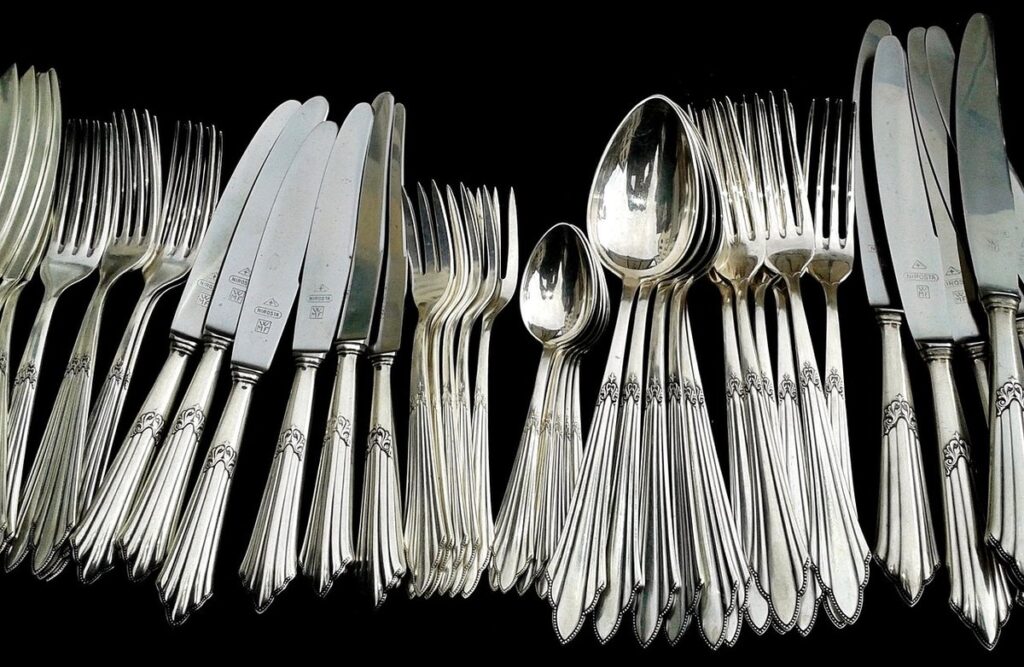
Kings pattern silverware is defined by its intricate motifs, which typically feature scrollwork, foliage, and floral patterns. These designs often incorporate subtle curves and geometric shapes to create a sense of movement and balance. The metal composition of kings pattern silverware can vary, but it’s most commonly found in sterling silver (92.5% silver). This high-quality material is prized for its durability, strength, and resistance to corrosion.
Distinct design periods also characterize kings pattern silverware. For example, Victorian-era pieces often feature more intricate, ornate designs with a focus on scrollwork and foliage patterns. Edwardian-era pieces, on the other hand, tend to be more restrained, with simpler lines and fewer motifs. Identifying the period in which your piece was made can help you understand its unique characteristics and potential value. When examining kings pattern silverware, pay attention to the metal stamp or hallmark, as this often indicates the maker’s mark, date of manufacture, and metal composition. By considering these factors, you can better appreciate the craftsmanship and historical context behind your piece.
Design Elements and Meanings
As you delve into the intricacies of kings pattern silverware, it’s essential to understand the symbolic meanings behind its various design elements. These subtle nuances can greatly enhance your appreciation for this exquisite table setting.
Symbolism in Kings Pattern Silverware
Kings pattern silverware often features a range of symbolic elements, each with its own meaning. Heraldic devices such as coats of arms and crests are common motifs, representing the family or lineage of the piece’s owner. These emblems may also signify the owner’s occupation, social status, or affiliations. For example, a pair of crossed swords might indicate military service, while a crown could symbolize nobility.
Flowers and foliage are another prominent feature in kings pattern silverware design. Roses, for instance, typically represent love and passion, while lilies often symbolize purity and innocence. Leaves and branches may be used to evoke a sense of abundance or fertility. In some cases, these motifs might be paired with heraldic devices to create a more complex symbolism.
When interpreting the symbolic meaning behind kings pattern silverware, it’s essential to consider the context in which they were created. This includes the historical period, cultural influences, and personal preferences of the piece’s owner. By understanding these elements, you can gain a deeper appreciation for the craftsmanship and storytelling embedded in each piece.
Iconography and Motifs
Coats of arms, monograms, and naturalistic patterns are staples of kings pattern silverware design. These motifs serve as visual representations of a piece’s history, family lineage, or even a particular region’s culture. Take the iconic Burdett coat of arms, for instance – this specific motif has been incorporated into numerous kings pattern designs throughout the centuries.
The use of coats of arms in kings pattern silverware often signified the owner’s noble or aristocratic status. These symbols were frequently displayed on family crests and coat of arms to showcase one’s lineage. When selecting a piece featuring a coat of arms, it’s essential to research its origins to appreciate the historical context.
Monograms, such as those found in kings pattern designs from the late 19th century, typically featured a single initial or initials intertwined with foliage or other ornate details. These personalized touches were often used on pieces meant for specific family members or occasions.
When examining naturalistic patterns in kings pattern silverware, look for specific elements that may indicate the piece’s origin or intended use – such as scenes of hunting or wildlife found in more masculine designs, and floral motifs commonly seen in feminine pieces.
Collecting and Identifying Kings Pattern Silverware
To start building your collection of Kings Pattern silverware, you’ll need to know how to identify genuine pieces and tell them apart from fakes. This requires a keen eye for detail and an understanding of the pattern’s unique features.
What to Look for When Buying or Selling
When buying or selling kings pattern silverware, it’s essential to verify its authenticity. Start by examining the hallmark system used during the piece’s production period. The British Hallmarks Act of 1907 and subsequent amendments established a standardized system of marks, including the maker’s mark, lion passant (for sterling silver), and date letter. Familiarize yourself with these hallmarks and look for any suspicious or inconsistent markings.
Seek expert appraisals from reputable dealers, auction houses, or antique specialists who are knowledgeable about kings pattern silverware. They can examine the piece’s craftsmanship, material quality, and provenance to determine its authenticity. Be cautious of sellers who refuse to provide documentation or access to their expert appraisals. A professional appraisal typically costs between $50 to $200, depending on the item’s value.
During an appraisal, ask the expert to note any repairs, restorations, or alterations that may have been made. This information can significantly impact the piece’s value and authenticity. By carefully examining hallmarks and seeking expert appraisals, you can confidently verify a kings pattern silverware piece’s genuineness and make informed purchasing or selling decisions.
Rarity and Value Factors
Mint marks can significantly impact a piece’s rarity and value. For example, a Kings Pattern serving dish from the 1890s with an “A” mint mark is relatively common, while one without a mint mark or bearing a less desirable “P” mark may be harder to find. Condition also plays a crucial role in determining value, with pieces showing little wear and tear commanding higher prices than those with significant scratches or dents.
Provenance, or the piece’s ownership history, can further enhance its value. If, for instance, a Kings Pattern dinner plate has been part of a prominent collection or was previously owned by a notable figure, this information can significantly increase its worth. However, it’s essential to verify provenance through documentation and authentication from reputable sources.
When evaluating the rarity and value of kings pattern silverware, examine the piece carefully for any distinguishing marks or features. Look for hallmarks, which can indicate the maker, date, and metal composition. Consider consulting a professional appraiser or expert in antique silverware to gain a more informed understanding of your piece’s value.
Care and Maintenance of Kings Pattern Silverware
To keep your beloved kings pattern silverware looking its best, proper care and maintenance are crucial to prevent tarnish and damage over time. Regular polishing is essential for their longevity.
Cleaning and Polishing Techniques
Avoid using harsh chemicals like bleach or ammonia, as they can damage the silver’s patina. Instead, mix a solution of warm water and mild dish soap. Dip a soft cloth into the solution, wring it out thoroughly, and gently wipe down each piece of silverware. For tougher stains, apply a small amount of baking soda to the affected area and rub it in with a clean, soft-bristled toothbrush. Rinse with lukewarm water and dry immediately with a soft cloth.
When polishing your kings pattern silverware, use a high-quality silver polish specifically designed for this type of metal. Apply a thin layer to a soft cloth and buff the silverware gently in a circular motion. Be sure to follow the manufacturer’s instructions for application and drying times. Avoid using electric buffers or other abrasive tools that can scratch the silver’s surface.
Regular polishing will help maintain your kings pattern silverware’s luster and prevent tarnish buildup. For long-term storage, wrap each piece individually in acid-free tissue paper and store them in a cool, dry place away from direct sunlight.
Storage and Display Considerations
Proper storage is crucial to maintaining the integrity of kings pattern silverware. To prevent scratches and damage, store each piece separately in a padded compartment or wrap it in a soft cloth. For smaller items like teaspoons and forks, consider using a small velvet-lined box or a dedicated silverware organizer. This will help keep them organized and protected from accidental mixing with other pieces.
For display purposes, choose a prominent location with minimal exposure to direct sunlight, which can cause tarnish and discoloration over time. Consider placing the most valuable or decorative items on a high shelf or in a glass-front cabinet to showcase their beauty while keeping them out of reach. A well-designed display case can also help maintain humidity levels and prevent moisture from seeping into the metal.
When not in use, store kings pattern silverware in a cool, dry place, away from direct sunlight. Avoid storing it near heating vents or fireplaces, as heat can cause metal expansion and contraction, leading to potential damage. By following these storage and display recommendations, you’ll be able to preserve the beauty and longevity of your kings pattern silverware for generations to come.
Contemporary Applications and Revivals
You might be surprised by how kings pattern silverware is being used today, from luxury gifts to statement pieces in modern homes and restaurants. Its timeless beauty has inspired new and innovative applications.
Modern Reproductions and Adaptations
Kings pattern silverware continues to captivate designers and manufacturers, who seek to reinterpret its classic elegance for modern tastes. The original design’s intricate foliage and florals have been reimagined in various materials, from stainless steel to 3D-printed plastics. For instance, the Kingsley UK brand offers a line of affordable, mass-produced silverware with a distinctly vintage flair.
Some designers prefer to deconstruct the classic pattern, applying its themes to entirely new forms. The Australian firm, Sutherland Silver, has created modernist serving pieces that evoke the spirit of kings pattern without literal reproduction. These innovative reinterpretations allow for fresh storytelling through metalwork, keeping the art form alive and vibrant.
When it comes to incorporating original or reproduction kings pattern silverware into your own home decor, consider the setting’s tone and style. Pair ornate antique pieces with sleek modern accents to create a striking contrast. Alternatively, collect vintage sets in varying conditions to showcase their unique histories.
The Revival of Traditional Craftsmanship
Artisanal producers are breathing new life into traditional craftsmanship in silverware-making. This revival is driven by a desire to preserve heritage techniques and honor the past while creating unique, high-quality pieces. In contrast to mass-produced silverware, artisanal producers focus on individualized design elements, like hand-engraved patterns or custom shapes.
Some notable examples include companies that partner with skilled silversmiths to create bespoke collections. For instance, a small workshop might work with a designer to craft a limited-edition series featuring intricate engravings inspired by historical patterns. This collaboration not only showcases traditional techniques but also introduces innovative designs.
Artisanal producers often prioritize using high-quality materials and environmentally friendly practices. They may choose to use recycled or sustainably sourced metals, reducing the production’s ecological footprint. By supporting these producers, collectors can own a piece of history while contributing to a more sustainable silverware industry.
Conclusion: Appreciating the Beauty of Kings Pattern Silverware
As we come to the end of our journey through the world of kings pattern silverware, let’s take a moment to appreciate its timeless beauty and enduring appeal.
Tips for New Collectors and Enthusiasts
For those new to collecting or learning about kings pattern silverware, it’s essential to start with an understanding of its historical significance and design characteristics. Begin by familiarizing yourself with the different hallmarks, which can indicate the maker, date, and quality of the piece. You’ll often find a combination of letters, numbers, and symbols that tell a story about the craftsmanship and materials used.
When examining potential pieces, look for signs of wear and tear, such as scratches, dents, or patination. This will help you determine their condition and authenticity. It’s also crucial to research reputable dealers, auction houses, and online marketplaces that specialize in antique silverware to avoid scams and ensure the legitimacy of your purchases.
Consider joining collector communities, forums, or social media groups where you can connect with fellow enthusiasts, share knowledge, and learn from experts. These platforms often feature discussions on restoration techniques, conservation methods, and best practices for caring for kings pattern silverware.
To get started with collecting, focus on high-quality reproductions or entry-level pieces that fit within your budget. As your collection grows, you’ll develop a deeper understanding of the artistry involved in creating each piece. Be patient, as building a reputable collection takes time and dedication. Set clear goals for yourself, whether it’s to acquire specific patterns or learn about restoration techniques. By following these steps and being mindful of the market and its nuances, you’ll be well on your way to becoming an accomplished collector of kings pattern silverware.
Frequently Asked Questions
Can I restore old kings pattern silverware myself?
Yes. With the right guidance and materials, you can attempt to restore your own kings pattern silverware. However, it’s essential to research proper techniques and safety precautions before attempting any restoration project.
How do I know if a piece of kings pattern silverware is genuine or a reproduction?
Look for hallmark marks, authentication documents, or expert appraisals that confirm the piece’s authenticity. Be wary of overly shiny finishes or inconsistent design elements, which may indicate a reproduction. Familiarize yourself with common hallmark systems and patterns specific to the era.
What if my kings pattern silverware has significant scratches or damage?
Yes, it is possible to repair damaged kings pattern silverware. Consult professional restoration services or experts in metalwork for guidance on repairing or replacing damaged areas without compromising the piece’s integrity.
Can I mix and match different eras of kings pattern silverware for a unique display?
While it may be tempting to combine pieces from various eras, doing so can create an aesthetically inconsistent look. Instead, focus on collecting pieces that share similar design characteristics or period styles to create a cohesive collection.
How do I maintain the patina on my antique kings pattern silverware over time?
Maintain your antique kings pattern silverware’s natural patina by storing it in a cool, dry place away from direct sunlight and extreme temperatures. Avoid harsh chemicals when cleaning; instead, use gentle polishing techniques to preserve its original finish.
Can I commission a custom piece of kings pattern silverware from an artisanal producer?
Yes, many skilled craftsmen offer bespoke services for creating unique pieces inspired by traditional kings pattern designs. Research reputable producers, discuss your vision with them, and ensure you understand the process, materials, and timeline involved in creating a custom piece.