
As you gaze up at the sky, chances are you’ve spotted a majestic hawk soaring overhead. But have you ever stopped to consider its younger counterpart? Juvenile hawks, in their characteristic brown and speckled plumage, may not be as showy as their mature counterparts, but they’re just as vital to maintaining ecosystem balance. These young birds, transitioning from fledgling to adulthood, require a specific set of skills and habitats to thrive. In this article, we’ll delve into the unique characteristics of juvenile hawks, exploring how they adapt to different environments and what they eat in the wild. We’ll also examine the pressing conservation efforts aimed at safeguarding these young birds’ survival and their crucial role in preserving biodiversity. By the end of this post, you’ll have a deeper understanding of the intricate world of juvenile hawks and their importance in the grand tapestry of nature.
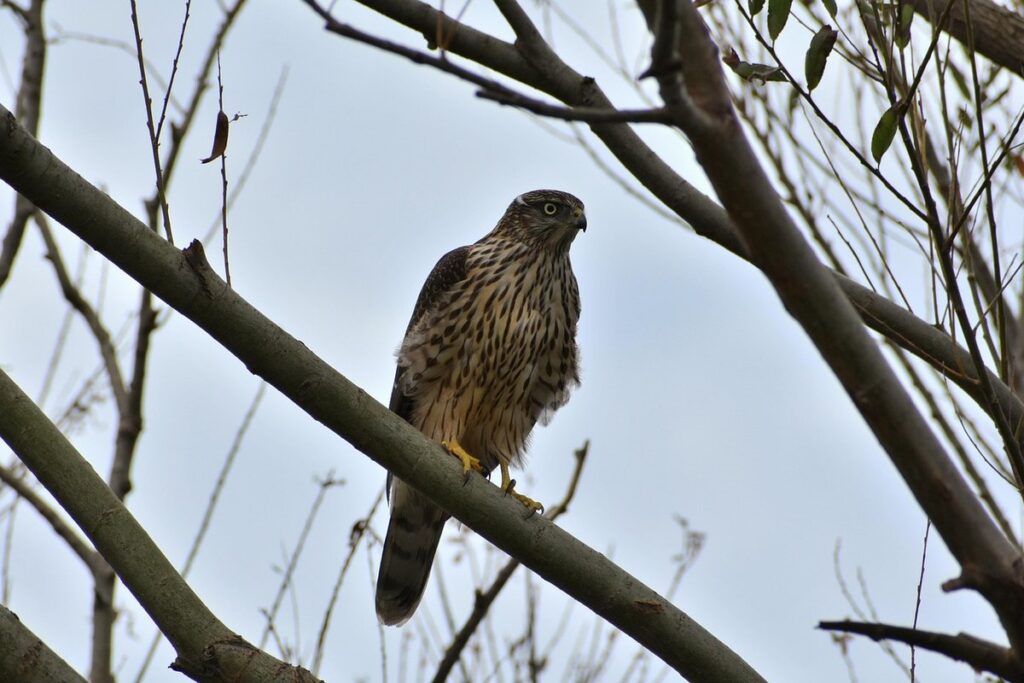
What is a Juvenile Hawk?
The term “juvenile hawk” can be confusing, as it’s not necessarily an age designation, but rather refers to hawks that exhibit certain physical characteristics. Let’s take a closer look at what defines these young birds of prey.
Characteristics of Young Hawks
Juvenile hawks exhibit distinct physical characteristics that set them apart from adult birds. At birth, young hawks are covered in a thick layer of down feathers, which provide insulation and help regulate their body temperature. As they grow, their plumage transforms, with juvenile hawks developing a more mottled or streaked appearance than adults.
In terms of size, juvenile hawks are typically smaller than adults, although the exact difference varies depending on the species. For example, young Red-tailed Hawks may weigh around 1-2 pounds (0.5-1 kg) at fledging, while adult birds can reach up to 3.5 pounds (1.6 kg). Young hawks also have a proportionally shorter wingspan and tail compared to adults.
Another notable difference is the coloration of juvenile hawks’ beaks and legs. While adult hawks sport bright yellow or orange talons and beaks, young birds often have more subdued, pale-colored appendages. As they mature, these features gradually darken to match those of adult hawks. Observing these physical characteristics can aid in identifying young hawks and distinguishing them from adults in the field.
Identification Challenges
Young hawks can be difficult to identify due to their resemblance to other bird species. One of the main reasons for this is the lack of distinctive markings on juvenile hawks. Unlike adult hawks, which develop unique plumage patterns and coloration as they mature, young hawks retain a more subtle appearance that makes them blend in with other birds.
For example, the juvenile red-tailed hawk, a common species found throughout much of North America, has a mottled brown coat that can be easily confused with that of a juvenile Swainson’s hawk. Additionally, young hawks often lack the distinctive eye rings or crown stripes that are characteristic of adult hawks.
To accurately identify a young hawk, it’s essential to observe its behavior and habitat. Look for signs such as the bird’s posture, wing shape, and tail length, which can be indicative of its species. However, even with these characteristics in mind, identification may still prove challenging. In cases where you’re unsure, consulting with an experienced birder or ornithologist can help provide a more accurate determination.
Habitat and Distribution
Juvenile hawks inhabit diverse ecosystems, ranging from vast deserts to dense forests. Let’s take a closer look at where these birds typically live and thrive during their early development stages.
Young Hawks’ First Homes
Juvenile hawks typically nest and raise their young in a variety of habitats, from forested areas to grasslands and even urban environments. In forests, they often choose mature trees with dense foliage, such as oak or pine, that provide shelter and protection from predators. These trees also offer an abundance of perches for hunting and roosting.
In grasslands, juvenile hawks tend to nest in areas with scattered trees or rocky outcroppings, which serve as a vantage point for scanning the surrounding landscape. This habitat allows them to easily spot small mammals, their primary prey, during this critical developmental stage.
Urban environments also provide suitable nesting sites for young hawks, often taking advantage of tall buildings, bridges, or power poles with ledges and rooftops that offer a safe perch. While it may seem counterintuitive, urban areas can be an ideal location for juvenile hawks to establish themselves due to the abundance of food sources and reduced competition from other predators.
When selecting a nesting site, juvenile hawks prioritize proximity to water sources, such as rivers or lakes, which provide a reliable supply of prey and also serve as a vital resource for survival during this period.
Migration Patterns
Juvenile hawks exhibit distinct migration patterns that vary depending on their species. While some young hawks follow the same migration routes as adults, others remain in their year-round habitats throughout their lives. The Red-tailed Hawk, for example, is known to migrate between its breeding grounds in North America and its wintering grounds in Central America.
In contrast, the Cooper’s Hawk and Sharp-shinned Hawk tend to remain in their year-round habitats, adjusting their behavior to adapt to changing food sources rather than migrating long distances. This difference in migratory behavior can be attributed to factors such as food availability, climate, and predator avoidance.
Some species of juvenile hawks may engage in altitudinal migration, where they move up or down mountains with the changing seasons to avoid extreme temperatures. For instance, the Swainson’s Hawk is known to migrate between its breeding grounds in North America and its wintering grounds in Argentina, often traveling thousands of miles each year.
It’s essential for researchers and bird enthusiasts to understand these migration patterns to better comprehend the unique needs and challenges faced by juvenile hawks. By studying their behavior, we can gain valuable insights into the complex interactions between species and their environments.
Diet and Hunting Habits
As a young hawk, finding reliable sources of food is crucial for growth and survival. We’ll examine how juvenile hawks hunt and what they typically eat in their early stages.
Feeding Habits of Young Hawks
Young hawks rely heavily on small mammals as a primary food source. They feed on rodents like voles, mice, and rabbits, often hunting them near their nests or in areas with high rodent activity. Insects and other invertebrates, such as grasshoppers, crickets, and worms, are also an essential part of their diet.
Juvenile hawks tend to focus on prey that is readily available and requires minimal effort to catch. This is because they still need to develop their hunting skills and build up their strength. A significant portion of a young hawk’s daily intake consists of small vertebrates like shrews, lizards, and snakes. In areas where these species are abundant, juvenile hawks may concentrate on feeding on them.
While their diet can vary depending on the season and location, the reliance on small mammals remains consistent across different habitats. This preference is likely due to the fact that young hawks have a relatively slow metabolism compared to adults, which means they need to eat frequently but not in large quantities.
Learning to Hunt
Young hawks typically begin their hunting education with observation. They watch as their parents stalk prey, swoop down for the kill, and bring back food to the nest. This observational phase is crucial, as it allows the young hawk to learn about stealth, patience, and strategy. Once they’ve observed enough, they’re encouraged to try their talons.
At first, the young hawks will attempt to catch small prey on their own, often with limited success. Their parents may intervene by bringing back live food or even demonstrating how to kill a struggling rodent. Over time, the young hawk’s skills improve as it practices and receives feedback from its parents.
In some cases, young hawks may even learn specific hunting techniques from their parents, such as how to hunt in groups or use different types of terrain to catch prey. For example, a parent may teach a young hawk how to hover over water, scanning the surface for fish and frogs. By learning these skills from experienced hunters, young hawks are able to develop into skilled predators themselves.
Behavior and Socialization
As juvenile hawks develop their flight skills, social interactions become a crucial part of their learning process. We’ll explore how they behave around other birds and what that means for their growth.
Family Ties
Juvenile hawks form strong bonds with their family members, particularly their parents. In fact, young hawks often stay with their parents for up to a year after fledging, during which time they receive crucial training and support. This close relationship allows the parents to teach their offspring essential hunting skills, such as how to catch prey, use talons, and navigate complex flight patterns.
The family dynamic also extends to siblings. In many cases, juvenile hawks will learn important social behaviors from their brothers and sisters, including territorial marking and dominance hierarchies. For example, researchers have observed that young hawks will often engage in “play-fighting” with each other, which helps them develop essential skills for survival.
To observe family ties in action, look for juvenile hawks perched together on a branch or engaging in aerial displays with their parents. These interactions are crucial for the development of young hawks and demonstrate the importance of family bonds in shaping their behavior and habitat use. By recognizing these relationships, bird enthusiasts can gain valuable insights into the complex social structures of hawk populations.
Independence and Leaving the Nest
Young hawks typically begin to venture out of their nest between 30 to 60 days after fledging. At first, they may still return to the nest for food and shelter, but as they gain confidence and hunting skills, they start to spend more time away from it. This is a critical period in their development, as they learn to fend for themselves and assert their independence.
During this time, parents continue to provide guidance and support, teaching their young ones essential survival skills and warning them of potential threats. The frequency and duration of these visits gradually decrease as the juvenile hawk becomes more self-sufficient.
A key indicator of a young hawk’s readiness to leave the nest is its ability to catch prey on its own. When they can consistently provide for themselves, it signals that they’re ready to take their first steps towards independence. This process often unfolds over several weeks or even months, with the juvenile hawk gradually increasing its distance from the nest and relying more heavily on its own hunting prowess.
Threats and Conservation Efforts
Juvenile hawks face numerous threats, from habitat destruction to climate change, which can impact their survival. We’ll examine these risks and explore conservation efforts underway to protect this vulnerable stage of development.
Predators and Mortality Rates
Juvenile hawks face numerous predators, both in their natural habitats and in urban areas. Owls, foxes, coyotes, and domestic cats are among the most common predators of young hawks. These birds often target nests and fledglings, taking advantage of the hawks’ vulnerability during this critical developmental stage.
Habitat loss and human activity also contribute significantly to mortality rates among juvenile hawks. As forests are cleared for development or agriculture, juvenile hawks may be forced to venture into urban areas in search of food and shelter, making them more susceptible to collisions with buildings or wind turbines. In addition, entanglement in barbed wire, electrocution on power lines, and poisoning from lead ammunition or pesticides pose significant threats.
It’s essential for conservation efforts to address these human-caused mortality factors, particularly in areas where habitat loss is most pronounced. By implementing measures such as reducing wind turbine blade height or using bird-friendly fencing, we can create safer environments for juvenile hawks to thrive.
Conservation Initiatives
Habitat preservation efforts are a crucial component of juvenile hawk conservation. Organizations like the HawkWatch International work with landowners and local communities to establish protected areas for hawks to nest, roost, and hunt. These sanctuaries provide a safe haven from human development, agriculture, and other threats that can fragment habitats.
Education programs aimed at children are also vital in conserving juvenile hawk populations. The Raptor Education Group offers interactive workshops and hands-on experiences that teach young people about hawk biology, habitat needs, and the importance of coexisting with wildlife. By fostering a sense of responsibility and empathy towards hawks, these programs help shape the next generation of conservationists.
Many organizations partner with schools to integrate raptor education into science curricula. This collaborative approach not only enhances students’ understanding of ornithology but also empowers them to become advocates for hawk conservation in their communities. By targeting both habitat preservation and education, we can better ensure the long-term survival of juvenile hawks.
Conclusion: The Importance of Juvenile Hawks
As we’ve explored the fascinating world of juvenile hawks, it’s time to take a closer look at why understanding their behavior and development is crucial for conservation efforts.
The Role in Ecosystem Balance
Juvenile hawks play a vital role in maintaining ecosystem balance and biodiversity. They serve as both predators and prey, regulating populations of small mammals, insects, and other birds. By controlling rodent numbers, juvenile hawks help to prevent overgrazing and maintain the health of vegetation.
In addition to their predatory role, young hawks also contribute to nutrient cycling through their scavenging activities. After a kill, juvenile hawks often cache excess food in various locations around their territory, dispersing nutrients across different areas. This behavior not only helps to redistribute energy but also supports other species that rely on these cached resources.
The loss of juvenile hawks can have cascading effects on ecosystem balance. For example, without the predation pressure exerted by young hawks, small mammal populations may surge, leading to overgrazing and degradation of vegetation. Furthermore, changes in food web dynamics can also impact other bird species that rely on juvenile hawks as prey or competitors.
Understanding the importance of juvenile hawks is crucial for effective conservation efforts. By recognizing their role in maintaining ecosystem balance, we can develop targeted strategies to protect these young birds and preserve the delicate balance of their ecosystems.
Final Thoughts on Conservation
Conserving juvenile hawk populations is crucial for maintaining a balanced ecosystem. While adult hawks are often the focus of conservation efforts, young birds play a vital role in the population’s overall health and resilience.
A key aspect of conservation involves preserving habitats that support juvenile hawk development. This includes protecting tall trees with dense foliage, which provide shelter and hunting grounds for young birds. It also means maintaining open areas with abundant prey populations, allowing juveniles to hone their hunting skills without struggling to find food.
Another essential consideration is reducing mortality rates among young hawks. This can be achieved by minimizing human impact on habitats, such as through the use of wind turbines or other infrastructure that may harm migrating birds. It’s also crucial to educate landowners and farmers about the importance of maintaining a safe distance from nesting sites and avoiding pesticide use, which can decimate hawk populations.
By taking these steps, we can ensure the long-term survival of juvenile hawks and maintain the delicate balance of ecosystems they inhabit. This not only preserves biodiversity but also contributes to overall environmental health.
Frequently Asked Questions
Can I spot a juvenile hawk in my backyard?
Yes, it’s possible to spot a juvenile hawk in your backyard if you live near a suitable habitat for hawks. Juvenile hawks can be found in a variety of environments, including urban areas with parks or green spaces. If you’re interested in spotting one, consider setting up a bird-watching station with binoculars and field guides.
How long does it take for a juvenile hawk to become an independent hunter?
It typically takes several months to a year or more for a juvenile hawk to become a skilled and independent hunter. During this time, they learn essential hunting skills from their parents through observation and hands-on experience. Be patient when observing young hawks, as they may make mistakes and require guidance.
What if I see an injured juvenile hawk? How should I proceed?
If you encounter an injured juvenile hawk, do not attempt to handle or touch it. Instead, contact a local wildlife rehabilitation center or conservation organization for advice on how to help the bird safely. These organizations often have trained staff who can provide assistance and care for injured wildlife.
Can I create a backyard habitat that attracts juvenile hawks?
Yes, you can create a backyard habitat that attracts juvenile hawks by providing suitable food sources, shelter, and water features. Consider planting native vegetation, installing a birdbath or pond, and leaving dead trees standing to provide perches for hunting. This will not only attract juvenile hawks but also support other local wildlife.
What’s the difference between a juvenile hawk and an adult hawk in terms of behavior?
Juvenile hawks tend to be more aggressive and curious than adult hawks, often engaging in playful behaviors like chasing or swooping. As they mature, their behavior becomes more subdued and focused on hunting and territory defense.