
If you’ve been keeping an eye on the night sky lately, you might be wondering if it’s full moon tonight. The full moon is one of the most recognizable and awe-inspiring natural events in our calendar, and its effects are felt far beyond just a pretty sight in the sky. For example, did you know that the full moon has a significant impact on tides, causing higher high tides and lower low tides? But it’s not just the oceans that respond to the lunar cycle – many animals also exhibit unique behaviors around full moon time, from migratory patterns to mating rituals.
As we explore the significance of the full moon, you’ll learn about its place in various cultures and traditions, from ancient myths to modern-day festivals. We’ll also explain how to check if it’s a full moon tonight, using some simple tools and techniques. By the end of this article, you’ll know exactly when and why the full moon is special, and perhaps even discover some new ways to appreciate its beauty and power.
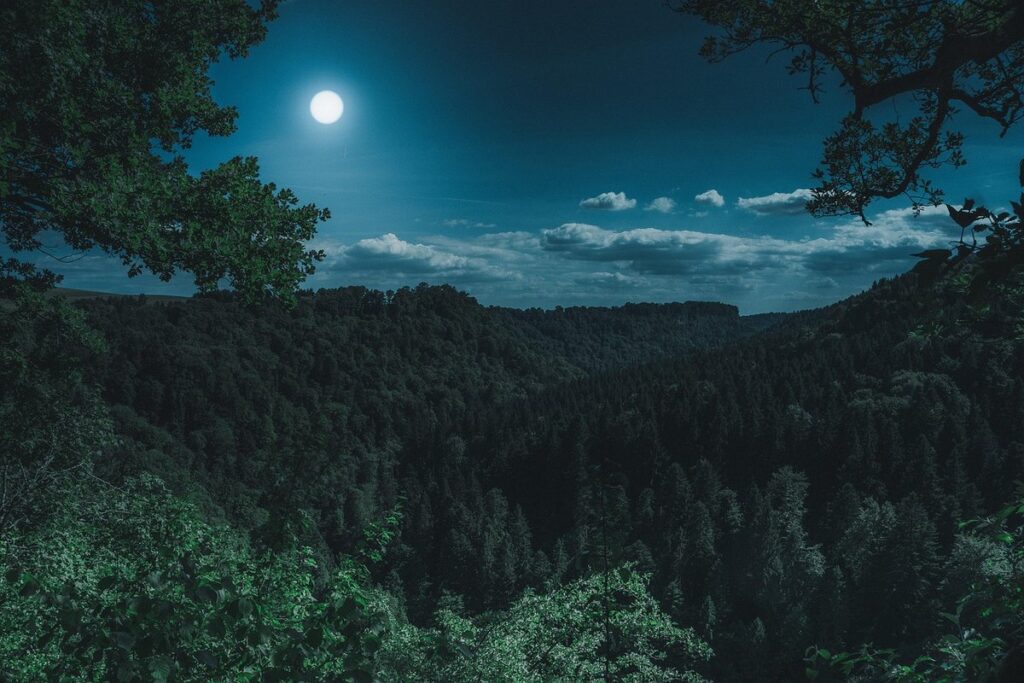
What is a Full Moon?
A full moon occurs when the entire face of the moon is illuminated by the sun, creating a spectacular sight in the night sky for us to observe and appreciate. This lunar event has been fascinating humans for centuries.
Definition and Characteristics
A full moon occurs when the Moon is positioned on the opposite side of Earth from the Sun, allowing its entire illuminated surface to be visible from our planet. This alignment is known as opposition. One of the key characteristics of a full moon is that it appears larger and brighter than other phases due to this optimal viewing angle.
Several distinct features distinguish a full moon from other lunar phases: the complete illumination of the Moon’s face, its maximum apparent size in the sky, and the noticeable effect on tides. The full moon is often associated with stronger tidal activity, as the gravitational pull of both Earth and the Sun combines to exert greater forces on our oceans. This increased tidal energy can sometimes lead to coastal flooding or erosion during peak high tide.
Phases of the Moon Explained
The moon’s position relative to Earth and the sun determines its phases. Leading up to a full moon, there are distinct phases: new moon, waxing crescent, first quarter, waxing gibbous, full moon, waning gibbous, last quarter, and waning crescent.
As the moon orbits Earth, it passes through these phases due to changing angles between itself, our planet, and the sun. The new moon occurs when the moon is positioned between Earth and the sun, making it invisible from our vantage point. As the moon moves away from this alignment, a small sliver of light appears on the right side in the waxing crescent phase.
The first quarter marks a 90-degree angle between the moon, Earth, and the sun. Now more than half of the illuminated surface is visible to us. The full moon phase occurs when the entire illuminated face of the moon is directed towards our planet. At this point, we can see the full disk of light from the reflected sunlight.
During a full moon, the entire near side of the moon is illuminated by the sun’s rays. This means that on any given night, there are two distinct times: before sunrise and after sunset, when the full moon is visible in the sky. Knowing these phases can help you plan your activities according to lunar timing.
How to Check if It’s Full Moon Tonight
Want to know if it’s full moon tonight? You can easily check using a few simple methods, including mobile apps and online lunar calendars.
Using Online Tools and Resources
You can check if it’s a full moon tonight using various online tools and resources. Websites like Space.com, NASA, and TimeAndDate offer detailed lunar calendars and phase tables. These websites provide accurate information on the current moon phase, including whether it’s a new moon, waxing crescent, first quarter, waning gibbous, or indeed full.
Mobile apps like Moon Phase Pro and The Photographer’s Ephemeris also allow you to view the current moon phase and plan photography shoots accordingly. Some calendars, such as those found on mobile devices, often display the lunar cycle for the month. You can set your device to show the calendar in a two-page spread layout or use an app that offers daily views of the moon phases.
Another option is to check websites specifically designed for astronomy enthusiasts and stargazers. These platforms offer advanced features such as astronomical calculations and ephemerides, which can help you determine if it’s a full moon tonight with precision.
Understanding Lunar Cycles and Calendars
A lunar calendar tracks the moon’s phases over time, helping you understand when a full moon occurs. There are several types of lunar cycles to consider: synodic months and tidal cycles. Synodic months measure the time it takes for the moon to return to its original position in the sky relative to the sun. This cycle is about 29.5 days long. Tidal cycles, on the other hand, refer to the rise and fall of ocean tides due to gravitational interactions between the Earth, moon, and sun. These cycles can take anywhere from 6 hours (for spring tides) to 18 hours (for neap tides). To use a lunar calendar effectively, consider the synodic month as your primary reference point. This will help you estimate when a full moon is likely to occur within a given year. Keep in mind that the exact timing of a full moon can vary depending on your location due to time zone differences and other celestial factors. Consult multiple sources or an online lunar calendar to ensure accuracy.
The Science Behind Full Moons
So, what actually happens during a full moon? Let’s break down the fascinating science behind this lunar phenomenon that’s been captivating humans for centuries.
Tidal Forces and Ocean Currents
Research has shown that full moons can significantly impact ocean currents, tides, and coastal erosion. The gravitational pull of the moon causes a slight increase in sea levels, known as tidal bulge, which is further amplified by wind patterns and atmospheric pressure. Studies have demonstrated that during full moons, there is an average increase of 5-10% in tidal amplitude, resulting in more pronounced tidal forces.
This increased tidal activity can lead to coastal erosion, particularly in areas with shallow water and exposed coastlines. For instance, the 2013 floods in New York’s coastal neighborhoods were exacerbated by a full moon, causing widespread damage and displacement. In contrast, some beaches experience enhanced sediment transport during full moons, which can be beneficial for beach replenishment efforts.
Understanding these lunar-driven ocean dynamics is crucial for predicting and mitigating coastal risks. Coastal managers and residents can prepare for increased tidal activity by monitoring moon phases, checking weather forecasts, and implementing necessary flood protection measures. By acknowledging the scientific relationship between full moons and ocean currents, we can better anticipate and adapt to these natural phenomena.
Lunar Cycles and Human Behavior
Some people believe that full moons can have a profound effect on human behavior. Claims range from increased crime rates to more births and heightened emotions. However, numerous studies have investigated these claims and found little evidence to support them.
One notable study examined the relationship between full moons and emergency room admissions. The researchers discovered no significant increase in violent or chaotic incidents during full moon phases compared to other lunar cycles. Another study analyzed data from a major city’s crime statistics over several years and found that crime rates remained consistent regardless of the lunar phase.
Some research has even suggested that any perceived changes in behavior might be due to other factors, such as weather patterns or social events coinciding with full moons. For instance, studies have linked increased births during full moon phases to the fact that medical staff often work longer shifts around these times and may notice more deliveries than usual due to fatigue rather than a genuine lunar influence.
Overall, while folklore suggests a connection between full moons and human behavior, scientific evidence suggests otherwise.
Full Moon and Cultural Significance
Different cultures associate full moons with various themes, from good fortune to chaos, reflecting their unique perspectives on the lunar cycle’s mystical energy. Let’s examine some of these fascinating examples up close.
Historical and Mythological Associations
Full moons have been imbued with spiritual, mystical, and supernatural significance across various cultures throughout history. In many ancient societies, full moons were associated with mythological events, such as the Greek legend of Lycaon, who was transformed into a wolf by the god Zeus during a full moon. Similarly, in Norse mythology, the werewolf-like creatures known as Ulfric were said to roam free under the light of the full moon.
In many cultures, full moons are also linked with supernatural events and omens. For instance, in some Native American tribes, a full moon is believed to be a time when the veil between the living and the dead is at its thinnest, allowing for communication with ancestors. In contrast, in European folklore, full moons were often associated with witchcraft and black magic.
It’s essential to note that these associations can vary greatly depending on the culture and region. Understanding these historical and mythological connections can provide insight into the symbolic significance of the full moon in our modern lives. By exploring these associations, you can tap into the rich cultural heritage surrounding the full moon and perhaps gain a deeper appreciation for its impact on human experience.
Modern-Day Celebrations and Traditions
Full moon celebrations have evolved over time, blending traditional practices with modern expressions. Many indigenous cultures still observe full moon rituals to honor the lunar cycle’s significance. For example, some Native American tribes gather for ceremonial dances and singing under the full moonlight. Similarly, some contemporary Pagans and Wiccans host full moon ceremonies, often incorporating elements like meditation, prayer, and symbolic offerings.
Festivals and events celebrating the full moon are also on the rise. Some notable examples include the Loi Krathong festival in Thailand, where people release floating lanterns onto rivers and streams, and the Full Moon Party in Thailand’s island of Koh Phangan, a popular event for travelers and locals alike. These gatherings not only commemorate the lunar cycle but also serve as opportunities for community building and self-expression.
If you’re interested in incorporating full moon celebrations into your own life, consider observing a digital detox during this time or taking a moment to connect with nature through outdoor activities like hiking or stargazing. You can also explore online resources and local event listings to find full moon ceremonies and gatherings happening near you.
Full Moon and the Environment
The full moon has long been associated with unusual weather patterns, tidal changes, and even subtle shifts in the natural world around us. Let’s take a closer look at these environmental effects.
Impact on Wildlife and Ecosystems
Full moons can significantly impact wildlife behavior, with many species responding to the increased lunar illumination. Research has shown that nocturnal animals like wolves and owls are more active during full moon nights, while diurnal species tend to be less active due to the brighter light. For example, a study in Yellowstone National Park found that wolf packs were 25% more active during full moon periods.
Migration patterns can also be influenced by full moons. Many bird species migrate at night, using visual cues like the lunar cycle to guide their journey. In some cases, full moon migration patterns have been linked to changes in food availability and predator avoidance strategies. Conservation efforts often take these lunar influences into account when designing wildlife management plans.
In fact, scientists recommend that researchers and conservationists plan fieldwork around full moons to minimize disruption to wildlife behavior. This is particularly important for nocturnal species like sea turtles and birds of prey, which are vulnerable to human disturbance during critical breeding or migration periods. By understanding the role of full moons in shaping wildlife patterns, we can develop more effective conservation strategies that respect the natural behaviors of these species.
Understanding Lunar Cycles in Agriculture
Many farmers and agriculturalists have long recognized the benefits of synchronizing their activities with lunar cycles. By planting and harvesting during specific moon phases, they can tap into subtle influences on soil moisture, plant growth, and pest control. This practice is often referred to as “moon gardening.” For instance, some gardeners swear by planting seeds during the new moon phase, when roots are said to grow downward more vigorously, promoting healthier root development.
Other farmers use lunar cycles to inform pruning and harvesting activities. During the full moon, plants tend to release more water vapor through their leaves, making it a good time for pruning to minimize moisture loss. Conversely, the waning crescent moon is often used for harvesting, as the gentle decline in plant energy can help prevent spoilage.
By paying attention to lunar cycles, gardeners and farmers can develop a deeper understanding of their crops’ needs and behavior. This knowledge allows them to adapt their schedules to optimize growth, reduce waste, and promote more sustainable agricultural practices.
Frequently Asked Questions (FAQs)
We’ve anticipated some common questions you might have after learning more about lunar cycles, so we’re addressing them here to provide further clarity. Let’s take a look at what you want to know.
Debunking Common Myths About Full Moons
One of the most enduring myths about full moons is their supposed effect on human behavior. Many people believe that a full moon amplifies aggression, leading to increased crime rates and chaos on the streets. However, numerous studies have failed to support this claim. A review of over 25 years’ worth of data from multiple countries found no correlation between full moons and rises in violent or erratic behavior.
Another common myth is that full moons trigger natural disasters like earthquakes, volcanic eruptions, and tsunamis. This notion likely stems from the ancient Greek concept of a “mad moon” driving extreme weather events. Yet, research has consistently shown that seismic activity and other geological phenomena are largely independent of lunar cycles. For example, a study analyzing 30 years’ worth of earthquake data in Japan found no significant correlation between full moons and increased seismic activity.
If you’re concerned about your own behavior or mood during a full moon, consider this: the actual effects on human psychology are relatively minor. Some people may experience heightened emotions or sleep disturbances due to the moon’s gravitational pull, but these effects are generally mild and temporary.
How to Make the Most of a Full Moon Night
A full moon night is a rare opportunity to connect with the lunar cycle on a deeper level. To make the most of it, try stargazing from a dark location, where the lack of light pollution will allow you to see more stars and planets in the night sky. Bring binoculars or a telescope to get a closer look at the moon’s surface features.
For photographers, full moon nights offer unique lighting conditions that can create striking images. Experiment with different angles and compositions, taking advantage of the soft, lunar glow to illuminate your subject. Consider using long exposure shots to capture the movement of clouds across the moon.
Other activities you might enjoy on a full moon night include holding a moon ceremony or ritual, practicing yoga under its light, or simply spending time in nature, appreciating the beauty and wonder of the night sky. To enhance this experience, try incorporating lunar-related practices into your daily routine, such as tracking the phases of the moon or setting intentions according to their energies.
Frequently Asked Questions
What If I Want to Plan Activities Around the Full Moon but Don’t Know When It Will Occur Next?
Yes, it’s easy to plan activities around the full moon by consulting lunar calendars or online tools that provide information on upcoming full moon dates. These resources often offer notifications and reminders so you can stay informed about the lunar cycle.
Can I Use the Full Moon as a Natural Indicator for Planting or Harvesting Crops?
Yes, many farmers and agriculturalists use lunar cycles to inform their planting and harvesting activities. By observing the phases of the moon, they can determine the optimal times for sowing seeds, transplanting seedlings, and harvesting crops. However, it’s essential to note that this practice is not a substitute for traditional farming methods.
How Do I Take Advantage of the Full Moon for Stargazing or Photography?
To make the most of a full moon night, find a location with minimal light pollution and set up your equipment accordingly. Bring binoculars or a telescope to observe the lunar surface in detail, and consider using a camera with a wide-angle lens to capture stunning photographs of the full moon.
Is It Possible for the Full Moon to Have an Impact on My Sleep Patterns?
No, there is no scientific evidence to suggest that the full moon has a direct impact on human sleep patterns. While some people may claim to experience changes in their sleep patterns during full moons, these claims are largely anecdotal and not supported by empirical research.
Can I Use the Full Moon to Inform My Workout or Exercise Routine?
Some individuals believe that the full moon’s gravitational pull can have an effect on the body’s energy and motivation levels. While this is a topic of ongoing debate, some people claim that exercising during the full moon phase can increase their energy and athletic performance. However, more research is needed to confirm these claims.