
Jupiter, our solar system’s largest planet, has long been shrouded in mystery, particularly when it comes to its extensive moon system. While you might know that Jupiter has many moons, the exact number is often debated and discussed among astronomers. In reality, NASA missions like Juno and Europa Clipper have significantly advanced our understanding of these celestial bodies. As a result, we now know that Jupiter’s moon system comprises over 92 known moons, each with its unique characteristics and features. This staggering number makes Jupiter’s moon system one of the most extensive in our solar system. In this article, we’ll take a closer look at Jupiter’s numerous moons and explore how NASA missions have helped us better comprehend these enigmatic bodies, ultimately shedding light on their significance within the Jupiter system. By the end of this article, you’ll be able to grasp just how diverse and fascinating Jupiter’s moon system truly is.
The Discovery and Exploration of Jupiter’s Moons
Jupiter’s extensive moon system is one of the most fascinating aspects of our solar system, with a staggering number of celestial bodies waiting to be explored. Let’s take a closer look at how scientists discovered and have since been studying Jupiter’s numerous moons over time.
Early Observations and Missions
Galileo Galilei made a groundbreaking observation on January 7, 1610. Using his telescope, he discovered four moons orbiting Jupiter: Io, Europa, Ganymede, and Callisto. These observations revolutionized our understanding of the solar system. Prior to this discovery, it was believed that only six planets orbited the Sun.
The early telescopic discoveries laid the groundwork for future missions to explore Jupiter’s moon system. In the following centuries, astronomers continued to observe and catalog new moons using improved telescope technology. The Voyager 1 spacecraft flew by Jupiter in 1979, providing the first close-up images of several moons.
The Galileo spacecraft arrived at Jupiter in 1995, carrying a suite of instruments designed to study the planet’s atmosphere and magnetic field as well as its moons. This mission greatly expanded our knowledge of Jupiter’s moon system, including their orbital characteristics and surface features. The discoveries made by these early missions paved the way for more sophisticated and comprehensive studies of Jupiter’s moons in the decades that followed.
NASA’s New Frontiers Program and the Exploration of Jupiter’s Moons
The NASA New Frontiers Program has played a crucial role in advancing our understanding of Jupiter’s moons. Two notable missions within this program are Juno and Europa Clipper, both of which have provided groundbreaking insights into the Jupiter system.
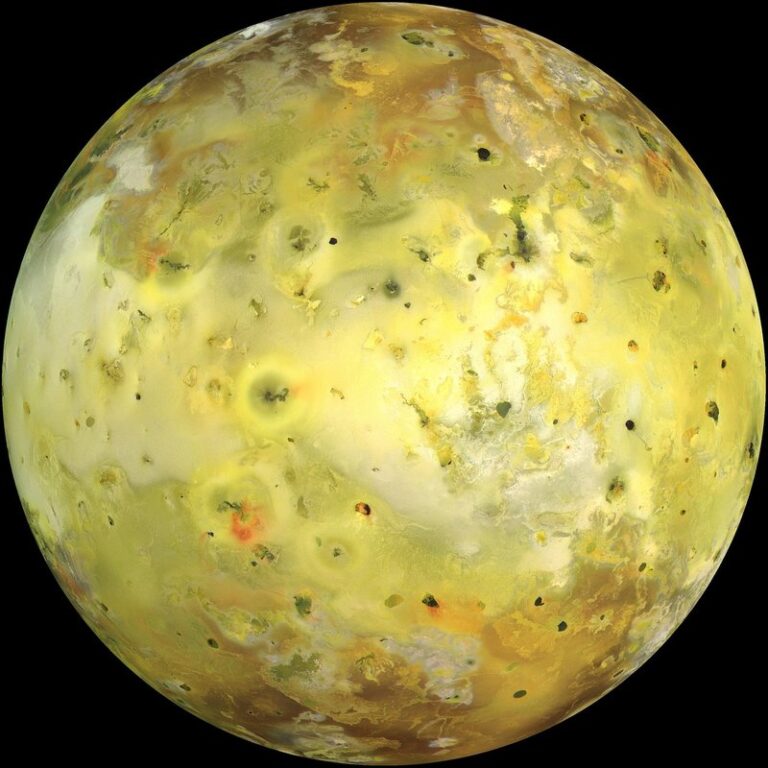
Launched in 2011, the Juno mission was designed to study Jupiter’s atmosphere and magnetic field. However, its findings have also significantly expanded our knowledge of the planet’s moons. The mission has observed the aurora-like light shows on Io and other volcanic activity on the moon. These observations have helped scientists better understand the complex interactions between Jupiter’s magnetic field and its moons.
Europa Clipper, scheduled for launch in the mid-2020s, will focus specifically on exploring Europa, one of Jupiter’s largest and most enigmatic moons. The mission aims to study Europa’s subsurface ocean and search for signs of life. Data from these missions has significantly advanced our understanding of Jupiter’s moon system, providing valuable insights into the complex relationships between the planet and its numerous satellites.
The Number of Moons Orbiting Jupiter
Jupiter, the largest planet in our solar system, has a staggering number of moons that orbit around it. Let’s take a closer look at just how many moons call Jupiter home.
Current Count: 92+ Known Moons
The process of counting and identifying new moons around Jupiter is a complex one. Astronomers use a combination of observations from space-based telescopes and ground-based observatories to detect these small, rocky bodies. When a new moon is discovered, its orbit is carefully measured to determine if it’s truly bound to Jupiter rather than a passing asteroid or comet.
The discovery process often involves analyzing large datasets collected by missions like the Hubble Space Telescope and the European Space Agency’s Gaia mission. These datasets are then compared against catalogs of known asteroids and comets to rule out any potential matches. If a new object is deemed to be orbiting Jupiter, its size, shape, and composition can be determined through further observations.
As of now, there are over 92 confirmed moons orbiting Jupiter, with many more awaiting official confirmation. The sheer number of these small bodies makes it challenging for astronomers to keep track of them all. To put this in perspective, the four largest moons – Io, Europa, Ganymede, and Callisto – account for only about 4% of the total known population. This highlights the vast diversity of Jupiter’s moon system, with many smaller, irregularly shaped bodies playing a crucial role in our understanding of planetary formation and evolution.
Characteristics of Jupiter’s Moons
Jupiter’s moons can be broadly categorized into two types based on their physical characteristics and orbital patterns. The Galilean moons – Io, Europa, Ganymede, and Callisto – are the largest and most notable of Jupiter’s moons. These four moons have distinct features that set them apart from the smaller, irregular moons.
Io is the most volcanically active body in the solar system, with hundreds of active volcanoes and a surface covered in lava flows and volcanic debris. Europa, on the other hand, has a thick icy crust covering a global ocean, making it a prime target for astrobiological research. Ganymede is the largest moon in the solar system, even bigger than the planet Mercury, and has its own magnetic field. Callisto, the outermost Galilean moon, has a cratered surface indicating a geologically inactive interior.
In contrast, the smaller irregular moons are thought to be captured asteroids or Kuiper Belt objects that have been gravitationally bound to Jupiter’s orbit. These moons have highly eccentric orbits and are often found in the outer reaches of Jupiter’s system. Their composition is typically rocky or icy, with some showing evidence of water ice on their surfaces.
The Galilean Moons: Io, Europa, Ganymede, and Callisto
Jupiter’s four largest moons are some of its most fascinating satellites, each with unique characteristics that make them stand out from the rest. Let’s take a closer look at Io, Europa, Ganymede, and Callisto, the Galilean quartet that has captivated astronomers for centuries.
Unique Features and Characteristics
The four Galilean moons of Jupiter are each unique and fascinating in their own right. Io, for instance, is the largest moon in the solar system, with a diameter of approximately 2,264 miles (3,643 kilometers). Its size is due to its composition, which is primarily silicate rock, similar to Earth’s crust.
Europa, on the other hand, has a surface composed almost entirely of water ice. This makes it an intriguing candidate for hosting life beneath its icy crust. Scientists believe that Europa’s subsurface ocean could potentially harbor conditions suitable for life, making it a prime target in the search for extraterrestrial life.
Ganymede, the largest moon of Jupiter and the second-largest moon in the solar system, has its own magnetic field. This is a rare feature among moons, and one that scientists are eager to study further. Ganymede’s magnetic field is thought to be powered by tidal heating, caused by Jupiter’s gravitational pull on the moon.
Callisto is the outermost of the four Galilean moons and has a surface composed primarily of water ice mixed with darker organic material. It is also one of the oldest objects in the solar system, dating back over 4 billion years to the early days of the Sun’s formation. Scientists are particularly interested in Callisto because its ancient surface provides valuable insights into the moon’s composition and geological history.
Each of these moons offers scientists a unique opportunity to learn more about the formation and evolution of our solar system. By studying their distinct features, composition, and potential for life, researchers can gain valuable insights into the complex processes that have shaped the universe over billions of years.
Moons Beyond the Galilean Group: Exploring the Smaller Moons
Beyond the well-known Galilean moons, Jupiter has a multitude of smaller satellites waiting to be explored. Let’s take a closer look at these lesser-known worlds orbiting our largest planet.
The Irregular Moons
Jupiter’s vast moon system includes not only the four large Galilean moons but also a plethora of smaller, irregular bodies. These moons range in size from about 10 kilometers to approximately 100 kilometers in diameter and have highly eccentric orbits, often taking them far beyond Jupiter’s main ring system. One notable example is Himalia, which has an orbital period of around 250 Earth days and a prograde orbit that brings it relatively close to the planet.
Elara is another significant irregular moon, with a sizeable 76-kilometer diameter and an orbital eccentricity that carries it as far as 1.5 astronomical units from Jupiter. Its highly inclined orbit causes Elara to pass above or below the plane of the main ring system, adding to its uniqueness among Jupiter’s moons.
While their sizes and orbits vary, many irregular moons are thought to have formed from a debris disk left over after Jupiter’s formation. Some scientists propose that these smaller bodies may be remnants of material captured by Jupiter during its migration through the solar system. However, more research is needed to confirm this theory and explore other possible origins for these enigmatic moons.
In terms of orbital characteristics, irregular moons like Himalia and Elara tend to have much higher inclinations than their Galilean counterparts. This can cause them to cross paths with Jupiter’s ring system or even collide with the planet itself under certain circumstances. Understanding the orbital dynamics of these smaller bodies is crucial for predicting potential hazards and refining our understanding of Jupiter’s complex gravitational environment.
Keep in mind that many irregular moons remain undiscovered, particularly those beyond Jupiter’s main ring system. Future missions and observations will likely uncover more of these hidden worlds, expanding our knowledge of the Jupiter system and its intriguing assortment of smaller moons.
Moon Formation Theories Around Gas Giants
Let’s take a closer look at how scientists believe some of Jupiter’s moons formed, including those thought to be captured by its massive gravitational pull. One prominent theory suggests a connection to nearby gas giants.
Key Theories
Jupiter’s moon system is one of the most extensive and unique in our solar system. The gas giant’s massive size and gravitational influence play a crucial role in shaping its lunar landscape. According to current theories, there are two primary ways gas giants like Jupiter form and capture or create their moons: through the accretion of small particles in the early stages of planetary formation and through the capture of existing objects in the surrounding disk.
The Grand Tack hypothesis suggests that Jupiter’s massive size and gravitational influence caused it to migrate inward during the solar system’s early stages, capturing and ejecting many smaller bodies in its path. This theory is supported by simulations showing that Jupiter’s current orbital position would have been too close to the Sun for gas giants of similar mass to form.
In contrast, the Nice Model proposes that Jupiter formed at a greater distance from the Sun and then migrated outward due to gravitational interactions with other planets. During this process, it captured many small objects in its vicinity, including asteroids and comets. This theory is also supported by observations of the solar system’s current configuration and the distribution of small bodies.
Jupiter’s moon system is unique in that it contains both large, regular moons like Ganymede and Callisto, as well as smaller, irregular moons. The diversity of Jupiter’s moons is thought to be a result of its complex formation history, which involved both accretion and capture processes. Understanding these theories provides valuable insights into the formation and evolution of our solar system, highlighting the importance of continued research into the mysteries of planetary science.
Scientific Importance of Studying Jupiter’s Moons
Jupiter’s moons offer a fascinating window into the formation and evolution of our solar system, each one unique and telling us something new about its parent planet. Let’s take a closer look at their scientific significance.
Insights into Planetary Formation and Evolution
Studying Jupiter’s moons offers a unique window into the planetary formation and evolution process. The gas giant’s extensive moon system provides valuable insights into how planets acquire their satellite populations during the early stages of solar system development.
One key theory is that many moons are formed from the leftover material in the disk of gas and dust surrounding the young Sun. This material coalesced to form small bodies, which eventually collided and merged with other objects or were perturbed by nearby gravitational forces. As a result, Jupiter’s moons display a range of characteristics, from the heavily cratered surface of Callisto to the volcanic landscapes of Io.
Another theory suggests that Jupiter’s massive gravity played a crucial role in the formation and migration of its satellites. The gas giant’s immense mass would have drawn in surrounding material, creating an environment where small bodies could grow and collide with other objects. This process, combined with the effects of nearby gravitational forces, may have contributed to the irregular shapes and orbits observed among Jupiter’s smaller moons.
Understanding how Jupiter’s moons formed and evolved contributes significantly to our knowledge of planetary formation and migration. By studying these satellites, scientists can gain insights into the early stages of solar system development, including the processes that shaped the architecture of the inner solar system. The unique properties of each moon provide a valuable laboratory for testing theories about planetary evolution, ultimately shedding light on the history of our own planet and its place within the solar system.
Conclusion: The Continuing Exploration of Jupiter’s Moons
As we conclude our journey through the fascinating world of Jupiter’s moons, let’s take a moment to reflect on what still remains to be discovered and explored.
Future Missions and Research Directions
Jupiter’s moon system is a complex and fascinating subject that continues to captivate scientists and astronomers around the world. Despite significant progress in understanding the Jupiter system, there remains much to be discovered and explored.
The Europa Clipper mission, set to launch in the mid-2020s, will focus on exploring the icy surface of Europa, one of Jupiter’s largest moons. The mission aims to provide insights into the moon’s subsurface ocean, which is believed to harbor conditions suitable for life. This research has significant implications for our understanding of planetary formation and evolution.
Another upcoming mission, the Juno Legacy Mission, will build upon the success of the Juno spacecraft, which has been orbiting Jupiter since 2016. The new mission will focus on exploring the magnetic field and radiation belts surrounding Jupiter, providing valuable data on the planet’s internal dynamics.
In addition to these missions, ongoing research projects are shedding light on the formation and evolution of the Jupiter system. For example, scientists have discovered a population of small, irregular moons orbiting Jupiter at extreme distances. These findings suggest that the moon system may be more complex than previously thought, with possible implications for our understanding of planetary formation.
To further advance our understanding of the Jupiter system, continued exploration and research are essential. This will involve leveraging new technologies, such as advanced telescopes and spacecraft instrumentation, to study the moons in greater detail. By doing so, scientists can gain a deeper understanding of the complex processes that have shaped the Jupiter system over billions of years.
The ongoing exploration of the Jupiter moon system has significant implications for our understanding of the universe. Continued research and missions will provide valuable insights into planetary formation, evolution, and potential habitability, helping us to better understand the complex and dynamic nature of our solar system.
Frequently Asked Questions
Can I see images of Jupiter’s moons up close?
Yes, the Juno spacecraft has captured stunning high-resolution images of Jupiter’s moons, including Io and Europa. These images have greatly enhanced our understanding of these celestial bodies’ surface features and geology.
How long will it take for scientists to explore all 92+ known moons of Jupiter?
The exploration of Jupiter’s moon system is an ongoing process that will likely take several decades to complete. NASA has planned future missions, such as the Europa Clipper, which will focus on specific moons like Europa and Ganymede.
What if I want to study the moons of Jupiter in my backyard using a telescope? Can it be done?
Yes, with a moderate-sized telescope, you can observe some of Jupiter’s larger moons. However, be aware that observing smaller or irregular moons may require more advanced equipment or expertise. Be sure to follow proper observing techniques and safety guidelines.
Are there any potential hazards associated with exploring Jupiter’s moon system?
Yes, the extreme radiation environment near Jupiter poses significant challenges for spacecraft designers. Additionally, some of Jupiter’s larger moons, like Io, have intense volcanic activity that could potentially harm both humans and electronic equipment.
Can I visit any of Jupiter’s moons in person?
No, due to the vast distances involved and the harsh conditions on many of Jupiter’s moons, human exploration is not currently feasible or safe. However, scientists continue to study these celestial bodies using robotic missions and virtual explorations.