
Asteroid observation is not just about tracking potentially hazardous space rocks that could collide with Earth. While threat mitigation is an essential aspect of this field, there’s more to asteroid research than just predicting and preventing impacts. In fact, studying asteroids can reveal insights into the formation and evolution of our solar system, providing valuable information for scientists trying to understand how planets like ours came to be.
By examining different types of asteroids, from ancient relics of planetary differentiation to remnants of destroyed bodies, researchers can gain a deeper understanding of celestial mechanics and the dynamics that govern our cosmic neighborhood. Professional efforts to track asteroids are ongoing, with astronomers employing various observation techniques to catalog these objects and predict their orbits. This article will take you through the world of asteroid observation, covering types, techniques, and the benefits that extend far beyond threat mitigation, allowing you to understand the significance of this field by the end of it.
Understanding Asteroids and Their Importance
Let’s start by exploring what asteroids are, where they come from, and why understanding them is crucial for astronomers and space enthusiasts alike today. You’ll learn about their composition and behavior in this next section.
What Are Asteroids?
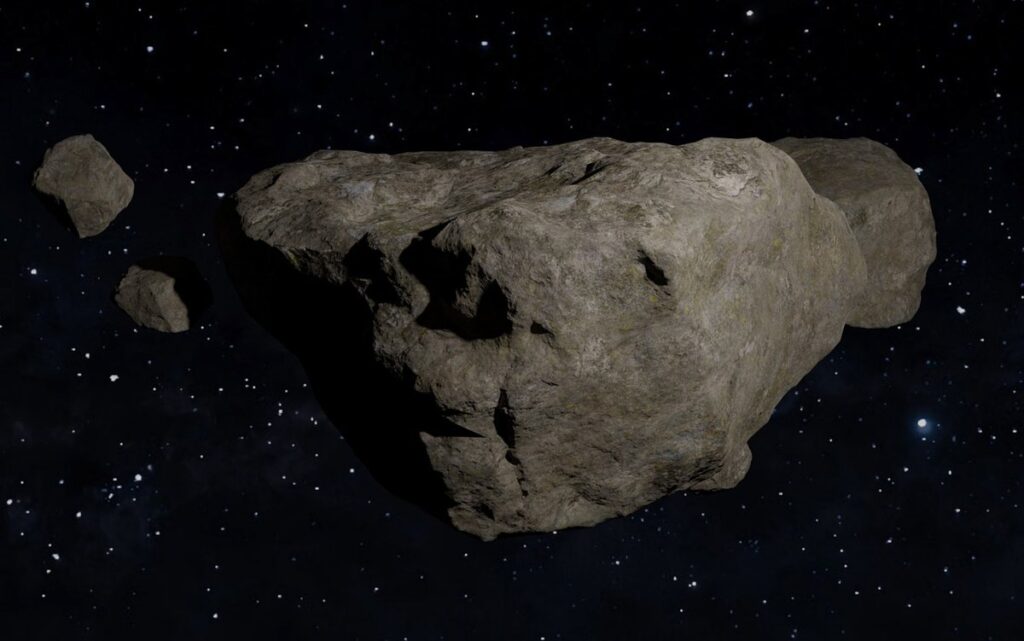
Asteroids are rocky objects that orbit the Sun, primarily found in the asteroid belt between Mars and Jupiter. They can be thought of as leftover building blocks from the formation of our solar system. Most asteroids are composed of stone or metal, with some being a mixture of both. One notable exception is the asteroid Ceres, which is now classified as a dwarf planet due to its size.
Asteroids come in various shapes and sizes, ranging from small boulders to objects hundreds of kilometers wide. Their surface features can provide clues about their composition, temperature, and even potential for hosting water or other volatile compounds. The study of asteroids helps astronomers better understand the early history of our solar system, including how planets formed and evolved.
Asteroids are also significant because they offer a window into the geology and evolution of other celestial bodies. By studying asteroid samples returned to Earth through space missions like NASA’s OSIRIS-REx, scientists can gain insights into the origins of life on our planet and potentially identify areas where conditions may have been suitable for life to emerge.
Types of Asteroids
There are several distinct types of asteroids, each with unique characteristics and orbits. Main-belt asteroids, for instance, reside between Mars and Jupiter, comprising the majority of known asteroids. They’re thought to be remnants from the solar system’s formation, preserving valuable information about its early history. Trojan asteroids, on the other hand, orbit around either Jupiter or Neptune at specific gravitational equilibriums.
A smaller subset of asteroids are Near-Earth Objects (NEOs), which pose a potential threat due to their proximity to Earth. These include both comets and asteroids that have been perturbed into close orbits with our planet. NEOs like 99942 Apophis, for example, have garnered significant attention in recent years due to concerns about possible impacts. Asteroid classification often relies on observations of their orbital paths, sizes, and compositions. By understanding these various types of asteroids, astronomers can better comprehend the solar system’s dynamics and potential hazards.
History of Asteroid Observation
From ancient civilizations to modern times, our understanding of asteroids has evolved significantly over the centuries. This section takes you on a journey through the milestones in asteroid observation history.
Early Discoveries and Observations
The first asteroid to be discovered was Ceres, identified by Italian astronomer Giuseppe Piazzi in 1801. Initially thought to be a planet, Ceres’ orbital characteristics led astronomers to classify it as an asteroid, marking the beginning of systematic searches for other bodies of similar size and composition. Over the next few decades, several notable asteroids were discovered, including Pallas (1802) and Vesta (1807). These early discoveries sparked interest in the field and paved the way for further exploration.
Astronomers like William Herschel and Johann Elert Bode made significant contributions to asteroid discovery during this period. They employed various observational techniques, such as visual searches and orbital calculations, to identify new asteroids. For instance, Herschel discovered six asteroids between 1802 and 1821 using his powerful telescopes.
The early discoveries laid the groundwork for subsequent advances in technology and detection methods that have enabled more precise and efficient asteroid hunting efforts. By studying these pioneering astronomers’ approaches and techniques, modern researchers can gain valuable insights into the evolution of asteroid observation and its continued importance today.
Advances in Technology and Detection Methods
The development of more powerful telescopes and advanced computational tools has significantly enhanced asteroid detection capabilities. In the early 20th century, astronomers used small refracting telescopes with limited magnification power to spot asteroids. These instruments allowed for basic observations but were often prone to errors due to atmospheric distortion. The introduction of reflecting telescopes in the mid-20th century improved resolution and allowed for more precise tracking.
The advent of digital technology revolutionized asteroid detection by enabling real-time processing and analysis of vast amounts of data. Modern computers can rapidly analyze images from large surveys, identifying potential asteroids with greater accuracy than manual observations. This has led to a significant increase in the number of discovered asteroids. For instance, the Catalina Sky Survey uses advanced algorithms to detect near-Earth asteroids (NEAs) that might pose a threat.
The combination of improved telescopes and computational power has also facilitated more precise orbital calculations, enabling astronomers to better predict asteroid trajectories and identify potential impact risks. This collaboration between technological advancements has greatly enhanced our ability to observe and track asteroids, laying the groundwork for future research and mitigation efforts.
Techniques for Asteroid Observation
To accurately observe asteroids, it’s essential to understand various techniques that aid in tracking their orbits and movements. These methods include photometry, spectroscopy, and astrometry.
Visual Observations and Amateur Astronomy
When visually observing asteroids as an amateur astronomer, it’s essential to understand the challenges and opportunities presented by small telescopes and binoculars. Asteroids are often too faint for these instruments to detect directly, but with patience and practice, you can spot them using specific techniques.
Start by locating a known asteroid in your field of view. Use online tools like Planetaria or Stellarium to find an asteroid’s predicted position in the night sky. Keep in mind that asteroids move relative to background stars, so it’s crucial to observe multiple nights in a row to track their movement.
When using binoculars, try observing in areas with minimal light pollution and a clear view of the horizon. Small telescopes can be more effective due to their ability to collect more light, but they require proper alignment and focusing. Remember that asteroid observations are often done in conjunction with planetary observations, so being familiar with your telescope’s capabilities and limitations is vital.
To increase your chances of spotting an asteroid, observe during periods when it’s high in the sky and above the horizon. Aim for a clear, transparent atmosphere to minimize light scattering and maximize visibility.
Spectroscopy and Orbital Analysis
Spectroscopy is a crucial technique used by astronomers to determine an asteroid’s composition. By analyzing the light reflected from the asteroid’s surface, scientists can identify the presence of specific minerals and elements. This method is particularly useful for studying asteroids that are too small or distant for direct observation. For example, NASA’s Stardust mission used spectroscopy to analyze the composition of Comet Wild 2, providing valuable insights into the formation and evolution of our solar system.
Orbital analysis involves tracking an asteroid’s path around the Sun, allowing astronomers to predict its future position and potential impact risks. By studying the asteroid’s orbital parameters, such as its semi-major axis, eccentricity, and inclination, scientists can identify patterns and anomalies that may indicate a potentially hazardous object. The Minor Planet Center, a global authority on asteroid orbits, maintains a comprehensive database of asteroid orbits, which is used to predict close approaches and potential threats.
Astronomers use various software tools, such as the Orbit Determination Program (ODP), to calculate asteroid orbits with high precision. These calculations take into account complex factors like gravitational influences from nearby celestial bodies and solar radiation pressure.
Asteroid Hunting: Professional Efforts and Initiatives
Asteroid hunting has become a global effort, with various organizations and initiatives collaborating to detect and track near-Earth objects. We’ll take a closer look at these professional endeavors and their contributions to asteroid observation.
Space Missions and Astronomical Surveys
Space agencies and research institutions worldwide are engaged in ongoing efforts to detect and track asteroids through space missions and astronomical surveys. The Catalina Sky Survey, a collaboration between the University of Arizona and NASA’s Planetary Defense Coordination Office (PDCO), is one notable example. This survey uses a combination of ground-based telescopes to identify near-Earth objects (NEOs) and determine their orbits.
NASA’s PDCO coordinates efforts to detect and track asteroids that pose a potential threat to Earth. The office also oversees the development of strategies for preventing or mitigating asteroid impacts, including deflection and disruption techniques. Another significant effort is the NASA’s OSIRIS-REx mission, which aims to collect samples from Bennu, a near-Earth asteroid.
The B612 Foundation, a non-profit organization, has partnered with NASA on several projects, including the Arecibo Asteroid Detection Project, which uses radio telescopes to detect and track asteroids. These collaborations demonstrate the growing international cooperation in asteroid detection research. By leveraging multiple approaches, scientists can improve their understanding of asteroid orbits and increase the chances of detecting potentially hazardous objects before they pose a threat.
Citizen Science Projects and Collaboration
Citizen science projects have become an essential component of asteroid observation and classification. These initiatives bring together amateur astronomers with professional researchers to advance our understanding of asteroids. One notable example is the Zooniverse platform, which hosts various projects that allow anyone to contribute to asteroid identification and tracking.
Asteroid hunters can participate in these projects by downloading specialized software or using online platforms like the Minor Planet Center’s Asteroid Terrestrial-impact Last Alert System (ATLAS). By doing so, amateur astronomers help classify asteroids, identify potential threats, and provide valuable data for scientists. Collaboration between professionals and amateurs is crucial as it leverages the collective effort to improve detection rates and classification accuracy.
To get involved in citizen science projects related to asteroid observation, look for programs that focus on asteroid tracking, such as the Catalina Sky Survey or the Asteroid Terrestrial-impact Last Alert System (ATLAS). These initiatives provide a unique opportunity for individuals to contribute to cutting-edge research while learning about asteroids and their importance. By joining these efforts, amateur astronomers can make a tangible impact on our understanding of near-Earth objects.
The Impact of Asteroid Observation on Society
Asteroid observation has far-reaching implications for human society, from potential asteroid deflection strategies to resource utilization opportunities that could revolutionize our understanding of space. We’ll explore these consequences in more detail here.
Potential Threats and Preparedness
The potential threats associated with asteroids are a pressing concern for scientists and policymakers worldwide. Asteroids pose a significant risk to Earth due to their size, composition, and unpredictable orbits. The impact threat is particularly concerning, as it can cause catastrophic damage to populated areas, infrastructure, and ecosystems.
International efforts are underway to prepare for and respond to asteroid impacts. Organizations such as NASA’s Planetary Defense Coordination Office (PDCO) and the European Space Agency’s (ESA) Space Situational Awareness program work together with governments and international partners to develop mitigation strategies.
A crucial aspect of preparedness is early detection and tracking of potentially hazardous asteroids (PHAs). This involves monitoring asteroid orbits and identifying those that pose a threat. Once an asteroid is identified as a potential threat, authorities can then determine the best course of action, which may include deflection or disruption techniques. These efforts require global cooperation and coordination to ensure effective preparedness and response.
Key international initiatives include the United Nations’ Committee on the Peaceful Uses of Outer Space (COPUOS) and the asteroid impact hazard assessment framework established by the International Astronomical Union (IAU).
Benefits of Asteroid Observation: Scientific Research and Exploration
Asteroid observation offers numerous benefits beyond mitigating potential threats. One significant advantage is the scientific research opportunities it provides. By studying asteroids, scientists can gain insights into the formation and evolution of our solar system. For instance, analyzing asteroid samples can reveal information about the early stages of planetary development, including the presence of water and organic compounds.
Asteroids also hold valuable resources such as metals and minerals that could be extracted for use in space exploration or even on Earth. NASA’s OSIRIS-REx mission, launched in 2016, aims to retrieve samples from asteroid Bennu with the goal of understanding the origins of life on our planet.
Furthermore, asteroids can serve as stepping stones for deep space missions, providing a source of fuel and materials for future exploration endeavors. The European Space Agency’s (ESA) concept for a lunar gateway, which involves using the Moon as a hub for further solar system exploration, highlights the potential uses of asteroids in this context.
Frequently Asked Questions
Can I use my smartphone to observe asteroids?
Yes. While smartphones can’t replace dedicated telescopes for advanced observations, many apps offer augmented reality (AR) features that help locate asteroids in the night sky. These apps can be useful for amateur astronomers or those interested in getting started with asteroid observation.
How do I know if I’ve discovered an asteroid myself?
Congratulations on being enthusiastic about asteroid hunting! If you think you’ve spotted a new asteroid, verify your findings using software like SkySafari or Stellarium. Make sure to record precise coordinates and report your observations to the Minor Planet Center (MPC) for official confirmation.
What’s the difference between spectroscopy and orbital analysis in asteroid observation?
Spectroscopy involves analyzing an asteroid’s light spectrum to determine its composition, size, and shape. Orbital analysis focuses on predicting an asteroid’s orbit and trajectory over time. While these techniques are often used together, they serve distinct purposes in understanding asteroids.
Can asteroid observation be used for space exploration beyond Earth’s orbit?
Yes. Asteroids can provide valuable resources, such as water or precious metals, which could support future space missions. Additionally, studying asteroids’ orbits and composition can help scientists better understand the formation of our solar system and plan more efficient routes for interplanetary travel.
How do astronomers collaborate with governments to prepare for potential asteroid threats?
Astronomers often work closely with government agencies like NASA’s Planetary Defense Coordination Office (PDCO) to monitor and track Near-Earth Objects (NEOs). These collaborations enable early detection, risk assessment, and mitigation strategies in the event of a potential threat.