
As we continue to explore the vastness of our solar system, one of the most fascinating destinations remains the Jupiter moon universe. These celestial bodies have captivated astronomers and space enthusiasts for centuries with their unique features and mysteries waiting to be unraveled. From volcanic wonders on Io to the hidden ocean beneath Europa’s icy crust, each of Jupiter’s moons offers a glimpse into the incredible diversity that exists in our cosmos.
In this article, we’ll delve into the captivating world of Jupiter’s moons, examining what makes them significant not just as fascinating objects to study but also as keys to understanding the solar system as a whole. We’ll take a closer look at some of the most intriguing moons and explore their unique characteristics, from volcanic activity on Io to the potential for life on Europa.
Section 1: Introduction to Jupiter’s Moons
As we embark on our journey through the solar system, let’s start by getting to know the fascinating moons of Jupiter, each one unique and full of secrets waiting to be uncovered.
Understanding the Gas Giant’s Orbital System
Jupiter’s massive size and unique place in our solar system have made it a fascinating subject for astronomers and space enthusiasts alike. As the largest planet in our solar system, Jupiter is more than 1,300 times the mass of Earth, which is roughly equivalent to the combined mass of all other planets. This enormous size has an intriguing effect on its orbital system, with numerous moons gravitationally bound to it.
Jupiter’s sheer scale allows it to capture and hold onto a vast number of smaller objects, including asteroids, comets, and even entire dwarf planet-sized bodies like Europa and Ganymede. In fact, Jupiter is so massive that it has an enormous gravitational influence on the surrounding space, creating a region known as the Hill sphere, where its gravitational pull dominates.
The discovery of its numerous moons began in 1610 when Galileo Galilei first spotted four large moons: Io, Europa, Ganymede, and Callisto. Since then, astronomers have identified over 92 confirmed moons orbiting Jupiter, each with its unique characteristics and features.
Significance of Studying Jupiter’s Moons
Studying Jupiter’s moons is crucial for advancing our understanding of planetary science and the formation of our solar system. These celestial bodies offer a unique window into the early days of our cosmic neighborhood. By examining the characteristics, orbits, and compositions of Jupiter’s moons, scientists can gain insights into the processes that shaped the solar system.
For instance, Io, Europa, Ganymede, and Callisto – collectively known as the Galilean moons – have been extensively studied due to their potential for harboring liquid water beneath their icy surfaces. This makes them prime targets in the search for extraterrestrial life. The study of these moons has also revealed fascinating information about Jupiter’s magnetic field and its influence on the surrounding space environment.
In addition, the moons’ unique features can provide clues about the solar system’s early stages. For example, research suggests that Ganymede may have had a subsurface ocean in the distant past, which could have supported life. By continuing to study Jupiter’s moons, scientists hope to unravel more secrets about our cosmic origins and the mysteries of planetary formation.
Section 2: The Largest Moons of Jupiter
Let’s take a closer look at the largest and most fascinating moons orbiting Jupiter, each with its own unique characteristics and features that make them stand out.
Io: Volcanic Wonders of the Solar System
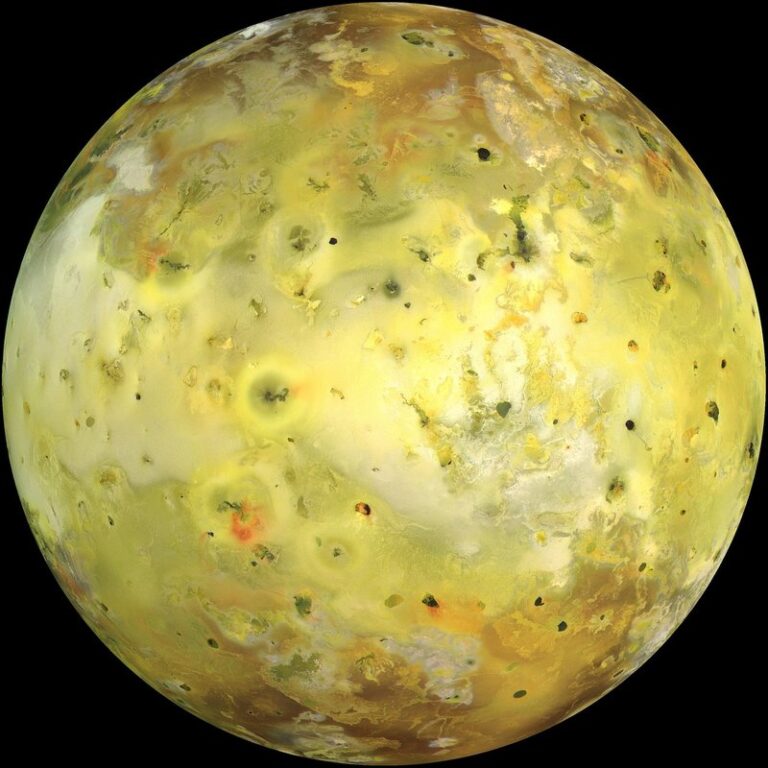
Io is one of the most fascinating and unique moons in our solar system. Located at the edge of Jupiter’s magnetic field, Io experiences intense tidal heating due to gravitational forces from its parent planet. This process generates immense internal heat, leading to volcanic activity on a scale unlike any other moon.
In fact, Io is the most volcanically active body in the solar system, with over 400 active volcanoes. Its surface is dotted with calderas, lava flows, and volcanic plumes that spew forth molten rock and debris into space. The most prominent feature on Io’s surface is the Pele Caldera, a massive volcano that towers over 8 km high.
One of the most striking aspects of Io’s geology is its unique composition. Unlike other moons with silicate-rich surfaces, Io’s crust is primarily composed of sulfur and sulfur dioxide. This distinct chemistry gives rise to its remarkable volcanic landscape, with eruptions fueled by the moon’s internal heat rather than external factors like sunlight.
As we explore Io, we’re reminded of the incredible diversity of celestial bodies in our solar system. By studying this tiny, volcanic world, scientists are gaining valuable insights into planetary formation and evolution.
Europa: A Moon with a Hidden Ocean
Europa, the icy moon of Jupiter, has been shrouded in mystery for decades. But beneath its frozen surface lies a hidden ocean, estimated to be up to 100 km deep. This subsurface sea is believed to be warmed by tidal heating, where Jupiter’s gravitational pull causes Europa’s interior to heat up due to friction. The potential implications of this discovery are profound – could Europa’s ocean support life?
One of the most intriguing aspects of Europa’s ocean is its potential for supporting life. Scientists have found evidence of hydrothermal activity on Earth, similar to that which occurs in the ocean beneath Europa. This raises questions about the possibility of life existing in the moon’s subsurface sea. NASA and other space agencies are currently conducting research aimed at uncovering Europa’s secrets.
NASA’s current plan is to send a mission to Europa by the 2020s, with the aim of studying the moon’s habitability. The mission will focus on determining whether or not there is liquid water present beneath the surface, which would be a crucial indicator for life.
Section 3: Moons with Unique Characteristics
Jupiter’s moons are full of surprises, and some stand out from the rest with their remarkable characteristics. In this next section, we’ll explore the fascinating world of Io, Europa, and Ganymede.
Ganymede: The Largest Moon in Our Solar System
Ganymede is the largest moon in our solar system, even bigger than the planet Mercury. Located about 1.4 million kilometers from Jupiter, this icy world measures approximately 3,275 miles (5,270 kilometers) in diameter. One of Ganymede’s most striking features is its unique geological composition. Comprising equal parts rock and ice, it has a surface that’s both rugged and smooth, with vast plains of dark terrain intermingled with lighter-colored regions.
What sets Ganymede apart from other moons, however, is its internal structure and magnetic field. Unlike other moons in the solar system, which have either iron-rich or water-ice dominated cores, Ganymede has a silicate mantle surrounding an iron-rich core. This peculiarity generates its own weak but detectable magnetic field, making it one of the few objects beyond Earth to do so.
Ganymede’s fascinating combination of size, geological complexity, and internal dynamics makes it a fascinating subject for scientific study.
Callisto: A Cratered Surface and Possible Water Ice
Callisto is one of the largest moons of Jupiter and boasts a surface that’s been shaped by billions of years of asteroid and comet impacts. Its surface composition is primarily made up of silicate rocks, but it’s also believed to contain water ice. The cratering pattern on Callisto’s surface tells an interesting story about its history. With fewer craters than you’d expect given its age, scientists think that the moon may have undergone a period of intense meteoroid bombardment in the distant past.
The resulting cratered terrain is characterized by numerous impact basins and grooved terrain, which are thought to be the result of tectonic activity that occurred long ago. This unique combination of geological features provides valuable insights into Callisto’s history and potential water ice content. In fact, NASA’s Galileo spacecraft detected evidence of water ice in Callisto’s cratered regions during its flybys of the moon. The presence of water ice on Callisto is significant because it could potentially be used as a resource for future space missions. By studying the surface composition and geological features of this fascinating moon, scientists are learning more about the history of our solar system and the potential for life beyond Earth.
Section 4: Smaller Moons of Jupiter
Let’s take a closer look at some of the smaller moons that orbit our gas giant, each one unique and fascinating in its own way. These tiny worlds offer valuable insights into Jupiter’s formation.
The Amalthea Group: Irregular Moons with Complex Orbits
The Amalthea group is a fascinating ensemble of irregular moons that orbit Jupiter. Comprising five moons – Amalthea, Thebe, Metis, Adrastea, and Themisto – this group’s unique orbital patterns are unlike those of the other moons in our solar system. One of the most striking features of these moons is their complex orbits, which take them through a delicate dance with Jupiter’s gravitational pull.
Scientists believe that the Amalthea group formed in the vicinity of Jupiter, where intense radiation and charged particles from the planet’s strong magnetic field likely shattered fragments of smaller bodies into the orbits we see today. This process is thought to have occurred around 4 billion years ago, when the solar system was still in its formative stages.
The Amalthea group’s irregular shapes and complex orbital patterns are testaments to their formation through this catastrophic process. Despite these challenges, studying these moons provides valuable insights into Jupiter’s early history and the evolution of our solar system.
The Himalia Group: A Cluster of Irregular Moons
Among the numerous moons orbiting Jupiter, one group stands out for its unique characteristics: the Himalia group. This cluster of irregular moons is comprised of four distinct bodies: Himalia, Elara, Leda, and Dia. What sets these moons apart from their counterparts is not only their irregular shapes but also their highly eccentric orbits.
These irregular shapes are a result of the moons’ composition, which is primarily made up of water ice mixed with darker organic material. This combination gives them a distinctive appearance that differs significantly from the smoother, more uniform surfaces of Jupiter’s other moons. As for their orbits, Himalia and its companions have highly elliptical paths around Jupiter, taking them as close as 11 million kilometers to as far as 26 million kilometers from the gas giant.
This eccentricity leads to some fascinating orbital dynamics within the group, with each moon interacting with the others in complex ways. For example, Himalia’s closest approach to Jupiter results in a highly inclined orbit, making it a prime target for astronomers studying the moon’s interaction with its parent planet.
Section 5: Exploration and Research of Jupiter’s Moons
Let’s dive into the fascinating world of research and exploration, where scientists continue to unravel the mysteries of these intriguing celestial bodies. We’ll explore how they’re studied and what we’ve learned so far.
Space Missions to Jupiter’s Moons
Jupiter’s moons have long been a source of fascination for astronomers and space enthusiasts alike. Over the years, several space missions have been launched to explore these celestial bodies up close. One of the most notable missions is NASA’s Juno spacecraft, which has provided invaluable insights into Jupiter’s magnetic field and atmosphere. However, Juno also made significant contributions to our understanding of Io and Europa, two of Jupiter’s largest moons.
During its flybys of Io and Europa, Juno collected valuable data on these moon’s subsurface oceans, which are believed to contain more water than all of Earth’s oceans combined. This discovery has major implications for the search for life beyond our planet. The data also revealed that Io’s surface is geologically active, with volcanoes and lava flows creating a constantly changing landscape. Meanwhile, Europa’s subsurface ocean is thought to be in contact with its rocky core, making it an ideal candidate for hosting life.
Future missions, such as NASA’s Europa Clipper and the European Space Agency’s Jupiter Icy Moons Explorer (JUICE), are set to build on these discoveries and explore the moons of Jupiter in even greater detail. These missions will not only shed more light on the composition and geology of Io and Europa but also investigate their potential for supporting life.
Future Research Directions for Jupiter’s Moons
As we continue to explore and study Jupiter’s moons, several ongoing research initiatives are focused on understanding their geology, atmospheres, and potential biosignatures. For instance, NASA’s Europa Clipper mission aims to investigate the subsurface ocean of Europa, which is believed to contain liquid water, a crucial ingredient for life. The mission will use a suite of instruments to study the moon’s habitability and search for signs of life.
Other research initiatives are focused on Ganymede, the largest moon of Jupiter, which has its own magnetic field and subsurface ocean. Scientists believe that studying Ganymede’s geology and atmosphere could provide insights into the moon’s potential for hosting life. The European Space Agency’s JUICE (JUpiter ICy moons Explorer) mission will also explore the icy moons of Jupiter, including Ganymede, Europa, and Callisto.
Researchers are also exploring the atmospheric composition of Jupiter’s moons, which can provide clues about their geological activity and potential biosignatures. For example, studying the sulfur dioxide and oxygen levels in Io’s atmosphere could indicate volcanic activity on the moon’s surface. By continuing to explore and research Jupiter’s moons, scientists hope to uncover more secrets about the solar system and the possibility of life beyond Earth.
To get involved in these research initiatives or to learn more about them, you can follow NASA’s and the European Space Agency’s websites for updates on their missions and discoveries.
Section 6: Cultural Significance and Impact
As you’ve learned about Jupiter’s moons, let’s explore how these celestial bodies have captivated human imagination and left a lasting impact on our culture. From art to literature, their influence is vast.
Representations in Science Fiction and Art
Jupiter’s moons have captivated human imagination for centuries, influencing science fiction, literature, and art in profound ways. From ancient mythologies to modern-day artistic expressions, the symbolism of Jupiter’s moons has been multifaceted and far-reaching.
In science fiction, Jupiter’s largest moon Ganymede is often depicted as a hub for intergalactic exploration or a refuge for humanity fleeing a dying Earth. For instance, in Arthur C. Clarke’s novel “2001: A Space Odyssey,” the alien monolith is discovered on Ganymede, leading to profound implications for human understanding of the universe. Similarly, in Jules Verne’s “Journey to the Moon,” the lunar surface is used as a stepping stone for space exploration, reflecting humanity’s fascination with celestial bodies.
In art, Jupiter’s moons have been interpreted as symbols of love, fertility, and the mysteries of the cosmos. For example, the painting “The Dream” by Henri Rousseau features a dreamlike landscape with Jupiter’s moons prominently displayed, evoking a sense of wonder and awe. To appreciate the cultural significance of Jupiter’s moons in art and science fiction, try exploring works from different eras and mediums that feature these celestial bodies as central themes or symbols.
Ganymede’s largest moon crater, Tros Crater, is named after King Tros in Greek mythology, who was said to have been the first king of Troy. This nod to ancient mythology highlights the enduring influence of Jupiter’s moons on human culture and imagination. By exploring these representations, we can gain a deeper understanding of how our collective fascination with Jupiter’s moons reflects both scientific curiosity and cultural significance.
The Moons’ Role in Space Exploration Inspiration
As we continue to marvel at the majesty of Jupiter’s moons, it’s essential to acknowledge their profound impact on inspiring future generations of scientists, engineers, and explorers. The wonders of these celestial bodies have captivated human imagination for centuries, sparking a sense of curiosity and wonder that drives us to push the boundaries of space exploration.
Jupiter’s moons serve as a catalyst for innovation, pushing us to develop new technologies and strategies for exploring our solar system. Take, for example, the remarkable story of NASA’s Europa Clipper mission, which aims to explore Jupiter’s icy moon Europa in search of signs of life. This mission has inspired countless young minds to pursue careers in STEM fields, sparking a new wave of interest in space exploration.
As we continue to venture into our solar system, it’s crucial that we prioritize continued exploration and research. By doing so, we not only expand our understanding of the universe but also inspire future generations to join us on this extraordinary journey. Whether you’re an aspiring astronaut or simply someone fascinated by the cosmos, Jupiter’s moons offer a wealth of inspiration and discovery waiting to be uncovered.
Frequently Asked Questions
What are the most promising candidates for hosting life among Jupiter’s moons?
Several of Jupiter’s moons, including Europa and Ganymede, have been found to possess conditions suitable for supporting life. These moons feature subsurface oceans warmed by tidal heating, which could potentially harbor life forms. While there is currently no conclusive evidence of extraterrestrial life on these moons, ongoing research aims to explore their habitability in greater detail.
How can I stay up-to-date with the latest research and discoveries about Jupiter’s moons?
To stay informed about the latest findings in the field of Jupiter moon research, consider following reputable astronomy news sources, such as NASA’s website or journals like The Astronomical Journal. You may also want to explore online forums and communities dedicated to space exploration, where experts often share updates on their research.
What are some common challenges faced by spacecraft when exploring Jupiter’s moons?
Spacecraft venturing towards Jupiter’s moons face numerous challenges, including intense radiation from the planet’s strong magnetic field, extreme temperatures, and high-speed solar winds. Additionally, navigating the complex orbital systems of these moons requires precise calculations to ensure accurate trajectory planning.
Can I explore Jupiter’s moons in person or through virtual experiences?
While visiting Jupiter’s moons is currently not possible with current technology, you can experience them virtually through 3D models, simulations, and interactive visualizations available online. These tools provide an immersive way to explore the geology, atmosphere, and orbital dynamics of these celestial bodies.
How do scientists prioritize their research on Jupiter’s moons?
Scientists typically focus on specific areas based on a moon’s unique characteristics, such as its potential for hosting life (e.g., Europa) or its geological features (e.g., Io). By prioritizing research in these key areas, scientists can make the most of limited resources and maximize our understanding of the Jupiter moon system.