
When shopping for an amethyst gemstone, have you ever wondered how its hardness affects its value and wearability? Amethysts are a type of quartz crystal that’s prized for their deep purple hue and unique properties. But did you know that amethyst hardness is measured on the Mohs scale? This scale ranks minerals from softest to hardest, with diamonds being the hardest at 10.
In this article, we’ll delve into the specifics of amethyst hardness, exploring how it impacts not only its value but also its care and wearability. We’ll examine what makes amethyst a relatively durable gemstone, despite its moderate hardness rating on the Mohs scale (a 7 out of 10). By understanding these factors, you’ll be better equipped to make informed decisions about your next amethyst purchase or how to properly care for an existing piece featuring this beautiful stone.
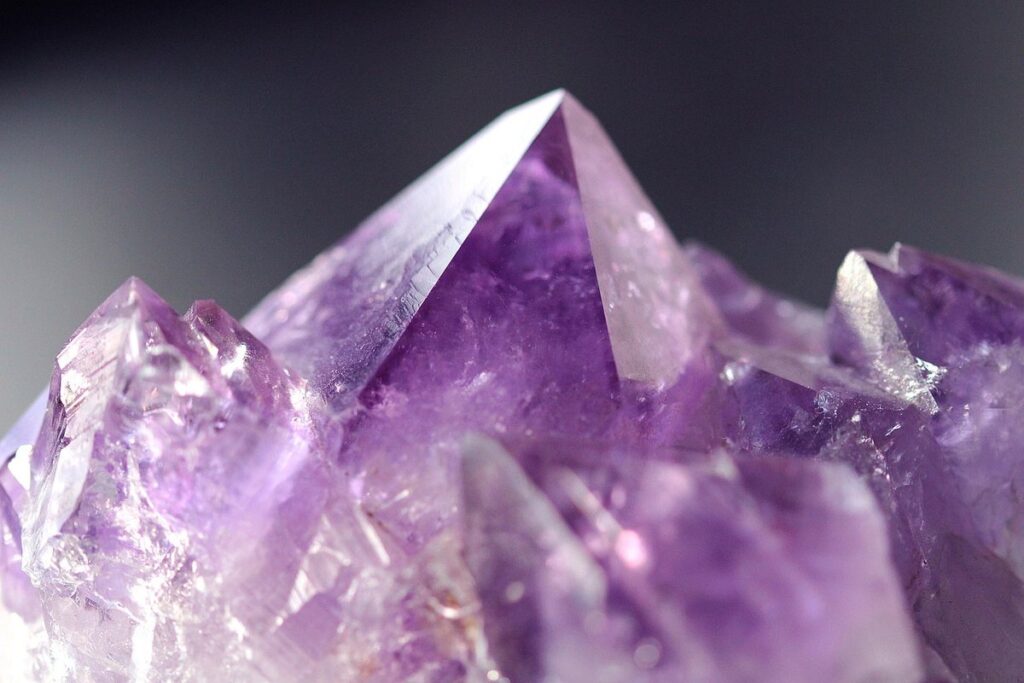
What is Amethyst Hardness?
When it comes to understanding amethyst, knowing its hardness is crucial for both everyday wear and long-term durability. This section explores the Mohs scale rating that defines its strength and resilience.
Measuring Amethyst Hardness
Measuring Amethyst Hardness involves assessing its resistance to scratching and wear. A common method for evaluating hardness is through the Mohs hardness scale, developed by Friedrich Mohs in 1812. This scale ranks minerals from 1 (softest) to 10 (hardest). Quartz, the base mineral that forms amethyst, has a Mohs hardness of 7.
To measure an amethyst’s hardness, jewelers and gemologists use various techniques. They may employ scratch testing by applying gentle pressure with a steel or diamond tool to see if the stone is scratched or damaged. Alternatively, they might use the Rebound Test, which assesses how hard it is for a sharp object (like a hammer) to dent or chip the surface of the gem.
For example, when evaluating an amethyst’s hardness, consider its crystal structure and inclusions. While pure quartz has a hardness of 7, inclusions like iron oxide can weaken its resistance. Knowing these factors helps you understand whether your amethyst is likely to withstand normal wear or may require special care.
Importance of Hardness in Gemstones
When evaluating gemstones like amethyst, hardness is a crucial factor to consider. It plays a significant role in determining their value, care requirements, and wearability. A gemstone’s hardness is measured on the Mohs scale, which ranges from 1 (softest) to 10 (hardest).
A stone with high hardness, such as amethyst, which falls under the 7-8 range, is less prone to scratches and damage. This makes it more suitable for everyday wear. In contrast, softer gemstones may require special care to prevent damage.
Understanding a gemstone’s hardness also affects its value. Harder stones are generally considered more valuable due to their durability and resistance to wear. When considering purchasing an amethyst or any other gemstone, it is essential to evaluate its hardness to determine the best ways to care for it and to ensure it meets your expectations for beauty and durability.
When handling and storing amethyst, consider these practical tips: clean it gently with a soft cloth, store it separately from harder materials that may scratch it, and avoid exposing it to harsh chemicals.
Amethyst’s Place on the Mohs Scale
When assessing amethyst hardness, it’s essential to understand its ranking on the Mohs scale, a widely accepted system for measuring mineral durability. Let’s take a closer look at where amethyst falls within this scale.
Understanding the Mohs Hardness Scale
The Mohs scale is a widely used method for measuring mineral hardness, developed by Friedrich Mohs in 1812. It’s a simple yet effective way to determine the scratch resistance of a mineral. The scale ranks minerals from 1 (softest) to 10 (hardest), with amethyst falling under the category of relatively hard minerals.
To understand the Mohs scale, let’s break it down: each mineral is ranked according to its ability to resist scratching by other minerals. For example, talc has a Mohs hardness of 1, meaning it can be scratched easily by most other minerals, while diamonds have a Mohs hardness of 10, making them highly resistant to scratches.
One limitation of the Mohs scale is that it’s not always linear, and some minerals may overlap in terms of their scratch resistance. However, for everyday purposes, the Mohs scale provides a useful guide for understanding mineral properties. When evaluating amethyst or other gemstones, knowing its Mohs hardness can help you choose the right jewelry setting or care for your stone properly.
Practically speaking, the Mohs scale helps you determine whether a mineral is suitable for everyday wear or requires special handling.
Amethyst’s Position on the Scale
On the Mohs scale of mineral hardness, amethyst is ranked 7 out of 10. This means that amethyst has a relatively high level of scratch resistance compared to other gemstones. To put this into perspective, a scratch resistance rating of 7 indicates that amethyst can withstand scratches from most everyday objects, but may be more susceptible to damage from harder materials like steel or titanium.
When evaluating the significance of an amethyst’s ranking on the Mohs scale, it’s essential to consider how often your stone will come into contact with potential scratching agents. If you wear your amethyst as jewelry regularly, for instance, a 7 rating may not be sufficient to guarantee complete scratch resistance. In such cases, taking extra precautions or opting for additional protective treatments can help mitigate the risk of damage.
To maximize the lifespan and appearance of your amethyst, we recommend being mindful of potential sources of scratches and taking steps to minimize exposure. This includes avoiding stacking or rubbing against harder gemstones, as well as cleaning your stone gently with a soft cloth and mild soap solution.
Factors Affecting Amethyst Hardness
Now that you know what makes amethyst durable, let’s explore the external factors that can affect its hardness and how they impact its overall strength.
Crystal Structure
The crystal structure of amethyst is a crucial factor that influences its hardness and durability. Amethyst, a type of quartz, crystallizes in the trigonal system, which means it has three axes of symmetry and a unique arrangement of atoms within its lattice. This specific crystal structure contributes to amethyst’s remarkable hardness, ranking 7 on the Mohs scale.
The trigonal system allows for a more rigid and compact arrangement of atoms, resulting in increased resistance to scratches and wear. In contrast, minerals with different crystal structures may be more prone to cleavage or chipping. For instance, diamonds, also made up of carbon, have a tetrahedral crystal structure that gives them exceptional hardness.
Understanding the impact of amethyst’s crystal structure on its hardness is essential for jewelry makers and gemstone collectors. This knowledge can help identify high-quality amethyst crystals with improved durability.
Inclusions and Imperfections
When evaluating an amethyst crystal‘s hardness, it’s essential to consider the impact of inclusions and imperfections. These internal features can significantly affect a stone’s overall durability, making some amethysts more prone to scratches or cracks.
Inclusions refer to natural features within the crystal structure, such as tiny gas bubbles, mineral deposits, or growth patterns. While some inclusions are inherent to the formation process and don’t compromise hardness, others can weaken the crystal. For instance, if an amethyst contains a significant amount of calcite, it may be more susceptible to etching (chemical wear).
Imperfections, on the other hand, refer to external blemishes that don’t affect hardness but can impact aesthetic value. These might include scratches, chips, or uneven color distribution.
When buying an amethyst crystal, inspect for inclusions and imperfections carefully. If present, assess their severity and potential impact on hardness. Keep in mind that some collectors prefer unique, character-filled crystals over flawless ones, as these often carry a distinct story of geological history.
The Effect of Treatment on Amethyst Hardness
When it comes to amethyst, understanding how treatment affects its hardness is crucial for those looking to purchase or work with this precious gemstone. We’ll explore the impact of various treatments on amethyst’s hardness level in this section.
Heat Treatment
When amethyst is heat-treated, it undergoes a process that can alter its hardness levels. This treatment involves subjecting the stone to high temperatures, typically between 400°C to 600°C (752°F to 1112°F), for an extended period. The primary objective of heat treatment is to enhance the amethyst’s color or clarity by stabilizing the crystal structure.
The effect of heat treatment on hardness is somewhat unpredictable, as it can vary depending on factors such as the stone’s original composition and the temperature applied during treatment. In some cases, the heat-treated amethyst may exhibit improved hardness due to the formation of a more stable crystal lattice structure. However, in other instances, the treatment might cause the stone to become softer or even develop internal flaws.
One potential risk associated with heat treatment is the possibility of thermal shock, which can lead to breakage or cracking if not done correctly. To minimize these risks, it’s essential to work with a reputable and experienced gemstone professional who has expertise in heat treatment techniques.
Other Treatments
While treatments to enhance amethyst’s hardness are essential for its commercial viability, there are other methods used to improve its appearance without compromising its inherent properties. One such method is irradiation, which can create a range of colors by altering the stone’s internal structure.
Irradiation involves exposing the amethyst to ionizing radiation, typically gamma or X-rays, causing the stone’s color to shift towards purple or red hues. This process is often used for color enhancement and has become a popular method in recent years due to its relatively quick turnaround time.
Another treatment employed is heating, which can either lighten or darken the stone’s natural color. However, this process must be done carefully as excessive heat can damage the amethyst’s internal structure. Some stones are also coated with a thin layer of transparent resin to enhance their appearance, but these coatings are generally not suitable for high-end jewelry.
It’s essential to note that any treatment used should be disclosed by the seller, and buyers should be aware of the potential consequences of treatments on the stone’s value in the long run.
Hardness and Care for Amethyst Jewelry
When it comes to wearing your beautiful amethyst jewelry, understanding how to properly care for it is just as important as choosing a stunning piece. This section will walk you through essential hardness and care tips to keep your amethyst looking its best.
Cleaning and Maintenance
Proper cleaning and maintenance of amethyst jewelry are essential to maintain its beauty and durability. Amethyst is a relatively soft gemstone with a hardness rating of 7 on the Mohs scale, making it prone to scratches and damage. However, with gentle care, you can keep your amethyst jewelry looking stunning for years to come.
To clean amethyst jewelry, start by gently wiping it with a soft cloth to remove any loose dirt or debris. For more thorough cleaning, mix a solution of mild soap and warm water, and soak the jewelry in it for about 15-20 minutes. Avoid using harsh chemicals, ultrasonic cleaners, or steam cleaners, as they can damage the gemstone.
Regular maintenance is also crucial to prevent amethyst jewelry from losing its luster. Store your amethyst pieces separately from other jewelry items to prevent scratching and tangling. You should also avoid exposing your amethyst jewelry to extreme temperatures, humidity, or direct sunlight, which can cause discoloration or damage.
Storage and Handling
When it comes to maintaining the beauty and longevity of amethyst jewelry, proper storage and handling are crucial. To avoid scratching or damaging your pieces, store them separately from other jewelry items. A soft, padded box or a velvet-lined case is ideal for storing amethyst gemstones, as these materials won’t scratch the stone.
When not wearing your amethyst jewelry, keep it in a cool, dry place to prevent moisture accumulation. Avoid exposing your amethyst pieces to direct sunlight, which can cause fading or discoloration. Cleaning your amethyst jewelry regularly can also help maintain its appearance and prolong its lifespan. Use a soft cloth dipped in mild soap solution to gently wipe down the stone.
For daily wear, consider pairing your amethyst with items that won’t scratch or abrade it, such as a leather or fabric strap. When handling your amethyst pieces, always hold them by the metal setting or a designated prong, rather than touching the gemstone directly. This will prevent oils from your skin from coming into contact with the stone and causing damage over time.
By following these simple storage and handling guidelines, you can help ensure that your amethyst jewelry remains beautiful and intact for years to come.
Conclusion: The Importance of Understanding Amethyst Hardness
In conclusion, understanding amethyst hardness is crucial for anyone looking to work with this beautiful gemstone. By grasping its Mohs hardness rating, you’ll be better equipped to appreciate its durability and resistance to scratches and wear. This knowledge will also enable you to choose the right tools and techniques when cutting, polishing, or setting an amethyst stone. For instance, if you’re a jeweler, knowing that amethyst has a Mohs hardness of 7 can help you decide whether to use a diamond-tipped saw or a lapidary grinder for precise cuts.
As a collector or enthusiast, understanding amethyst hardness will also allow you to care for your gemstones more effectively. By recognizing the stone’s limitations and potential vulnerabilities, you’ll be able to take steps to prevent damage and maintain its beauty over time. This could involve storing it separately from other gemstones, avoiding exposure to harsh chemicals, or taking regular cleaning precautions.
Frequently Asked Questions
Can I use an amethyst gemstone for everyday wear, considering its moderate hardness rating?
Yes, you can safely wear an amethyst ring or pendant daily, but be aware that scratching or impact could potentially damage the stone. To minimize risks, consider wearing it on a chain and not stacking multiple necklaces or rings together.
How does the Mohs scale help me choose between different types of quartz crystals for jewelry?
The Mohs hardness scale is essential when selecting gemstones, as it directly affects durability and wearability. When choosing between various quartz crystals, like amethyst (Mohs 7) or citrine (also Mohs 7), you should consider how their similar hardness ratings affect your selection process.
What are some common care mistakes that can harm my amethyst jewelry?
Common errors include using harsh chemicals for cleaning, exposing the gemstone to direct sunlight, and not properly storing it. To prevent damage, use mild soap and water for cleaning, keep it away from heat sources and direct light, and store your amethyst jewelry separately.
How does heat treatment affect an amethyst’s hardness?
Heat treatment can enhance an amethyst’s color but may also alter its hardness. It doesn’t increase the Mohs rating but can improve its durability by reducing internal inclusions that make it more susceptible to cracking under stress.