
Identifying antique silver hallmarks can be a daunting task, especially for those new to collecting or restoring vintage pieces. With so many marks in circulation from various regions like the UK, Continental Europe, and the US, it’s easy to get confused about what you’re looking at. Many enthusiasts have fallen victim to common misconceptions about these hallmarks, mistaking them as indicators of authenticity or quality when they may actually be something entirely different.
This guide aims to demystify the process of identifying antique silver hallmarks by providing a comprehensive overview of their history, significance, and expert analysis. We’ll delve into the intricacies of UK Assay Office marks, Continental European hallmarks, and American makers’ marks, ensuring that you have a solid understanding of what makes each one unique. Whether you’re a seasoned collector or just starting out, this guide will give you the confidence to identify and appreciate your antique silver pieces with precision.
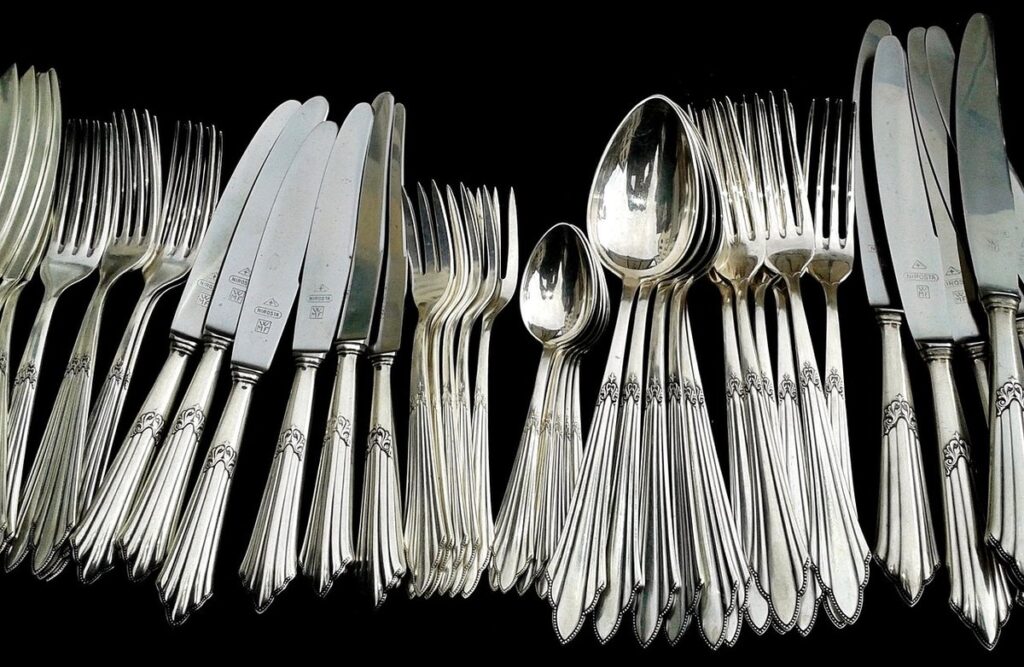
Understanding Antique Silver Markings
When examining antique silver pieces, understanding the markings on them can be a crucial step in identifying their age and authenticity. This section will break down common markings you might find on vintage silver items.
History of Hallmarks and Their Purpose
The history of hallmarks dates back to ancient times when craftsmen used symbols and marks to identify their work. In medieval Europe, particularly during the 13th to 16th centuries, hallmarks became a crucial part of silverwork regulation. The British government introduced the Assay Office in London in 1478, requiring all sterling silver items to be stamped with a hallmark indicating their metal content.
Initially, hallmarks were simple symbols or letters representing the town or city where an item was made. Over time, these marks evolved into more complex combinations of letters and symbols. The British hallmark system, known as the “London Assay Office,” still uses this system today. Hallmarks serve multiple purposes: they ensure authenticity, provide information on metal content, and distinguish between different makers.
For collectors and enthusiasts, understanding the history and purpose of hallmarks is essential for accurate identification. Familiarize yourself with common marks and their meanings to avoid confusion. Consult expert resources or reputable sources like the London Assay Office website for guidance on deciphering antique silver hallmarks.
Common Misconceptions About Antique Silver Markings
When it comes to antique silver hallmarks, there are several common misconceptions that can make identification more challenging. One of the most prevalent myths is that a sterling silver hallmark guarantees the item’s authenticity and value. However, this isn’t always the case. A mark indicating 92.5% or “925” doesn’t necessarily mean it’s a high-quality piece; it merely confirms its material composition.
Another misconception is that a hallmark with multiple symbols is more valuable than one with fewer markings. While some combinations may indeed signify exceptional craftsmanship or rarity, others might simply indicate the item’s origin or manufacturer. To accurately assess an antique silver piece, look beyond the number of marks and focus on their significance and context.
It’s also essential to distinguish between hallmarks that denote quality, such as “Sterling” or “925,” and those indicating a specific geographic region or time period. The latter may not necessarily impact an item’s monetary value but can provide valuable insight into its historical background. To avoid misinterpreting silver hallmarks, it’s crucial to understand their individual meanings and how they interact with one another.
Identifying UK Hallmarks
To identify antique silver hallmarks from the UK, it’s essential to understand the different types of marks and how they’re used to date pieces. We’ll walk you through the process step by step.
Sterling Silver (925) Marks in the UK
In the UK, sterling silver is denoted by various marks that identify its composition and origin. One of the most common marks you’ll encounter is the ‘925’ mark, which indicates that the item contains 92.5% silver. This mark can be found on sterling silver items manufactured from 1890 onwards.
However, it’s essential to note that the ‘925’ mark has undergone some changes over the years. Between 1909 and 1946, a small lion passant mark was often stamped alongside the ‘925’ mark to ensure the item met the required standards. In some cases, you might also come across an anchor or crown mark in conjunction with the ‘925’ mark, which signifies that the item has been inspected and meets British hallmarks standards.
When identifying sterling silver marks in the UK, it’s crucial to consider the era in which the item was manufactured. This will help you determine whether the mark is a traditional lion passant or one of its variants. With practice and knowledge, you’ll become proficient in deciphering these subtle markings, allowing you to accurately identify antique silver items as sterling quality.
UK Assay Office Marks and Their Locations
In the UK, silver items are tested for their precious metal content by local assay offices. These marks provide valuable information about an item’s authenticity and purity. There were four main assay offices that operated throughout history: London, Birmingham, Sheffield, and Edinburgh. Each office had its own distinct mark, which is still recognizable today.
The London Assay Office is the most well-known, and its marks are often sought after by collectors. The Birmingham Assay Office, on the other hand, has a more understated approach to marking its items. The Sheffield Assay Office’s marks are easily identifiable due to their unique lettering style. Edinburgh, being the smallest of the four offices, has a distinctive mark featuring an anchor.
It’s essential to be aware of these different marks when identifying antique silver hallmarks. If you’re unsure about an item’s origins or authenticity, consult with a professional appraiser or take it to a reputable dealer for evaluation. Pay close attention to any lettering or logos on the item, as they may hold valuable information about its history and composition.
Identifying Continental European Hallmarks
When it comes to antique silver hallmarks, understanding the subtle differences between British and Continental markings is crucial for accurate identification. Let’s dive into the unique characteristics of Continental European hallmarks.
German Silver Marks (800/835)
In Germany, antique silver pieces are often marked with various symbols to denote their silver content. Two of the most common marks used in this region are ‘800’ and ‘835’. The ‘800’ marking is a guarantee that the item contains at least 800 parts per thousand (ppth) silver, which translates to 83% pure silver. This mark is typically found on sterling silver pieces made after 1907.
On the other hand, the ‘835’ marking indicates that the item contains at least 835 ppth of silver, equivalent to 91.6% purity. This standard was introduced in Germany in 1881 and applies to a range of silver alloys, including coins and jewelry. When examining antique German silver pieces, it’s essential to note that some may bear additional markings or stamps. For instance, you might find the Assay Office mark (such as ‘M’ for Munich or ‘P’ for Pforzheim) or other symbols like ‘PT 900’ (a purity standard used in some regions).
When identifying German silver marks, it’s crucial to research the specific symbols and markings associated with different cities and time periods. By doing so, you can accurately determine the authenticity and value of your antique silver piece.
French Silver Marks (750)
In France, sterling silver is denoted by the hallmarks “Argent Fourni” or the more common “Fourni”. These marks signify that the silver content of an item meets the minimum standard of 92.5% required for it to be considered sterling. However, the most widely recognized and sought-after hallmark in French silver is the “AgNEF” stamp.
Introduced in the late 19th century, “AgNEF” stands for Argent NEuf Francs, translating to ‘New Silver Franc’. This mark is typically found on high-end pieces produced between 1898 and 1914. When examining antique silver with the “AgNEF” hallmark, look for the presence of a French assay stamp or a number indicating the fineness of the metal.
To confirm that your piece meets its stated quality, always examine it under magnification. The presence of other marks, such as the maker’s mark, can also provide valuable information about an item’s origin and authenticity.
Identifying American Hallmarks
To help you decipher the hidden meanings behind American silver hallmarks, let’s take a closer look at some common marks and what they signify. Understanding these markings is crucial for accurate identification.
US Sterling Silver Marks (925)
In the United States, sterling silver is marked with a “925” stamp, indicating that the item contains 92.5% pure silver. However, not all sterling silver marks are created equal. Notable manufacturers like Tiffany & Co., Cartier, and Gorham often add their own stamps or logos to the standard “925” mark.
For instance, Tiffany & Co.’s hallmark is a stylized letter “T” or “TF,” while Cartier’s mark features a crowned “C.” Gorham, on the other hand, uses a series of letters and numbers that indicate the metal content and the specific type of silver used. Understanding these marks can be crucial for identifying antique sterling silver pieces.
To identify the maker’s mark, look closely at the piece for any distinctive stamps or logos. Research the manufacturer and their typical hallmarks to confirm your identification. Some manufacturers also include a “sterling” or “ster.” mark in addition to the “925” stamp. With practice, you’ll become more familiar with these marks and be able to confidently identify sterling silver pieces from notable American manufacturers.
Early American Silver Marks (pre-1900)
Early American silver hallmarks have a rich history and unique characteristics that can help identify antique pieces. One of the earliest hallmarks was introduced by the Massachusetts Bay Colony in 1651, featuring a shield with a crown above it. This mark indicated that the silver item was made within the colony. Other early marks include those used by the American colonies of Pennsylvania (1735) and New York (1756).
Some hallmarks from this period are quite simple, consisting only of initials or letters, while others feature elaborate designs and coats of arms. Understanding the context in which these marks were used is crucial to identifying their authenticity. For example, a silver piece with a mark that includes a crown may indicate that it was made for royal use or as a gift to royalty.
To identify early American silver hallmarks, researchers often rely on documentation from historical archives and museum records. By studying the evolution of these marks over time, collectors can gain valuable insights into the history of their pieces and verify their authenticity.
Interpreting Hallmark Combinations
Now that you’ve learned how to identify individual marks, let’s dive into interpreting these combinations and what they reveal about your antique silver piece. This is where things get really interesting!
Understanding Hallmark Sequences
When examining antique silver pieces, it’s not uncommon for multiple hallmarks to be present on the same item. These combinations of hallmarks can provide valuable insights into the piece’s origin, age, and composition. By understanding these hallmark sequences, you’ll be able to uncover a wealth of information about your antique silver treasure.
The first hallmark typically indicates the maker or sponsor, while subsequent marks may reveal additional details such as the date, standard of assay, or any other relevant information. For instance, a piece bearing the initials ‘ST’ followed by a lion passant mark might indicate that it was made in London between 1660 and 1688.
When interpreting hallmark combinations, pay close attention to the order in which they appear. The sequence often follows a specific pattern, with the maker’s mark preceding other marks. By identifying the correct sequence, you can piece together a more accurate picture of your antique silver piece’s history. Keep in mind that some hallmarks may be worn or obscured over time, requiring careful observation and analysis to decipher their meaning.
Deciphering Hallmark Variations
When deciphering hallmark variations, it’s essential to note that subtle differences can significantly impact interpretation and identification. Hallmark designs can be altered over time due to advances in technology or changes in manufacturer preferences. For instance, the Britannia standard was introduced in 1907 with a new Britannia mark featuring an ornate ‘S’ within an oval shape, while earlier marks used a simpler letterform. Similarly, some manufacturers might shift from incuse (sunken) to relief (raised) hallmarks.
When encountering such variations, consider multiple factors: the manufacturer’s reputation, the era in which the piece was made, and any available documentation or provenance. Consult reference materials and expert opinions if necessary. Even small changes can signal significant variations – for example, a slight alteration in font style or placement within the hallmark may indicate a specific production period.
To accurately identify an antique silver hallmarked piece with a unique variation, take note of the surrounding details: adjacent marks, metal quality, and any signatures or engravings present. By carefully examining these aspects and comparing them to reference materials, you’ll be better equipped to decipher the nuances behind hallmark variations.
Advanced Topics in Antique Silver Hallmark Identification
As you’ve mastered the basics of antique silver hallmark identification, it’s time to dive into more complex and nuanced topics that’ll take your expertise to the next level. Let’s explore advanced techniques for verifying marks and uncovering hidden histories.
Rare and Obscure Marks
When it comes to antique silver hallmark identification, even experienced collectors and dealers may struggle with rare and obscure marks. These hallmarks often lack documentation, making it challenging to verify their authenticity and historical significance.
Take the example of the ‘Pig’ mark, used by Thomas Bradbury of Sheffield from 1720-1805. At first glance, this simple symbol might seem insignificant; however, research reveals that it’s a key indicator of high-quality silverwork during the Georgian period. For instance, a rare “Pig and date” mark can indicate a piece created in the early years of Bradbury’s workshop.
Similarly, the ‘Dove’ mark is another enigmatic hallmark found on antique silver pieces from England’s Regency era (1811-1820). Thought to be linked to the Dove brand name or possibly referencing a specific technique, this symbol has left historians and collectors puzzled for decades. Understanding these lesser-known marks not only enhances our appreciation of antique silver craftsmanship but also provides valuable insights into the lives of skilled craftsmen who once used them.
Attribution of Unknown or Unmarked Pieces
When dealing with antique silver pieces that are either unknown or unmarked for their hallmark, attributing them can be a challenging but not insurmountable task. One of the first steps is to conduct an exhaustive search through various databases and online resources, including reputable websites and catalogues. You should also consult with experts in the field, as they may have valuable insights or information about similar pieces.
It’s essential to examine the piece itself closely for any subtle markings that might be indicative of its origin or age. This could include maker’s marks, stamps, or even initials etched into the metal. In some cases, a piece may not have been hallmarked at all, but this does not necessarily mean it is unimportant or without value.
A thorough analysis of the piece’s style, craftsmanship, and overall aesthetic can also provide clues about its potential age and origin. By combining these various approaches, you can increase your chances of attributing an unknown or unmarked antique silver piece accurately. Additionally, be prepared to spend time researching and seeking expert opinions – it may take patience and persistence, but with the right approach, you can uncover valuable information about even the most enigmatic pieces.
Resources for Further Study
Now that you’ve learned how to identify antique silver hallmarks, it’s time to delve deeper into the world of silver collecting and research. Below are some trusted resources for further study.
Books, Online Databases, and Expert Networks
If you’re serious about mastering antique silver hallmark identification, it’s essential to have access to reliable resources. These can range from books and online databases to expert networks that offer guidance and support.
Books on the subject are a great starting point for developing a deeper understanding of the complexities involved in hallmark identification. One highly recommended resource is Ralph W. Jackson’s “Marked by the Maker,” which provides an exhaustive history of British hallmarks, including their development, evolution, and changes over time. Another valuable text is “The Silver Book” by Peter Johns, which offers detailed information on silver hallmarks, along with a comprehensive reference section for easy cross-referencing.
Online databases are another vital tool in the identification process. The UK’s Assay Office’s online database, for instance, allows users to search for marks dating back as far as 1697. Similarly, the British Museum’s online collection of silver artifacts includes detailed descriptions and images that can aid in your research.
Expert networks are also an excellent resource for antique silver hallmark identification. Professional organizations such as the British Antique Dealers Association (BADA) and the National Association of Goldsmiths (NAG) offer access to expert members who can provide guidance on various aspects of hallmark identification. You can also join online forums or social media groups focused on antique silver collecting, where experienced collectors and experts share their knowledge and expertise.
When utilizing these resources, keep in mind that practice makes perfect. The more you engage with the subject matter, the better your skills will become.
Frequently Asked Questions
What if I have a mix of silver marks on an antique piece, how do I determine the primary mark?
When you encounter multiple marks on an antique silver item, prioritize identifying the most prominent or highest-quality marks first. Typically, sterling silver (925) marks in the UK hold greater significance than lesser-known marks. However, context and expert analysis are crucial; consult online resources and consider consulting with a professional to accurately determine the primary mark.
Can I rely solely on online databases for identifying antique silver hallmarks?
While online databases can be incredibly valuable tools for research, they shouldn’t be the sole basis for identification. Verify information through reputable sources and cross-check findings with other experts or resources to ensure accuracy. Additionally, consider consulting books or expert networks for rare or obscure marks.
How do I distinguish between a hallmark indicating sterling silver (925) and one denoting a lesser standard, such as German Silver (800/835)?
A key distinction lies in the location of the mark; UK sterling silver marks usually appear on the base, while Continental European marks might be found elsewhere. Additionally, research the specific maker’s history and production practices to better understand their marking conventions.
Can I use a single reference book for all antique silver hallmark identification?
While comprehensive books can provide a solid foundation, they often focus on specific regions or time periods. To ensure accurate identification, supplement your knowledge with online resources and expert networks that specialize in lesser-known marks or rare pieces. This will help you stay current with the latest research and findings.
What if I’m unable to find any information about an antique silver piece’s mark – how can I proceed?
If a hallmark remains unidentified after thorough research, consider consulting with professional appraisers, online forums, or expert networks for guidance. They may be able to offer valuable insights based on their expertise or connect you with specialized resources that could aid in the identification process.