
Are you ready to embark on a colorful journey with one of the most fascinating gemstones out there? Tourmaline is more than just a beautiful stone – it comes in an astonishing array of colors that each hold unique symbolism and healing properties. From the fiery red rubellite to the radiant paraiba blue-green, this versatile gemstone has captivated hearts for centuries. But what makes tourmaline so special? In this article, we’ll delve into the diverse world of tourmaline colors, exploring their meanings, healing properties, and care tips. We’ll also discuss how different shades can be used in various ways – from jewelry to spiritual practices. By the end of this journey, you’ll have a deeper understanding of this enchanting gemstone and its many wonders, making it easier for you to appreciate its beauty and significance.
Introduction to Tourmaline
Let’s start our journey into the world of tourmaline, where vibrant colors meet unique energies and meanings that can elevate your life. In this section, we’ll explore what makes each color special.
What is Tourmaline?
Tourmaline is one of the most fascinating gemstones on the planet, and its unique properties have captivated people for centuries. So, what exactly is tourmaline? Simply put, tourmaline is a boron silicate mineral that’s made up of aluminum, iron, magnesium, sodium, and potassium. Its name comes from the Turkish word “turamali,” which means “mixed stone” – a nod to its distinctive characteristic of being able to exhibit multiple colors in the same crystal.
Tourmaline has been prized for centuries, with ancient cultures using it in jewelry and decorative objects. In fact, the first recorded reference to tourmaline dates back to 1703, when it was discovered in Brazil. From there, it spread throughout Europe and eventually around the world. Today, tourmaline is mined in many countries, including Brazil, Afghanistan, Pakistan, and Mozambique.
What’s truly remarkable about tourmaline is its ability to display an incredible range of colors – from vibrant greens and blues to fiery reds and pinks. This phenomenon is due to the presence of different elements within the crystal structure, which absorb and reflect light in unique ways. As we explore the various colors of tourmaline in this blog post, you’ll discover just how special this gemstone truly is.
Types of Tourmaline
Tourmaline is a versatile gemstone that comes in an array of colors and types. While its vibrant hues are often the primary attraction, it’s essential to understand the different varieties to appreciate their unique characteristics.
There are several types of tourmaline, including elbaite, schorl, and bi-color. Elbaite is one of the most colorful forms of tourmaline, often displaying a range of pastel shades such as pink, green, blue, or yellow. Schorl, on the other hand, is typically black but can also appear in shades of brown or gray. Bi-color tourmalines exhibit two distinct colors within the same stone, while tri-color tourmalines display three different hues.
A notable type of tourmaline is paraiba tourmaline, prized for its intense blue-green color. This variety is relatively rare and highly sought after by collectors. Another interesting type is chrome tourmaline, which owes its vibrant green or blue colors to the presence of chromium.
When shopping for a tourmaline gemstone, it’s crucial to consider the specific type and its associated characteristics.
Importance of Tourmaline in Jewelry and Healing
Tourmaline has been revered for centuries not only for its breathtaking colors but also for its profound metaphysical properties and healing benefits. In the realm of jewelry, tourmaline is highly prized for its exceptional hardness, making it an ideal choice for everyday wear. Its vibrant colors add a pop of personality to any outfit, while its unique crystal structure creates a mesmerizing play of light that’s sure to turn heads.
Beyond its aesthetic appeal, tourmaline is believed to possess remarkable healing properties. It’s said to promote emotional balance and stability, helping to calm the mind and soothe the spirit. Tourmaline is also thought to have the power to neutralize negative energy, making it a popular choice for those seeking protection from environmental stressors.
Practitioners of holistic healing often recommend tourmaline for its ability to amplify the body’s natural energy. By placing tourmaline on specific areas of the body or wearing it as jewelry, individuals can supposedly boost their vitality and promote overall well-being. Whether you’re drawn to tourmaline for its beauty or its metaphysical prowess, one thing is certain: this enchanting gemstone has captured the hearts of many, and its importance in both jewelry and healing practices will only continue to grow.
The Colors of Tourmaline: Meaning and Symbolism
Let’s dive into the fascinating world of tourmaline, where each vibrant color holds a unique meaning and symbolism that can add depth to your life. From pink to green and beyond, we’ll explore them all.
Red Tourmaline (Rubellite)
Red tourmaline, also known as rubellite, is one of the most coveted and valuable colors of this majestic gemstone. Its deep, rich red hue evokes feelings of passion, energy, and strength. In many spiritual traditions, red tourmaline is associated with the root chakra, grounding us in our connection to the earth and our inner power.
The symbolism of red tourmaline is deeply rooted in its bold color, which represents courage, vitality, and determination. It’s said to possess a fiery energy that can ignite passion and motivation within us, helping us overcome obstacles and achieve our goals. In many cultures, red tourmaline is also associated with love, commitment, and loyalty.
If you’re considering wearing or working with red tourmaline, here are some tips to keep in mind: choose a piece that resonates with your personal energy and style, as it’s said to amplify the wearer’s intentions. For example, if you’re looking to boost your self-confidence, wear a bold red tourmaline necklace.
Pink Tourmaline
Pink tourmaline is one of the most sought-after varieties of this mineral, cherished for its deep connection to emotions and compassion. This beautiful gemstone is associated with the heart chakra, symbolizing love, nurturing energy, and a sense of balance. Its gentle pink hue reminds us of rose petals, sunsets, and warm summer days, evoking feelings of serenity and calmness.
Interestingly, pink tourmaline’s color can range from soft pastel shades to vibrant magentas, depending on the presence of manganese or chromium impurities in its crystal structure. While this variation in shade may seem subtle, it significantly affects the stone’s energies. For instance, softer pinks are often linked to emotional healing and gentle self-care, while deeper magentas can embody fierce passion and courage.
As a tool for personal growth, pink tourmaline encourages us to approach life with kindness, empathy, and an open heart. By carrying this gemstone or wearing it as jewelry, we invite its loving energy into our daily lives, cultivating deeper connections with ourselves and others. Its vibrations also remind us to cultivate self-love and acceptance, acknowledging that love comes in many forms – not just romantic, but also platonic and familial.
Blue Tourmaline (Schorl)
Blue tourmaline, also known as schorl, is one of the most sought-after colors in the tourmaline family. Its deep blue hue evokes feelings of tranquility and protection, making it a popular choice for those seeking to calm their minds and ward off negative energies. This stone is often associated with the Throat Chakra, which governs communication, self-expression, and emotional balance.
When working with blue tourmaline, it’s essential to understand its role in promoting mental clarity and focus. By placing this stone on the third eye or wearing it as jewelry, you can enhance your intuition and make more informed decisions. Blue tourmaline is also known for its grounding properties, which help alleviate anxiety and stress.
To harness blue tourmaline’s full potential, try meditating with the stone before a challenging task or situation. Its calming energy will help quiet your mind and focus your intentions. Alternatively, place it near your workspace to create a peaceful atmosphere that fosters productivity and creativity. By incorporating blue tourmaline into your daily routine, you can cultivate a sense of calmness and protection that permeates all aspects of your life.
Green Tourmaline: Nature’s Balance and Harmony
Let’s delve into the calming world of green tourmaline, a stone that embodies balance and harmony, perfect for those seeking inner peace. Its gentle energy is said to soothe emotional turmoil.
Bi-Color Green Tourmaline
Bi-color green tourmaline is a rare and captivating gemstone that embodies the essence of balance and harmony. This enchanting variety combines two distinct shades of green, creating an intriguing visual effect that’s both soothing and stimulating. The most common color combinations found in bi-color green tourmaline include blue-green, yellow-green, and green-green, each with its unique characteristics and energies.
One of the most striking aspects of bi-color green tourmaline is its rarity. Due to the specific geological conditions required for its formation, bi-color green tourmalines are scarce compared to other varieties. This scarcity contributes to their allure and value among collectors and enthusiasts. When selecting a bi-color green tourmaline, look for stones with well-defined color transitions and minimal inclusions. With proper care, these gemstones can remain vibrant and stable, radiating their balancing energies for years to come.
If you’re drawn to the beauty of bi-color green tourmaline, consider pairing it with complementary colors like gold or silver to amplify its harmonizing effects. By embracing this rare and captivating gemstone, you’ll not only add a touch of elegance to your jewelry but also tap into its profound symbolic meaning – balance, harmony, and unity with nature.
Watermelon Tourmaline (Green-Radial)
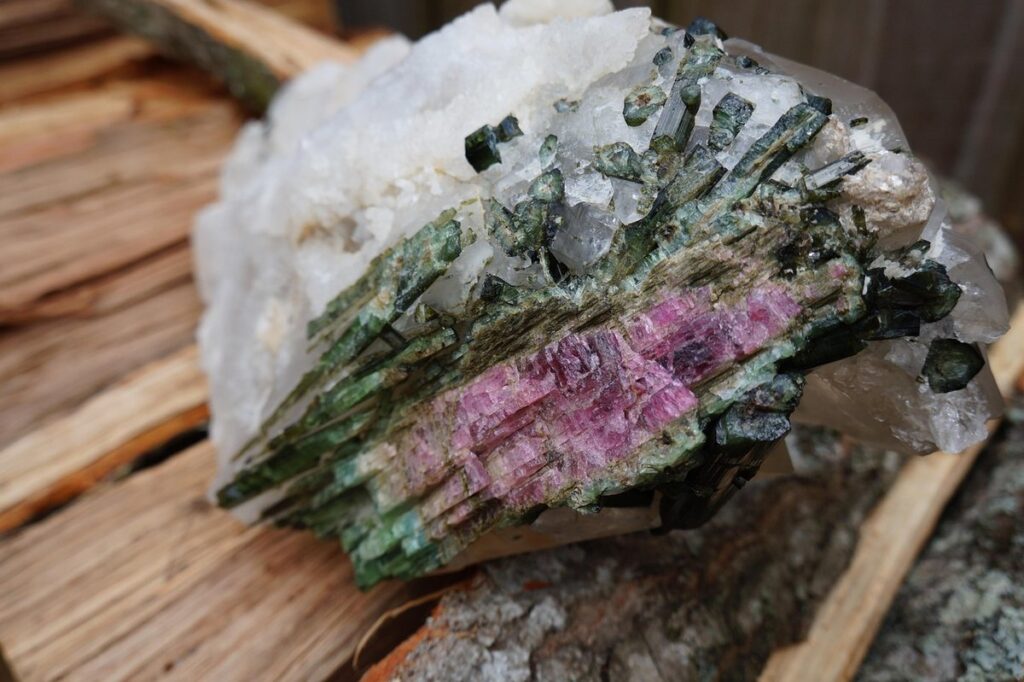
Watermelon tourmaline is one of the most unique and sought-after varieties of green tourmaline. Its distinctiveness lies in its extraordinary color pattern, which features a vibrant green core surrounded by a radial band of pink or red. This striking contrast between the two colors creates an iridescent effect that’s truly mesmerizing.
What sets watermelon tourmaline apart is its rarity – it’s one of the most difficult types to find due to specific geological conditions required for its formation. The result is a gemstone that not only boasts exceptional color but also possesses a distinct spiritual significance. Watermelon tourmaline is said to promote emotional balance and harmony, encouraging users to cultivate inner peace.
When shopping for watermelon tourmaline, look for stones with strong radial patterns, as these tend to be more vibrant and intense. Avoid pieces with muted or faded colors, as they may lack the gem’s characteristic charm. When worn or displayed, watermelon tourmaline is said to attract positive energy, manifesting its unique balance and harmony properties in everyday life.
Yellow and Brown Tourmaline: Optimism and Grounding
As we continue our journey through the vibrant world of tourmaline, let’s dive into the sunny optimism and grounding energies of yellow and brown tourmalines. These unique crystals hold special properties that can uplift and calm us.
Yellow Tourmaline
Yellow tourmaline is often associated with feelings of happiness and optimism, making it a popular choice for those seeking to cultivate a positive mindset. Its sunny color is said to radiate warmth and energy, much like the sun itself. This uplifting stone is believed to help dispel negative thoughts and emotions, promoting an overall sense of well-being.
As a symbol of joy and abundance, yellow tourmaline is often used in crystal healing to bring balance and harmony into one’s life. It’s said to support personal growth by encouraging self-expression and creativity, helping individuals break free from limitations and tap into their full potential.
Practically speaking, you can use yellow tourmaline in meditation or as a daily talisman to boost your mood. Place it on your altar or wear it as jewelry to absorb its energizing vibrations. Some people also find it helpful to pair yellow tourmaline with other uplifting stones like citrine or sunstone for enhanced effects.
Remember, the true power of yellow tourmaline lies in its ability to inspire positivity and motivation within us. By embracing its energy, we can tap into our inner source of joy and live more vibrant, purposeful lives.
Brown Tourmaline (Dravite)
Brown tourmaline, also known as dravite, is a lesser-known but equally powerful variant of this incredible gemstone. While it may not be as flashy as its multicolored counterparts, brown tourmaline has a unique energy that promotes stability and grounding. Its warm, earthy tone resonates deeply with our sense of connection to the natural world.
When it comes to spiritual growth, brown tourmaline is said to facilitate a deeper understanding of ourselves and our place in the universe. It’s believed to promote feelings of calmness and centeredness, helping us navigate life’s challenges with greater ease. In terms of practical applications, brown tourmaline is often used in meditation and energy healing practices to anchor and balance one’s energy.
One way to incorporate brown tourmaline into your daily routine is to place a small piece in a room where you spend a lot of time. This can help create a sense of stability and calmness in your environment. You can also wear a brown tourmaline pendant or ring as a subtle reminder of its grounding properties. By working with this stone, you may find yourself feeling more centered and connected to the world around you.
Rare and Unique Colors of Tourmaline
Let’s dive into some of the rarest and most stunning color variations of tourmaline, each with its own unique charm and significance. From emerald green to sapphire blue, we’ll explore the full spectrum of this incredible gemstone.
Multicolor Tourmaline
Multicolor tourmalines are truly one-of-a-kind gemstones that captivate us with their mesmerizing combinations of colors. These vibrant stones owe their unique appearance to the presence of multiple minerals within a single crystal structure, creating intricate patterns and hues. Typically, multicolor tourmaline exhibits a combination of pink, red, blue, green, or yellow shades, often gradating from one color into another.
One notable example is the so-called “Paraiba” tourmaline, renowned for its striking electric blue-green coloration. This rare gemstone owes its distinct appearance to the presence of manganese and iron within its crystal structure. Multicolor tourmalines can also feature a phenomenon known as “watermelon” or “peach-blossom” pattern, where bands of pink and green colors intermingle.
While multicolor tourmaline’s beauty is undeniable, it’s worth noting that this variety is relatively rare in nature. This scarcity contributes to its allure and value among collectors and connoisseurs. When searching for a genuine multicolor tourmaline, look for stones displaying distinct color gradations or banding patterns. Keep in mind that lab-created tourmalines can mimic natural colors but often lack the intricate inclusions characteristic of naturally occurring gemstones.
Paraiba Tourmaline (Blue-Green)
Paraiba tourmaline is one of the most extraordinary gemstones to have been discovered in recent history. This rare and unique variety of tourmaline owes its breathtaking blue-green color to the presence of copper, which replaces iron in the crystal structure. The result is a mesmerizing hue that’s unlike any other tourmaline on the market.
What sets Paraiba tourmaline apart from other gemstones is its exceptional rarity. Found primarily in Brazil, it’s estimated that only a handful of Paraiba tourmalines are mined each year. This scarcity contributes to their immense value and allure. When light hits a Paraiba tourmaline, it scatters in a way that creates an iridescent effect, often referred to as “oil droplet” or “peacock” colors.
If you’re lucky enough to get your hands on a Paraiba tourmaline, be prepared for a truly unique experience. These gemstones are highly prized by collectors and connoisseurs due to their one-of-a-kind color patterns. To appreciate the full beauty of a Paraiba tourmaline, consider setting it in a pendant or ring where its colors can dance in the light.
Caring for Your Tourmaline Gemstones
To keep your vibrant tourmaline gemstones looking their best, it’s essential to care for them properly and store them in a way that prevents damage. Here are some tips on how to do just that.
Cleaning and Maintenance
To keep your tourmaline gemstones sparkling for years to come, it’s essential to clean and maintain them properly. Tourmaline is relatively durable with a hardness of 7-7.5 on the Mohs scale, but it can still be damaged by harsh chemicals or excessive heat.
When cleaning your tourmaline, avoid using ultrasonic cleaners or steam cleaners as they can cause damage to the stone’s crystal structure. Instead, gently wipe your tourmaline with a soft cloth and mild soap solution. For more thorough cleanings, you can soak the gemstone in warm water mixed with a small amount of ammonia or vinegar for about 15 minutes.
It’s also crucial to store your tourmaline safely to prevent scratches and damage. Keep them separate from other gemstones that may be harder or softer than tourmaline, and avoid stacking them on top of each other. To maintain their vibrant colors, expose your tourmaline to natural light for short periods only, as excessive sunlight can cause fading.
By following these simple care tips, you’ll be able to enjoy the beauty of your tourmaline gemstones for years to come.
Storage and Display
Storing tourmaline gemstones requires attention to their unique properties. As they are prone to scratches and fading, it’s essential to store them separately from other jewelry pieces. Consider using a soft pouch or a padded box lined with velvet or silk to prevent scratching. This will also help maintain the vibrancy of the stone.
When displaying tourmaline gemstones, highlight their vibrant colors by showcasing them against complementary backgrounds. For instance, pair pink or red tourmalines with neutral-toned wood or metal, allowing the stone’s color to take center stage. Alternatively, use a colored glass or crystal case that complements the stone’s hue.
To add an extra touch of elegance, consider displaying your tourmaline pieces on a velvet-covered jewelry stand or tray. This will not only protect the stone but also showcase its beauty. You can also place a few drops of oil, such as jojoba or olive oil, on a soft cloth and gently wipe down the tourmaline to enhance its luster.
In addition to proper storage and display, avoid exposing your tourmaline gemstones to direct sunlight for extended periods. While some sun exposure may be beneficial in enhancing the stone’s color, excessive exposure can cause fading or discoloration. By taking these precautions, you’ll be able to enjoy your tourmaline pieces for years to come.
Tourmaline also responds well to being placed near a window with filtered natural light. This gentle illumination will not only maintain but also deepen the stone’s vibrant colors. Consider placing your tourmaline jewelry on a dresser or nightstand where it can be admired during the day.
Frequently Asked Questions
What are the ideal care conditions for tourmaline gemstones?
Tourmaline is a relatively durable stone, but it does require special care to maintain its beauty. Store your tourmalines separately from other jewelry pieces and avoid exposing them to direct sunlight or harsh chemicals. Clean your tourmalines regularly using mild soap and lukewarm water. This will help preserve their vibrant colors and prevent damage.
Can I combine different types of tourmaline in one piece of jewelry?
Yes, combining different types of tourmaline can create a unique and stunning piece of jewelry. For example, pairing red rubellite with blue schorl or green tourmaline with yellow dravite can create a striking contrast that complements the natural properties of each stone.
How do I choose the right type of tourmaline for my personal energy and intentions?
The choice of tourmaline depends on your individual needs and intentions. If you’re looking to balance your emotions, consider using pink or watermelon tourmaline. For physical healing, opt for blue schorl or red rubellite. Multicolor tourmaline can be used for its universal balancing properties.
What’s the best way to display my tourmaline collection?
To showcase your tourmaline collection, store each piece separately in a protective case and avoid exposing them to direct sunlight. Consider displaying rare and unique colors like paraiba tourmaline or multicolor tourmaline in a prominent location where you can appreciate their beauty.
Can I use tourmaline in spiritual practices beyond jewelry?
Yes, tourmaline is often used in various spiritual practices due to its unique energies and properties. You can meditate with tourmaline or place it on specific areas of your body for healing. Be sure to cleanse the stone regularly to maintain its effectiveness.