
If you’re anything like me, you’ve got a sketchbook just waiting for some creativity to pour into it. But sometimes, we get stuck in a rut and don’t know where to start. That’s where fun doodles come in – they’re the perfect way to break through that creative barrier and have some fun while expressing yourself. Whether you’re a seasoned artist or just starting out, doodling can be a great stress-reliever and an amazing way to explore your imagination. In this article, we’ll take you on a journey of simple yet engaging doodles to draw in your sketchbook. From beginner-friendly designs to more intricate patterns, we’ve got you covered. Get ready to unleash your creativity and make some artistic magic happen – all with just a pencil and paper!
Getting Started with Doodling
To get started, let’s begin with some simple doodle techniques and basic tools you’ll need to bring your sketchbook creations to life.
Benefits of Doodling for Beginners
Doodling is an excellent activity for both children and adults, offering numerous benefits that can enhance their lives. One of the most significant advantages of doodling is stress relief. By allowing yourself to focus on a simple drawing or pattern, you can calm your mind and reduce anxiety levels. For instance, studies have shown that individuals who engage in creative activities like doodling experience a decrease in cortisol levels – the hormone responsible for stress.
Doodling also improves focus by training your brain to concentrate on a specific task. This skill can be applied to other areas of life, helping you stay focused and productive. Moreover, doodling fosters creativity, encouraging experimentation and innovation. By trying out new patterns or styles, you’ll discover new ideas and techniques that can be incorporated into other creative pursuits.
As a beginner, start by setting aside a few minutes each day to doodle in your sketchbook. Begin with simple shapes and lines, gradually moving on to more complex designs. Remember, the goal is not to create a masterpiece but to enjoy the process of creating something new.
Essential Drawing Tools for Doodlers
When it comes to doodling, having the right tools can make all the difference. You don’t need to break the bank on fancy supplies, but investing in a few essential items will help you get started and take your doodles to the next level.
First and foremost, you’ll want to choose a pencil that’s comfortable to hold and draw with. A #2 graphite pencil is a great starting point – it’s versatile and easy to use for both fine details and broader strokes. Don’t be afraid to experiment with different brands or types of pencils to find one that suits your style.
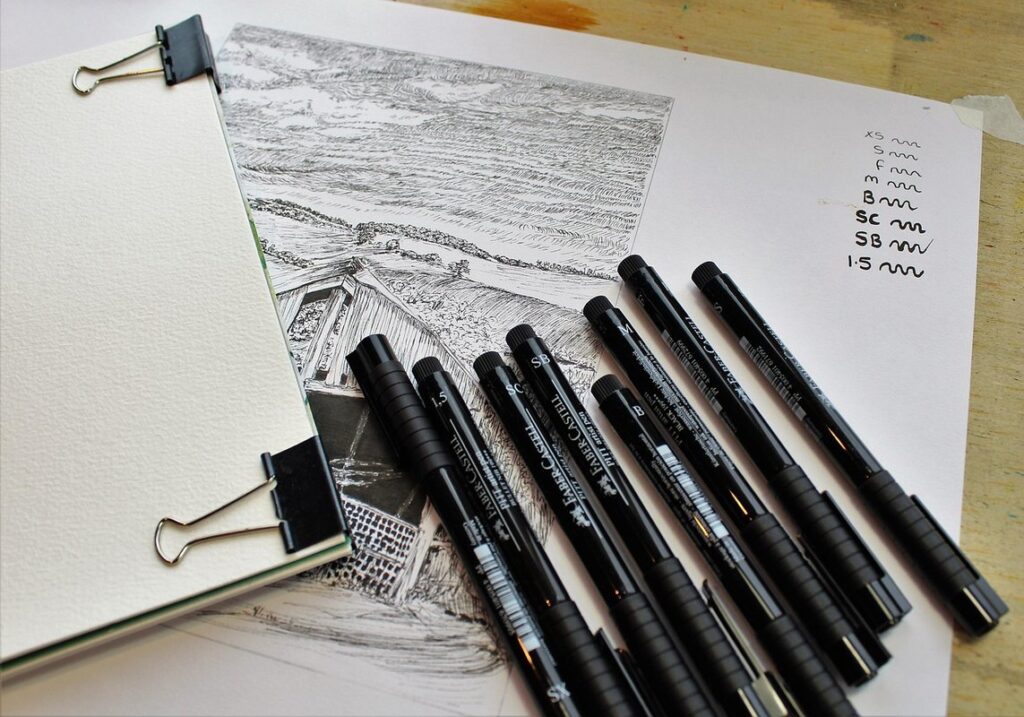
A pen is also a must-have for doodling, as it allows for varying line weights and textures. A fine-tip pen, such as a Micron or a Sakura, is ideal for adding details and creating intricate designs. For thicker lines and bold statements, a marker can be just what you need – try a Copic or Prismacolor.
When it comes to paper, don’t overlook the importance of choosing the right type. Look for smooth, high-quality paper that won’t bleed or feather when using liquid media. A sketchbook with mixed media paper is perfect for doodling – it allows for experimentation with different tools and techniques without worrying about ruining your work.
Tips for Setting Up a Sketchbook
When setting up a sketchbook for doodling, it’s essential to consider a few key factors. First, choose a book with high-quality paper that can handle various drawing tools and mediums without bleeding or buckling. Look for pages with a smooth texture, as they will make it easier to create detailed designs.
Next, decide on the size of your sketchbook. A larger format allows for more intricate drawings, while smaller books are perfect for quick sketches and on-the-go doodling. Consider the proportions of the book too – some people prefer the 9×12 inch format, while others like the compactness of an A5 or 6×8 inch book.
Think about the layout as well. Do you want a grid, a spiral, or a plain notebook? Each type has its benefits: grids are perfect for precise drawings, spirals allow for easy flipping and sketching on both sides, and plain notebooks provide endless possibilities for experimentation.
Remember, the most crucial aspect is to make your sketchbook your own – fill it with doodles that reflect your personality and style. Don’t be afraid to experiment and try new things; that’s where the true creativity lies!
Whimsical Creatures: Fun Doodles to Draw
Let’s get creative and dive into some fantastical doodles! You’ll love drawing these adorable, mischievous creatures that will bring a smile to your face.
Doodling Cute Animals
If you’re looking to bring a smile to your face and some joy to your sketchbook, doodling cute animals is an excellent place to start. With just simple shapes and lines, you can create adorable cats, dogs, birds, and other popular pets that will brighten up any page.
To draw a cute cat, begin by sketching a small oval for the head and a slightly larger oval for the body. Add two triangular ears on top and a small curved tail at the back. Use simple lines to create whiskers and eyebrows, and don’t forget to add some cute nose and mouth details. You can experiment with different textures and patterns for your cat’s fur.
For dogs, try drawing a slightly more elongated oval body with a smaller oval head attached by a short neck. Add two floppy ears on top and a wagging tail at the back. Use wiggly lines to create the dog’s fur texture, and don’t forget to add some cute nose and mouth details.
When it comes to birds, you can draw a small triangle for the head and attach a longer oval body with two wings on either side. Add a long curved beak and some simple feathers around the body. You can experiment with different bird species by changing the shape of the body and adding distinctive features like a parrot’s colorful plumage or an owl’s wise eyes.
Remember, doodling cute animals is all about having fun and experimenting with different shapes and lines. Don’t worry too much about perfection – it’s okay if your drawings aren’t realistic, as long as they bring you joy!
Fantasy Beasts and Mythical Creatures
Get ready to unleash your inner artist and explore the fantastical world of mythical creatures. In this section, we’ll take you on a journey to draw dragons, unicorns, mermaids, and other magical beings that will transport you to a realm of wonder.
Let’s start with dragons – those majestic, fire-breathing creatures that have captivated our imagination for centuries. To doodle a dragon, begin by sketching a large oval shape for the body, followed by two smaller circles for the head and neck. Add some wings (either curved or straight) and a long tail. Don’t forget to include scales and claws – you can use lines, shapes, or patterns to create these textures.
Unicorns are another popular mythical creature that exudes magic and beauty. To draw a unicorn, start with a horse’s body, then add a single horn protruding from the forehead (make it as elaborate or simple as you like). Don’t forget the mane – use flowing lines or curved shapes to create this majestic feature.
When doodling mermaids, think about combining human and fish elements. Sketch a humanoid figure with a fishtail instead of legs, adding some shimmery scales or seaweed for added detail. You can also draw seashells, sea stars, or other ocean-inspired elements to surround your mermaid friend.
These creatures are not only fun to draw but also serve as a reminder that doodling is all about experimentation and creativity. Feel free to mix and match features from different mythical beings to create something entirely new – after all, the world of fantasy is full of endless possibilities!
Abstract Designs: Geometric Patterns and Shapes
Let’s dive into geometric patterns, where shapes and lines come together in perfect harmony to create visually striking designs that are sure to inspire. We’ll explore some amazing ideas for you to try out!
Geometric Doodles for Beginners
Geometric doodling is all about playing with shapes to create intricate and visually appealing designs. As a beginner, it’s essential to start with the basics. Let’s begin with some simple shapes like triangles, circles, and squares. You can use a ruler or draw them freehand – either way, it’s a great exercise in developing your fine motor skills.
Start by drawing a few triangles of varying sizes and orientations. Experiment with different angles and combinations to create unique patterns. For example, try placing two triangles together to form a larger shape. This will help you understand how shapes can be manipulated to create something new.
Once you’re comfortable with basic shapes, it’s time to move on to more complex designs like mandalas and tessellations. These involve repeating patterns of shapes to create intricate and symmetrical designs. Don’t worry if your first attempts look messy – practice makes perfect, and soon you’ll be creating stunning geometric doodles that will make your sketchbook shine!
Creating Complex Patterns with Simple Tools
Creating complex patterns with simple tools is a great way to add depth and interest to your doodles. You can use basic shapes like triangles, circles, and squares to create intricate designs that look far more complicated than they actually are. One technique is to start by drawing a series of interconnected circles or hexagons, then add in additional details like lines, arcs, or geometric patterns.
To take this even further, try using different sizes and scales for your shapes, allowing them to overlap and interact with one another in interesting ways. This can create a sense of movement and energy in your design, drawing the viewer’s eye around the page.
You can also experiment with symmetry by creating mirror images or repeating patterns on either side of a central axis. For example, draw a series of interconnected triangles on one side of a vertical line, then repeat them on the other side for a sense of balance and harmony.
Inspirational Sources: Where to Find New Ideas
When you’re feeling stuck, where do you turn for inspiration? From social media to online communities and books, there are countless resources waiting to spark your creativity.
Social Media Platforms for Doodle Inspiration
Social media platforms have become an incredible resource for doodle inspiration. By tapping into the creative communities on these sites, you can discover new ideas and techniques to incorporate into your sketchbook doodles.
One of the best places to start is Instagram, where artists share their work through visually appealing posts and stories. Use hashtags like #doodles, #sketchbookart, or #illustration to discover fresh inspiration. You can also join Facebook groups dedicated to doodling and drawing, which often feature member-submitted artwork for critique and feedback.
Pinterest is another treasure trove of doodle ideas, with boards dedicated to various themes and styles. Browse through sections like “Doodle Inspiration” or “Sketchbook Art” to find inspiring images that spark your creativity. To make the most out of these platforms, engage with other artists by commenting on their posts, sharing your own work, and participating in challenges or discussions.
By leveraging social media effectively, you can turn a blank page into a canvas of endless possibility, filled with unique doodles that reflect your personality and style.
Real-Life Observation for Authenticity
Observing real-life patterns and shapes is an essential part of developing authentic doodle designs. When you take note of the intricate details that surround us every day, it’s amazing what inspiration can strike. Take a walk outside and pay attention to the architecture of buildings, the textures of leaves on trees, or the swirls in a river. You’ll start to notice repeating patterns, shapes, and lines that can be reimagined as doodles.
For instance, the branching of tree limbs can become an intricate network of lines and curves, while the overlapping scales of fish can form an interesting arrangement of geometric shapes. Even the simple act of observing the play of light on different surfaces can spark a new design idea. The key is to slow down, observe carefully, and let your curiosity guide you.
When incorporating these observations into your doodles, remember that it’s not about copying nature exactly but rather using its forms as a starting point for your own creative expression.
Experimentation and Practice: Tips for Continuous Improvement
Now that you’ve mastered some basic doodle techniques, it’s time to take your skills to the next level through experimentation and practice. Here are our top tips for continuous improvement in your sketchbook.
Overcoming Frustration and Self-Doubt
We’ve all been there – staring at a blank page, feeling like our doodles aren’t good enough. Frustration and self-doubt can creep in, making us want to put down our pencils and give up on creativity altogether. But don’t let these negative thoughts get the best of you!
When faced with frustration, take a deep breath and remind yourself why you started doodling in the first place. Is it for relaxation? Self-expression? To tap into your imagination? Whatever your reason, hold onto that spark. It’s essential to approach doodling as a process, not a product. Focus on the joy of creating, rather than the end result.
To overcome self-doubt, try this simple exercise: set aside your sketchbook and doodle on a piece of scrap paper or even on a sticky note! The goal is to create freely without judgment. Don’t worry about what others might think – just let your pen wander. This technique can help you quiet that inner critic and tap into your creativity. And remember, it’s okay to make mistakes – they’re an essential part of the creative journey!
Setting Realistic Goals and Challenges
As you continue to experiment and practice doodling in your sketchbook, it’s essential to set realistic goals and challenges for yourself. This will help you stay motivated, track your progress, and push your creativity boundaries.
Start by setting specific, achievable targets. For instance, try to draw a new doodle every day or create a certain number of unique designs within a week. You can also challenge yourself to explore different mediums, like colored pencils, markers, or even watercolors. Remember, the goal is to have fun and improve your skills, not to create perfect art.
To make it more engaging, set mini-challenges for yourself. For example, try drawing doodles with your non-dominant hand or incorporate a specific theme, like animals or architecture, into your designs. You can also join online communities or find fellow sketchbook enthusiasts to share tips and inspire each other.
By setting realistic goals and challenges, you’ll be more likely to stay committed to your practice and enjoy the creative journey. Don’t be too hard on yourself if you don’t see immediate results – remember that improvement takes time, patience, and consistent effort.
Conclusion: Embracing the Joy of Doodling
Now that you’ve discovered a world of doodle ideas, it’s time to wrap up your sketchbook journey and explore how doodling can bring joy into your daily life.
Final Thoughts on Doodling’s Benefits and Fun
As we conclude our journey through the wonderful world of doodles to draw in your sketchbook, it’s essential to remember just how beneficial this creative pursuit can be. Not only does doodling offer a unique outlet for self-expression and imagination, but it also has a profound impact on both mental and emotional well-being.
By incorporating doodling into your daily routine, you’ll find yourself better equipped to handle stress and anxiety. The repetitive motions involved in doodling have been shown to stimulate the brain’s default mode network, which can help quiet the mind and promote relaxation. Moreover, doodling provides an entertaining distraction from the demands of everyday life, allowing you to unwind and recharge.
As you continue to explore the world of doodles, remember that creativity knows no bounds! Don’t be afraid to experiment with new styles, techniques, or themes – it’s in embracing this freedom that we truly unlock the full potential of doodling. So go ahead, grab your sketchbook, and let the joy of doodling become a consistent companion on your creative journey.
Encouragement for Lifelong Learning
As you’ve been exploring the world of doodling and sketchbooking with us, we hope you’re beginning to see the endless possibilities it has to offer. Now that you have a solid foundation in getting started with doodling and are familiar with various techniques, inspirational sources, and tips for improvement, it’s essential to cultivate a mindset that will allow you to continue growing as an artist.
To do so, we must remember that learning is a lifelong journey. Encouragement for Lifelong Learning begins with recognizing that there’s always room for growth and that the process of doodling is not just about creating something aesthetically pleasing but also about expressing oneself and exploring new ideas. By embracing this mindset, you’ll be more open to trying new techniques, experimenting with different materials, and pushing beyond your comfort zone.
Set aside time each week to explore a new style or technique. You can find countless videos on YouTube, sketching communities online, and blogs dedicated to various styles of doodling. Take notes on what resonates with you and why.
Frequently Asked Questions
Can I use digital tools or apps to create doodles, or do I need traditional mediums?
Traditional mediums like pencils and paper are perfect for doodling, but you can also experiment with digital drawing apps or software if that’s what you prefer. Many artists combine both traditional and digital methods to create unique pieces.
How long should I dedicate to doodling each day/week to see improvement in my skills?
Consistency is key! Set aside a specific time slot each day or week, even if it’s just 15-20 minutes, to practice doodling. As you continue to draw, you’ll find that your skills will improve over time.
Are there any specific sketchbook sizes or paper types that are ideal for doodling?
Choose a sketchbook size and paper type that suits your comfort level. A4 or letter-sized sketchbooks with smooth 80-100 gsm paper work well for most doodlers. Experiment with different sizes and papers to find what works best for you.
How can I incorporate my personal style into my doodles, making them more unique and expressive?
Infuse your doodles with your personality by experimenting with different line styles, patterns, and colors. Pay attention to your surroundings and draw inspiration from nature, architecture, or art pieces that resonate with you.
Can I use doodling as a way to create gifts for friends and family, or is it more suited for personal expression?
Doodling can be both therapeutic and a thoughtful gift-giving activity! Consider creating custom doodle artwork for special occasions like birthdays, holidays, or milestones.