
Are you tired of feeling stuck or uninspired when it comes to your drawing skills? Do you wish you had more time and energy to devote to your creative pursuits? A dedicated sketchbook can be just the thing to breathe new life into your artistic endeavors. Not only does maintaining a regular sketching practice help improve your technical skills, but it also has a profound impact on mental well-being, reducing stress and anxiety while boosting creativity. In this article, we’ll explore how setting up a sketchbook, finding online inspiration, and experimenting with different media and techniques can elevate your drawing game. We’ll dive into practical tips and ideas to get you started, so grab a pen and paper and let’s begin our journey together!
The Importance of a Dedicated Sketchbook
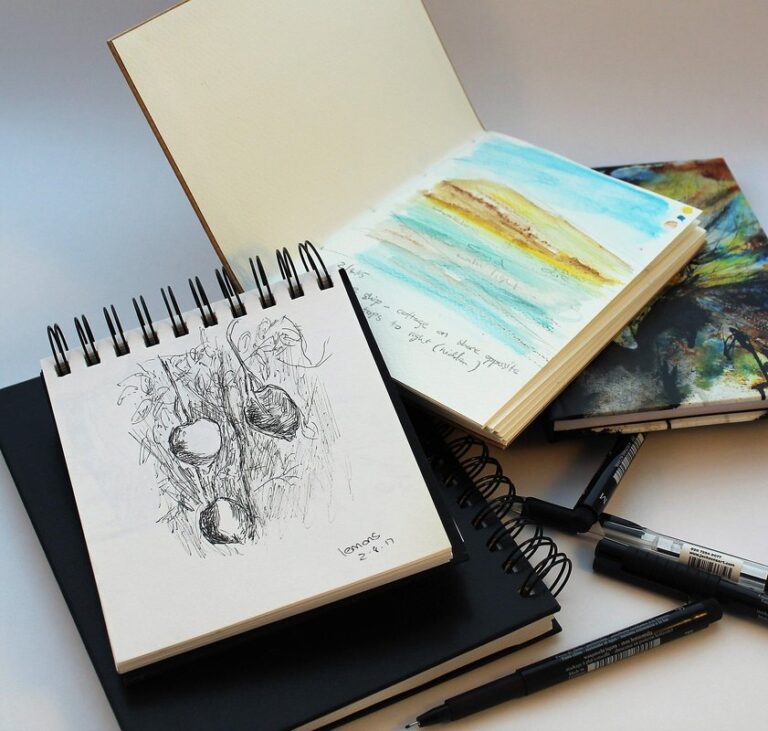
Having a dedicated sketchbook is essential for any creative journey, allowing you to freely experiment and explore ideas without judgment or pressure. It’s where your true creativity can flourish and shine.
Understanding the Benefits of Sketchbooking
Maintaining a dedicated sketchbook can have numerous benefits for artists and creatives. Not only does it provide an outlet for your ideas, but it also helps to improve your drawing skills over time. Regular practice in your sketchbook allows you to experiment with different techniques and mediums, which is essential for growth as an artist.
In addition to honing your craft, sketchbooking can be a therapeutic activity that reduces stress and anxiety. By dedicating time each day or week to creating in your sketchbook, you’ll find yourself unwinding and focusing on the present moment. You’ll also develop observational skills as you learn to accurately capture what you see.
To get started with sketchbooking, begin by setting aside a specific time each day to dedicate to drawing. Choose a subject that inspires you – it could be a still life, landscape, or even an everyday object. Start simple and focus on capturing the overall shape and form of your subject before moving on to finer details. As you continue to practice regularly, you’ll notice improvements in both your technique and creativity.
Setting Up Your Sketchbook for Success
When setting up your sketchbook for success, the right materials can make all the difference. Begin by choosing a high-quality sketchbook paper that suits your drawing style. Look for papers with a smooth texture and a durable binding that will withstand frequent use. For pencils, select a range of graphite pencils (HB, 2B, 4B, 6B) to achieve varying line weights and shading effects.
An eraser is also essential, but not just any eraser will do. A kneaded eraser allows for subtle corrections and can be molded into small areas for precision. A white vinegar eraser or a Staedtler eraser pencil is great for larger corrections.
To cultivate the habit of regularly using your sketchbook, designate a specific space for sketching that’s free from distractions. This could be a corner in your home office or even a dedicated art nook. Keep your materials within easy reach to make it convenient to grab your sketchbook and pencils whenever inspiration strikes.
Finding Inspiration: Online Resources and Communities
In today’s digital age, there are countless online resources and communities waiting to spark your creativity. Let’s explore some of our favorite tools for finding inspiration.
Discovering Sketchbooks on Social Media
Exploring the world of social media can be an incredible way to discover new sketchbooks and spark inspiration for your own drawing ideas. Instagram and Pinterest are two platforms where artists share their sketchbooks with a global audience, making it easy to stumble upon unique styles and techniques.
To find inspiration on these platforms, start by using relevant hashtags such as #sketchbook or #artistshare. Browse through the results, paying attention to what catches your eye. You might come across a particular color palette, composition style, or even a favorite medium. Make a mental note of what draws you in and consider how you can incorporate those elements into your own work.
One of the best ways to learn from others is by analyzing their sketchbooks as a whole rather than individual pieces. Look for artists who share their process, including how they set up their sketches, plan their layouts, and experiment with different materials. By observing these details, you’ll gain insight into their creative thought process and might even discover new techniques to try in your own practice.
Joining Online Communities for Sketchers
Joining online communities for sketchers is an excellent way to stay motivated, learn from others, and get feedback on your work. By connecting with fellow artists who share similar interests, you can gain a fresh perspective on your projects and stay inspired.
When engaging with these communities, remember that the goal is to give as much as you take. Start by introducing yourself, sharing your sketchbook or latest artwork, and asking for feedback. This will help you build relationships and establish trust within the group. Don’t be afraid to ask questions or seek guidance from more experienced artists.
To get the most out of these online communities:
* Share your process: Describe how you tackle a particular piece or technique.
* Be open to constructive criticism: Use feedback as an opportunity to learn and grow.
* Participate in discussions: Join conversations about art, techniques, and inspirations.
* Offer help when you can: Share your expertise or provide resources for others.
By actively engaging with these online communities, you’ll not only stay connected with fellow sketchers but also improve your skills and spark new ideas.
Techniques for Filling Your Sketchbook
Now that you have a solid sketchbook, let’s dive into some practical techniques to fill its pages with creativity and inspiration. From warm-up exercises to observational drawing.
Basic Drawing Exercises for Warm-Up Pages
When you first crack open your sketchbook, it’s natural to feel a twinge of anxiety. Will you create something amazing, or will it be a blank page staring back at you? The key is to loosen up and get those creative juices flowing. One way to do this is with basic drawing exercises that can help warm up your hand and mind.
Start by doing simple gesture drawings of everyday objects, like fruit or household items. Don’t worry too much about accuracy – focus on capturing the overall shape and movement of the object. For example, quickly sketch a vase in 5-10 seconds. Then, move on to drawing its shape, paying attention to proportions and perspective.
Another exercise is contour drawing: carefully tracing the outline of an object or person without looking at your paper. This will help you develop observational skills and pay attention to details. You can also try simple gesture drawings of body parts, like arms or legs. The goal is not to create a masterpiece but to get comfortable with your tools and let your imagination flow.
Remember, the more you practice these basic exercises, the easier it becomes to fill those blank pages with creativity!
Experimenting with Different Media and Techniques
As you experiment with different media and techniques in your sketchbook, remember that there’s no right or wrong – only endless possibilities waiting to be discovered. Start by exploring the unique characteristics of various mediums: pencils offer precision and control, charcoal adds a gestural quality, while watercolors bring an unpredictable, fluid nature.
Don’t be afraid to combine these media for unexpected effects. For example, layering charcoal beneath pencil marks can create deep contrast, while blending watercolors with a wet brush can produce subtle gradations of tone. Practice switching between mediums and techniques within the same page or spread to create visually interesting contrasts.
To take your experimentation to the next level, try applying different textures and materials to your sketchbook pages. Colored paper, tracing paper, or even fabric scraps can add tactile interest and challenge your drawing skills. By embracing failure and exploring new possibilities, you’ll unlock fresh perspectives and ideas that will breathe life into your sketchbook.
Filling Your Sketchbook with Subject Matter
When it comes to filling your sketchbook, inspiration can often strike when you least expect it. Let’s explore some ways to capture those fleeting ideas and turn them into a consistent flow of creative sparks.
Drawing from Observation: Still-Life and Nature
When it comes to drawing still-life compositions and nature scenes in your sketchbook, observing shapes, values, and textures is crucial for capturing their essence. Start by setting up a simple still life arrangement with objects that catch your eye, such as fruit or household items. As you begin to draw, focus on the overall shape of each object, paying attention to its contours, proportions, and placement in space.
To add depth and interest to your still-life drawing, practice observing values – the light and dark areas within each object. Notice how shadows fall across surfaces and use a range of values to convey this sense of dimensionality. Nature scenes offer endless opportunities for observation, too. When drawing trees or plants, pay attention to their textures: the rough bark of tree trunks, the softness of leaves, or the intricate patterns on flower petals.
When observing nature, take note of how light interacts with different surfaces, creating a range of values and moods. Try to capture this interplay in your drawings by using simple shapes and gestural lines to convey the movement and energy of natural forms.
Incorporating Personal Projects and Themes
Incorporating personal projects and themes into your sketchbook is a fantastic way to add depth and meaning to your creative endeavors. By tracking progress over time and creating a narrative with your sketches, you can unlock new levels of engagement and inspiration.
Start by identifying a theme or project that resonates with you – it could be anything from exploring different textures to experimenting with color theory. Break down the project into smaller, manageable goals, and dedicate specific sections in your sketchbook to each one. This will not only help you stay organized but also allow you to see how your ideas evolve over time.
Use symbols, stickers, or washi tape to create visual markers for each section, making it easy to navigate and track your progress. You can also include notes, dates, or quotes related to the project to add context and meaning to your sketches. For instance, if you’re documenting a series of botanical drawings, you might include the name of the plant, its habitat, or interesting facts about its properties.
Remember, the key is to make it personal and fun – so don’t be afraid to experiment and try new things!
Maintaining Motivation and Consistency
Now that you’ve filled your sketchbook with fresh ideas, let’s talk about keeping that momentum going: staying motivated and consistent in your creative journey. This is where it gets really exciting!
Strategies for Staying Engaged with Your Sketchbook
When you start using a drawing ideas sketchbook, it’s easy to get excited and fill its pages with enthusiasm. However, as time passes, motivation can wane, and the book may collect dust on a shelf. To avoid this, it’s essential to develop strategies for staying engaged.
Set achievable goals for yourself, whether it’s completing a certain number of sketches within a week or mastering a new technique. Celebrate your progress by rewarding yourself with art supplies or taking a break to enjoy a favorite activity. Consistency is key; establish a regular sketching routine that suits your lifestyle and schedule. For instance, dedicate 15-30 minutes each morning to drawing before starting work.
Another way to stay motivated is by mixing up your sketches. Experiment with different mediums, styles, and subjects to keep things interesting. Create a theme for the week or challenge yourself to draw from life. The more variety you introduce into your sketchbook, the less likely you are to become bored and disengage.
Overcoming Creative Blocks and Frustrations
We’ve all been there – staring at a blank page, struggling to come up with even the simplest of ideas. Creative blocks and frustrations can be debilitating, especially when you’re trying to fill the pages of your drawing ideas sketchbook. But don’t worry, it’s normal, and there are ways to overcome them.
Firstly, take breaks! Give yourself permission to step away from your sketchbook for a bit. Go for a walk, do some stretching, or engage in a hobby that has nothing to do with art. Sometimes, our minds just need a break to recharge and come back to our drawing ideas fresh. When you return to your sketchbook, try approaching it with a different mindset – focus on the process rather than the end result.
Another trick is to adjust your expectations. Not every idea will be a masterpiece, and that’s okay. Remember why you started keeping an ideas sketchbook in the first place: to explore your creativity and have fun. Don’t put too much pressure on yourself to create perfect drawings. Lastly, don’t be afraid to seek inspiration from others – flip through art books, visit museums, or follow artists online. Sometimes, all it takes is a little spark of someone else’s creativity to get our own engines going again.
Conclusion: Reflecting on Your Sketchbook Journey
As you close your sketchbook, take a moment to reflect on your journey so far, celebrating the ideas that sparked and grew during this creative process. What did you learn about yourself?
Reviewing Progress and Identifying Areas for Improvement
As you near the end of your sketchbook journey, it’s essential to take a step back and review your progress. This isn’t just about admiring your artwork; it’s about identifying areas where you can improve and refining your skills.
Regularly reviewing your work helps you recognize patterns in your creativity, such as which themes or styles consistently excite you. You might notice that certain exercises or prompts have been particularly successful for sparking new ideas, while others haven’t yielded the results you hoped for. By acknowledging these trends, you can adjust your approach to focus on what’s working and minimize time spent on less productive activities.
Take a critical look at each section of your sketchbook: are there areas where you’re consistently struggling or feeling stuck? Are there specific mediums or techniques that you’re not mastering as quickly as you’d like? Make a list of these challenges, then brainstorm ways to overcome them. This might involve seeking guidance from online tutorials, practicing different strokes or textures, or experimenting with new materials.
As you make adjustments to your practice, keep in mind that improvement is often incremental. Don’t be too hard on yourself if progress doesn’t come immediately – every small step forward counts.
Continuing Your Journey with a Growth Mindset
As you close this chapter on your sketchbook journey, remember that true mastery is an ongoing process. A growth mindset will be your best companion as you continue to explore the world of drawing ideas and techniques. It’s essential to acknowledge that there’s always room for improvement, no matter how skilled or confident you may feel.
To cultivate a growth mindset, make it a habit to step out of your comfort zone regularly. Experiment with new tools, mediums, or styles – perhaps even switching between different sketchbook formats to keep things fresh and exciting. Don’t be afraid to fail; each attempt is an opportunity for learning and growth.
Reflect on the progress you’ve made so far, celebrating small victories along the way. Identify areas where you’d like to improve next and set realistic goals for yourself. Break these down into smaller, manageable tasks that will help you build momentum and confidence. By embracing challenges and staying committed to your creative development, you’ll unlock new levels of skill and self-expression in your drawing practice.
Frequently Asked Questions
How do I maintain consistency with my sketchbook practice?
Consistency is key when it comes to improving your drawing skills. Try setting aside a specific time each day or week to work on your sketchbook, and make sure you have all the necessary materials within reach. It’s also essential to schedule this time in your calendar and treat it as non-negotiable.
Can I switch between different media and techniques in my sketchbook?
Absolutely! One of the benefits of maintaining a dedicated sketchbook is that you can experiment with various mediums and techniques without worrying about wasting space or resources. Don’t be afraid to try new things, even if they don’t work out as expected – it’s all part of the learning process.
How do I deal with creative blocks and frustrations in my sketchbook?
When faced with a creative block, take a step back and give yourself permission to experiment and make mistakes. Try switching between different mediums or techniques, or even taking a break from your sketchbook altogether. Remember that setbacks are an inevitable part of the learning process.
Can I use my sketchbook for both personal and professional projects?
While it’s perfectly fine to use your sketchbook for personal projects, you may also want to consider using it as a portfolio for professional purposes. Be mindful of the content you create in your sketchbook, especially if you plan on sharing it with others.
How do I store and transport my sketchbook safely?
To prevent damage to your sketchbook, consider investing in a sturdy carrying case or bag that can protect it from dust, moisture, and other environmental factors. Make sure to handle your sketchbook with care when moving it around, and avoid exposing it to extreme temperatures or humidity levels.