
Identifying igneous rocks can be a daunting task, especially for those new to geology. You might find yourself staring at a rock outcropping, wondering if that speckled stone is a granite or an andesite. The ability to confidently identify these rocks is crucial in various fields such as geology, mining, and environmental science. Understanding the formation process of igneous rocks – from magma cooling beneath the Earth’s surface to volcanic eruptions – provides valuable insights into their characteristics, which in turn help with identification.
This comprehensive guide will walk you through the key factors involved in identifying igneous rocks. We’ll cover how to recognize common rock types based on their texture and composition, including methods for distinguishing between intrusive and extrusive rocks. Field techniques such as using a hand lens and identifying mineral patterns will also be discussed. By the time you finish reading this article, you’ll have gained the skills needed to accurately identify igneous rocks in various settings.
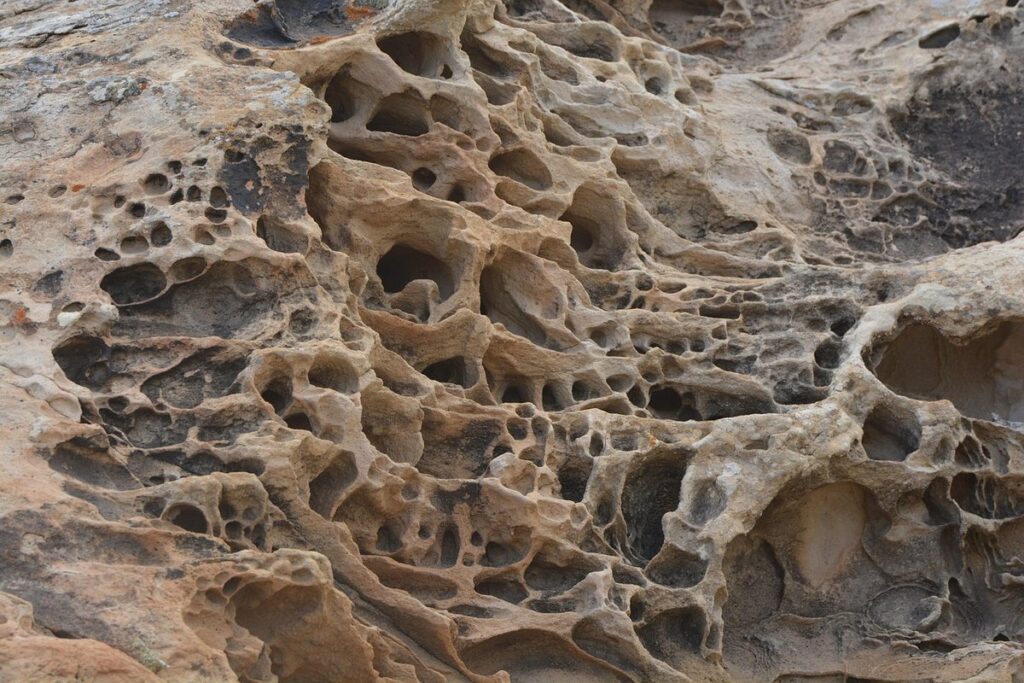
Understanding Igneous Rock Formation
To truly understand how to identify igneous rocks, you need to grasp their formation process, which begins with molten magma deep within the Earth’s crust. This section breaks down the key factors that shape igneous rocks’ characteristics.
The Magma Cycle
Magma is formed in the Earth’s mantle when carbon dioxide and water vapor dissolved in the rock’s minerals are released as pressure decreases. This process creates a decrease in density, causing the molten rock to rise towards the surface. There are two main types of magma: mafic (rich in magnesium and iron) and felsic (rich in silica). Mafic magma is less dense and tends to erupt explosively, producing highly viscous lava flows. Felsic magma is more viscous and typically produces less violent eruptions.
As magma rises through the crust, it encounters increasing heat loss and pressure decrease. This causes it to cool and solidify into intrusive rocks like granite or diorite. However, if the magma is able to reach the surface quickly enough, it can erupt as lava flows, producing extrusive rocks like basalt or andesite.
It’s essential for rock identifiers to understand the Magma Cycle because it influences the final texture and composition of igneous rocks. For example, rocks formed from mafic magma tend to have a glassy texture due to rapid cooling at the surface.
Cooling Rates and Rock Texture
When magma cools slowly, it allows minerals to form large crystals, resulting in rocks with a coarse-grained texture. In contrast, rapid cooling traps minerals in smaller crystals, producing rocks with a fine-grained or glassy appearance. This fundamental relationship between cooling rates and rock texture is crucial for identifying igneous rocks.
The rate of cooling also influences the development of distinctive textures within a rock. For instance, some igneous rocks exhibit a phenomenon called porphyritic texture, where large crystals are surrounded by smaller ones. This occurs when magma cools quickly enough to form small crystals, but then slows down, allowing larger crystals to grow.
To identify the cooling rate and its impact on rock texture, consider the following characteristics:
- Coarse-grained rocks often have a more varied mineral composition and may display visible crystal growth.
- Fine-grained or glassy rocks typically lack distinct mineral boundaries and can appear uniform in color.
- Rocks with porphyritic textures may exhibit both coarse and fine-grained areas within the same sample.
Understanding these relationships between cooling rates, rock texture, and structure will help you better identify igneous rocks in the field.
Characteristics of Igneous Rocks
Igneous rocks are formed from molten magma, and their unique characteristics can be a big help when trying to identify them. Look for distinctive textures like porphyritic or phaneritic patterns.
Mineral Composition
Igneous rocks are composed of a wide range of minerals, each with its own unique chemical composition and common occurrences. One of the most common minerals found in igneous rocks is quartz (SiO2), which is often present in granitic rocks. Feldspar, another essential mineral in igneous rocks, can be divided into three subtypes: plagioclase, orthoclase, and sanidine. Plagioclase feldspar is rich in calcium and aluminum, while orthoclase feldspar has a higher potassium content.
Pyroxene and amphibole are common minerals found in mafic and ultramafic rocks, respectively. Pyroxene has a general formula of (Ca,Fe,Mg)2Si2O6, while amphibole can be represented as Ca(Fe,Mn,Mg)5Al(Si7AlO22)(OH). Olivine, a mineral rich in magnesium and iron, is often present in basaltic rocks. Other minerals such as biotite and muscovite mica may also occur in igneous rocks.
To identify the mineral composition of an igneous rock, consider the rock’s texture and any visible mineral crystals. Look for distinctive crystal forms or cleavage patterns to narrow down the possible mineral identities.
Rock Texture Classification
Igneous rocks exhibit a range of textures, primarily influenced by cooling rates and the presence of crystals. The two main categories are phaneritic and porphyritic textures.
Phaneritic textures display uniformly distributed crystals throughout the rock. These rocks have cooled slowly enough for large crystals to form, resulting in a coarse-grained appearance. Granite is an example of a phaneritic igneous rock. To identify phaneritic textures, look for the presence of visible crystals and a uniform grain size.
Porphyritic textures feature larger crystals embedded within a finer-grained matrix. This occurs when magma cools slowly at first, allowing large crystals to form, then rapidly cools as it reaches the Earth’s surface. The result is an interlocking arrangement of coarse and fine grains. Obsidian is an example of a porphyritic igneous rock.
Other textures include glassy (rapidly cooled with little to no crystal formation) and pyroclastic (formed from volcanic ash). When classifying rock texture, consider both the size and distribution of crystals, as well as any visible signs of rapid cooling. This knowledge will aid in accurately identifying various types of igneous rocks.
Common Igneous Rock Textures
Igneous rocks exhibit a range of textures, each reflecting distinct cooling and crystallization processes. Fine-grained rocks are characterized by their uniform, even grain size, often giving them a smooth appearance. This texture typically forms when magma cools slowly over long periods. Basalt is an example of a fine-grained igneous rock.
Coarse-grained rocks, on the other hand, display larger crystals due to slower cooling rates or lower pressure conditions. Granite is a classic coarse-grained igneous rock, with its prominent crystal faces giving it a speckled appearance. Vesicular textures are also common in igneous rocks and result from trapped gas bubbles within the solidifying magma. Pumice and scoria are examples of vesicular rocks.
Understanding these textures can aid in identifying igneous rocks. For instance, coarse-grained rocks tend to be more dense than fine-grained ones due to their larger crystals. Vesicular rocks often display a characteristic “foamy” appearance. When examining an unknown rock, note its texture and compare it with reference samples or similar igneous rocks.
Field Identification Techniques
To identify igneous rocks in the field, you’ll need to observe their texture and mineral composition, which can be a challenge even for experienced geologists. Let’s start by breaking down these key factors.
Visual Inspection
When inspecting igneous rocks in the field, visual characteristics such as color, pattern, and texture provide valuable clues for identification. Start by observing the rock’s overall appearance. Note its dominant color, which can range from dark gray to pale pink or even black. Be aware that some igneous rocks may exhibit a mottled or streaked appearance due to differences in mineral composition.
Next, examine the rock’s pattern and texture. Basaltic rocks typically display a fine-grained, glassy texture, while those with larger crystals are often classified as gabbroic. The presence of phenocrysts – large crystals that form within the rock matrix – can also be an important distinguishing feature.
To distinguish between different types of igneous rocks, pay attention to any distinctive patterns or textures. For example, rocks with a “salt and pepper” appearance may be a type of diorite, while those with a coarse-grained texture are often syenites. Keep in mind that the rock’s color can provide additional clues; for instance, a rock with a bluish tint is likely to be a type of basalt or gabbro.
When possible, use a hand lens to inspect the rock’s surface more closely. This can help reveal subtle details such as mineral inclusions or small-scale texture variations that may aid identification.
Hand Sample Analysis
When collecting hand samples for analysis, it’s essential to gather enough material to assess various features. Choose a representative sample with minimal weathering and no signs of contamination. Use a rock hammer or geologist’s pick to carefully extract a small portion from the outcrop or boulder.
Examine the sample under different lighting conditions – natural light, shade, and possibly even a hand lens or magnifying glass – to observe its texture, color, and any distinctive features. Look for foliation, porphyritic texture, or other characteristics specific to igneous rocks. Use your fingers to gently rub the surface and check for any notable hardness differences between different areas.
A few essential tools will aid in your hand sample analysis: a hand lens (10x magnification) for closer inspection, a geologist’s hammer for breaking up samples, and a notebook or data sheet for recording observations. Focus on key features such as texture, mineral composition, and any notable inclusions. When possible, create multiple cross-sections to better understand the sample’s internal structure.
Comparison with Reference Samples
When using reference samples to aid in igneous rock identification, it’s essential to create a personal collection of well-characterized specimens. This collection should be diverse enough to represent various textures and mineral compositions found in igneous rocks. To start building your collection, focus on acquiring samples from known localities or areas with a history of significant volcanic activity.
A good reference sample should have a detailed label with information about its origin, texture, and any notable features. This label will help you quickly recall the characteristics of each sample when comparing it to unknown rocks in the field. When examining an unknown rock, match its texture and mineral composition against those in your reference collection. Consider the size and shape of crystals, as well as the overall grain structure.
Aim for a minimum of 10-15 samples that cover different types of igneous textures, such as phaneritic, porphyritic, or glassy rocks. Avoid collecting samples with unclear or uncertain origins, as this can compromise their value as reference points. Regularly review and update your collection to ensure it remains relevant for accurate identification in the field.
Advanced Identification Techniques
To take your rock-identification skills to the next level, we’ll be covering advanced techniques for pinpointing specific igneous rocks, such as microscopic examination and chemical analysis. These methods will help you make more precise identifications.
Microscopic Examination
When examining igneous rocks under a microscope, you’re looking for characteristics that can’t be seen with the naked eye. This technique is crucial for identifying specific minerals and textures within the rock. To begin, you’ll need access to a polarized light microscope or a petrographic microscope specifically designed for mineral identification.
Before starting your examination, make sure you have the necessary safety precautions in place. Wear protective eyewear, such as goggles, and work in a well-ventilated area. Familiarize yourself with the microscope’s controls and adjust the settings to optimize the image quality.
Under low magnification (around 40x), examine the rock for any visible mineral grains or structures. As you increase the magnification (up to 400x or higher), look for specific features such as crystal shapes, cleavage patterns, and inclusions. Note the colors and textures of the minerals present, as these can be distinctive indicators of certain minerals.
When examining igneous rocks microscopically, it’s also essential to document your findings. Take clear photographs or notes on the mineral composition, texture, and any other notable features observed.
Chemical Analysis
Igneous rock identification often requires chemical analysis to determine their mineral composition and elemental abundance. Two common methods used are X-ray fluorescence (XRF) and inductively coupled plasma mass spectrometry (ICP-MS). XRF uses a focused beam of X-rays to excite the atoms within the sample, which then emit characteristic X-rays that can be measured to determine their elemental composition.
ICP-MS involves bombarding a sample with high-energy argon ions, which ionize and break down the elements into their constituent atoms. These atoms are then sorted by mass-to-charge ratio using a quadrupole or time-of-flight mass analyzer, providing a precise determination of elemental abundance. Both techniques offer high accuracy and sensitivity, making them essential tools in igneous rock identification.
To choose between XRF and ICP-MS, consider the sample size and complexity. For small samples or those with complex mineralogy, XRF may be more suitable due to its ability to analyze multiple elements simultaneously without the need for extensive sample preparation. In contrast, ICP-MS is often preferred for larger samples or those requiring high-precision elemental analysis.
When using either technique, it’s essential to follow proper calibration and quality control procedures to ensure accurate results. This may involve running certified reference materials alongside your samples to validate analytical performance.
Case Studies: Real-Life Applications
Let’s take a look at how igneous rock identification plays out in real-world scenarios, including geological surveys and mining operations.
Geological Mapping
Geological mapping is a crucial application of igneous rock identification skills. By combining knowledge of geological processes with field observations and sampling techniques, geologists can create detailed maps of bedrock formations. When conducting geological mapping for an area rich in igneous rocks, consider the following best practices: Take note of the regional tectonic setting, as it influences the types of igneous rocks present. Use aerial photography or satellite imagery to identify potential outcrops and plan sampling routes accordingly.
During fieldwork, focus on collecting representative samples from each distinct rock unit. Analyze these samples using the techniques described in this guide, such as visual inspection and hand sample analysis. This will help you distinguish between different types of igneous rocks and understand their spatial relationships within the mapped area. For instance, if you identify a body of basalt with distinctive columnar joints, this could indicate a large-scale intrusive event that shaped the local geology.
Incorporate your findings into a detailed geological map, using symbols and colors to represent different rock types and structural features. This visual representation will enable others to quickly understand the geological history and composition of the mapped area. By integrating igneous rock identification skills with field mapping techniques, you can create accurate and informative maps that contribute to our understanding of regional geology.
Mineral Exploration
Igneous rock identification plays a crucial role in mineral exploration efforts. By accurately identifying the type of igneous rock present at a site, geologists can infer the presence of specific minerals and target them for extraction. For example, granitic rocks are often associated with quartz-rich veins, while basaltic rocks may indicate the presence of olivine or pyroxene.
To aid in mineral exploration, geologists use a combination of igneous rock identification techniques. These include visual inspection, hand sample analysis, and comparison with reference samples. For instance, if a geologist suspects that a site may be rich in copper, they would look for rocks with high concentrations of biotite or hornblende, which are common mineral indicators of copper-rich deposits.
In practice, this means that geologists should always collect and analyze igneous rock samples as part of their exploration efforts. By doing so, they can better understand the geological context and make more informed decisions about where to focus their extraction efforts. A systematic approach to igneous rock identification is essential for successful mineral exploration, allowing geologists to target specific minerals with greater accuracy and precision.
When evaluating potential mineral-rich areas, consider the following key factors:
- Rock texture: Are the rocks coarse-grained or fine-grained?
- Mineral composition: What types of minerals are present in the rocks?
- Cooling rate: Were the rocks formed rapidly or slowly?
Environmental Monitoring
Understanding igneous rocks is crucial for environmental monitoring efforts, particularly when it comes to tracking volcanic activity and assessing geothermal potential. Volcanic eruptions can have devastating impacts on local ecosystems and human populations, making it essential to monitor seismic activity and gas emissions. By analyzing the texture and mineral composition of igneous rocks, scientists can gain insights into a volcano’s eruptive history and predict future activity.
For example, the presence of phenocrysts in an igneous rock can indicate a rapid cooling rate, which may be associated with explosive volcanic eruptions. Conversely, rocks with a porphyritic texture often suggest slower cooling rates, more characteristic of effusive eruptions. By combining field observations with laboratory analysis of igneous rock samples, researchers can develop more accurate models of volcanic behavior and predict the likelihood of future eruptions.
Assessing geothermal potential involves identifying areas where magma has interacted with groundwater, potentially producing significant heat. Igneous rocks can provide valuable information about subsurface temperatures and fluid flow patterns, guiding the placement of exploration wells and resource extraction facilities. By integrating geological mapping, igneous rock analysis, and other data streams, environmental monitoring efforts can become more targeted and effective in mitigating risks associated with volcanic activity and geothermal development.
Frequently Asked Questions
Can I use this guide to identify metamorphic or sedimentary rocks as well?
No, the techniques and characteristics discussed in this guide are specifically tailored for identifying igneous rocks. While some principles may be applicable to other types of rocks, it’s essential to consult a separate resource for accurate identification of metamorphic and sedimentary rocks.
How do I handle variations in rock texture that don’t fit the typical classifications?
Rock textures can exhibit a wide range of variation, and not all samples will neatly fit into a specific category. When encountering unusual textures, take detailed notes on the characteristics observed, and consult reference materials or seek expert guidance to help determine the most likely classification.
Is it possible to use field identification techniques alone for accurate rock identification?
While field identification techniques can be effective, they may not always provide a definitive answer. It’s often necessary to supplement field observations with laboratory analysis, such as chemical tests or microscopic examination, to confirm the identity of an igneous rock.
What if I’m working in an area where access to reference samples is limited – what alternatives can I use?
In areas with limited access to reference samples, consider creating a personal collection by collecting and preserving samples from your study site. Additionally, consult digital resources, such as online databases or scientific publications, which may provide valuable information on rock characteristics and textures.
Can I use XRF or other chemical analysis methods for initial identification in the field?
While these methods can be useful for further analysis, they are typically not suitable for initial identification in the field due to the complexity of equipment and the need for specialized training. It’s usually more practical to rely on visual inspection, hand sample analysis, and comparison with reference samples for initial identification.