
For many birdwatchers, identifying pigeons and doves can be a challenging task. These two birds are often confused with one another due to their similarities in plumage patterns and behavior. However, there are several key differences that can help you tell them apart. By learning how to identify these birds correctly, you’ll not only enhance your birdwatching experience but also improve your chances of spotting other species.
When it comes to distinguishing pigeons from doves, size is a good starting point. Pigeons tend to be larger and more robust than doves, with a distinctive neck and legs. Plumage patterns are another important factor – pigeons often have a black band on their neck, while doves typically sport a more subdued color scheme. In this article, we’ll explore these differences in depth, covering size, plumage patterns, and behavior to help you become a birdwatching pro. By the end of this guide, you’ll be able to confidently identify pigeons and doves in the wild.
Understanding the Basics
Let’s start by identifying some key characteristics that set pigeons apart from doves, including their size and plumage. We’ll break down these differences to help you tell them apart.
What are Pigeons and Doves?
Pigeons and doves are often confused with one another due to their similarities. However, they belong to different families within the Columbidae bird family. Pigeons (genus Columba) are typically larger and more muscular than doves, with a stocky build and short neck. They have a coarser beak shape and stronger legs.
Doves, on the other hand, tend to be smaller and slender, with long necks and tails. Their beaks are generally softer and more pointed compared to pigeons. Both birds are found in various parts of the world, but their habitats differ slightly. Pigeons are often seen in urban areas, parks, and cities, whereas doves prefer more natural environments such as forests, grasslands, and wetlands.
In terms of behavior, pigeons tend to be more aggressive and social, often living in large flocks. Doves, by contrast, are generally quieter and more solitary, preferring to forage alone. Some species of pigeons are also known to coexist with humans, feeding on crumbs and scraps from city dwellers. Understanding these basic differences is essential when attempting to tell pigeons from doves.
Key Differences between Pigeons and Doves
Pigeons are generally larger than doves. While there’s some overlap in size between species, pigeons typically have a more robust build and can weigh anywhere from 9 to 13 ounces (250-370 grams). Doves, on the other hand, tend to be smaller, often weighing less than 8 ounces (220 grams).
When it comes to plumage patterns, doves are usually distinguished by their iridescent feathers, which can reflect light and appear shiny. Pigeons have a more subdued color palette, with grayer or bluish undertones. The neck banding pattern is another key identifier: pigeons often display a distinct black band around the neck, while doves tend to lack this feature.
In terms of beak shapes, pigeons typically have a thicker, more prominent beak than doves. Pigeon beaks are also usually straight or slightly curved, whereas dove beaks are more tapered and slender. When observing these characteristics together – size, plumage patterns, and beak shape – you’ll often find that pigeons exhibit a more dramatic combination of features than doves.
Here are some specific examples to keep in mind:
- The Rock Pigeon has a distinctive black neck band and grayish-brown plumage.
- The Mourning Dove has iridescent feathers on its breast and back, with a mournful call.
Physical Characteristics
One of the key differences between pigeons and doves lies in their physical appearance, so let’s examine some distinctive characteristics that will help you identify these birds.
Pigeon Plumage Patterns
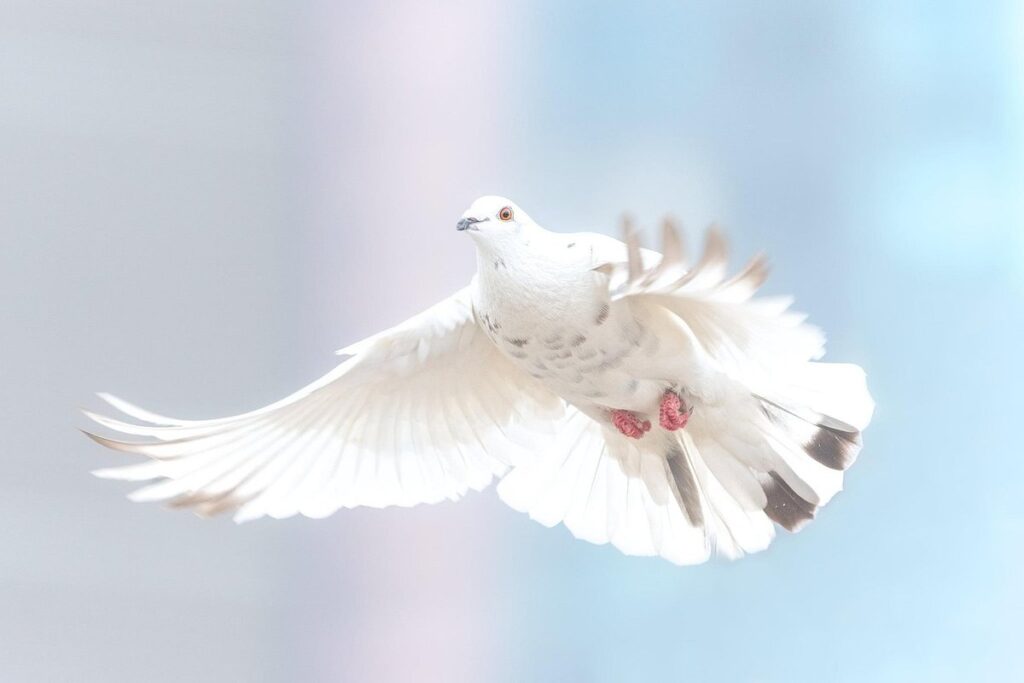
Pigeon plumage patterns are quite varied and can be a key factor in distinguishing pigeons from doves. Gray pigeons, for instance, often have a uniform gray coat with a subtle sheen to their feathers. Brown pigeons tend to have a more muted tone, ranging from warm sepia hues to deep chocolate browns. White pigeons are relatively rare but can be identified by their stark white plumage and sometimes a slight pinkish tint around the eyes.
Some pigeon varieties display intricate patterns on their necks or chests, such as iridescent sheens or subtle color gradations. However, other breeds may have more subdued markings. Keep in mind that pigeons can also exhibit a wide range of feather lengths and textures, which can sometimes make it difficult to discern plumage patterns.
When examining pigeon plumage patterns, pay attention to the bird’s overall tone and any distinct markings or color transitions. Note that some pigeon breeds are bred specifically for their unique plumage characteristics, so familiarity with specific breed standards may be helpful in identifying certain patterns.
Dove Plumage Patterns
Doves are known for their stunning iridescent feathers, which can appear to shift and change color depending on the angle of the light. These colors often have a purplish or greenish sheen, giving doves a rich, jewel-toned appearance. In some species, like the Eurasian Collared-Dove, this iridescence is most pronounced in the neck feathers, creating a striking “ring” effect.
In addition to their iridescent plumage, many dove species feature distinctive wing bars or shoulder patches. These markings can be black, white, or gray and help to distinguish doves from pigeons. For example, the Mourning Dove’s black band across its chest and wings is a clear indicator of its identity as a dove.
It’s also worth noting that some dove species have more subdued coloration, with earthy tones and subtle patterns. The Rock Pigeon’s gray-brown plumage, for instance, might be easily mistaken for a pigeon if not examined closely. To accurately identify a dove, pay attention to the overall sheen of its feathers, as well as any distinctive markings or patterns on its wings, neck, or chest.
Beak Shapes and Sizes
Pigeons and doves have distinct beak shapes and sizes, which can be a key identifier when distinguishing between these two birds. Let’s examine their unique characteristics up close.
Pigeon Beaks
Pigeon beaks are distinct from those of doves and can be identified by their shape, size, and unique features. One key characteristic is the gape, which refers to the distance between the mandibles when the bird’s mouth is open. Pigeons typically have a larger gape than doves, allowing them to consume coarser seeds and grains. The mandible itself is also thicker and more robust in pigeons, making it well-suited for crushing tough plant material.
Another feature that sets pigeon beaks apart is their length. Pigeon beaks are generally shorter and more broadened at the tip compared to doves. This shape allows pigeons to easily pick up seeds and grains from the ground without having to exert too much effort. The upper mandible of a pigeon’s beak also tends to be stronger than that of a dove, giving it a distinctive curve.
To distinguish a pigeon’s beak from a dove’s, look for these unique features: a larger gape, thicker mandibles, and a shorter, broader beak shape. By paying attention to these characteristics, you can more accurately identify pigeons in the field or at home. When observing pigeon beaks, also note their color – they often have a distinctive black or gray hue around the tip of the lower mandible.
Dove Beaks
Dove beaks are one of the most distinctive features that set them apart from pigeons. Unlike pigeons, which have stout and rounded beaks, doves sport slender profiles with sharp tips. This shape allows doves to feed on small seeds and fruits, as well as to forage for insects in crevices and cracks.
The beak of a dove is typically around 1-2 cm long, making it shorter than that of a pigeon. The tip is usually sharp and pointed, which helps the bird to extract seeds from tight spaces. In some species, such as the mourning dove, the beak is slightly hooked at the tip, giving it an even more precise feeding mechanism.
When observing doves in the wild or in captivity, take note of their beaks’ slender profiles and sharp tips. This can help you distinguish them from pigeons, which have coarser, more rounded beaks. Remember that while beak shape is just one characteristic to consider when telling pigeons from doves, it’s an important one – especially if the bird is foraging or eating seeds.
Habitat and Distribution
Pigeons and doves are found on every continent, but their habitats vary greatly – from deserts to rainforests. Understanding these differences is key to identifying them accurately.
Pigeon Habitats
Pigeons can thrive in a wide range of environments, from urban cities to rural countryside. They’re highly adaptable birds, capable of surviving and even thriving in human-dominated landscapes. One reason for their adaptability is their ability to exploit food sources provided by humans, such as garbage and discarded food waste.
In cities, pigeons are often found roosting on buildings, bridges, and other structures. They’ll also frequent areas with high foot traffic, such as parks, plazas, and street markets. Their ability to navigate human environments has allowed them to exploit these resources, making urban areas a key component of their habitat.
In contrast, pigeons may be less abundant in areas where food is scarce or difficult to access. However, even in these situations, they can still be found, particularly if alternative sources of food are available. For example, some pigeon populations have adapted to foraging in agricultural fields, where crops such as wheat and oats provide a reliable source of nutrition.
Their adaptability has also led to the establishment of feral pigeon populations in many parts of the world.
Dove Habitats
Doves inhabit a wide range of natural environments, including forests, grasslands, and wetlands. They are often found near water sources, such as rivers, lakes, and coastal areas. In addition to these habitats, doves can also be found in urban and suburban areas, where they have adapted to human presence.
In terms of migratory patterns, some dove species make long-distance journeys between their breeding grounds and wintering grounds, while others are resident birds that remain in the same area year-round. For example, the Mourning Dove is a partial migrant, with populations in the northern parts of its range migrating south for the winter, whereas those in the southern parts remain in place.
When considering the habitat preferences of doves, it’s essential to note that they tend to favor areas with dense vegetation, such as shrublands and woodland edges. This allows them to forage for food and find shelter from predators. In contrast, pigeons are more commonly found in urban environments and can thrive in a variety of habitats.
Some key characteristics of dove habitats include the presence of trees or large shrubs, access to water sources, and areas with dense undergrowth.
Behavior and Social Structure
When it comes to pigeons and doves, their behavior and social habits can be quite distinct, often serving as a key identifier for these two bird species. Understanding their unique traits is crucial for confident identification.
Pigeon Behavior
Pigeons are highly social birds and can often be found in large flocks, particularly in urban areas. They have a unique communication system that involves a range of calls and visual displays to convey messages. For example, pigeons will often use a loud cooing sound to alert other birds to potential predators or food sources.
Pigeon mating rituals are also quite distinctive. During courtship, males will perform an elaborate display of strutting and bowing to attract females. Females will then signal their interest by displaying their own plumage patterns and making specific calls. Pigeons typically form long-term monogamous relationships, with pairs staying together for several breeding seasons.
When it comes to flock behavior, pigeons are known to be quite aggressive towards other birds that enter their territory. They have a strong pecking order within flocks, with dominant birds asserting their dominance through vocal displays and physical posturing. Observing these social dynamics can be an effective way to identify pigeons in the field, as they tend to exhibit more assertive behavior than doves.
Dove Behavior
In dove colonies, you’re likely to find a complex social structure centered around monogamous relationships. Doves are known to form long-term pair bonds, with some species staying together for many years or even decades. This level of commitment is unusual among bird species and allows doves to invest time and energy in their mates and offspring.
Within these pair bonds, cooperative breeding behaviors are common. Both male and female doves take turns incubating eggs and caring for their young. Some dove species even engage in “helper” behavior, where a juvenile or subordinate bird assists the primary caregivers with feeding and guarding duties.
This social complexity is often accompanied by a strict hierarchy within the colony. Dominant pairs will typically establish territories and defend them against intruders, while subordinates may form smaller groups or live on the periphery of the main colony. Understanding these social dynamics can help you recognize dove behavior in the wild and distinguish it from the more solitary or aggressive nature of pigeons.
Advanced Identification Techniques
As you’ve learned more about pigeon and dove anatomy, it’s time to take your identification skills to the next level with advanced techniques for distinguishing between these two birds.
Feather Moult Patterns
When examining feather moult patterns to distinguish between pigeons and doves, it’s essential to consider seasonal changes. Pigeon feathers typically exhibit a more rapid growth rate than those of doves, resulting in shorter moulting periods. During the spring, you may observe a complete plumage replacement in 3-4 weeks for pigeons, whereas doves can take up to 6-8 weeks.
In contrast, pigeon juveniles undergo an accelerated moult process, replacing their juvenile feathers with adult plumage within 2-3 weeks. Dove youngsters, on the other hand, may retain some juvenile characteristics even after reaching adulthood, making age-related identification more challenging.
To accurately identify pigeons and doves using feather moult patterns, observe the following key differences:
- Pigeon adults typically exhibit a complete replacement of their feathers every 2-3 months.
- Dove adults undergo a more gradual moulting process, with some feathers replaced annually while others remain for several years.
- Juvenile pigeons rapidly replace their juvenile feathers, whereas dove youngsters may retain some juvenile characteristics longer.
By considering these seasonal and age-related factors, you can refine your identification skills and accurately distinguish between pigeons and doves based on their unique feather moult patterns.
Skeletal Characteristics
Pigeons and doves possess distinct skeletal characteristics that can be observed through careful examination. One notable difference lies in bone density: pigeons tend to have denser bones, particularly in their wings and legs, due to their robust build and adapted flying style. In contrast, doves generally have lighter, more slender bones, reflecting their agile and swift flight patterns.
Wing morphology is another area where pigeons and doves diverge. Pigeon wings are typically broader and more rounded at the tip, allowing for a greater surface area to generate lift during takeoff and landing. Dove wings, on the other hand, are narrower and more pointed, facilitating their characteristic swift and agile flight.
To identify these skeletal features, observe the bird’s overall posture and movement patterns. Pigeons tend to have a more upright stance due to their sturdy build, while doves exhibit a more fluid, effortless motion as they fly or walk. By paying attention to these subtle differences in bone density and wing shape, you can develop your skills in distinguishing pigeons from doves based on their underlying skeletal characteristics.
Frequently Asked Questions
What if I still can’t tell the difference between pigeons and doves in the wild?
Yes, it’s normal for birdwatchers to struggle with identification at first. To improve your skills, try observing both species in different contexts, such as in cities or natural habitats, and pay attention to their behavior, plumage patterns, and beak shapes.
Can I use a field guide to identify pigeons and doves, or are there any specific apps that can help?
Yes, field guides and mobile apps like iBird Pro or Merlin Bird ID can be valuable tools for identifying birds. These resources often include detailed descriptions, photos, and audio recordings of various species, including pigeons and doves.
What if I’m trying to identify a pigeon or dove, but it’s molting or has some other unusual feature?
When birds are molting, their plumage patterns can change significantly, making identification more challenging. Look for other distinctive features like beak shape, size, or coloration, which may remain consistent despite changes in plumage.
How do I know if a pigeon or dove is sick or injured, and what should I do in that case?
If you suspect a bird is ill or injured, it’s essential to observe from a safe distance and avoid approaching it. Contact local wildlife rehabilitation centers or bird conservation organizations for guidance on how to handle the situation.
Can I keep pigeons or doves as pets, or are they protected by laws in my area?
Check with your local authorities to determine if there are any laws regulating the keeping of pigeons or doves as pets. In some areas, these birds may be protected, and it’s crucial to ensure you’re not harming them or their habitats.