
Identifying succulents can be a daunting task, especially for beginners, as their unique growth habits and leaf types can make them seem almost identical at first glance. You might find yourself wondering if that plump, green rosette is a Echeveria or a Crassula, or if the thin, pointed leaves belong to a Kalanchoe or a Gasteria. But with a little practice and the right knowledge, you can become proficient in categorizing succulents based on their growth habits, leaf types, and even their family affiliations. In this article, we’ll explore advanced identification techniques and provide expert tips on how to take your succulent identification skills to the next level, enabling you to confidently identify and categorize even the most obscure species. By the end of this article, you’ll be able to accurately identify succulents and take your succulent collection to new heights.
Understanding Succulent Classification
Succulents are incredibly diverse, and understanding their classification is key to identifying the many different types. We’ll break down the main categories, making it easier to pinpoint your favorite plant.
Types of Succulents Based on Growth Habit
Succulents can be broadly categorized into three main types based on their growth habit: rosettes, shrubs, and climbers. Rosettes are perhaps the most iconic type of succulent, characterized by their compact, spherical growth habit and thick, fleshy leaves that radiate from a central point. These plants are often used in decorative arrangements and are popular for indoor gardening due to their low-maintenance requirements.
Shrubs, on the other hand, are more upright and bushy, with stems that can grow quite tall. They often have smaller, more slender leaves than rosettes and may produce flowers or berries. Examples of shrubby succulents include the aloe plant and the prickly pear cactus.
Climbing succulents, such as the string of pearls (Senecio rowleyanus) and the ivy-like Kalanchoe tomentosa, use their stems to twine around supports or other plants. These succulents are ideal for hanging baskets or containers where they can cascade over the edges. Understanding the growth habit of a succulent can help you choose the right potting mix, watering schedule, and growing conditions to ensure the plant thrives.
Succulent Classification by Leaf Type
Succulents can be classified based on their leaf types, which provide clues to their identity and characteristics. Fleshy leaves, often plump and soft, are common in succulents like Echeveria and Crassula. These leaves can be thick and juicy, storing water to help the plant survive dry conditions. Thick leaves, found in succulents like Aloe and Agave, are often waxy and provide excellent protection against water loss. Spiny leaves, like those found in some Sedum species, can be armed with sharp or soft spines, adding to the plant’s defense mechanisms.
When examining succulent leaves, pay attention to their texture, color, and arrangement. Fleshy leaves may be arranged in rosettes or grow in a sprawling manner, while thick leaves are often arranged in a more upright or vertical pattern. Spiny leaves can be found in various shapes and sizes, from small, pointed spines to larger, more elaborate ones. By considering the leaf type and its characteristics, you can narrow down the possibilities and make a more informed identification. For example, if you encounter a succulent with fleshy, plump leaves arranged in a rosette pattern, you may be looking at an Echeveria species.
Recognizing Succulent Families
As you continue on your succulent journey, it’s essential to understand the various families within this diverse group, each with its unique characteristics and species.
Many succulent families share similar traits, making identification a fun challenge that requires attention to detail and a bit of detective work.
The Euphorbiaceae Family: Succulents with Milky Sap
The Euphorbiaceae family encompasses a diverse group of succulents, united by their distinctive milky sap. This sap, often referred to as latex, serves as a defense mechanism against herbivores and can be a identifying feature for the untrained eye. Euphorbia, a genus within this family, is one of the most well-known examples, with species like Euphorbia tirucalli and Euphorbia pulcherrima exhibiting vibrant, colorful stems and flowers. Another notable member of the Euphorbiaceae family is Poinsettia, a holiday favorite known for its bright red bracts.
When handling Euphorbiaceae succulents, it’s essential to exercise caution, as the milky sap can cause skin irritation in some individuals. Wear protective gloves when repotting or pruning these plants to avoid exposure. Some species within this family are also toxic, so be sure to research the specific needs and cautions associated with your particular plant. By recognizing the characteristic milky sap and associated growth habits, you can confidently place your succulent within the Euphorbiaceae family.
The Cactaceae Family: True Cacti
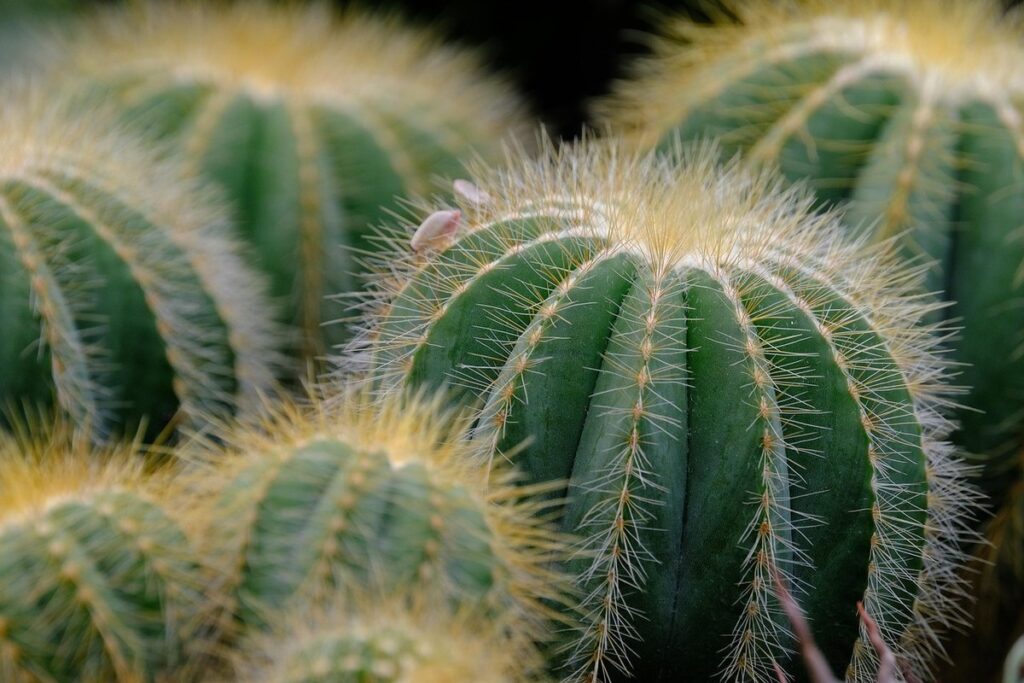
The Cactaceae family is one of the most recognizable and iconic groups of succulents, characterized by their ability to produce areoles and spines. These features are unique to true cacti, setting them apart from other succulent families. Prickly Pear (Opuntia) and Christmas Cactus (Schlumbergera) are two well-known examples of cacti that exhibit these traits. The areoles, or small, cushion-like structures, on the stems of these cacti are responsible for producing new growth, including flowers and leaves. Spines, which can be sharp and protective, or soft and hair-like, provide additional defense against predators and environmental stress.
When examining a succulent suspected to be a true cactus, look for the presence of areoles and spines. The arrangement and type of spines can also be indicative of the cactus’s identity. For example, the Christmas Cactus has short, smooth spines, while the Prickly Pear has longer, more segmented spines. By paying attention to these distinctive characteristics, you can confidently identify true cacti within the Cactaceae family.
The Aizoaceae Family: Mesembs and Lithops
The Aizoaceae family is one of the most diverse and fascinating groups of succulents, comprising over 140 genera and 3,000 species. Within this family, you’ll find two distinct and popular subgroups: mesembs and lithops. Mesembs, such as Living Rocks (Lampranthus), are characterized by their compact, rounded growth habit and often colorful flowers. They typically thrive in well-draining soil and full sun, making them ideal for rock gardens and container arrangements.
Lithops, commonly known as Frost Plants, are small, low-growing succulents with unique, stone-like appearance. They have paired, rounded leaves that resemble rocks, with the ability to photosynthesize through small, hair-like structures called trichomes. Lithops are often found in dry, sandy soils and require careful watering to prevent rot.
When working with mesembs and lithops, it’s essential to provide them with the right conditions. Overwatering can be detrimental to these succulents, so ensure that the soil is dry to the touch before watering. A well-draining potting mix and a sunny location will help these plants thrive and flourish. By understanding the specific needs and characteristics of mesembs and lithops, you’ll be better equipped to care for these unique and beautiful succulents.
Identifying Succulent Genera
Succulent enthusiasts often get confused about the various genera, but understanding them is key to accurately identifying these plants. Let’s break down the main succulent genera and their distinctive characteristics.
Crassula: The Jade Plant and Its Varieties
The Crassula genus is a vast and diverse group of succulents, encompassing over 400 species. Among the most recognizable members of this genus is the Jade Plant (Crassula ovata), a popular choice for indoor gardens due to its small size and ease of care. However, the Crassula genus also includes several hybrids of the Jade Plant, such as the ‘Hummels Sunset’ and ‘Tricolor’ varieties, which exhibit unique leaf coloration and patterns.
One of the distinguishing features of Crassula species is their small, rounded leaves, often with a powdery coating (known as farina) that helps to conserve water. Some species, like Crassula rupestris, have leaves with wavy or crinkled edges, while others, like Crassula lutea, have leaves with a distinctive yellow or orange tint.
When identifying a Crassula species, look for the characteristic small, star-shaped flowers that bloom on the ends of stems in shades of white, pink, or yellow. The flowers are often small and delicate, but they can be a key feature in distinguishing between different species. By examining the leaves, flowers, and growth habits of a Crassula, you can narrow down the possibilities and identify the specific species you’re working with.
Echeveria: A Succulent with Beautiful, Fleshy Leaves
Echeveria succulents are known for their stunning, fleshy leaves that come in a wide range of vibrant colors. These leaves can be plump and rounded, or more elongated and pointed, but always retain a soft, powdery texture. One of the key identifying features of Echeveria is the presence of a powdery coating on the leaves, known as farina. This helps to prevent water loss and protect the plant from extreme temperatures.
Some popular Echeveria species include Echeveria elegans, with its delicate, pale pink leaves, and Echeveria perle von Nürnberg, which boasts striking silver and green stripes. These succulents are often used in decorative arrangements and make attractive additions to indoor spaces. When identifying an Echeveria, look for the distinctive leaf shape and coloration, as well as the presence of farina. With over 150 species to choose from, Echeveria offers a diverse range of possibilities for succulent enthusiasts.
Sedum: The Burro’s Tail and Its Relatives
The Sedum genus is a large and diverse group of succulents, comprising over 600 species. Among these, the Burro’s Tail (Sedum morganianum) is one of the most recognizable and popular varieties. This trailing succulent is known for its thick, fleshy stems that resemble a donkey’s tail, hence its common name. The Burro’s Tail is a popular choice for hanging baskets and containers, where it can cascade over the edges and create a stunning display of succulent foliage.
Other notable members of the Sedum genus include the White Sedum (Sedum album) and the Sedum adolphi, both of which are native to Europe and Asia. These sedums are often used in rock gardens and alpine plantings, where their ability to thrive in poor soil and full sun makes them a valuable addition.
When identifying a succulent as a member of the Sedum genus, look for its characteristic thick, fleshy stems and leaves that are often arranged in a rosette pattern. Many sedums also produce white or yellow flowers in the summer months, which can add a touch of color to the plant. With over 600 species to choose from, it’s no wonder that the Sedum genus is a favorite among succulent enthusiasts.
Succulent Identification Features
When it comes to identifying succulents, understanding their unique features is key to making a correct identification. Let’s examine the physical characteristics that will help you pinpoint the type of succulent you’re looking at.
Leaf Shape and Size
Succulent leaves come in a wide range of shapes and sizes, which can be a crucial identifying feature. Many succulents have thick, fleshy leaves that store water, but the arrangement of these leaves varies greatly between species. Rosettes, for example, are a common feature of succulents like aloe and agave, where the leaves grow densely packed at the base of the stem. These rosettes can be small and compact or large and sprawling, with some species forming massive clusters of leaves.
Some succulents, like echeveria and crassula, have individual leaves that grow from stems or branches, often in a more scattered or irregular pattern. These leaves can be thin and pointed or thick and rounded, and may have interesting textures or colors. Other succulents, such as sedum and sempervivum, grow in a more linear fashion, with leaves that trail down from the ends of stems or branches.
When identifying a succulent, pay attention to the size and shape of its leaves. Are they small and compact, or large and sprawling? Do they grow in a rosette or from individual stems? Taking note of these characteristics can help narrow down the possibilities and lead you to the correct identification.
Flower Color and Shape
Succulent flowers are a true marvel of nature, offering a dazzling array of colors and shapes that can help you identify specific species. While some succulents produce showy, trumpet-shaped blooms in vibrant hues like red, orange, and yellow, others feature delicate, star-shaped flowers in softer shades of pink, white, and purple. The shape of the flower itself can also be an important identification feature. For example, the flowers of the Echeveria genus are often shaped like bells or stars, while those of the Crassula genus are more rounded and cup-shaped. To identify the flower color and shape of a succulent, start by taking a close look at the blooms themselves. Note the color, shape, and arrangement of the petals, as well as any distinctive features such as stripes or spots. You can also consult field guides or online resources to compare your succulent’s flowers with those of known species. By paying attention to these details, you can begin to narrow down the possibilities and identify the specific succulent you’re looking at.
Spines and Thorns
Succulents often develop spines and thorns as defense mechanisms to deter herbivores and protect themselves from harsh environmental conditions. These structures can be found in various shapes, sizes, and arrangements, making identification crucial for succulent enthusiasts. The most common types of spines include straight, hooked, and curved spines, as well as glochids, which are small, hair-like spines that can be particularly troublesome to handle.
Thorns, on the other hand, are typically longer and more rigid than spines, often being part of the stem or leaf. Some succulents have sharp, needle-like thorns, while others have blunt, warty growths. The arrangement of spines and thorns can also vary greatly, with some succulents having a dense covering of fine spines, while others have prominent, isolated thorns.
When identifying succulents based on their spines and thorns, it’s essential to examine the plant’s overall shape and growth habit. For example, cacti often have sturdy, columnar stems with sharp, waxy spines, while succulents from the Euphorbiaceae family may have milky sap and paired spines. By carefully observing the shape, size, and arrangement of spines and thorns, you can narrow down the possibilities and make a more accurate identification.
Advanced Succulent Identification Techniques
As you become more comfortable with the basics of succulent identification, it’s time to take your skills to the next level with more precise techniques and subtle characteristics to look for.
Using Microscopy to Examine Succulent Structures
When examining succulent structures under a microscope, you can gain valuable insights into their unique characteristics. A good starting point is to look at the leaf veins, which can be a key identifier for certain genera. For example, the leaf veins of Echeveria species are typically thick and prominent, while those of Crassula species are more delicate.
To examine the leaf veins, use a microscope with a magnification power of at least 40x. Place a small piece of the succulent leaf on the microscope slide, making sure to secure it with a coverslip.
In addition to leaf veins, you can also examine the stomata, which are small pores on the surface of succulent leaves. These pores are responsible for gas exchange and are often used to identify succulent species. Under the microscope, you can observe the shape and arrangement of the stomata, which can be circular, elliptical, or even absent in some species.
When examining the stomata, look for any distinctive patterns or features, such as the presence of subsidiary cells or the arrangement of the stomata in relation to the leaf veins. These characteristics can help you narrow down the identification of your succulent.
Analyzing Succulent Chemistry
When analyzing succulent chemistry, one crucial aspect to examine is the presence of toxic compounds and alkaloids. Some succulents, like the Euphorbiaceae family, contain latex that can cause skin irritation and allergic reactions. This latex is particularly concentrated in the sap of plants like Euphorbia tirucalli. In contrast, certain succulents in the Aizoaceae family, such as Lithops, are known for their relatively low toxicity.
To identify toxic compounds, look for milky sap or latex that can be squeezed from the plant’s leaves or stems. Be cautious when handling plants with this characteristic, as the sap can cause skin irritation and burns. On the other hand, succulents with high concentrations of alkaloids, such as some Crassula species, may exhibit unique growth patterns and leaf shapes. For example, Crassula ovata, also known as the jade plant, contains a toxic compound called secologanin, which is responsible for its distinctive growth habits.
When examining succulent chemistry, it’s essential to note that some toxic compounds can be broken down or degraded over time. However, this process can be slow, and some succulents may retain their toxicity even after they have died. As a result, it’s crucial to exercise caution when handling and identifying succulents, especially if you plan to grow or propagate them.
Consulting Expert Resources and Communities
When encountering a succulent that defies easy identification, it’s time to tap into the collective knowledge of experts and enthusiasts. Online forums, social media groups, and specialized communities offer a wealth of information and advice from experienced succulent enthusiasts and botanists. The Succulent Enthusiasts’ Forum, for example, features a dedicated section for advanced identification, where users can post images and descriptions of their plants and receive expert input.
Other online resources include succulent-focused Facebook groups, where members share knowledge, photos, and experiences with specific genera or species. The International Succulent Society also offers a members-only forum, where experts and enthusiasts discuss various aspects of succulent cultivation and identification. When seeking guidance from these communities, be sure to provide clear, high-quality images and detailed descriptions of the plant’s characteristics.
Some key things to keep in mind when consulting these resources include being respectful of others’ expertise and experience, and being prepared to provide detailed information about the plant in question. By doing so, you’ll be more likely to receive accurate and helpful advice from the community.
Frequently Asked Questions
Can I use succulent identification to determine their toxicity?
Yes, understanding the chemical composition of succulents can help identify their toxicity. Analyzing succulent chemistry, such as the presence of toxic compounds and alkaloids, can provide valuable information for handling and care. This technique requires expertise and specialized equipment, but can be a useful tool for advanced identification.
How do I know when to use microscopy for succulent identification?
Using microscopy is often necessary for examining succulent structures like leaf veins and stomata, which can be crucial for identifying specific species. When in doubt, try using a microscope to examine the succulent’s microscopic features. This can be particularly helpful for distinguishing between similar species or identifying unusual characteristics.
What if I’m unsure about the succulent’s family or genus?
If you’re unsure about the succulent’s family or genus, try examining its leaf type, growth habit, and flower characteristics. Consult expert resources and communities, such as succulent forums or online identification groups, to get a second opinion or learn more about your specific succulent. Don’t be afraid to ask for help – it’s better to get it wrong than to misidentify a succulent.
Can I identify succulents based on their photos alone?
While photos can be a good starting point, they’re often not enough to make a definitive identification. Succulents can look very different in person compared to in photos, and their characteristics can vary depending on the lighting and angle. For accurate identification, it’s best to examine the succulent in person and consider multiple factors, including its growth habit, leaf type, and flower characteristics.
What’s the best way to store and preserve succulent specimens for identification?
For long-term preservation, store succulent specimens in a dry, cool environment, away from direct sunlight. Use airtight containers or bags to maintain humidity and prevent moisture from accumulating. When storing succulents for identification, make sure to label them carefully and note any notable characteristics or features. This will help you and others accurately identify the succulent in the future.