
Quartz is one of the most common minerals found on our planet, but did you know that there are many different types? From the clarity of clear quartz to the elegance of rose quartz, each kind has its own unique characteristics and uses. Whether you’re a jewelry enthusiast, an electronics aficionado, or a spiritual seeker, understanding the various kinds of quartz can open doors to new possibilities. In this article, we’ll delve into the fascinating world of quartz, exploring its many forms, including smoky, amethyst, citrine, and tiger’s eye. We’ll discover their distinct properties, uses in various industries, and even their significance in spiritual practices. By the end of our journey, you’ll have a deeper appreciation for these remarkable crystals and their impact on our lives.
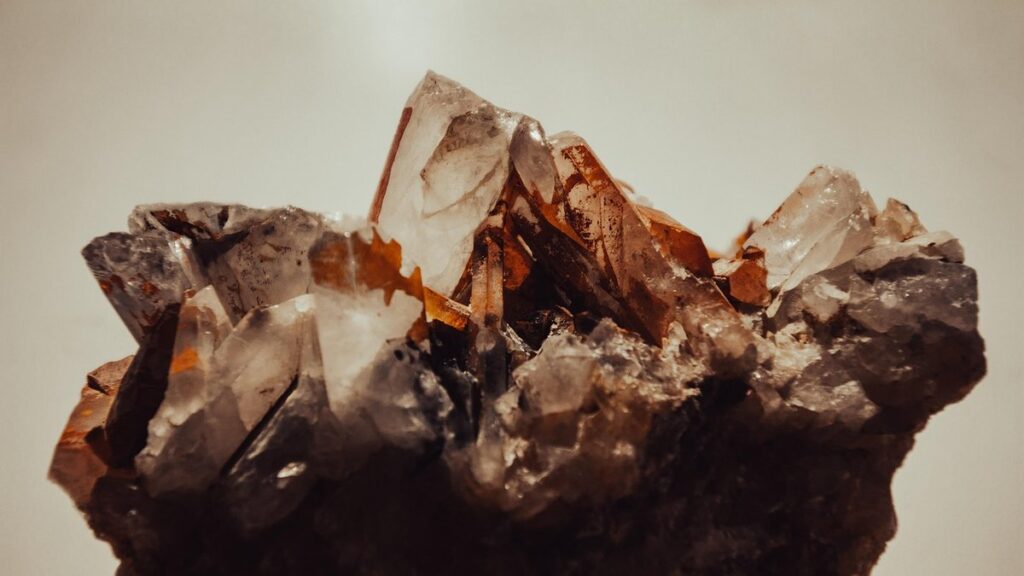
Introduction to Quartz
Let’s start by exploring the basics of quartz, including its composition and properties that make it one of the most versatile minerals on Earth. We’ll dive into what makes quartz unique.
What is Quartz?
Quartz is one of the most common and versatile minerals found on Earth, comprising a significant portion of the planet’s crust. At its core, quartz is defined by its chemical composition: silicon dioxide (SiO2). This simple yet robust formula underpins its widespread occurrence and unique properties.
The crystal structure of quartz is hexagonal, meaning it grows in a six-sided prism shape. This characteristic allows quartz to form a wide range of crystals, from small, tabular crystals to towering, prismatic formations. The stability of the quartz crystal lattice also contributes to its remarkable durability, making it one of the most resistant minerals to heat, pressure, and chemical attacks.
Interestingly, quartz is not just a single mineral but a vast family of related silicates, known as the Quartz Group. This group encompasses over 20 different types of quartz, each with distinct physical characteristics, optical properties, and crystal habits. Understanding the fundamental composition and structure of quartz provides a solid foundation for exploring its diverse forms and applications.
History of Quartz Use
Quartz has been a prized mineral throughout human history, with its unique properties and versatility making it an integral part of various cultures and civilizations. In ancient times, quartz was used by the Egyptians to carve intricate stone vessels and other decorative objects. The ancient Greeks also utilized quartz in their jewelry, often combining it with other materials like gold and precious stones.
As civilizations evolved, so did the uses of quartz. During the Renaissance period, European craftsmen began using quartz crystal to create elaborate clocks and time-keeping devices. In modern times, quartz is a crucial component in electronic devices, including computers, smartphones, and watches. Its high frequency and durability make it an ideal material for piezoelectric applications.
Interestingly, some cultures believed that quartz possessed mystical powers, often using it in rituals and ceremonies to ward off evil spirits or promote good fortune. While these practices may have been rooted in superstition, they highlight the significance of quartz as a symbol of power and elegance across various societies.
Importance of Understanding Quartz Types
Understanding the different types of quartz is crucial for both amateurs and professionals alike. Each type has its unique characteristics, making them suitable for specific applications. For instance, Amethyst quartz, with its deep purple hue, is often used in jewelry due to its beauty and rarity.
On the other hand, Rose Quartz, known for its delicate pink color, is preferred in decorative items like vases and figurines. Similarly, Citrine quartz’s vibrant yellow-orange color makes it a popular choice for fashion accessories and home decor.
Failing to recognize these differences can lead to misapplication of materials. For example, using clear quartz in place of Amethyst could result in an inferior product that lacks the aesthetic value. Conversely, choosing the right type of quartz can significantly enhance the final product’s quality and appeal.
To make informed decisions, it’s essential to familiarize yourself with each type’s characteristics, properties, and applications. This knowledge will enable you to select the most suitable quartz for your project, ultimately leading to a more satisfying outcome.
Common Types of Quartz
There are many types of quartz, and each has its own unique characteristics, making some more suitable for jewelry, while others are ideal for home decor. Let’s explore some of the most common types found around the world.
Clear Quartz (Clarity and Color)
Clear quartz is one of the most versatile and popular types of quartz. It’s prized for its exceptional clarity and ability to amplify intentions, making it a favorite among crystal healers and spiritual practitioners. When it comes to clarity, clear quartz is often described as “rock crystal” due to its high level of transparency.
In terms of color variations, while true clear quartz shouldn’t have any tint or hue, some stones may display a slight blue or smoky undertone. However, these variations don’t affect the stone’s metaphysical properties and are often considered desirable by collectors.
Clear quartz is highly valued for its versatility in jewelry, making it a popular choice for pendants, earrings, and rings. Its clarity also makes it ideal for faceting, resulting in sparkling crystals that refract light beautifully. In addition to its aesthetic appeal, clear quartz is believed to possess powerful healing properties, including amplifying intentions, clarifying thought patterns, and protecting against negative energy. Whether you’re drawn to its spiritual significance or simply appreciate its beauty, clear quartz is a must-have for any crystal enthusiast’s collection.
Rose Quartz (Pink Quartz)
Rose quartz is one of the most sought-after types of quartz crystals, prized for its beautiful pink color and metaphysical properties. The vibrant hue of rose quartz is said to be associated with emotional balance, love, and compassion, making it a popular choice among those seeking to cultivate these qualities in their lives.
The color of rose quartz ranges from pale pastel shades to deep magentas, depending on the presence of iron oxide impurities. The pink color is also influenced by the crystal’s clarity – the clearer the quartz, the more vibrant its hue will be.
Rose quartz is said to promote emotional healing and balance by helping individuals to release emotional blockages and cultivate self-love. It’s often used in meditation practices to quiet the mind and focus on inner peace. If you’re looking to work with rose quartz, try placing a piece in your bedroom or keeping one near your heart chakra to amplify its energy.
When choosing a rose quartz crystal, look for one that feels comfortable to hold – this can be an indicator of the stone’s energetic vibration. Cleanse and charge your rose quartz regularly by exposing it to sunlight, moonlight, or placing it on a selenite plate.
Smoky Quartz
Smoky quartz is one of the most striking types of quartz crystals, known for its dark brown to black color. This unique characteristic makes it instantly recognizable and highly sought after by collectors and enthusiasts alike. But smoky quartz is more than just a visually appealing mineral – it’s also deeply connected to our emotional and spiritual well-being.
Its association with grounding, protection, and stability stems from the fact that it’s believed to absorb and transmute negative energy. Smoky quartz is often used in healing practices to shield against negativity and promote feelings of calmness and balance. If you’re feeling overwhelmed or anxious, working with smoky quartz can help clear your energy field and bring a sense of equilibrium back into your life.
To incorporate the benefits of smoky quartz into your daily routine, try meditating with it or placing it in areas where you spend most of your time. You can also wear it as jewelry or keep a piece on your desk to amplify its effects. Remember that the true power of smoky quartz lies not just in its physical presence but also in its ability to connect us with our inner selves. By harnessing its energy, we can cultivate greater stability and resilience in our lives.
Less Common Types of Quartz
While many people are familiar with clear quartz and rose quartz, there are numerous other lesser-known types that possess unique properties and characteristics. Let’s explore some of these hidden gems together.
Amethyst Quartz (Purple Quartz)
Amethyst quartz, also known as purple quartz, is one of the less common types of quartz that has gained popularity for its unique properties and metaphysical significance. The distinct purple color of amethyst quartz is often associated with spirituality, intuition, and wisdom. This crystal is said to possess a calming effect on the mind and emotions, helping to quiet the thoughts and promote inner peace.
People who work with amethyst quartz often report enhanced intuitive abilities, allowing them to tap into their subconscious mind and access deeper levels of awareness. This crystal is also believed to foster emotional balance, making it an excellent tool for those seeking to overcome negative patterns or addictive behaviors. To harness the energy of amethyst quartz, it’s recommended to meditate with this crystal, focusing on breathing exercises and quiet contemplation.
When choosing an amethyst quartz, look for a piece that has a rich, deep purple color, as these tend to be more effective in promoting spiritual growth and emotional balance. It’s also essential to cleanse and charge your amethyst quartz regularly, using methods such as moonlight or sound healing, to maintain its energetic potency.
Citrine Quartz (Yellow Quartz)
Citrine quartz, also known as yellow quartz, is one of the most sought-after types of quartz crystals due to its vibrant and uplifting energy. Characterized by its distinct yellow or orange color, citrine quartz is said to embody the qualities of abundance, manifestation, and positive energy. It’s no wonder that many people use citrine quartz for its ability to attract wealth, prosperity, and joy into their lives.
In terms of metaphysical properties, citrine quartz is believed to enhance personal power, confidence, and creativity. It’s often used as a protective stone against negative energies, promoting a sense of calmness and clarity. When working with citrine quartz, it’s essential to keep your intentions positive and focused on manifesting your desires. To do this, simply hold the crystal in your hand, visualize your goals, and repeat affirmations such as “I am worthy of abundance” or “I trust that my needs will be met.”
When choosing a citrine quartz crystal, look for one with a vibrant yellow color and no signs of fading or discoloration. By incorporating this powerful stone into your daily routine, you can harness its energy to bring positivity, joy, and success into your life.
Tiger’s Eye Quartz
Tiger’s eye quartz is a mesmerizing variety that belongs to the less common types of quartz family. Its striking golden or brown color, resembling the warm hues of sun-kissed sand dunes, makes it an attractive addition to any crystal collection. But beyond its aesthetic appeal, tiger’s eye quartz is also imbued with powerful metaphysical properties.
This quartz variety is often associated with protection, confidence, and clarity, which can be beneficial for individuals seeking to overcome self-doubt or anxiety. By placing a piece of tiger’s eye quartz near the third chakra, the solar plexus area, you can harness its energies and tap into your inner strength and willpower. To do so, simply position the crystal on your desk or nightstand and focus on its calming presence.
When used in meditation, tiger’s eye quartz is said to amplify intentions and manifest positive outcomes. It’s also believed to enhance one’s perception and intuition, allowing individuals to make more informed decisions. If you’re drawn to this enigmatic quartz variety, consider incorporating it into your spiritual practice or using it as a decorative accent to create a harmonious atmosphere in your space.
Synthetic and Treated Quartz
Let’s take a look at some of the more complex types of quartz, including those that are created through synthetic processes and enhanced by various treatments.
Synthetic Quartz
Synthetic quartz is created through a process called hydrothermal growth, where high pressure and temperature are used to replicate the natural conditions that form quartz crystals. This method involves dissolving silicon dioxide in an acid solution, which is then mixed with water under intense heat and pressure, resulting in the formation of synthetic quartz crystals.
The most notable difference between synthetic and natural quartz lies in their crystal structure. Synthetic quartz has a more uniform and predictable crystal lattice, making it ideal for use in electronics and optics. In contrast, natural quartz has unique inclusions and imperfections that can affect its optical properties. Due to these differences, synthetic quartz is often preferred in applications where precision and consistency are crucial.
Synthetic quartz is widely used in electronic components, such as filters, oscillators, and resonators, due to its ability to transmit high-frequency signals with minimal loss of energy. It’s also used in optics for lenses, prisms, and windows, thanks to its low dispersion and high transmission rates.
Treated Quartz (Heating and Dyeing)
Treated quartz has become increasingly popular due to its wide range of colors and patterns. To create these variations, manufacturers employ a process that involves heating and dyeing the stone. The most common method is called high-temperature diffusion (HTD), where the quartz is subjected to extremely high temperatures under vacuum conditions. This process allows for the introduction of metal oxides or other substances that impart specific colors.
The result of HTD can be truly striking, with some treated quartz showcasing vibrant hues and intricate patterns. However, it’s essential to note that these characteristics are not permanent and can fade over time. Some consumers have expressed concerns about the durability and long-term stability of treated quartz, which has led to a slight decline in its popularity.
Despite this, treated quartz remains a staple in many interior design projects due to its affordability and versatility. Manufacturers continue to innovate and experiment with new colors and patterns, ensuring that treated quartz stays relevant in the market. When considering treated quartz for your next project, remember to evaluate its durability and potential color shift before making a final decision.
Applications and Uses of Quartz
Quartz is a versatile mineral used in various industries, from electronics and optics to construction and even jewelry making. Let’s explore some of its most practical and creative applications.
Electronics and Technology
Quartz is one of the most widely used minerals in the electronics industry due to its unique properties. In electronic devices such as watches, computers, and mobile phones, quartz is utilized for its ability to regulate vibrations at precise frequencies. This property enables quartz crystal oscillators to keep time with high accuracy.
In watches, quartz crystals are used to drive mechanical movements, providing a reliable and consistent timekeeping system. The most common type of quartz watch is the battery-powered quartz watch, which uses a small quartz crystal to regulate the movement’s pace. This has made quartz watches incredibly popular due to their affordability, durability, and accuracy.
In computers and mobile phones, quartz crystals are used in oscillators that generate clock signals, enabling these devices to process information quickly and efficiently. The stability of quartz frequencies ensures that data is transmitted accurately, which is critical for modern communication systems.
When selecting a quartz crystal for electronic applications, it’s essential to consider the frequency range required for your device, as well as the operating temperature range and power consumption. By choosing the right type of quartz crystal, you can ensure reliable performance in your electronic devices.
Jewelry and Decorative Objects
When it comes to jewelry and decorative objects, quartz is a popular choice due to its stunning beauty and durability. One of the most common types of quartz used in jewelry-making is amethyst, which is prized for its deep purple hue. However, other varieties like citrine, rose quartz, and smoky quartz are also highly sought after.
Quartz’s unique properties make it an excellent material for decorative objects as well. Its ability to refract light creates a beautiful play of colors, making it perfect for crystal clusters, paperweights, or even chandeliers. Additionally, its durability means that quartz jewelry can withstand daily wear and tear without losing its luster.
When shopping for quartz jewelry, look for pieces that are expertly cut to maximize the stone’s natural beauty. Consider combining quartz with other materials like sterling silver or gold for a more sophisticated look. Remember, quartz is a relatively affordable option compared to diamonds or sapphires, making it an excellent choice for those on a budget. With proper care, your quartz jewelry will remain stunning for years to come.
Healing and Spiritual Practices
Quartz is one of the most versatile minerals when it comes to healing and spiritual practices. Many people use quartz crystals for their metaphysical properties, which are believed to amplify thought, intention, and energy. One way to harness these properties is through meditation. Hold a clear quartz crystal in your hand or place it on your third eye during meditation to focus your intentions and enhance your connection with the universe.
You can also create a crystal grid using various types of quartz, including clear, smoky, or amethyst. Grids are believed to amplify the energy of the crystals and manifest specific outcomes. To set up a grid, first choose a center stone, then arrange the other stones around it in a pattern that feels intuitive. Seal the intention with a prayer or mantra.
In addition to meditation and grids, quartz is often used in energy work. This can involve placing quartz points on or near the body to absorb, transmute, or balance energy. Some practitioners also use quartz wands to channel and direct energy during healing sessions.
Frequently Asked Questions
Can I use quartz in electronic devices without any treatments or enhancements?
No, many types of quartz used in electronics are indeed treated or enhanced to improve their performance. However, there’s a growing interest in using natural, untreated quartz for its unique properties and benefits.
How can I identify the authenticity of synthetic or treated quartz crystals?
When purchasing quartz crystals, look for certifications from reputable sources like the International Colored Gemstone Association (ICA) or the Gemological Institute of America (GIA). These organizations provide laboratory reports that confirm the crystal’s origin, composition, and any treatments it may have undergone.
Are there any specific safety precautions I should take when handling quartz crystals?
Yes, quartz is generally considered safe to handle, but it can be brittle. Handle quartz crystals with care, avoiding drops or impacts that could cause breakage. When working with quartz in electronics, follow proper safety protocols for handling electrical components and avoid exposure to extreme temperatures.
Can I use citrine quartz as a substitute for amethyst quartz in spiritual practices?
While both citrine and amethyst are popular types of quartz, they have distinct properties and energies associated with them. Amethyst is often used for its calming effects and emotional healing, whereas citrine is believed to promote abundance and manifestation. Choose the type of quartz that resonates with your specific intentions and needs.
What’s the difference between “heated” and “treated” quartz in terms of crystal structure?
Heating a quartz crystal can change its color or clarity but doesn’t alter its chemical composition. Treated quartz, on the other hand, may undergo more significant changes to its internal structure through processes like dyeing, irradiation, or high-pressure treatment.