
As you gaze up at the night sky, have you ever wondered how the moon’s cycles affect the tides, or whether there’s more to astrology than just sun signs? The lunar phase is often overlooked, but its significance extends far beyond the occasional full moon party. In reality, the moon’s cycles play a crucial role in everything from agriculture to ocean currents, influencing the timing of planting and harvesting crops, as well as the rise and fall of sea levels. This comprehensive guide will take you on a journey through the moons cycles, exploring how lunar phases impact various aspects of our lives, from astrology and farming to marine ecosystems and even human behavior. By the end of this article, you’ll have a deeper understanding of the moon’s cycles and be able to predict their effects on tides, agriculture, and more.
What Are Lunar Phases?
Lunar phases are a result of the changing position of the Earth, Moon, and Sun as they orbit each other. Let’s break down the eight distinct lunar phases that occur in this cycle.
Defining Lunar Phases
Lunar phases are primarily determined by the Moon’s position relative to the Earth and Sun. The eight distinct phases are caused by varying angles between these celestial bodies. During new moon phase, the side of the Moon facing the Earth is not illuminated by direct sunlight, making it invisible from our planet.
As the Moon moves through its orbit, different amounts of the illuminated surface become visible from Earth. This creates a gradual change in appearance over several days. The first quarter occurs when half of the lit face is turned towards us, marking the beginning of an increase in visibility. Full moon phase happens when the entire illuminated side faces our planet.
To keep track of lunar phases, consider using a simple mnemonic device or calendar to mark each day’s position. Many astronomy apps and websites also provide visual aids and charts to help understand this process. Understanding these distinct phases is crucial for activities like planting crops, fishing, and navigating, as they significantly impact tidal patterns and light availability. This awareness will enable you to appreciate the intricate dance between Earth, Moon, and Sun that results in changing lunar appearances.
Types of Lunar Phases
There are eight distinct types of lunar phases, each with its own unique characteristics. The new moon occurs when the side of the Moon facing Earth is not illuminated by the Sun, making it invisible from our planet. As the Moon begins to move away from the new moon phase, we see the waxing crescent, which appears as a small sliver of light in the sky.
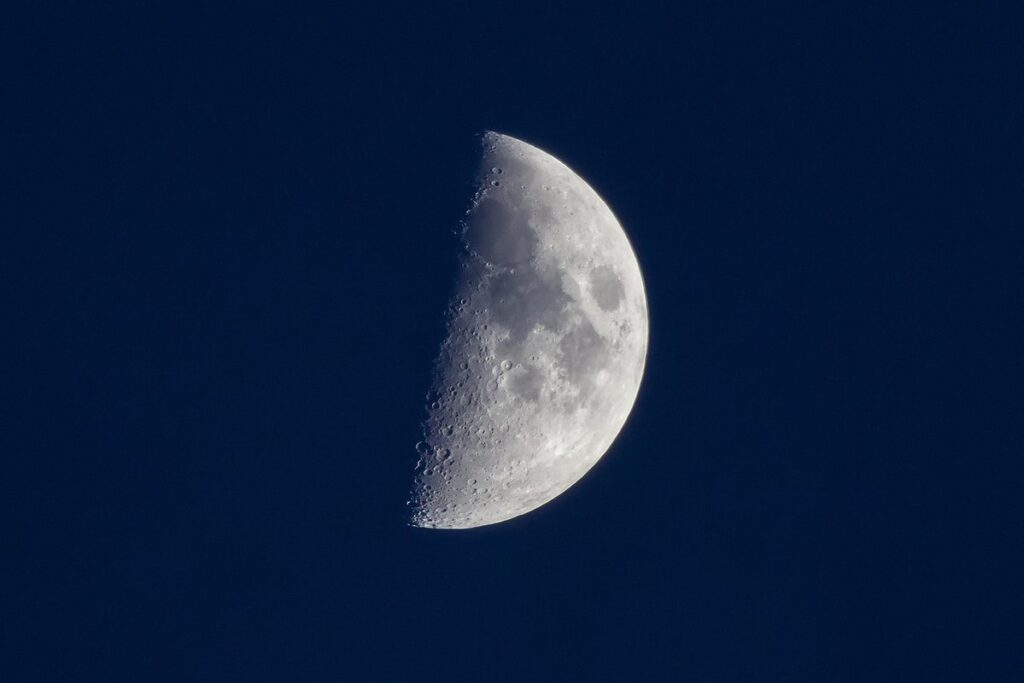
The first quarter marks a turning point, where the right half of the Moon’s illuminated surface is visible from Earth. This is followed by the waxing gibbous phase, during which the Moon appears to be growing larger and fuller. The full moon occurs when the entire illuminated side of the Moon faces Earth, making it fully visible in the night sky.
As the Moon continues its cycle, we see the waning gibbous, last quarter, and finally the waning crescent phases. Each phase offers a unique opportunity for astronomers to observe and study the Moon’s changing appearance. For amateur astronomers, being aware of these different lunar phases can help plan observing sessions and make the most of their time under the stars.
How Lunar Phases Affect Tides
The moon’s gravitational pull has a profound impact on our oceans, and understanding how lunar phases affect tides is essential to grasping their complexities. This intricate relationship is explored in detail below.
Understanding the Connection Between Lunar Phases and Tides
The gravitational pull of the Moon has a profound impact on Earth’s oceans, resulting in the rise and fall of sea levels known as tides. This phenomenon is often associated with the lunar phases, but the connection is not as straightforward as it seems. During full moon and new moon phases, the gravitational pull is at its strongest, causing higher high tides and lower low tides. This is because the Moon’s gravity pulls on the water molecules in the ocean, causing them to bulge out in two areas: one on the side of the Earth facing the Moon and the other on the opposite side.
As a result, coastal areas experience more extreme tidal fluctuations during these phases. For example, if you’re planning a beach vacation during a full moon, be aware that high tide may reach higher levels than usual, potentially flooding low-lying areas or making it difficult to access certain beaches. Conversely, during quarter moon phases, the gravitational pull is weaker, resulting in less pronounced tidal changes. Understanding this relationship between lunar phases and tides can help you better prepare for coastal activities and plan your trips accordingly.
Lunar Cycle and Ocean Currents
The lunar cycle has a profound impact on ocean currents, influencing the formation of tidal waves and their effects on coastlines. During new moon and full moon phases, the gravitational pull of the moon is at its strongest, causing the oceans to bulge outward and creating larger-than-usual tides. This phenomenon results in the formation of powerful tidal waves that can reach speeds of up to 25 feet per second.
The increased water flow during these phases can have devastating effects on coastlines, including erosion, flooding, and damage to coastal infrastructure. For example, a study on the 2004 Indian Ocean tsunami found that the massive tidal wave was triggered by a 9.1-magnitude earthquake that occurred during a new moon phase. The powerful waves caused widespread destruction along the coast of Thailand, Indonesia, and Sri Lanka.
To understand the impact of lunar cycles on ocean currents, it’s essential to consider the specific characteristics of each lunar phase. For instance, during spring tides (new moon and full moon), the tidal range is at its greatest, resulting in more pronounced tidal waves. Conversely, neap tides (quarter moons) experience a weaker gravitational pull, leading to smaller tidal ranges. By acknowledging these patterns, coastal residents can better prepare for the challenges posed by lunar cycles and take proactive measures to mitigate their effects.
Lunar Phases in Astrology
Lunar phases have a significant impact on our emotions, relationships, and personal growth, making them an essential aspect of astrology to understand. Let’s explore how the lunar cycle influences different areas of life.
The Significance of Lunar Phases in Astrology
Lunar phases have long been studied for their influence on personality traits, emotional states, and decision-making processes in astrology. The full moon, for instance, is often associated with heightened emotions, impulsive decisions, and a sense of restlessness. During this phase, individuals may feel more expressive, sensitive, and reactive to their surroundings.
The new moon, on the other hand, is typically linked to introspection, renewal, and rebirth. It’s considered an ideal time for setting intentions, making plans, and taking action towards personal goals. People often feel more reflective, intuitive, and inclined to let go of old patterns during this phase.
As the moon waxes and wanes, its phases can also affect our relationships. For example, the waxing crescent is thought to bring increased energy, creativity, and a desire for connection with others. This may be an excellent time to nurture friendships or pursue romantic interests. In contrast, the waning gibbous phase might bring feelings of uncertainty, conflict, and a need for boundaries in relationships. Understanding these lunar influences can help you better navigate life’s challenges and make more informed decisions about your personal growth.
Working with Lunar Cycles for Personal Growth
Working with lunar cycles for personal growth involves synchronizing your goals and activities with the moon’s phases. The new moon is an ideal time to set intentions, as it represents a blank slate. Take some time to reflect on what you want to achieve, then write down specific, achievable objectives. Be sure to make them positive and focused on what you want to create rather than avoiding a particular outcome.
The waxing crescent moon phase is suitable for taking action towards your goals. Break down larger objectives into smaller, manageable tasks, and prioritize the most critical ones first. This will help you make steady progress and build momentum. For example, if you’re planning to start a new exercise routine, use this time to research different workouts, schedule a gym membership, or prepare healthy meal plans.
During the full moon, revisit your intentions and assess your progress. Celebrate your successes and acknowledge areas where you need improvement. This phase is also an excellent opportunity for self-care and relaxation. Use it to recharge and refocus before the next lunar cycle begins. By working with the lunar cycles in this way, you can tap into their natural energy and make lasting changes in your life.
Observing and Tracking Lunar Phases
To observe and track lunar phases effectively, you’ll want to learn how to identify key features and patterns that occur during each phase. This involves understanding the relationship between the Moon’s position and the Earth’s oceans and landmasses.
How to Observe Lunar Phases
To accurately observe and track lunar phases, you’ll need a clear understanding of the moon’s position in relation to the Earth and Sun. Start by using astronomical software like Stellarium or SkySafari, which can generate 3D simulations of the night sky for specific dates and locations. These programs will show you the moon’s phase at any given time, helping you anticipate and prepare for observations.
Mobile apps like Moon Phase Pro or Lunar Calendar offer similar functionality in a more portable format. They often include features like alarm notifications when the moon is at its brightest or most visible, making it easier to plan your observing sessions.
When using these tools, pay attention to the moon’s illumination percentage and its position relative to notable celestial objects, such as planets or bright stars. This information will help you understand how the lunar phase affects the overall visibility of other night sky features. For example, a full moon can make it difficult to spot fainter stars or galaxies, while a new moon offers a clearer view of these objects.
Understanding Lunar Cycle Charts
When examining lunar cycle charts, it’s essential to understand the significance of lunar positions and their connections with planetary cycles. These charts display the relative positions of the Moon, Sun, and planets throughout a given period. By interpreting these positions, you can gain insight into the potential influences on various areas of life.
Pay attention to the following key points when analyzing lunar cycle charts:
- The New Moon often marks new beginnings and fresh starts, while the Full Moon highlights completions and resolutions.
- Planetary aspects, such as conjunctions and oppositions, indicate potential tension or harmonious relationships between celestial bodies.
- Consider the planetary ruler of each sign to identify which energies are at play during specific lunar phases.
For example, a New Moon in Aries may signal bold initiative and pioneering spirit, while a Full Moon in Cancer may emphasize emotional expression and nurturing qualities. By combining these insights with your own experiences and intuition, you can develop a deeper understanding of the lunar cycle’s impact on your life. This skill takes practice, so be patient and continue to study and observe these charts over time.
Lunar Phases in Agriculture
Agricultural practices that align with lunar phases can have a profound impact on crop yields and growth, making it essential to understand how these cycles work. Let’s examine the unique effects of each lunar phase on plant development.
The Importance of Lunar Phases in Planting and Harvesting
Lunar phases have been used to guide agricultural activities for centuries, with farmers often observing significant differences in crop yields and growth rates between planting during various lunar cycles. The full moon is typically considered a favorable time for planting seeds that require a lot of energy to grow, such as corn, sunflowers, and squash. This is because the full moon’s bright light allows plants to undergo rapid cell division and expansion, setting them up for healthy growth.
In contrast, planting during the new moon phase can be beneficial for crops that prefer cooler temperatures and reduced moisture levels, like lettuce and spinach. These vegetables tend to thrive in conditions where they don’t receive direct sunlight, making the new moon’s lower light an optimal environment for their development. Harvesting, too, can be timed according to lunar phases. For instance, many farmers believe it’s best to harvest fruits and vegetables during the waning moon phase, when the moon is decreasing in size.
Case Studies: Successful Farming Using Lunar Cycles
In the United States, a well-known example of lunar farming is the work of Rowen White, an indigenous seed keeper and farmer. She uses the full moon to plant seeds for warm-season crops like corn and beans, while the new moon is reserved for cool-season crops such as broccoli and kale. This approach has allowed her to improve crop yields by about 20% compared to traditional methods.
Another notable example comes from a small-scale farm in Australia, where the farmers use the lunar cycle to determine when to harvest their crops. They find that the full moon coincides with optimal fruit ripeness for fruits like strawberries and tomatoes. This precision has resulted in significantly reduced waste and improved flavor profiles for their customers.
Farmers can replicate this success by first identifying which lunar phase is best suited for each crop type, based on its growth stage and requirements. By tailoring planting and harvesting schedules to the lunar cycle, farmers can gain a more intuitive understanding of natural rhythms and make adjustments accordingly.
Common Misconceptions About Lunar Phases
Many people assume that lunar phases occur simultaneously for all locations on Earth, but this is actually not the case. In reality, the timing of each phase varies depending on your location.
Debunking Myths and Misunderstandings
The full moon is often associated with increased tides, but this notion has been somewhat exaggerated. In reality, high tide occurs when the moon’s gravitational pull aligns with the Earth’s rotation, which happens twice a day regardless of lunar phase. This means that tidal activity isn’t directly correlated to the full moon.
Another misconception is that new moon and full moon are symmetrical in terms of their effects on our daily lives. While it’s true that these two phases have opposite sides facing the sun, they don’t necessarily produce opposing effects. For instance, a full moon can be just as quiet and still as a new moon if its gravitational pull isn’t aligned with the Earth’s rotation.
A more accurate way to understand lunar phases is by considering their specific characteristics rather than relying on generalizations or stereotypes. By doing so, we can develop a more nuanced appreciation for the complex relationships between the Earth, sun, and moon.
Historical and Cultural Significance of Lunar Phases
Lunar phases have long been a source of fascination and reverence across various civilizations. Many ancient cultures considered the full moon to be a time for celebration and ritual, while the new moon was often associated with introspection and renewal. In some Asian cultures, the full moon is still honored as a symbol of prosperity and good fortune, with traditional lantern festivals held during this phase.
In contrast, the dark moon has been linked to mystery and the supernatural in many mythologies. For instance, in ancient Greece, the new moon was associated with the goddess Hecate, who presided over magic and the night. Similarly, in some Native American cultures, the dark moon is seen as a time for spiritual growth and introspection.
Understanding the cultural significance of lunar phases can provide valuable insights into their symbolism and meaning. For example, if you’re planning a wedding or other celebratory event, consider scheduling it during a full moon phase to tap into its associated energies of joy and abundance. Conversely, if you’re looking to set intentions for personal growth or renewal, the new moon may be a more suitable time. By tuning into the cultural and historical context of lunar phases, we can deepen our appreciation for their significance and harness their power in our own lives.
Frequently Asked Questions
Can I Use Lunar Phases for Every Decision in My Life?
Yes, lunar phases can be used as a tool to inform and guide personal decisions. By understanding the different types of lunar phases and their associated energies, you can tap into their potential to enhance your decision-making process.
When using lunar cycles for personal growth, it’s essential to remember that they’re just one aspect of a larger system. Be sure to integrate multiple sources of information and intuition when making important decisions. This will help you avoid relying too heavily on any single influence, including lunar phases.
How Do I Track Lunar Phases in the Field When Working with Plants?
To track lunar phases while working outdoors, consider using a combination of visual observation and astronomical software. Observe the Moon’s position in relation to your surroundings and note its phase, as well as any notable patterns or changes.
When tracking lunar cycles for agriculture, be mindful of local time zones and adjust your schedule accordingly. This will ensure that you’re aligning with the correct lunar phase for your specific location and planting needs.
Can I Use Lunar Phases in Urban Planning and Architecture?
While lunar phases are often associated with more traditional or natural settings, they can indeed be applied to urban planning and architecture. By incorporating elements that resonate with different lunar phases – such as water features, gardens, or courtyards – you can create spaces that honor the cycles of nature.
When designing buildings or public spaces, consider how lunar phases might influence the experiences and behaviors of occupants. This could include using materials, colors, or shapes that evoke specific lunar energies, promoting a more harmonious relationship between built environments and natural cycles.
Is It Possible to Use Lunar Phases for Financial Planning?
Yes, lunar phases can be used as a metaphorical guide for financial planning. By aligning your financial goals with different lunar phases – such as investing during full moon or selling during waning crescent – you can tap into the energies associated with each phase.
When using lunar cycles for financial planning, remember that this approach is highly subjective and should be combined with more practical, evidence-based strategies. This will help you avoid relying too heavily on a single, potentially unreliable influence.
Can I Use Lunar Phases to Enhance My Athletic Performance?
Yes, lunar phases can be used as a tool to enhance athletic performance by tapping into their associated energies and cycles. By synchronizing your training schedule with the different types of lunar phases – such as waxing crescent for growth or waning gibbous for release – you can optimize your physical output.
When using lunar cycles for athletic enhancement, consider how they might influence your mental state and focus. This could include practicing mindfulness, visualization, or other techniques that resonate with specific lunar energies.