
Ever dreamed of unleashing your creativity and bringing far-off lands to life with just a pencil? Map drawing is more than just a hobby – it’s an art form that allows you to explore new places, challenge yourself creatively, and develop a deeper understanding of geography. With map ideas drawing, the possibilities are endless, from imagining fantastical worlds to creating realistic representations of your favorite destinations.
Whether you’re a seasoned artist or just starting out, this comprehensive guide will walk you through basic techniques to advanced methods, helping you unlock your full creative potential. Inside, we’ll cover essential tips for getting started, experimenting with different styles and mediums, and pushing the boundaries of what’s possible in map drawing. By the end of this article, you’ll have the skills and inspiration to create stunning maps that transport others to new and exciting places.
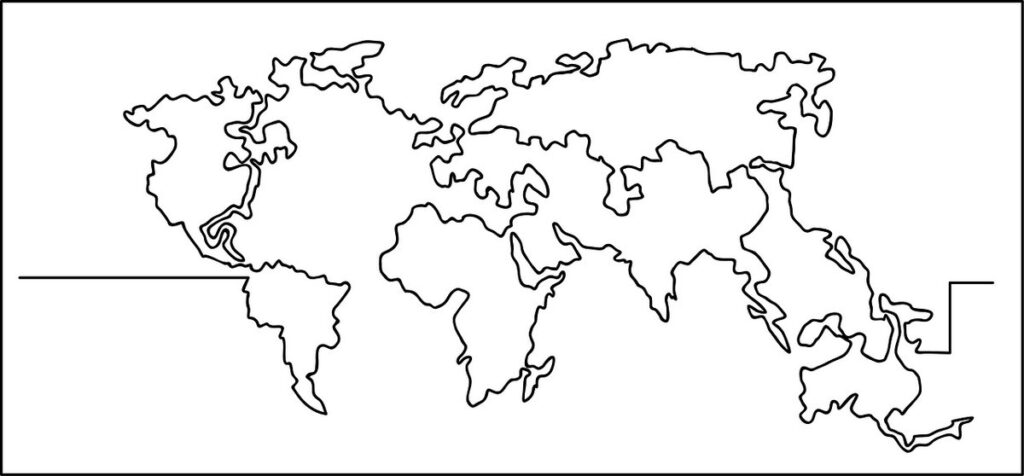
Understanding the Basics of Map Drawing
To get started, you need to understand the fundamentals of map drawing, which includes learning basic symbols and conventions used on maps to convey geographical information effectively. Let’s break down these essential elements together.
What is Map Drawing?
Map drawing is an incredibly versatile and engaging creative activity that allows you to bring your imagination to life on paper. Whether you’re designing a map for personal use, such as planning a dream vacation or creating a treasure hunt for friends and family, or working on a professional project like illustrating a novel’s fantasy world or developing a marketing campaign, the process of map drawing requires a unique blend of artistic skills, spatial reasoning, and attention to detail.
To get started with map drawing, you’ll want to combine your creative vision with an understanding of basic cartographic principles. This means considering factors such as scale, proportion, and perspective, as well as incorporating visual elements like colors, textures, and symbols that will help tell the story of your map. Remember, the goal is not just to create a visually appealing representation but also to convey information effectively. Take inspiration from real-world examples – think about how iconic maps like the London Underground or Disney’s fantasy worlds are both aesthetically pleasing and functional.
When approaching a map drawing project, it can be helpful to break down the process into stages. Start by brainstorming ideas, considering what you want your map to depict and who your audience will be. Then, sketch out rough drafts, experimenting with different layouts and visual elements until you have a clear vision.
Importance of Map Drawing in Everyday Life
When you think of map drawing, you might immediately consider it as something that’s limited to professionals like cartographers and urban planners. However, understanding map drawing concepts can have a significant impact on our daily lives, regardless of our profession or background.
By grasping the basics of map drawing, individuals can develop their problem-solving skills in various aspects of life. For instance, visualizing complex information is essential for making informed decisions, whether it’s planning a road trip, understanding traffic patterns, or analyzing data. Map drawing helps break down complex information into a clear and concise format, allowing us to better comprehend the relationships between different elements.
Additionally, map drawing can enhance our creativity by encouraging us to think outside the box and explore new ways of presenting information. In graphic design, for example, maps are often used to create engaging visualizations that convey data in an aesthetically pleasing manner. By applying these principles, individuals can develop a more analytical and creative approach to problem-solving, which can be applied to various areas of their lives.
Getting Started with Map Ideas Drawing
Now that you have a spark of creativity, it’s time to get started on your map ideas drawing journey. This section will walk you through the basics of getting started and laying down the groundwork for your artistic endeavors.
Choosing the Right Tools and Materials
When it comes to map ideas drawing, selecting the right tools and materials can make all the difference. You don’t need a vast array of equipment to get started, but having the right mediums can enhance your experience and produce better results.
Traditional drawing tools like pencils, markers, and colored pencils are great for beginners and experienced artists alike. Pencils allow for fine details and subtle shading, while markers provide bold lines and vibrant colors. Colored pencils, on the other hand, offer a more nuanced approach to coloring, with blendable and mixable options.
For digital map drawing, software like Adobe Illustrator, SketchUp, or Autodesk can be incredibly powerful tools. These programs allow for precision and versatility, enabling you to experiment with different styles and techniques. Additionally, digital tools often come with built-in measurement and layout features that make it easier to create accurate maps.
Ultimately, the choice between traditional and digital tools depends on your personal preference and the specific requirements of your project.
Understanding Scale and Proportion in Map Drawing
When creating maps, it’s easy to get caught up in the details of design and forget about one of the most critical aspects: scale and proportion. Scale refers to the ratio between the size of objects on the map and their real-life counterparts. Proportion, on the other hand, is about maintaining the relationships between these objects.
To put this into perspective, imagine you’re drawing a park with trees, paths, and buildings. If your scale is 1:1000, every object will be 1/1000th of its actual size. This means that if a tree in real life is 10 feet tall, it would only be about 2 millimeters on your map.
Spatial reasoning comes into play when you’re working with different scales and trying to maintain proportion. Think of it like building with LEGO blocks: as the scale changes, so do the relationships between the blocks. In map drawing, this means adjusting object sizes and distances according to their actual measurements.
When creating a new map idea, consider how scale and proportion will affect your design. Use a scale reference or measure out distances on paper to ensure accuracy. This may require some trial and error, but with practice, you’ll develop an eye for visual proportion and create maps that are both beautiful and accurate.
Basic Map Drawing Techniques
To bring your map ideas to life, let’s start with the basics of map drawing: learning essential techniques to create a foundation for any type of map.
Basic Shapes and Lines
When it comes to drawing maps, mastering basic shapes and lines is an essential skill that will make a significant difference in your overall map-drawing experience. Let’s start with the basics: drawing different types of lines. You’ll need to learn how to draw various line weights, styles, and patterns to add depth and visual interest to your map.
To begin, practice drawing straight lines using a ruler or by eye. Experiment with different line weights, such as fine, medium, and bold. This will help you develop muscle memory and achieve consistent results. Next, try drawing curved lines using a variety of techniques, including freehand, compass, and French curve methods.
In addition to lines, basic shapes are another crucial element in map drawing. Familiarize yourself with fundamental shapes like points, lines, polygons, circles, ellipses, rectangles, triangles, and quadrilaterals. Practice combining these shapes to create more complex forms, such as buildings, trees, or other landscape features.
Remember, the key is to practice regularly and be patient with your progress. With time and effort, you’ll become proficient in drawing various lines and basic shapes, setting the foundation for creating detailed and accurate maps.
Creating Realistic Landscapes and Features
When it comes to creating realistic landscapes and features on your map, attention to detail is key. To start, consider the overall style you want to achieve – are you going for a realistic depiction of the natural world or something more stylized? This will help guide your approach.
For hills and mountains, think about using gentle slopes and curves to create a natural-looking terrain. You can use a combination of straight lines and smooth curves to build up layers of hills, gradually increasing in size as you move upwards. Remember that it’s all about proportion – make sure the smaller features blend seamlessly into the larger landscape.
When drawing rivers, consider the flow of water and how it would shape the surrounding terrain over time. You can use gentle undulations to create a meandering path or more dramatic curves for a faster-moving stream. Don’t forget to add some visual interest with nearby buildings, roads, or vegetation – these details will help bring your map to life.
As you add buildings, think about their relationship to the surrounding landscape – are they nestled in valleys, perched on hillsides, or situated along waterways? Use a combination of rectangular shapes and curved lines to create a sense of depth and texture.
Advanced Map Drawing Techniques
Now that you’ve mastered the basics, let’s dive into some advanced techniques to take your map drawing skills to the next level and create truly unique designs. We’ll explore expert-level strategies for adding depth and visual interest.
Adding Depth and Dimensionality
When creating a map, it’s essential to consider more than just the physical features and layout. By incorporating techniques that add depth and dimensionality, you can transform a two-dimensional representation into an immersive visual experience. One effective method is atmospheric perspective, which uses color and contrast to create a sense of distance and depth.
To achieve this effect, employ a range of colors for distant objects, gradually fading to more muted tones as they recede from the viewer’s eye. This technique draws inspiration from real-world observations of how our atmosphere affects visual perception. For instance, mountains may appear as blue-gray blurs on the horizon while sharp details become apparent only when up close.
In addition to atmospheric perspective, layering is another crucial aspect of creating depth in map drawing. By combining and overlapping different elements, such as terrain, vegetation, or water bodies, you can create a multi-layered effect that invites exploration. This technique can also be used to guide the viewer’s attention through carefully arranged foreground and background elements.
Another key element is texture, which adds a tactile quality to your map drawing. By varying textures across different regions – for example, rough stone in mountainous areas versus smooth sand on beaches – you create a sense of realism that engages the viewer on multiple levels.
Incorporating Symbols and Icons
When creating maps, symbols and icons play a crucial role in conveying specific information. To effectively incorporate these elements into map design, consider using visual consistency throughout the map. This means selecting a limited color palette and sticking to it for all symbols and icons.
Choose symbols that are easily recognizable and relate directly to the content being mapped. For example, a blue pin could represent a location, while a green leaf symbolizes vegetation. Ensure that the chosen symbols are contextually relevant and avoid overloading the map with too many different icons.
Consider using standardized sets of symbols from organizations such as the International Cartographic Association (ICA) or the United States Geological Survey (USGS). These pre-existing collections can help maintain consistency across maps while ensuring accuracy in representation. By thoughtfully incorporating symbols and icons, you can enhance your map’s clarity and make it more engaging for your audience.
Additionally, keep in mind that the size of symbols should be consistent with their significance on the map. This means using larger symbols to draw attention to important features or events.
Creating Themed Maps
Let’s dive into creating themed maps that transport you and your audience to fantastical worlds. We’ll explore techniques for crafting unique, immersive environments in your art.
Fantasy and Science Fiction Maps
When it comes to fantasy and science fiction maps, the possibilities are endless. You can create entire worlds from scratch, complete with their own landscapes, creatures, and cultures. To get started, try brainstorming about different types of environments you’d like to feature on your map. Do you want sprawling cities, dense forests, or vast deserts? Perhaps you’d like to include mythical creatures such as dragons, unicorns, or mermaids.
To add depth to your fantasy world, consider creating a rich history and mythology for the inhabitants. This could involve designing unique cultures with their own customs, languages, and traditions. You might also want to explore the science behind your world’s geography, including the creation of continents, oceans, and mountain ranges. To visualize these concepts, try using different colors, textures, and shapes to represent various features on your map.
Some popular techniques for designing fantasy maps include layering, where you create a series of transparent layers to build up the details of your world, and isometric projection, which allows you to view multiple levels at once.
Realistic Maps for Travel and Navigation
When it comes to creating maps for travel and navigation, accuracy is key. Realistic maps help travelers navigate unfamiliar territories with ease, while also providing essential information about local attractions, transportation options, and cultural landmarks. To create accurate and informative maps, start by researching the region you’re mapping. Gather data on topographical features, road networks, public transportation systems, and notable points of interest.
You can use online tools like Google Maps or Mapbox to get a base layer of information, then add additional details such as walking routes, bike lanes, and local businesses. Consider the scale and orientation of your map – will it be used for planning purposes or as a physical guide while traveling? Using a mix of cartographic techniques and visual elements can help create a clear and easy-to-follow design.
For example, if you’re creating a map of Tokyo’s public transportation system, include key landmarks like Shinjuku Station and Shibuya Crossing. Add walking routes to popular areas like Harajuku or Akihabara, and highlight major subway lines and bus routes in different colors. This will help travelers navigate the complex network with confidence. By incorporating practical features and real-world details, you can create a map that’s both visually appealing and incredibly useful for travelers.
Tips and Best Practices for Map Drawing
As you continue on your map drawing journey, let’s dive into some essential tips and best practices that’ll take your creations to the next level. We’ve got expert advice coming right up!
Common Mistakes to Avoid
When drawing maps, it’s easy to fall into common pitfalls that can detract from the overall accuracy and visual appeal of your work. One of the most critical mistakes beginners make is getting the scale wrong. A map that’s too small or too large can be confusing and difficult to read. To avoid this, start by deciding on a specific purpose for your map – will it be used for navigation, decoration, or education? This will help you determine the ideal scale.
Another mistake is failing to pay attention to proportion. Make sure that the relative sizes of buildings, roads, and other features are accurate. A good rule of thumb is to use a consistent ratio between different elements on your map. For instance, if you’re drawing a city block, make sure the building height is proportional to its footprint.
Spatial reasoning is also essential when creating maps. It’s easy to get lost in details and forget about the overall layout of your map. To avoid this, start by sketching out the main features of your map before adding smaller details. This will help you visualize how all the elements fit together.
Final Touches: Adding Finishing Details
Adding finishing touches to your map can be just as important as creating the initial design. These details bring depth and meaning to your map, making it more engaging and informative for your audience.
When it comes to labeling, keep it concise but clear. Use a consistent font and color scheme throughout the map to avoid visual clutter. Consider using icons or symbols instead of lengthy labels for features like rivers or mountain ranges. For instance, a simple compass icon can represent direction without taking up valuable space.
Legends are another crucial aspect of map design. They help viewers understand complex information by breaking it down into an easily digestible format. Make sure to include all necessary information in your legend, such as color codes and symbols used on the map.
Decorative elements like borders or illustrations can add a personal touch to your map. However, use them sparingly to avoid overwhelming the viewer. A minimalist approach often works best for maps, allowing the important features to take center stage.
Conclusion
As you conclude this comprehensive guide on map ideas drawing, remember that creativity is a muscle that can be developed over time. Don’t be discouraged if your initial attempts at mapping don’t yield the desired results – it’s all part of the process. Instead, focus on experimenting with different techniques and styles to find what works best for you. For instance, try combining traditional media like pencils and markers with digital tools like Procreate or Adobe Illustrator to create unique and eye-catching maps.
To keep your creativity sparked, consider joining a community of map enthusiasts or sharing your work online. This can help you stay motivated and inspired by seeing the work of others and receiving constructive feedback. With practice and patience, you’ll be well on your way to creating stunning maps that showcase your artistic vision. Keep exploring, experimenting, and pushing the boundaries of what’s possible in map ideas drawing!
Frequently Asked Questions
Can I use digital tools to create map ideas drawings?
Yes, many artists now use software or apps specifically designed for creating maps, such as Adobe Illustrator or Procreate. These tools can offer a range of benefits, including the ability to easily edit and manipulate lines, shapes, and symbols. When choosing a digital tool, consider what features are most important for your needs – for example, ease of use, flexibility in design options, or integration with other creative apps.
How do I ensure my map drawing is accurate and realistic?
While artistic license can be an essential part of map drawing, accuracy is also crucial. To achieve a balance between creativity and realism, research the location you’re drawing to gain insight into its geography, climate, and cultural characteristics. You can use maps from various sources – such as National Geographic or OpenStreetMap – to gather information about geographical features like mountains, rivers, and cities.
Can I combine different styles or mediums in a single map?
Combining different styles or mediums is an excellent way to add visual interest and depth to your map drawing. For instance, you might use traditional media like pencils or watercolors for certain elements, then overlay digital tools or software-generated elements for added detail or complexity. When experimenting with mixed-media approaches, keep in mind the texture, color palette, and overall aesthetic cohesion of each component.
How do I incorporate symbols and icons effectively into my map?
Incorporating symbols and icons can add meaning and context to your map drawing. To use them effectively, research their meanings and conventions – for example, understanding what different colors or shapes represent on a map. Balance the number of symbols used with the overall visual flow of your map, ensuring they don’t overwhelm the viewer.
Can I sell my map drawings as merchandise or prints?
Yes, if you have created unique and visually appealing map designs, there’s potential to monetize them through various channels such as print-on-demand services or online marketplaces. Consider factors like licensing agreements, copyright laws, and profit margins when exploring these opportunities. You can also offer custom commissions for personalized maps tailored to clients’ specifications.