
Quartz is more than just a pretty crystal that you might find on your nightstand or in a jewelry box. It has a rich geological history, having formed over millions of years through a combination of heat and pressure deep within the Earth’s crust. But its significance goes far beyond its physical properties – quartz also holds metaphysical properties that have been revered by cultures around the world for centuries. From its use in crystal healing to its applications in modern technology, medicine, and even quantum computing, quartz is a mineral with an impressive range of uses. In this article, we’ll delve into the fascinating world of quartz, exploring its geological origins, metaphysical properties, and the many ways it impacts our lives today.
What is Quartz?
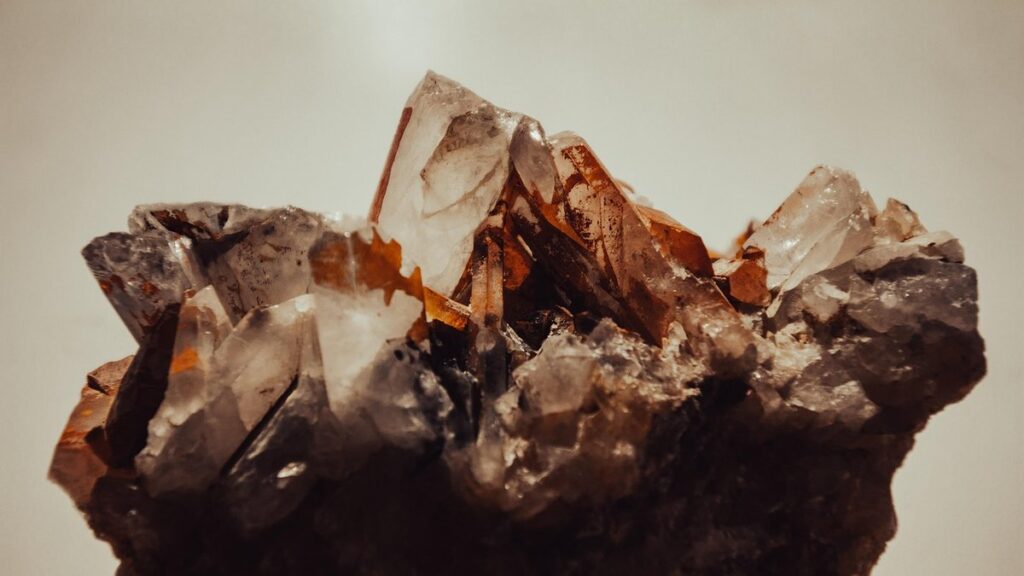
Let’s dive into the basics of quartz, starting with its definition: a type of mineral crystal that forms when silicon and oxygen atoms combine under high pressure. It’s an essential element in many natural occurrences.
Definition and Classification
Quartz is one of the most abundant minerals on Earth, making up a significant portion of the planet’s crust. Its definition can be summed up as a mineral composed of silicon and oxygen atoms, typically found in rocks and sand. The classification of quartz is based on its crystal structure and composition, which determines its physical properties.
There are numerous types of quartz, each with unique characteristics and significance. Amethyst, for instance, is a purple variety of quartz prized for its deep color and rarity. Citrine, on the other hand, is known for its vibrant orange to yellow hues and is often used in jewelry. Rose quartz, often referred to as the “love stone,” has a delicate pink color and is associated with emotions and compassion.
When it comes to understanding the meaning of quartz, it’s essential to consider these different types and their unique energies. Each type of quartz carries its own distinct properties, which can be used for various purposes, such as healing, spiritual growth, or simply as a decorative piece. By learning about the different types of quartz, you can tap into their individual energies and harness their significance in your life.
History and Origins
Quartz has been a part of our planet’s geological history for over 2.5 billion years, formed through a process known as magmatic crystallization. This occurs when magma cools and solidifies within the Earth’s crust, resulting in the formation of crystals. The unique combination of silicon and oxygen atoms gives quartz its distinctive properties and versatility.
Quartz has played a significant role in the lives of ancient cultures and civilizations. In many indigenous cultures, it was believed to possess spiritual energy and healing powers. The ancient Egyptians, for instance, used quartz in their jewelry and decorative objects, while the Incas revered it as a sacred stone associated with strength and power. Similarly, in some Native American traditions, quartz is considered a powerful tool for purification and protection.
Today, we can learn from these ancient cultures by appreciating the significance of quartz not just as a mineral but also as a symbol of spiritual growth and connection to nature.
Properties and Characteristics
Quartz is a mineral with a wide range of properties, from its unique crystal structure to its distinct optical characteristics that make it stand out. Let’s take a closer look at these fascinating traits.
Optical and Electrical Properties
Quartz is renowned for its exceptional optical and electrical properties that make it an invaluable material across various industries. One of its defining characteristics is its remarkable transparency, allowing it to transmit light with minimal loss, which is why quartz is often used in optical components such as lenses and prisms. Its hardness, measured at 7 on the Mohs scale, also makes it resistant to scratching and wear, making it an ideal choice for applications where durability is a must.
Another critical property of quartz is its piezoelectricity – the ability to generate an electric charge in response to mechanical stress. This unique characteristic enables quartz crystals to be used in electronic devices such as oscillators, filters, and resonators, which rely on precise frequency control. The widespread use of quartz in timepieces and clocks is a testament to this property, allowing for accurate timekeeping even at high frequencies.
The optical and electrical properties of quartz are just two reasons why it’s an essential material in our daily lives.
Thermal and Physical Properties
Quartz is renowned for its exceptional thermal conductivity, which allows it to efficiently transfer heat throughout its structure. This property makes it a valuable material in electronics, where it’s used to dissipate heat generated by high-powered components. Specifically, quartz crystal oscillators are used in clocks and timing circuits due to their ability to regulate frequency with minimal variation.
In addition to thermal conductivity, quartz boasts impressive specific heat capacity – approximately 1.73 J/g°C – which enables it to store energy effectively. This property is leveraged in the production of quartz crystal resonators, essential components in radio transmitters and receivers.
Beyond electronics, quartz finds applications in optics, where its piezoelectric properties allow for precise control over laser beams. In fact, many high-precision lasers rely on quartz crystals to stabilize their output frequencies.
Uses and Applications
Beyond its metaphysical significance, quartz has numerous practical uses in various industries, from electronics to medicine. We’ll explore some of these applications next.
Electronics and Technology
Quartz plays a vital role in the world of electronics and technology, powering many devices we use daily. Its unique properties make it an ideal material for generating and stabilizing frequencies, which is crucial for electronic devices to operate accurately. In watches, for instance, quartz crystals are used to regulate the timekeeping mechanism, ensuring precise timing.
In computers and smartphones, quartz crystals are used in crystal oscillators to generate stable clock signals that synchronize data processing and communication. This frequency generation and stabilization are critical for reliable operation, as even minor deviations can lead to errors or system crashes. The stability of quartz crystals also enables them to withstand various environmental conditions, such as temperature fluctuations.
To put its significance into perspective, consider the following: a typical smartphone contains several quartz-based components, including crystal oscillators, resonators, and filters. These components work together to ensure that the device’s frequency is stable, allowing for smooth communication between components. This highlights the crucial role quartz plays in modern electronic devices, underscoring its importance as a fundamental material in technology.
Medical and Scientific Applications
Quartz has revolutionized various medical and scientific fields with its unique properties. In medicine, quartz is used extensively due to its ability to withstand high temperatures and pressure. One of the most significant applications is in the development of lasers, which rely on quartz for their precision and accuracy. For instance, a laser can precisely vaporize tumors or seal blood vessels during surgery.
Medical imaging technologies like ultrasound and MRI machines also utilize quartz due to its piezoelectric properties. These machines convert electrical signals into sound waves that penetrate tissues, allowing doctors to diagnose various conditions more accurately. Furthermore, radiation therapy involves the use of quartz in linac (linear accelerator) technology, which helps deliver precise doses of radiation.
In scientific research, quartz is used for spectroscopy and crystallography studies due to its unique atomic structure. Quartz’s crystals can be precisely cut to produce specific frequencies, enabling scientists to study molecular interactions and material properties in detail. For example, a technique known as Brillouin scattering uses quartz crystals to analyze the elastic properties of materials.
Quartz has opened up new avenues for medical research and diagnostics. As technology advances, its applications will continue to grow.
Healing Properties and Symbolism
Quartz is deeply connected to our emotional, spiritual, and physical well-being, offering a range of healing properties that can balance our lives. Let’s explore its symbolism and how it can work its magic on us.
Metaphysical and Spiritual Significance
Quartz is often considered a powerful tool for amplifying one’s intentions and desires. Its metaphysical properties are associated with clarity, manifestation, and protection, making it a popular choice for those seeking to enhance their spiritual practices. When working with quartz, it’s essential to set clear intentions and focus on what you want to manifest in your life.
In meditation, quartz can be used as a catalyst for inner reflection and self-discovery. Its energy is believed to promote a sense of calmness and mental clarity, allowing individuals to access higher states of consciousness more easily. To harness this energy, simply hold the crystal in your hand or place it on your third eye during your meditation practice.
Quartz can also be used in energy healing to absorb and transmute negative energies. This can be achieved by placing the crystal near areas of concern or by using its energy to clear and balance the body’s chakras. By incorporating quartz into your spiritual routine, you may find that it enhances your ability to focus, sets a positive tone for the day, and amplifies your intentions, leading to a more fulfilling life.
Crystal Healing and Chakras
Quartz is one of the most versatile crystals used in crystal healing, and its significance lies in its ability to balance and align the body’s energy fields. In this context, quartz is often associated with the crown chakra, also known as Sahasrara, which represents spiritual awareness and higher states of consciousness. By placing a piece of clear or smoky quartz on the crown of the head, individuals can tap into its amplifying properties and enhance their connection to the universe.
Quartz is also believed to have a balancing effect on the root chakra, Muladhara, associated with feelings of safety and security. This crystal helps to ground and center the body’s energy, promoting stability and emotional well-being. To reap the benefits of quartz in this way, simply hold a piece of rose or clear quartz in your hands during meditation or place it under your bed while sleeping.
When working with quartz for healing purposes, it’s essential to keep its intention focused on a specific outcome. Set an intention, such as letting go of emotional baggage or promoting clarity and focus, before placing the crystal near the corresponding chakra.
Sources and Availability
If you’re interested in learning more about quartz, you’ll want to know where to find it and how to access reliable sources of information on its meaning and significance. We’ve got you covered!
Where is Quartz Found?
Quartz is one of the most abundant minerals on Earth, found in numerous geographical locations worldwide. Major deposits are located in Brazil, India, and South Africa, while significant amounts can also be found in the United States, particularly in Arkansas and North Carolina. In addition to these countries, quartz-rich areas exist in many other parts of the world, including China, Madagascar, and Russia.
The process of extracting quartz from its natural deposits is typically carried out through open-pit mining or underground mining methods. Once extracted, the raw quartz is then crushed and processed into various forms, such as crystals, clusters, or powder. This processing step often involves heating, cutting, and polishing to enhance the crystal’s clarity and luster.
It’s worth noting that some countries have strict regulations regarding quartz extraction, particularly if it involves mining in protected areas or near environmentally sensitive zones. For those interested in obtaining high-quality quartz crystals, research local suppliers who adhere to sustainable practices.
Sustainability and Conservation
As you explore the significance of quartz, it’s essential to consider its impact on the environment. The mining process can have devastating effects on local ecosystems, including deforestation, soil erosion, and water pollution. Moreover, the extraction of quartz often involves the use of heavy machinery and energy-intensive processes.
To mitigate these concerns, look for quartz sources that prioritize sustainability and conservation. Many manufacturers now adhere to responsible sourcing practices, which ensure that materials are extracted using environmentally friendly methods. Some notable certification programs include Conflict-Free Quartz Certification and Fairmined Certification.
When shopping for quartz products, ask the supplier about their sourcing policies and certifications. You can also research companies that have implemented eco-friendly mining practices or support conservation initiatives in areas where they operate. By making informed choices, you contribute to a more sustainable quartz industry while still appreciating its beauty and significance. Ultimately, responsible sourcing and certification programs empower consumers like yourself to make a positive impact on the environment.
Conclusion
In conclusion, understanding the meaning and significance of quartz can be a truly transformative experience. As we’ve explored throughout this post, quartz is more than just a mineral – it’s a powerful tool for healing, manifestation, and personal growth. Whether you’re seeking to amplify your intentions, protect yourself from negative energy, or simply tap into its calming properties, quartz has something to offer.
As you continue on your journey of discovery with quartz, remember that its true power lies in the intention and energy you bring to it. By cultivating a deep connection with this incredible crystal, you can unlock its full potential and experience the profound impact it can have on your life. So take time to work with quartz regularly, tune into its vibrations, and watch as its significance becomes even more apparent.
Frequently Asked Questions
Can I use quartz for crystal healing if it’s been treated or altered?
Yes, the effectiveness of quartz for crystal healing is not diminished by treatments such as heat or irradiation. However, it’s essential to research and understand the potential impact on its metaphysical properties before using it in healing practices.
How can I ensure the authenticity of a quartz crystal I’m purchasing for crystal healing or other purposes?
To verify the authenticity of a quartz crystal, look for reputable suppliers that provide certification or documentation about the crystal’s origin, composition, and treatment. Researching the supplier and checking reviews from other customers can also help you make an informed decision.
Are there any specific safety precautions I should take when handling quartz crystals, especially in healing practices?
Yes, it’s essential to handle quartz crystals with care, as they can be brittle and may cause injury if mishandled. In crystal healing, always hold the crystal gently and avoid touching your eyes or sensitive areas after handling it.
Can quartz crystals be used for protection from electromagnetic radiation (EMR) emitted by electronic devices?
Yes, some types of quartz crystals are believed to have EMF-protective properties, although more research is needed to confirm this. If you’re concerned about EMF exposure, consider using a crystal specifically marketed as an EMF protector or consult with a healthcare professional for guidance.
How do I cleanse and charge my quartz crystals for optimal use in healing practices?
To cleanse and charge your quartz crystals, try methods like placing them under moonlight, burying them in the earth, or smudging with sage. You can also visualize a bright, white light filling the crystal to recharge its energy. Remember to set intentions and focus on the crystal’s purpose during this process.