
For centuries, humans have been fascinated by the night sky and its many mysteries. But beyond mere curiosity, star constellations have played a crucial role in guiding us through uncharted territories. From ancient mariners to modern space explorers, navigators have relied on constellation maps to chart their courses. These intricate patterns of light have not only illuminated our understanding of the universe but also ensured safe passage for countless travelers. In this article, we’ll delve into the rich history and applications of star constellation maps, exploring how they’ve been used in navigation, astronomy, space exploration, and even travel. We’ll examine their significance, from ancient civilizations to modern times, and discuss the ways in which these celestial maps continue to shape our understanding of the cosmos.
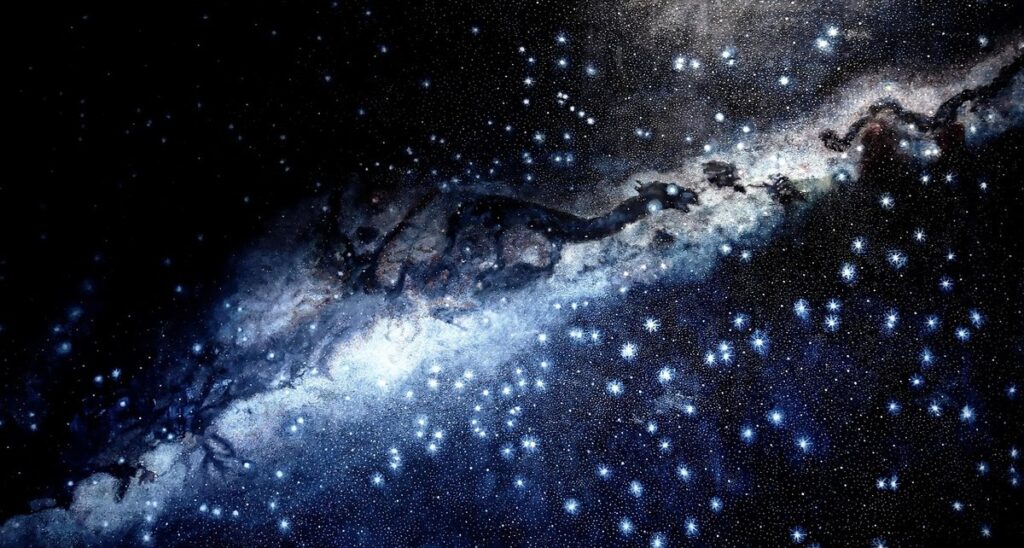
Understanding Star Constellations
As we explore the night sky, it’s essential to understand how star constellations are formed and identified. This is where mythology and astronomy come together in a fascinating way.
What are Star Constellations?
Star constellations have been an integral part of human navigation and astronomy for centuries. These patterns in the night sky are formed by the careful selection of bright stars that, when connected, create shapes and figures. In essence, star constellations are a way to make sense of the vast expanse of celestial bodies and their movements.
Historically, star constellations played a crucial role in navigation, particularly for ancient civilizations such as the Greeks and Romans. By recognizing familiar patterns in the night sky, sailors and travelers could determine their direction and location. For example, the constellation Ursa Major was used by ancient mariners to navigate the northern seas.
Today, understanding star constellations is essential for anyone interested in stargazing or astronomy. By knowing which stars make up a particular constellation, you can better appreciate its mythology, cultural significance, and even use it as a guide for finding other celestial objects. To get started, familiarize yourself with the most prominent constellations visible from your location, such as Orion, Cassiopeia, and Leo.
Identifying Constellations in the Night Sky
Identifying constellations can be an exciting and rewarding experience for stargazers. To begin with, familiarize yourself with the most prominent constellations visible from your location during different times of the year. Start by learning the basic patterns associated with them – their shapes, sizes, and positions in relation to one another.
For instance, beginners often recognize the constellation Orion due to its distinctive ‘hourglass’ shape formed by three stars: Alnitak, Alnilam, and Mintaka. With practice, you’ll be able to identify this pattern more easily, even with just a cursory glance at the sky.
Another valuable tool is a sky map or app – these resources allow you to view a virtual representation of the night sky from any location on Earth, adjusting for time, date, and atmospheric conditions. They also highlight notable celestial objects such as planets, asteroids, and stars.
One popular app is Sky Map (available for both iOS and Android), which can be used in conjunction with your phone’s camera to locate constellations. Simply hold the device towards the sky and tap on the object you’d like more information about – the app will then provide details on its name, distance from Earth, and any notable events or phenomena associated with it.
Keep an eye out for other noticeable features such as asterisms (smaller patterns within larger constellations) or planetary alignments. Understanding these elements enhances your overall experience while observing star constellation maps.
The Importance of Star Patterns in Navigation
For centuries, ancient civilizations have used star constellations as navigational tools to traverse vast distances. Maritime trade routes were a significant part of their economy, and understanding the night sky was crucial for safe navigation. One notable example is the ancient Polynesians who used the constellation of Ursa Major to sail across the Pacific Ocean. They recognized the Big Dipper‘s pattern and used it as a guide to find their way to distant islands.
Similarly, ancient sailors in the Mediterranean used the position of the constellations to determine their latitude. By observing the star patterns, they could estimate their distance from the equator. This knowledge allowed them to plan their routes more effectively and avoid getting lost at sea. The use of star patterns as navigational tools has been documented in various ancient texts, including Ptolemy’s Almagest.
By understanding the importance of star patterns in navigation, we can appreciate the ingenuity of our ancestors who relied on celestial bodies to chart their courses. Today, we can still utilize this knowledge by using modern star charts and astronomical software to plan our own stargazing excursions.
Creating Your Own Star Constellation Map
As a stargazer, you’ve probably gazed up at the night sky and wondered how to create your own personalized star map. This is where creativity meets astronomy!
Choosing the Right Stars and Patterns
When creating your own star constellation map, choosing the right stars and patterns is crucial for an accurate and aesthetically pleasing representation of the night sky. To select the best stars, consider their brightness and proximity to each other. Brighter stars are more visible and will stand out on your map, but be mindful that overly dominant stars can overwhelm the surrounding area. On the other hand, fainter stars may require additional illumination or magnification to make them visible.
In addition to brightness, also think about the visibility of the stars in your chosen constellation. Some constellations feature stars that are only visible from specific latitudes, so it’s essential to consider your location and time of year when selecting stars. For instance, the star Deneb in Cygnus is not visible from locations south of 37°N latitude.
When selecting patterns, remember to balance creativity with realism. Avoid overly simplistic or complex designs that may be difficult to recognize. Instead, aim for a harmonious blend of shapes and sizes that accurately represent the stars’ positions and relationships.
Designing and Labeling Your Constellation Map
When designing and labeling your constellation map, it’s essential to strike a balance between aesthetics and functionality. A well-crafted map can help you visualize the night sky and locate specific stars and constellations with ease. To get started, choose a color scheme that complements your theme – for example, dark blues and grays for a cosmic feel or bright pastels for a whimsical look.
Consider using free software like Stellarium or Aladin Sky Atlas to create your map. These tools allow you to customize font sizes, colors, and formatting to suit your needs. Labeling is crucial; use clear, concise language and bold important details, such as constellation names and notable star positions. To save space, consider grouping related stars together or using icons to represent specific celestial bodies.
When it comes to labeling, remember that less is often more – avoid cluttering the map with too much information. Focus on highlighting key features and allow the viewer’s eye to follow a natural flow through the design.
Tips for Sharing and Using Your Star Map
Now that you’ve created your star map, it’s time to share it with the world and put it to good use. Whether you’re a seasoned astronomer or just starting out, effectively presenting your constellation map is crucial for maximum impact.
When sharing your digital star map online, consider creating a shareable link or embedding it on social media platforms like Instagram or Twitter. This way, others can easily access and explore the night sky with you. You can also use online tools to create interactive star maps that respond to user input, such as zooming in or out of specific regions.
If you prefer a physical poster, choose high-quality paper or canvas that will bring your map to life. Consider laminating it for durability and protection from scratches. To make it more engaging, include interesting facts about the constellations featured on your map, such as myths behind their names or notable astronomical events associated with them.
Remember to save a copy of your original design file in case you want to make adjustments or create variations later. By presenting your star map effectively, both digitally and physically, you’ll be well on your way to inspiring others to explore the wonders of the night sky.
History of Star Constellation Maps
As we delve into the world of star constellation maps, let’s take a step back and explore how our understanding of these celestial bodies has evolved over time through ancient cartography.
Ancient Civilizations’ Use of Constellations
The earliest recorded use of constellations for navigation and astronomy dates back to ancient civilizations in Egypt and Greece. The Egyptians, for instance, mapped the stars to aid in the construction of monumental architecture like the pyramids. Their system of 36 decans (constellations) was used to track the movements of celestial bodies and predict seasonal changes.
The Greeks took this concept a step further by associating their gods with specific constellations. They created mythological stories around these connections, such as Orion being the hunter and Cassiopeia representing Queen Cassiopeia’s throne. This narrative approach helped them memorize the constellations’ patterns and locations more effectively.
These early civilizations laid the groundwork for modern astronomy by recognizing the importance of stars in navigation and timekeeping. By studying their methods, we can appreciate the ingenuity and curiosity of our ancestors as they sought to understand the night sky.
How Cartographers Developed Modern Constellation Maps
Cartographers have successfully adapted the concept of star constellations into comprehensive maps that are widely used today. By integrating astronomical data with traditional cartographic techniques, modern constellation maps have become an essential tool for astronomers and stargazers alike.
To create these maps, cartographers rely on a combination of historical records and cutting-edge technology. They start by analyzing ancient maps and texts to understand the original constellations’ boundaries and patterns. Next, they incorporate data from modern astronomical surveys, such as the Hipparcos mission, which provides precise measurements of star positions and distances.
This integration enables cartographers to create accurate, scaleable maps that account for both celestial movements and Earth’s rotation. As a result, modern constellation maps can accurately depict the night sky for any date and time, making them an indispensable resource for astronomers planning observations or stargazers tracking celestial events. By using these maps, you can explore the night sky with greater precision and confidence.
Impact on Astronomy and Navigation
For centuries, star constellation maps have not only helped us understand the layout of the night sky but also significantly impacted our understanding of the universe. Early astronomers relied on these maps to identify key celestial bodies and track their movements. For instance, Hipparchus’ catalog of 400 BC listed over 850 stars and was later used by Ptolemy in his Almagest, a comprehensive treatise on astronomy.
As technology improved, so did our understanding of the universe. Star charts enabled cartographers to create more accurate maps of the night sky, allowing for better navigation. In modern times, GPS systems rely heavily on precise star maps to determine location and time. This is because stars remain relatively constant in their positions over long periods, making them ideal reference points.
In fact, some spacecraft use star maps to navigate through space. For example, NASA’s Voyager 1 has used the position of the North Star, Polaris, to adjust its course during interstellar travel. As a beginner astronomer or navigator, understanding how these maps work can greatly enhance your ability to locate celestial bodies and chart your own course under the stars.
Modern Applications of Star Constellation Maps
From ancient navigation tools to modern-day tech, star constellation maps have evolved into an essential component of various industries and innovations that rely on celestial mapping. Let’s dive into how these maps are being used today in surprising ways.
In Astronomy: Enhancing Our Understanding of Space
Modern star constellations have become an essential tool for scientists and researchers today. By studying these celestial patterns, astronomers can gain valuable insights into the structure and evolution of our galaxy, the Milky Way. For instance, exoplanet hunting relies heavily on star constellation maps to identify potential candidates for hosting planets outside our solar system.
The process involves analyzing the light curves of stars within a specific constellation to detect subtle variations that could indicate planetary transits or eclipses. By using advanced software and algorithms, researchers can pinpoint promising targets and narrow down their search area. For example, NASA’s Kepler space telescope used star constellation maps to discover thousands of exoplanets, revolutionizing our understanding of planetary formation and the likelihood of life beyond Earth.
As technology advances, so does our ability to study the universe using star constellations. With new telescopes and observational techniques emerging, we can expect even more groundbreaking discoveries in the field of astronomy.
Navigation and Aviation: Using Constellations for Safe Travel
For centuries, constellations have served as trusted guides for travelers and explorers alike. In today’s world of advanced navigation systems, it may seem surprising that these ancient patterns still hold significance. However, their enduring value lies in the simplicity and versatility they offer.
Pilots rely on constellation maps to verify their position during flights over open waters or remote areas with limited GPS coverage. By identifying the stars within certain constellations, pilots can cross-reference their location with navigational charts, ensuring a safe and precise landing. Similarly, sailors use constellation patterns to chart courses at sea, where GPS signals may be weak or unreliable.
One of the most widely used constellation maps for navigation is the “Celestial Navigation Grid.” This grid overlays 30-degree latitude and longitude lines on a star map, creating a navigational framework that can be applied universally. By plotting their position within this grid, travelers can accurately determine their course and distance from any given location.
Educational Tools and Resources for Star Map Enthusiasts
For those eager to delve deeper into the world of star constellations, there are numerous educational tools and resources available. One popular option is Stellarium, a free planetarium software that allows users to simulate the night sky for any location and time. This tool is particularly useful for astronomers-in-the-making, as it provides an immersive experience and can help develop a deeper understanding of celestial mechanics.
Mobile apps like Sky Map and Star Walk 2+ are also excellent resources for stargazers on-the-go. These apps utilize augmented reality technology to superimpose the night sky onto your device’s camera view, making it easy to identify constellations in real-time. For a more hands-on approach, consider attending a star-gazing workshop or astronomy course at a local observatory or planetarium. Many organizations, such as the International Astronomical Union (IAU), offer online tutorials and resources for learning about constellations and astronomical phenomena.
By leveraging these educational tools and resources, you can take your stargazing hobby to the next level and develop a more nuanced understanding of the night sky.
Conclusion: Appreciating the Beauty and Utility of Star Constellation Maps
As you’ve delved into the world of star constellation maps, I hope you’ve gained a deeper appreciation for their beauty and utility. These maps have been helping navigators and stargazers alike for centuries, providing a window into the night sky’s secrets. By incorporating these maps into your outdoor adventures or simply gazing at the stars from your backyard, you’re not only enhancing your experience but also developing a new skill – that of reading the celestial canvas.
With practice and patience, you’ll begin to recognize patterns and constellations that will guide you through even the most unfamiliar night skies. And it’s precisely this journey of discovery that makes star constellation maps such an enduring and captivating resource. By embracing their beauty and utility, you’re tapping into a rich tradition of exploration and observation that spans centuries.
Frequently Asked Questions
Can I use star constellation maps for navigation on land as well?
Yes, while star constellations are often associated with maritime navigation, they can also be used on land to understand the relationship between celestial bodies and terrestrial geography. This requires a good understanding of astronomy and cartography, but can be a valuable skill for hikers, backpackers, or anyone venturing into remote areas.
How accurate do star constellation maps need to be for safe navigation?
While accuracy is crucial in navigation, a certain level of precision is sufficient for most purposes. Star constellations are often used as rough guides rather than exact navigational tools. For instance, the position of stars and constellations can indicate general directions, but precise calculations may require additional information.
What software or tools can I use to create my own star constellation map?
There are several free and paid software options available for creating digital star maps, including Stellarium, Celestia, and Cartes du Ciel. These programs allow users to customize their constellations, add labels, and even generate printable versions of the maps.
Can I use modern technology to verify my observations of star constellations?
Yes, with a smartphone or tablet, you can download apps like Sky Map, Star Walk, or Stellarium Mobile that provide real-time views of the night sky, including the positions of stars and constellations. These tools can help you identify patterns and verify your observations.
How do I balance the use of star constellation maps for navigation with the need to preserve natural darkness?
It’s essential to consider the impact of light pollution on both navigation and our understanding of the universe. Using red light or minimizing artificial lighting when stargazing is a good starting point, but it’s also crucial to advocate for preserving dark skies in areas where possible.