
Quartz crystals are one of the most common minerals found on Earth, but despite their ubiquity, their unique growth patterns and shapes have captivated scientists and collectors alike. Quartz crystal habit refers to the external shape and appearance of these crystals, which can vary greatly depending on factors such as temperature, pressure, and chemical composition. In geology and mineralogy, understanding quartz crystal habit is crucial for identifying and classifying different types of quartz, while in the gemstone industry, it plays a significant role in determining the value and market demand of quartz varieties. But what drives the formation of these intricate crystals? How are they classified, and what economic significance do they hold? This article will take you through the fascinating world of quartz crystal habit, exploring its classification systems, geological implications, and applications in various industries.
What is Quartz Crystal Habit?
Quartz crystal habit refers to the unique external forms and patterns that quartz crystals develop as they grow, often influenced by geological conditions. These distinct formations can significantly affect a crystal’s appearance and value.
Defining Quartz Crystal Habit
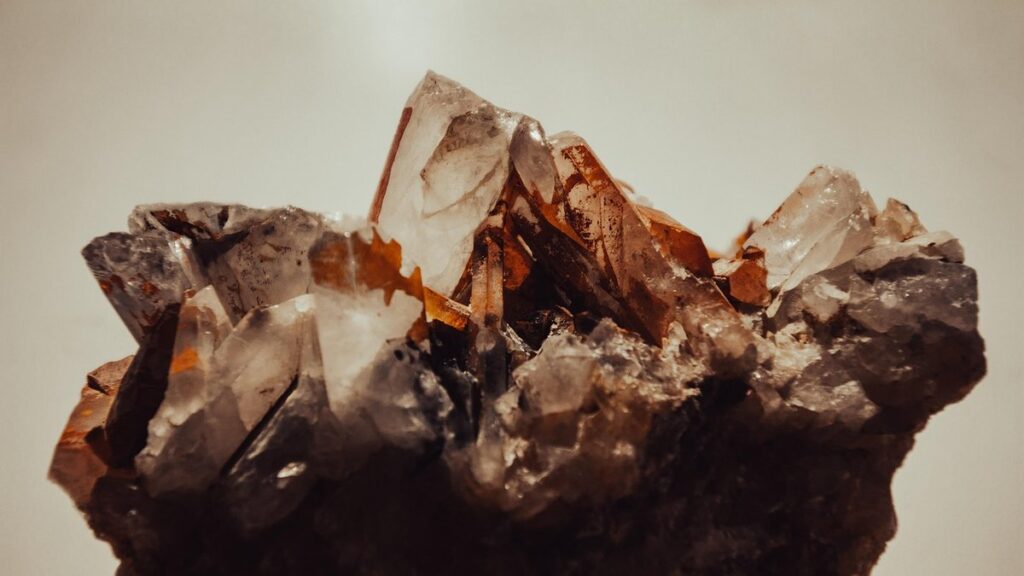
Quartz crystal habit is a term used to describe the external shape and appearance of a quartz crystal. It’s not just about the size or weight of the crystal, but rather how it grows outward from its core. Imagine holding a quartz cluster in your hand – some crystals may be long and slender, while others are more blocky or tabular. This variation in form is directly related to the conditions under which the crystal grew.
To illustrate this point, consider the difference between a prismatic crystal and one with multiple terminations. Prismatic crystals tend to grow in a straight line, often in response to specific temperature and pressure conditions. In contrast, crystals with multiple terminations may have formed in areas where there were more frequent changes in these conditions. This can result in unique shapes that are not only aesthetically pleasing but also tell us something about the crystal’s history.
Understanding quartz crystal habit is essential for several reasons: it helps us classify and categorize crystals, which is crucial for both scientific research and commercial applications; and it provides valuable information about the geological conditions under which the crystal formed. By examining a crystal’s habit, researchers can gain insights into the Earth’s past and present processes.
Importance of Studying Quartz Crystal Habit
Studying quartz crystal habit is essential for geologists, mineralogists, and collectors due to its significant implications for understanding geological processes, identifying new deposits, and classifying crystals. By examining the unique characteristics of a quartz crystal’s shape, size, and orientation, researchers can infer valuable information about the conditions under which it formed.
For example, analyzing the termination style – whether single or multiple – can provide insights into the temperature and pressure conditions present during crystallization. Furthermore, studying the tabular versus prismatic habit can reveal details about the chemical composition of the crystal’s environment. This knowledge is crucial for identifying potential mineral deposits and predicting where new resources may be found.
In addition to its practical applications, understanding quartz crystal habit also aids in the classification and identification of crystals. A well-studied collection of crystalline specimens allows researchers to create more accurate morphometric analysis and classification systems. By recognizing patterns and relationships between different crystal habits, scientists can refine their categorization methods and better distinguish between various types of quartz crystals. This, in turn, facilitates further research into the properties and behavior of these minerals.
Types of Quartz Crystals
Quartz crystals come in a wide range of shapes and forms, from towering clusters to delicate points, each with its own unique characteristics. Let’s take a closer look at some of the most common types.
Single Termination vs. Multiple Termination
Quartz crystals can terminate in various ways, which significantly impact their habit and potential uses. Single-termination crystals have a single point of termination, where all growth has ceased. This type is often associated with rapid cooling rates or specific chemical conditions. For instance, quartz crystals grown from high-temperature solutions may exhibit single termination due to the rapid formation process.
In contrast, multiple-termination crystals display multiple points of termination, indicating more complex growth patterns. These crystals typically form under slower cooling rates or in environments where there is limited space for growth. An example of this type can be seen in quartz crystals formed within cavities or fissures, where they may grow outward from multiple points.
The distinction between single-termination and multiple-termination crystals has practical implications for collectors and researchers. Single-termination crystals are often more prized due to their striking appearance, while multiple-termination crystals can provide valuable insights into geological processes. When studying quartz crystal habit, recognizing these differences is essential for understanding the underlying growth conditions.
Tabular vs. Prismatic Crystals
Tabular crystals form when quartz grows flat against a surface, often due to slow growth rates and limited space for expansion. This results in broad, plate-like structures with parallel faces. In contrast, prismatic crystals develop from rapid growth along a single axis, leading to elongated, needle-like or columnar forms.
The formation process of tabular crystals is closely tied to the geologic setting in which they form. For example, quartz tabular crystals are commonly found in sedimentary environments where minerals like silica-rich clay can facilitate flat growth. Prismatic crystals, on the other hand, often emerge from high-temperature magmatic environments, where rapid cooling and chemical reactions drive crystallization along a single axis.
To distinguish between these two crystal types, collectors and geologists examine their external morphology, noting the presence of parallel faces (tabular) or a prominent growth direction (prismatic). In some cases, additional features like etching patterns or inclusions can provide further clues about the crystal’s origin. By understanding the distinct characteristics of tabular and prismatic quartz crystals, researchers can gain insights into their geological history and formation processes.
Factors Influencing Quartz Crystal Habit
Quartz crystal habit is shaped by a variety of factors, including temperature and pressure conditions, which can significantly impact its formation. Understanding these influences is key to appreciating the unique characteristics of quartz crystals.
Temperature and Pressure Conditions
Temperature and pressure conditions play a crucial role in determining the formation of quartz crystal habit. The rate at which crystals grow is influenced by temperature fluctuations, with higher temperatures typically resulting in more rapid growth rates. Conversely, lower temperatures can lead to slower growth rates, allowing for more precise control over crystal morphology.
In general, quartz crystals grown under high-temperature conditions tend to exhibit a tabular or prismatic habit, while those grown at lower temperatures often display single termination or multiple termination characteristics. For instance, the hydrothermal veins in pegmatites, which form at relatively low temperatures, frequently produce crystals with sharp terminations.
Pressure also exerts significant influence on quartz crystal formation. Studies have shown that increasing pressure can lead to a shift from tabular to prismatic habit, as the crystal lattice becomes more compressed under greater stress. Conversely, decreasing pressure may result in the development of more complex or irregular morphologies.
While temperature and pressure conditions are essential factors in determining quartz crystal habit, they often interact with other variables, such as chemical composition and impurities, to produce unique formations.
Chemical Composition and Impurities
The chemical composition of quartz crystals plays a significant role in determining their habit. Quartz is an extremely versatile mineral, and its ability to form in a wide range of shapes and sizes is largely due to variations in its chemical makeup. For instance, iron-rich quartz crystals tend to grow with a more complex, intricate habit than those found in iron-poor environments.
The presence of impurities can also impact the growth patterns of quartz crystals. For example, the addition of certain ions, such as aluminum or lithium, can lead to the formation of distinctive crystal faces and edges. Conversely, the absence of these ions can result in a more uniform habit.
When evaluating the chemical composition of quartz crystals, it’s essential to consider the type and amount of impurities present. This information can be used to reconstruct the geological environment in which the crystal formed, providing valuable insights into its history and growth patterns. By examining the chemical composition and impurities of quartz crystals, researchers and collectors can gain a deeper understanding of their unique characteristics and habits.
Unique Quartz Crystal Habits
Quartz crystals can form a variety of unique habits, from tabular formations to pyramidal shapes, each with its own distinct characteristics and properties. Let’s take a closer look at some of these fascinating forms.
Rare and Exotic Forms
Sceptre crystals, with their singular termination and elongated shape, are a striking example of rare quartz crystal habits. These crystals form when a primary growth zone is interrupted by an external factor, such as changes in temperature or pressure, causing the crystal to grow in an unusual direction. Doubly-terminated crystals, where both ends of the crystal are fully developed, are another exceptional variant. In both cases, the unique conditions under which these crystals formed have created remarkable structures that are prized for their aesthetic appeal and scientific interest.
Some sceptre crystals display a phenomenon known as “twinned growth,” where two or more crystals merge to form a single entity. This twinning can create complex patterns and shapes, further contributing to the crystal’s rarity and value. In addition to sceptre and doubly-terminated crystals, other rare forms include tower crystals, which grow in a vertical, columnar shape, and pyramidal crystals, with their distinctive four-sided base.
These unusual crystal habits often form in areas of intense geological activity, such as volcanic regions or zones of tectonic plate interaction.
Importance of Preserving Rare Crystals
Preserving rare quartz crystals for scientific study and appreciation is crucial. These unique formations provide valuable insights into geological processes and offer a glimpse into the Earth’s ancient history. Each crystal holds a distinct story of its formation, shaped by intricate interactions between temperature, pressure, and chemical composition.
The loss of these crystals due to natural degradation or human activities would be irreparable. For instance, the rare “needle quartz” formations found in Madagascar are already under threat from mining and habitat destruction. If not preserved, their unique habit and crystal structure will remain forever lost to science.
Scientific institutions and collectors must collaborate to establish safe storage facilities and conservation programs for these crystals. This would enable researchers to analyze and classify them accurately, unlocking new knowledge about quartz crystal formation. Furthermore, preserving rare crystals also raises awareness among the general public, inspiring appreciation for geological wonders and fostering a deeper understanding of Earth’s natural processes.
By prioritizing preservation, we can ensure that future generations inherit not only the crystals themselves but also the stories they tell about our planet’s complex history.
Geologic Setting and Quartz Crystal Habit
The geologic setting where quartz crystals form plays a crucial role in determining their unique habits, from tabular to prismatic. Let’s examine how these settings influence crystal growth patterns.
Formation Processes in Igneous and Sedimentary Environments
Quartz crystals form through different processes in igneous and sedimentary environments. In igneous environments, quartz crystals often crystallize from magma deep within the Earth’s crust. As magma cools and solidifies, minerals such as quartz precipitate out of solution, forming large crystals. The size and shape of these crystals can vary greatly depending on factors like cooling rate and the presence of impurities.
In sedimentary environments, quartz crystals typically form through a process called cementation. As sediments like sand or silt are compressed over time, silica-rich fluids carried by groundwater precipitate out of solution, filling in pore spaces between grains and forming a quartz crystal framework that binds the rock together. This can result in the formation of large, tabular quartz crystals.
Both processes involve changes in temperature and pressure conditions, but the key difference lies in the initial presence of minerals or fluids. Understanding these formation processes is crucial for identifying quartz crystal habit and appreciating its significance within different geologic settings.
Economic Significance of Quartz Crystals
Quartz crystals are one of the most abundant minerals on Earth, and their economic significance extends far beyond their use as a gemstone. The majority of quartz crystals mined today are used in industrial applications such as electronics, optics, and construction materials. The unique habits of quartz crystals can also be highly prized for their aesthetic value.
For example, quartz crystals with distinctive termination patterns or tabular forms are often sought after by collectors. These rare and unusual specimens can command high prices at mineral auctions due to their rarity and beauty. In addition, the formation processes that create these unique habits provide valuable insights into geologic history and can be used as indicators of past environmental conditions.
The economic significance of quartz crystals is closely tied to their chemical composition. Crystals with a higher concentration of silicon dioxide (SiO2) are often more prized for their clarity and durability. On the other hand, crystals with impurities such as iron or aluminum may exhibit unique colors or properties that make them valuable in specific industrial applications.
Analyzing and Classifying Quartz Crystal Habit
Quartz crystal habit comes in a variety of shapes, sizes, and forms, each with its own unique characteristics. Let’s take a closer look at how to analyze and classify these different crystal habits effectively.
Morphometric Analysis and Classification Systems
Morphometric analysis involves quantifying specific characteristics of quartz crystals using precise measurements and statistical methods. This approach allows for objective classification and comparison across different specimens. Researchers use specialized software to analyze data points such as crystal length, width, and angle relationships.
Classification systems categorize quartz crystals based on these morphological features. The most widely used system is the Quartz Crystal Habit Classification (QCHC) developed by the International Association of Crystallographers. This framework divides crystals into seven main types: tabular, prismatic, pyramidal, columnar, spherical, needle-like, and other irregular shapes.
In practical application, morphometric analysis can aid in identifying specific quartz crystal deposits or assessing their commercial value. For instance, understanding the precise dimensions of a crystal can determine its utility for electronic applications. To apply this knowledge, collectors and researchers should familiarize themselves with existing classification systems and software tools, such as CrystalMaker or WinCryst.
When conducting morphometric analysis, it is essential to consider potential sources of error and variability in measurement techniques. This may involve calibrating equipment and accounting for environmental factors that can influence crystal growth patterns.
Limitations and Challenges in Classification
Classifying and analyzing quartz crystal habit is a complex task, and researchers face numerous limitations and challenges. One major issue is the lack of a universally accepted classification system. Different systems exist, each with its own criteria for categorizing crystals, which can lead to inconsistencies and difficulties when comparing results.
For instance, some systems focus on the external morphology of the crystal, while others consider internal structures or growth patterns. This diversity in approaches makes it challenging to standardize classifications and communicate findings across different research groups. Furthermore, the complexity of quartz crystal habit means that even with a well-defined system, nuances can be difficult to capture.
Additionally, the availability and quality of data can significantly impact classification efforts. In some cases, incomplete or inaccurate information may lead to misclassifications or incorrect conclusions. Researchers must also consider the inherent variability in natural crystals, which can exhibit subtle differences within what might initially appear to be a uniform habit.
Applications of Understanding Quartz Crystal Habit
As you explore the fascinating world of quartz crystal habit, understanding its applications is essential to harnessing the unique properties of these minerals. We’ll examine how knowledge of crystal habit impacts various industries and uses.
Gemstone and Jewelry Industry
In the gemstone and jewelry industry, understanding quartz crystal habit is crucial for determining pricing and quality control. The unique characteristics of a quartz crystal’s growth pattern can significantly impact its value. For instance, crystals with distinct terminations or inclusions may be more valuable due to their rarity and aesthetic appeal.
Gemstone buyers often rely on the expertise of geologists or mineralogists to assess the crystal habit and determine its authenticity. This is particularly important for high-end jewelry pieces, where the quality and origin of the gemstones can greatly affect their value. In contrast, crystals with less desirable growth patterns may be used in lower-cost jewelry or as decorative stones.
To ensure consistency in pricing and quality control, industry professionals must stay up-to-date on the latest research and discoveries related to quartz crystal habit. This includes recognizing the impact of various factors such as temperature, pressure, and chemical composition on crystal formation. By doing so, they can make more informed decisions about the purchase and sale of gemstones, ultimately benefiting their business and customers.
Scientific Research and Discovery
Understanding quartz crystal habit has significantly contributed to scientific research and discovery in geology and mineralogy. By analyzing the unique properties of various crystal habits, researchers have gained insights into the geological processes that shape our planet.
For instance, studying tabular crystals has helped scientists understand how temperature and pressure conditions influence crystal formation. This knowledge has been applied to better comprehend the formation of economic deposits of quartz, such as those found in pegmatites or hydrothermal veins.
Additionally, research on rare and exotic crystal habits has provided valuable information about the chemical composition and impurities present during their formation. By examining these unusual crystals, scientists have identified new minerals and gained a deeper understanding of the geological processes that create them.
These discoveries also have practical applications for the gemstone and jewelry industry. For example, identifying specific crystal habits can help determine the authenticity and value of quartz crystals used in jewelry. Furthermore, understanding the unique characteristics of various crystal habits can inform strategies for finding and extracting valuable minerals from the earth.
Frequently Asked Questions
Can You Grow Quartz Crystals with a Desired Habit?
Yes, by carefully controlling temperature and pressure conditions, you can influence the formation of quartz crystals to grow with a desired habit. This process is often used in laboratory settings for research and educational purposes.
How Do I Preserve Rare and Exotic Quartz Crystal Habits?
To preserve rare and exotic quartz crystal habits, it’s essential to handle them gently and store them in a cool, dry place away from direct sunlight. You can also consider using specialized storage containers or cases designed specifically for preserving delicate mineral specimens.
What if the Standard Methods of Classifying Quartz Crystal Habit Don’t Apply to My Specimen?
If you’re working with an unusual quartz crystal habit that doesn’t fit into standard classification categories, try using morphometric analysis techniques to quantify its unique features. This can help you create a customized classification system for your specific specimen.
Can Understanding Quartz Crystal Habit Impact the Gemstone and Jewelry Industry?
Yes, understanding quartz crystal habit has significant implications for the gemstone and jewelry industry, particularly when it comes to pricing and quality control. By analyzing the crystal habit of quartz crystals, gemstone dealers can better assess their value and authenticity.
How Do Geologists and Mineralogists Use Quartz Crystal Habit in Their Research?
Geologists and mineralogists use quartz crystal habit as a key indicator of geological processes and conditions. By studying the unique characteristics of quartz crystals, they can gain insights into the Earth’s history, including temperature, pressure, and chemical composition conditions that existed during their formation.