
Radio observatories are fascinating tools that allow us to study celestial objects in ways previously unimaginable. By harnessing the power of radio waves, these observatories can unlock cosmic phenomena and provide insights into the universe’s most fundamental mysteries. But what exactly do they do? In this article, we’ll take a closer look at how radio observatories are used to advance our understanding of the cosmos through cutting-edge research and technology. From studying distant galaxies to tracking asteroids and comets, these powerful tools are revolutionizing our knowledge of the universe. By exploring the inner workings of radio observatories, you’ll gain a deeper appreciation for the complex phenomena that shape our existence and leave with a better understanding of how scientists use them to drive discovery and push the boundaries of human knowledge.
What is a Radio Observatory?
A radio observatory is essentially a giant ear that listens for signals from space, allowing scientists to study celestial objects and phenomena in ways previously unimaginable. Let’s take a closer look at how these incredible facilities work.
Definition and Purpose
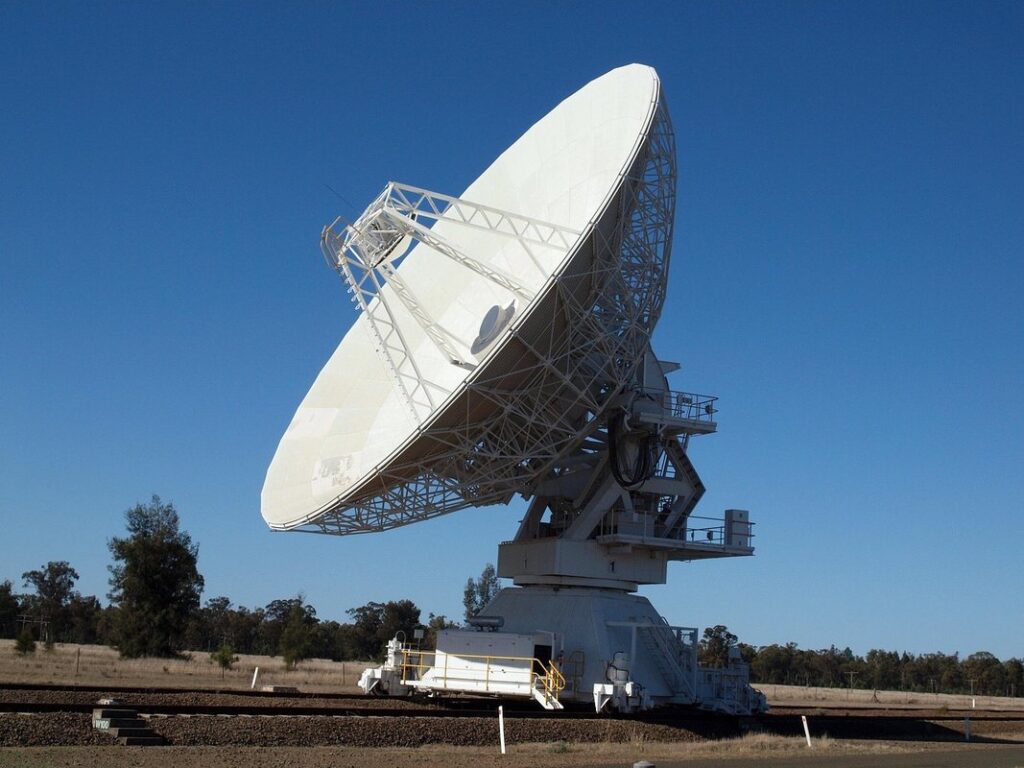
A radio observatory is a specialized facility designed to study celestial objects and phenomena using radio waves. These facilities are equipped with massive antennas and sophisticated instruments that detect and analyze radio signals emitted by stars, galaxies, and other cosmic entities.
The primary purpose of a radio observatory is to explore the universe in ways not possible with traditional optical telescopes. By tuning into radio frequencies, scientists can gather data on objects that are too distant or faint to be detected visually, such as black holes, neutron stars, and interstellar gas clouds.
Radio observatories also play a crucial role in understanding the physical processes that govern the behavior of celestial objects. For instance, by monitoring the radiation emitted by pulsars, researchers can gain insights into extreme astrophysical phenomena, like supernovae explosions and gamma-ray bursts. Additionally, radio telescopes are used to study the distribution of matter and energy within galaxies, shedding light on the mysteries of cosmic evolution.
By leveraging the unique capabilities of radio observatories, scientists can continue to push the boundaries of our knowledge about the universe, unlocking new secrets and expanding our understanding of the cosmos.
Types of Radio Observatories
Radio observatories come in various forms, each designed to capture specific aspects of the radio universe. Single-dish telescopes are a common type, consisting of a single antenna that collects and focuses radio waves. These dishes can be as large as 100 meters in diameter and provide high sensitivity for detecting faint signals. They’re often used for surveys and monitoring purposes.
Arrays of multiple antennas work together to form a larger virtual telescope. This allows researchers to cover more sky area and achieve higher resolution than a single dish could. The Very Large Array (VLA) in New Mexico is an example, comprising 27 antennas working in unison to create a powerful radio observatory.
Interferometers take this concept further by combining the signals from multiple arrays or even different locations across the globe. This technique enables scientists to pinpoint sources with incredible precision and study phenomena that would be lost on smaller telescopes. The Atacama Large Millimeter/submillimeter Array (ALMA) in Chile is an example of a radio interferometer, comprised of 66 antennas working together to form a single observing system.
History of Radio Astronomy
Radio astronomy has a fascinating history that spans several decades, from its humble beginnings to the sophisticated technology we see today. We’ll explore the key milestones and discoveries that paved the way for modern radio observatories.
Early Beginnings
The early history of radio astronomy began with the accidental discovery by Karl Jansky in 1931. While investigating sources of static on radio signals, he detected a steady, persistent signal coming from the center of the Milky Way galaxy. This finding marked the beginning of radio astronomy as a distinct field of study. Jansky’s observation sparked interest among scientists, including Grote Reber, who built the first amateur radio telescope in 1937.
Reber’s setup consisted of a rotating parabolic dish and a receiver, which he used to detect radiation from various celestial objects. His discoveries, particularly the detection of radiation from the Crab Nebula, demonstrated that radio waves could be used to study the universe. These pioneering efforts laid the groundwork for the establishment of dedicated radio observatories.
The first such facility was the National Radio Astronomy Observatory (NRAO), established in 1956 at Green Bank, West Virginia. The NRAO marked a significant milestone in the development of radio astronomy, enabling scientists to conduct systematic and targeted research on celestial objects using large-scale radio telescopes.
Milestones in Radio Astronomy
The discovery of pulsars and quasars marked significant milestones in radio astronomy. Jocelyn Bell Burnell’s detection of the first pulsar in 1967 revolutionized our understanding of neutron stars. This finding was made possible by the Parkes Radio Telescope in Australia, which was scanning the sky for radio signals. The pulsar’s emission pattern led scientists to conclude that it was a rapidly rotating neutron star with intense magnetic fields.
The discovery of quasars, on the other hand, revealed incredibly luminous objects at vast distances from Earth. In 1959, Maarten Schmidt identified the first quasar, 3C 273, which is about 2 billion light-years away. Quasars are thought to be powered by supermassive black holes at the centers of galaxies.
The detection of pulsars and quasars demonstrated that radio astronomy could reveal previously unknown phenomena in the universe. These findings have since been used to study a range of cosmic objects, from neutron stars to distant galaxies. The discoveries made possible by radio astronomy continue to expand our understanding of the cosmos, driving further research and exploration with each new breakthrough.
How Radio Observatories Work
Radio observatories use a network of antennas and receivers to detect radio waves from space, allowing scientists to study celestial objects in unprecedented detail. Let’s take a closer look at how these incredible tools work their magic.
Basic Principles
Radio waves are a form of electromagnetic radiation that can be detected and studied using radio telescopes. The basic principle behind radio astronomy is to convert these invisible waves into usable data, allowing scientists to study celestial objects and phenomena in unprecedented detail.
To do this, radio observatories use large antennas or dishes to collect and focus incoming radio waves onto sensitive receivers. These receivers are designed to amplify weak signals while minimizing noise and interference from other sources. The resulting signal is then digitized and processed using sophisticated software algorithms that extract meaningful information about the source of the radiation.
One key aspect of radio astronomy is the concept of wavelength, which determines the resolution or sharpness of the image produced by a telescope. Shorter wavelengths allow for higher resolution images but are often absorbed or scattered by interstellar gas and dust, while longer wavelengths can penetrate farther into space but provide lower resolution data. By choosing the right frequency range and antenna size, radio astronomers can select the optimal balance between resolution and sensitivity to suit their research goals.
Instrumentation and Technology
Modern radio observatories rely on sophisticated instrumentation and technology to detect and analyze the faint signals emanating from distant celestial objects. At the heart of these systems are large antennas, typically dish-shaped or horn-shaped, which collect and focus the incoming radiation. The most common type of antenna is the parabolic dish, which uses its curved surface to concentrate radio waves onto a receiver.
The receivers themselves are highly sensitive instruments capable of detecting signals as weak as a few millivolts. These signals are then amplified and processed by sophisticated signal processing systems, often using digital technology. Modern radio observatories employ advanced algorithms to analyze the data, allowing researchers to extract meaningful information from the raw signals. For example, the Atacama Large Millimeter/submillimeter Array (ALMA) uses a highly advanced correlator system to combine data from its 66 antennas and produce ultra-high-resolution images of celestial objects.
In addition to these technological advancements, modern radio observatories also employ cutting-edge materials and designs to optimize their performance. For instance, some telescopes are built with cryogenic cooling systems to reduce thermal noise, allowing for even more sensitive observations.
Research and Discoveries Made Possible by Radio Observatories
One of the most exciting aspects of radio observatories is the groundbreaking research they enable, revealing new insights into cosmic phenomena and shedding light on long-standing mysteries. From black holes to distant galaxies, their discoveries continue to captivate scientists and the public alike.
Cosmic Phenomena Studied with Radio Observatories
Radio observatories have played a pivotal role in understanding various cosmic phenomena. For instance, black holes have been extensively studied using radio waves. By analyzing the radiation emitted by hot gas swirling around these supermassive objects, scientists can infer their mass and spin rates.
Neutron stars, incredibly dense remnants of massive stars, are also under close scrutiny with radio telescopes. These instruments allow researchers to detect bursts of energy that signal the star’s rotation period or magnetic field strength. By studying neutron stars, astronomers can gain insights into extreme physics, such as strong gravity and high-energy particle acceleration.
Galaxy evolution is another area where radio observatories have made significant contributions. By observing the emission from neutral hydrogen gas within galaxies, researchers can map their structures and infer how they interact with each other. This information helps scientists understand the large-scale organization of the universe and the processes that govern galaxy formation and mergers.
Radio observations have also helped identify Fast Radio Bursts (FRBs), brief but intense pulses of energy originating from distant galaxies. These events remain poorly understood, but ongoing research is shedding light on their possible connection to neutron star collisions or supernovae explosions.
Breakthroughs in Understanding the Universe
The study of cosmic phenomena using radio observatories has led to several groundbreaking discoveries about the universe. One significant breakthrough is our understanding of pulsars, which were first detected by Jocelyn Bell Burnell and Antony Hewish at Cambridge University’s Mullard Radio Astronomy Observatory. These rapidly rotating neutron stars emit electromagnetic radiation in a beam that sweeps through space, allowing scientists to study their properties and behavior.
The discovery of Fast Radio Bursts (FRBs) is another major achievement made possible by radio observatory research. FRBs are brief, intense pulses of energy originating from distant galaxies, which can provide insights into extreme astrophysical phenomena. By analyzing these events using radio telescopes, scientists have gained a better understanding of the properties and environments in which they occur.
The detection of gravitational waves has also been facilitated by radio observatory research. The Laser Interferometer Gravitational-Wave Observatory (LIGO) and other projects rely on precise timing and synchronization provided by radio astronomy to detect these subtle ripples in spacetime, allowing us to study cosmic events such as black hole mergers.
These discoveries demonstrate the crucial role that radio observatories play in advancing our understanding of the universe.
Operating a Modern Radio Observatory
Operating modern radio observatories requires advanced technical expertise and precise planning, from antenna maintenance to data processing. We’ll walk you through the key considerations that ensure successful operations.
Challenges and Opportunities
Modern radio observatories face a unique set of challenges that can hinder their ability to unlock the secrets of the universe. One of the most significant obstacles is funding constraints. Radio telescopes are incredibly complex and expensive instruments, requiring constant maintenance and upgrades to stay at the forefront of scientific discovery. However, securing consistent funding can be a struggle for many observatories, forcing them to allocate resources carefully and prioritize research projects.
Technical difficulties also pose a significant challenge. Radio waves from distant stars and galaxies can be extremely faint, requiring cutting-edge technology to detect and analyze them accurately. Furthermore, radio telescopes must operate in harmony with the natural environment, avoiding interference from human-made sources like cell phone signals and other electronic devices. This delicate balance requires ongoing calibration and maintenance to ensure that observations remain accurate.
Environmental concerns also impact modern radio observatories. Radio waves can be affected by atmospheric conditions such as temperature, humidity, and air pressure, which must be carefully monitored and accounted for in data analysis.
The Role of Human Observers
Human observers play a vital role in modern radio astronomy, working alongside sophisticated instruments to ensure accurate and reliable data. One of their primary responsibilities is data analysis, where they interpret complex signals and identify patterns that reveal insights into celestial phenomena. This process requires a deep understanding of the instrument’s capabilities, as well as the astronomical context of the observations.
In addition to data analysis, human observers are also responsible for maintaining the instruments themselves. Regular calibration, adjustments, and repairs are necessary to ensure optimal performance, particularly when dealing with sensitive equipment like radio telescopes. This hands-on involvement is crucial, as even small issues can impact the quality of the data collected.
Moreover, human observers provide critical guidance on research direction, helping scientists prioritize observations based on current scientific interests and priorities. They also facilitate collaboration among researchers, coordinating efforts to address complex questions in radio astronomy. By combining technical expertise with scientific knowledge, human observers help bridge the gap between instrument capabilities and research objectives.
Future Directions for Radio Astronomy
As we explore the vast expanse of space through radio observatories, researchers are now looking ahead to new technologies that will revolutionize our understanding of the universe. Next-generation telescopes and innovative detection methods are on the horizon.
Emerging Technologies and Methods
Next-generation telescopes are pushing the boundaries of radio astronomy by collecting more data and observing the universe with unprecedented precision. These advanced instruments feature larger dishes, improved receivers, and sophisticated signal processing systems. For instance, the Square Kilometre Array (SKA) will be one of the world’s most powerful radio telescopes when completed, capable of detecting faint signals from distant galaxies. Machine learning algorithms are also being integrated into radio astronomy to analyze vast amounts of data more efficiently.
Machine learning can help identify patterns and anomalies in large datasets that would be time-consuming for humans to detect manually. This enables researchers to study phenomena such as fast radio bursts (FRBs) and gravitational waves, which require quick analysis to maximize scientific return. However, machine learning algorithms also introduce new challenges, like ensuring data quality and interpretability.
Some of the emerging technologies and methods include:
• Advanced computing architectures: New computing systems designed for parallel processing can accelerate data reduction and analysis.
• Artificial intelligence (AI) software tools: Specialized AI frameworks allow researchers to develop customized solutions for their specific data analysis needs.
• Interferometry techniques: Next-generation interferometers will enable astronomers to observe the universe at higher resolutions, allowing for more detailed studies of cosmic phenomena.
International Collaboration and Cooperation
Radio astronomy research has become increasingly globalized, with international collaboration and cooperation playing a vital role in advancing our understanding of the universe. The development of global networks and partnerships has enabled researchers to pool their resources, expertise, and data, driving breakthroughs that would be impossible for individual observatories to achieve on their own.
Projects like the Square Kilometre Array (SKA) and the Event Horizon Telescope (EHT) have brought together scientists from over 20 countries, fostering a collaborative environment where ideas can flow freely. These networks also facilitate the sharing of resources, such as telescopes, computing power, and personnel, making it possible to tackle complex research questions.
For instance, the EHT collaboration used data from multiple observatories worldwide to capture the first-ever image of a black hole’s shadow. This achievement demonstrates the power of global cooperation in radio astronomy. As we move forward, international partnerships will continue to play a crucial role in driving innovation and pushing the boundaries of our knowledge about the universe.
Frequently Asked Questions
Can I build my own radio observatory at home?
Yes, it is possible to build a small-scale radio observatory at home for educational or research purposes. However, you will need to ensure compliance with local regulations and obtain necessary permits before construction begins. Additionally, consider the limitations of your setup, as professional-grade radio telescopes are highly specialized instruments.
How do I contribute to ongoing radio astronomy research?
You can contribute to ongoing radio astronomy research by participating in citizen science projects, such as analyzing data from existing surveys or helping with data reduction tasks. Many institutions also offer opportunities for volunteers to assist with maintenance and repairs of their facilities. Check with local observatories or organizations involved in radio astronomy research for more information.
What are the potential sources of funding for a new radio observatory project?
Potential sources of funding for a new radio observatory project include government grants, private donations, and partnerships with educational institutions. Consider reaching out to organizations focused on science education and outreach to explore potential collaboration opportunities. Additionally, apply for competitive research grants that support innovative astronomy projects.
Can I use machine learning algorithms in my radio astronomy research?
Yes, machine learning algorithms can be a valuable tool in analyzing large datasets from radio telescopes. However, keep in mind that the application of these techniques requires significant expertise and computational resources. Consider collaborating with experts in data science or machine learning to integrate these tools into your research.
What are some common challenges faced by modern radio observatories?
Some common challenges faced by modern radio observatories include funding constraints, technical difficulties related to instrumentation and signal processing systems, and environmental concerns such as light pollution and climate change. Addressing these challenges often requires innovative solutions and collaboration among researchers, policymakers, and stakeholders from various fields.