
Identifying seashells can be a daunting task, especially for beginners. With over 100,000 known species, it’s easy to get overwhelmed by the sheer variety on display. But one key factor that sets many shells apart is their shape: symmetrical, asymmetrical, spiral, and irregular forms all have unique characteristics waiting to be discovered.
When you’re trying to identify a seashell, its shape can often be the most telling feature. A shell with a perfectly symmetrical curve may belong to a species of snail or limpet, while an irregularly shaped shell could be from a type of bivalve or scallop. By learning to recognize these different forms, you’ll become more confident in your ability to identify seashells on the beach or at home. This article will take you through each of these shape categories, providing expert tips and tricks for accurate identification so that by the end, you’ll be able to pick out a shell’s shape and start narrowing down its identity.
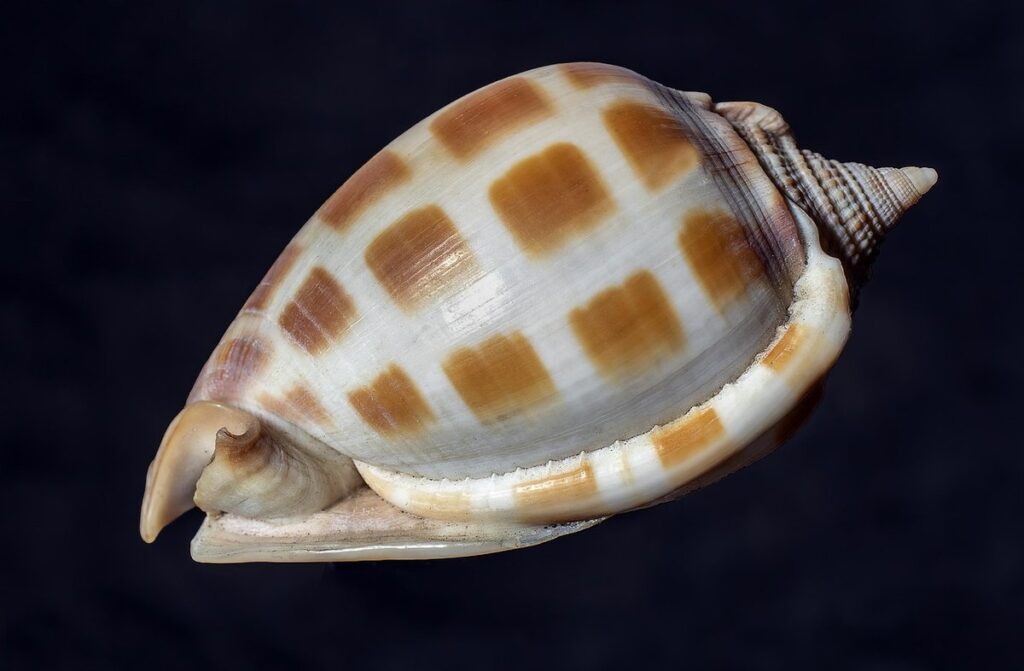
Understanding the Basics of Seashell Shapes
Understanding seashell shapes is a fundamental step in identifying these treasures. Let’s begin by exploring the basic forms and characteristics that will help you get started on your shell-identification journey.
Common Seashell Shapes and Their Meanings
Common seashell shapes can be broadly categorized into four main types: symmetrical, asymmetrical, spiral, and irregular. Symmetrical shells are characterized by their bilateral symmetry, where one half is a mirror image of the other. Examples of symmetrical shells include conch shells, which have a rounded body with a long spire and a large, pearly interior.
Asymmetrical shells, on the other hand, lack this mirror-like symmetry. Instead, they often have an irregular shape that can make them more difficult to identify. Turban snails are a good example of asymmetrical shells, with their twisted, elongated bodies and varying shell shapes.
Spiral shells are characterized by their coiled or spiral shape, which provides added protection for the mollusk’s body. Whelks and other species of marine snails exhibit this type of shell shape. Irregular shells can take many forms, from flat and disk-shaped to highly ornamented and sculpted.
Understanding these common seashell shapes is crucial for accurate identification. By recognizing the distinct characteristics of each type, you can narrow down the possibilities and make a more informed decision about the species of shell you’re examining. When examining a shell, start by observing its overall shape and symmetry – this will give you a good starting point for further investigation.
Factors Influencing Seashell Shape
The shape of a seashell is not fixed; it’s influenced by various factors. For example, environment plays a significant role: shells from rocky shores tend to be thicker and more robust than those from sandy beaches. This is because the latter need to withstand currents and abrasion.
Diet also affects seashell shape. Herbivorous snails, which feed on algae, often have flat, broad shells that allow them to scrape algae from surfaces. In contrast, carnivorous species with pointed shells can spear prey more efficiently. Even within a single genus, different species may develop unique shapes based on their dietary preferences.
Evolutionary pressures also shape seashells. For instance, species living in areas with strong predators often evolve stronger, more protective shells. As the predator population changes or becomes more diverse, the shell shape of these species can adapt accordingly.
In addition to environment and diet, genetic factors can influence shell shape. Different species within a genus may exhibit varying degrees of similarity in their shell morphology due to shared ancestry. However, even among closely related species, environmental pressures can drive distinct evolutionary paths, resulting in unique seashell shapes.
Understanding these influencing factors is crucial for accurate identification. By recognizing the relationship between environment and diet on shell shape, you can narrow down the possibilities when trying to identify a new species.
Identifying Symmetrical Shapes
When examining a seashell, one of the first things you might notice is its overall symmetry, which can be an important characteristic for identification. Let’s take a closer look at how to identify symmetrical shapes in seashells.
Conch Shells: Examples of Symmetry
Conch shells are a classic example of symmetrical shapes in seashells. These large, pearly shells display bilateral symmetry, meaning they have mirror-image halves on either side of a central axis. One of the most recognizable features of conch shells is their pointed spire and rounded body, which are often adorned with ridges or other patterns.
A key characteristic of symmetrical conch shells is their identical shape when viewed from both sides. The left and right sides of the shell should be mirror images of each other. This symmetry allows for efficient growth patterns, as the shell’s layers can grow uniformly on either side of the central axis.
Some common features to look for in conch shells include:
• A prominent spire or tower-like structure at one end
• A rounded body with a smooth surface
• Ridges or other patterns that may be symmetrical or irregular
• A small aperture (opening) at the opposite end of the shell
When examining conch shells, pay attention to their overall shape and symmetry. While individual variations can occur, a symmetrical conch shell will generally exhibit these characteristic features, making it easier to identify this type of seashell.
Scallop Shells: Another Example of Symmetry
Scallop shells exhibit a striking example of symmetry, making them easily recognizable. The arrangement of their radiating ribs is a key characteristic of this symmetry. These ribs often form a pattern of five or more distinct sections, each with its own unique shape and size. This pattern can be symmetrical about the central axis, creating a sense of balance and harmony in the shell’s overall design.
When examining scallop shells, pay attention to how these ribs intersect with the edges of the shell. In many cases, the intersections form gentle curves or rounded corners, adding to the overall aesthetic appeal of the shell. The symmetry of scallop shells can also be seen in their shapes, which often feature bilateral symmetry – that is, they have a mirror image on one side of the central axis.
To better understand and identify these symmetrical patterns in scallop shells, study the arrangement of the ribs and how they relate to the shell’s edges. Note any variations or irregularities in this pattern, as these can be indicative of specific species or subspecies within the scallop family. By paying close attention to these details, you’ll become more proficient at identifying scallop shells based on their unique symmetrical characteristics.
Asymmetrical Shapes: Characteristics and Examples
As we explore seashell shapes, it’s essential to understand asymmetrical shells, which often feature irregular, unbalanced forms. These unique characteristics make identification a fun challenge for shell enthusiasts like you.
How to Identify Asymmetrical Seashells
When examining asymmetrical seashells, pay attention to their irregular or curved forms. These shapes often lack a central axis of symmetry and may appear lopsided or uneven. To identify an asymmetrical shell, look for shells with off-center ridges, bulges, or spines that disrupt the usual symmetrical pattern.
Consider the shape’s overall silhouette: does it seem to lean to one side? Are there any unusual protrusions or indentations that break up the symmetry? Asymmetrical shells can also have an irregularly shaped aperture, or opening. Some examples of asymmetrical seashells include those from turban snails and certain species of whelks.
To distinguish between different types of asymmetrical shells, examine their surface textures and patterns. For instance, some asymmetrical shells may feature distinctive stripes or swirls that help to identify the species. By carefully observing these unique characteristics, you can develop a better understanding of the various forms of asymmetrical seashells.
Examples of Asymmetrical Shells: Turban Snails and More
The Turban Snail (Turbo castanea) is a classic example of an asymmetrical seashell. Its shell has a distinctive twisted shape, with one end being significantly larger and more rounded than the other. This uneven shape helps to protect the snail’s vulnerable body from predators that might be lurking on the beach. Another notable feature of the Turban Snail’s shell is its unique color pattern, which often features shades of brown, yellow, or red.
Other examples of asymmetrical seashells include the Abalone (Haliotis spp.) and the Top Shell (Trochus spp.). These shells have a more dramatic difference in shape between their two halves, with one side being much larger and more elongated than the other. In some cases, the larger half may even be shaped like a small dome or cone.
Notice how these asymmetrical seashells differ from symmetrical ones in terms of overall form and structure. While symmetrical shells tend to have mirror-image halves, asymmetrical shells are often more irregular and unique. This difference can make it easier to identify certain species based on their shell shape alone.
Spiral Shapes: Their Function and Forms
Spiral shapes are one of the most distinctive and recognizable forms found in seashells, often conveying important information about a shell’s origin and purpose. Let’s take a closer look at their unique characteristics and functions.
The Role of Spirals in Seashell Protection
Spirals play a crucial role in the protection of seashells against predators. One key way spirals aid in defense is by creating a difficult-to-reach interior for potential invaders. The spiral shape makes it challenging for predators to gain access to the shell’s soft tissues, thereby protecting them from harm.
In many species, the spiral pattern also serves as a visual deterrent. For example, some whelks have prominent spiral ridges that make their shells appear larger and more intimidating than they actually are. This can help deter smaller predators from attacking.
The spiral shape can also be used to create a protective barrier around the shell’s vulnerable areas. Some seashells have spiral flanges or ridges that surround the aperture (the opening of the shell). These features can make it difficult for predators to grab hold of the shell, thereby preventing them from turning it inside out.
In summary, the spiral shape in seashells serves multiple purposes in protection against predators, including creating a challenging interior space, providing visual deterrence, and forming protective barriers around vulnerable areas. When identifying seashells with spiral shapes, pay attention to these features to better understand their role in defense mechanisms.
Examples of Spiral-Shaped Shells: Whelks and Other Species
Spiral-shaped shells are a distinctive feature of many seashell species. One notable example is the whelk, also known as the pearly nautilus. Whelks have a well-defined spiral shape with chambers that increase in size as you move towards the opening. This unique design allows for maximum protection from predators while minimizing energy expenditure on shell growth.
Other examples of spiral-shaped shells include the argonaut and the vampire squid’s internal shell, which is used for reproduction. These creatures all share the common trait of having a coiled or spiraling shape that aids in their defense mechanisms.
One key feature to look out for when identifying spiral-shaped shells is the presence of siphonal apertures – narrow openings on the left side of the aperture (the shell’s opening). Whelks typically have one or two distinct siphonal apertures, whereas other species may not display this characteristic.
Irregular Shapes: Forms and Functions
Irregular shapes can be particularly tricky to identify, but knowing their unique characteristics is key to pinpointing a specific species. We’ll explore the distinctive forms of irregular seashells and how they serve as functional adaptations.
Understanding the Purpose of Irregular Seashell Shapes
Irregular seashells often come with a unique set of features that allow them to thrive in their environments. One primary purpose of irregular shapes is camouflage – by blending in with surrounding rocks, sand, or other debris, shells can conceal themselves from predators and make hunting more difficult for potential threats. This adaptation is particularly common among species living in areas with high predation pressure, such as tropical reefs.
Consider the example of the Cassis shell, which features a wavy, irregular shape that helps it blend seamlessly into rocky crevices. By mimicking the surrounding terrain, these shells can avoid detection and increase their chances of survival.
Another important function of irregular shapes is enhanced stability. In turbulent water or on sloping beaches, irregularly shaped shells are more likely to anchor themselves securely than symmetrical ones, which may be easily dislodged by currents or waves. This is especially true for species that live in areas with strong tidal movements or frequent storms.
In some cases, irregular shapes can also provide additional benefits like increased surface area or better attachment points for muscles or other structures.
Examples of Irregular Shells: Types and Variations
Irregular shells come in a wide range of forms and variations. Take the helmet shell (Cassidula spp.), for example, which has a thick, rounded shape with a prominent spire. The helmet shell’s irregular shape provides excellent protection from predators, as it can be difficult to grasp or pry open.
Another example is the moon snail (Naticarius spp.), whose large, pearly interior often gives way to an uneven exterior. Moon snails have a unique adaptation that allows them to secrete a powerful digestive enzyme, which they use to penetrate and eat prey like clams and mussels. Their irregular shape likely helps them blend in with their surroundings.
The keyhole limpet (Diodora spp.) is another species with an unusual shell shape. Its elongated body is enclosed by a spiral-shaped aperture, creating the distinctive “keyhole” appearance that gives this snail its name. This unique design allows the keyhole limpet to fit snugly into crevices and under rocks, making it a common find in tide pools.
These examples demonstrate how irregular shell shapes can serve as effective adaptations for survival in marine environments.
Common Misidentifications and Challenges
One of the most frustrating parts of seashell identification is recognizing what not to identify, as there are many shells that bear a striking resemblance to others. We’ll address some of the most common culprits here.
Overlapping Forms and Difficulty in Identification
When identifying seashells by shape, enthusiasts often encounter challenges due to overlapping forms. For instance, the shapes of certain species within the families Trochidae and Turbinidae can be quite similar, making it difficult to distinguish between them. The distinctive spire of a top shell (Trochus spp.) might be mistaken for that of a helmet shell (Cassidula spp.), leading to incorrect identifications.
Another challenge arises from the varying levels of shape specialization within species. Some species exhibit more extreme or exaggerated features than others, blurring the lines between categories. For example, the spiral shells of whelks (Buccinidae family) can range in tightness and angle, making it hard to pinpoint a specific species based solely on its shape.
To overcome these challenges, seashell enthusiasts should focus on combining shape analysis with other identifying features, such as coloration, texture, and size. By considering multiple characteristics, you’ll be able to more accurately place your shell within its corresponding family or genus.
Strategies for Accurate Identification: Tips and Tricks
To ensure accurate identification of seashell shapes, it’s essential to have a solid foundation in shape recognition. One of the most critical tools for achieving this is reference materials. Consult reputable field guides, online resources, and shell collector communities to familiarize yourself with various species’ characteristic shapes.
Another crucial aspect is seeking expert guidance when needed. Reach out to experienced shell enthusiasts or marine biologists who can provide valuable insights based on their knowledge. Don’t be afraid to ask questions – it’s better to clarify a doubt than risk misidentifying a shell.
When examining shells, pay close attention to the shape’s dimensions, proportions, and overall symmetry or asymmetry. Compare your findings with reference images to confirm your identification. In cases where you’re unsure, consider consulting multiple sources or seeking expert advice.
Effective note-taking is also vital for accurate identification. Record observations about each shell’s unique characteristics, including any distinguishing features such as ridges, spines, or colors. This documentation will help you track patterns and refine your shape recognition skills over time.
Frequently Asked Questions
Can I use this guide to identify seashells from other oceans or regions?
Yes, the principles of shape identification discussed in this guide can be applied to seashells from various parts of the world. However, it’s essential to note that regional variations and endemic species may require additional research and reference materials for accurate identification.
What if I’m still unsure about a particular seashell’s identity after following these steps?
Don’t worry; it’s not uncommon for even experienced enthusiasts to encounter challenging identifications! Consult multiple reference sources, including books, online databases, and expert forums. If possible, consult with an experienced shell collector or marine biologist who can provide guidance on specific regional species.
How do I document my seashell finds accurately when using this shape-based identification method?
To ensure accurate documentation, take clear, high-quality photographs of the seashells from multiple angles, including any notable features like spines or patterns. Record the shell’s dimensions, weight (if possible), and any other distinctive characteristics mentioned in the guide.
Can I use these techniques to identify fossilized seashells?
While the shape-based identification method can be applied to some extent, it’s crucial to consider additional factors when dealing with fossils, such as preservation conditions, age, and potential taphonomic effects. Consult specialized literature on paleontology and fossilization processes for more information.
What if I find a seashell that seems to fit multiple categories or has unusual characteristics?
When encountering a shell that defies easy categorization, take detailed notes and photographs. Research the species in question using multiple sources, and consider consulting with experts or joining online forums to share your findings and gather additional insights.