
As you begin your journey into the fascinating world of marine biology, one essential skill to develop is identifying shells. Shells are more than just beautiful beach finds; they hold secrets about the creatures that inhabit them and the ecosystems they come from. For those interested in ecology, conservation, or simply understanding the ocean’s complexities, being able to identify shells accurately is a valuable asset. But where do you start? With so many species of mollusks and various types of shells, it can be overwhelming for beginners. This guide will walk you through the essential tools, observation techniques, and advanced identification methods necessary to become proficient in shell recognition. By the end of this comprehensive resource, you’ll be equipped with the knowledge to distinguish between different shell species, understand their habitats, and appreciate the intricacies of marine life.
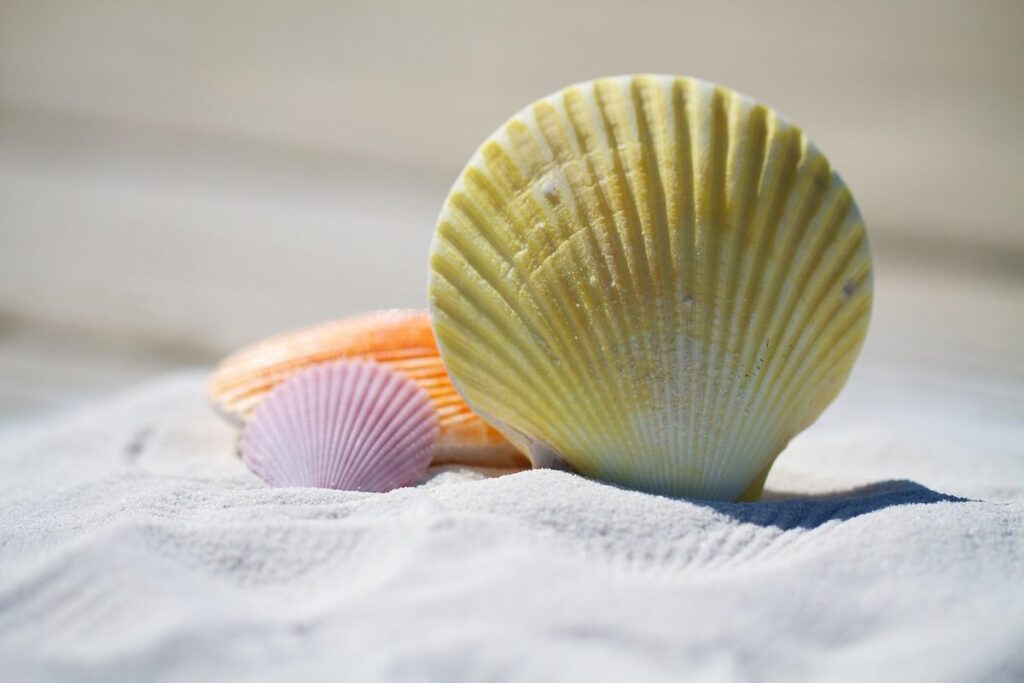
Understanding Shells and Why They Matter
Let’s start by understanding the basics of shells, including their structure and function, which will help you identify them more easily. This foundation is crucial for shell enthusiasts to build upon as they begin their journey.
What are Shells?
Shells are the outer protective coverings of marine and terrestrial mollusks, such as snails, slugs, clams, mussels, oysters, scallops, abalone, conchs, whelks, and nautiluses. These hard structures serve multiple purposes: protection from predators, support for soft body parts, and in some cases, even aid in movement or sensory perception. Shells can be quite varied in shape, size, texture, and composition, often reflecting the unique adaptations of their inhabitants.
There are two primary types of shells: univalve (single-chambered) and bivalve (two-chambered). Univalves, like snails and slugs, have a single opening, while bivalves, such as clams and mussels, have two hinged openings. Some shells are internal, meaning they’re housed within the mollusk’s body, like those of abalone and limpets.
Shells play crucial roles in various ecosystems: providing habitats for other animals, influencing coastal geomorphology through erosion and sedimentation, and serving as essential food sources for many species. Understanding what shells are and their significance is vital for shell identification, which can inform ecological research, conservation efforts, and even human health studies due to the role of certain mollusks in water filtration and bioremediation processes.
Importance of Shell Identification
Accurate shell identification is crucial in various fields, including ecology, conservation, paleontology, and education. In ecology, identifying shells can aid in understanding marine ecosystems and monitoring changes over time. For instance, tracking the distribution of certain species can indicate shifts in ocean temperatures or pollution levels.
In conservation efforts, accurate identification helps protect endangered species and their habitats. Misidentification can lead to misguided protection strategies, ultimately harming the very species being protected. Paleontologists rely on shell identification to reconstruct ancient ecosystems and better understand evolutionary history.
Education is also an essential application of shell identification skills. Students can develop critical thinking and observation techniques through hands-on shell analysis. Moreover, accurate identification contributes to a broader understanding of marine biodiversity and its role in maintaining healthy ecosystems.
To emphasize the importance of accurate shell identification, consider this: even small changes in species distribution or abundance can have significant ecological implications. By mastering basic shell identification skills, individuals can contribute to ongoing research and conservation efforts, ultimately helping to preserve our planet’s precious marine resources.
Gathering Materials and Equipment
To begin identifying shells, you’ll need some essential tools and materials, so let’s start by gathering everything we need for a successful shell-hunting adventure. You’ll want to collect various magnifying glasses, notebooks, and other equipment that will aid in your research.
Essential Tools for Shell Identification
A magnifying glass is essential for getting a close look at shells’ intricate details. Hand lenses are also useful, as they can provide a slightly higher magnification power without the bulk of a full-fledged microscope. When choosing between the two, consider what you’ll be examining most often: if it’s primarily surface textures and patterns, a hand lens might suffice; however, if you need to study internal features or small details, a magnifying glass with adjustable focus is usually better.
Measuring tools are another crucial piece of equipment for accurate shell identification. A ruler or caliper can help you record precise dimensions, which can be particularly useful when comparing shells from different collections or identifying specific species based on size criteria.
When selecting your initial set of tools, prioritize durability and ease of use. You don’t need to invest in the most expensive options; a basic magnifying glass and hand lens combo from a reputable brand should suffice for beginners. Avoid compact, travel-sized versions that sacrifice quality for convenience – these can be more frustrating than helpful when working with delicate shells or trying to discern subtle details.
Preparing Specimens for Observation
When collecting shells, it’s essential to handle them gently to avoid damaging their delicate surfaces. This means carefully plucking them from the sand or other substrate, rather than digging them up with a tool. Once you’ve gathered your specimens, rinse them thoroughly with cold water to remove any dirt or debris.
To prepare shells for observation, start by drying them completely. You can achieve this by laying them flat on a paper towel or cloth, allowing air to circulate freely around each shell. This helps prevent moisture from accumulating and causing damage. For particularly humid environments, you may want to store your specimens in a well-ventilated area or use a desiccant to absorb excess moisture.
For storing shells, consider using airtight containers or bags filled with silica gel to maintain a dry environment. Label each container clearly so you can easily identify the contents later. When handling multiple specimens, use clean gloves to prevent oils from your skin from transferring to the shells and altering their appearance. This will help preserve their original characteristics for more accurate identification.
Observing Shell Characteristics
When examining a shell, start by observing its overall shape and coloration, as these characteristics can often give you a clue about its identity.
Look for distinctive patterns, textures, or ridges that set it apart from others.
External Features: Shapes, Sizes, and Textures
Shells come in a wide range of shapes and sizes. Some are rounded and symmetrical, while others are irregularly shaped or have distinctive ridges or spines. The most common shell shapes can be grouped into four main categories: ovate (egg-shaped), trochoid (spiral), turbinate (top-heavy with a large body), and univalve (single-chambered). To get started, familiarize yourself with these basic shapes by examining pictures or specimens.
To accurately measure a shell’s size, use a ruler to record the length and width in millimeters. Pay attention to any distinctive features like ridges, spines, or apertures, as these can greatly impact overall shape and appearance. The texture of a shell is also an essential aspect to consider – some shells are smooth, while others have intricate patterns or bumps. Look for variations in coloration, too, which can provide clues about the shell’s age, diet, or environment.
When recording these characteristics, be sure to note any unique features that might distinguish one shell type from another. This attention to detail will serve you well as you begin to identify shells and explore their various forms.
Internal Structures: Nacre, Periostracum, and Other Features
When examining a shell’s internal structures, you’ll notice several key features that aid in identification. One of the most significant components is nacre, also known as mother-of-pearl. This iridescent layer lies beneath the periostracum and provides protection to the shell’s inner layers. Nacre can be smooth or pearly in appearance, depending on the species.
To observe nacre safely, gently remove any outer layers of the periostracum using a soft-bristled brush or a small tool with a rounded edge. Be cautious not to damage the underlying structures. With the periostracum removed, you can see the nacre’s characteristic sheen and coloration.
Other internal features worth examining include the shell’s core, often made of calcite or aragonite, and any visible layers of growth. These layers can be used to determine the age of the shell and its environmental conditions. When observing these structures, use a magnifying glass or hand lens to get a closer look. Note any unique patterns, textures, or colors that may be indicative of the species.
Identifying Shell Families and Genera
Let’s start by learning how to identify shells at a family level, which will help you narrow down the possibilities when looking at an unfamiliar shell. This involves recognizing key characteristics that define different families and genera.
Overview of Major Shell Families
The majority of shell-bearing mollusks belong to one of six major families: Turbinidae (turbans), Muricidae (murex shells), Trochidae (top snails), Naticidae (moon snails), Volutidae (volute shells), and Strombidae (true conchs). Each family has distinctive characteristics that can be used for identification. For instance, Turbinidae is known for its brightly colored and often symmetrical patterns, while Muricidae features a range of shell shapes and sizes.
Some families are easily recognizable due to their unique shell morphology. The Trochidae family, for example, is characterized by its spiral shape and typically has a small aperture. Volutidae shells, on the other hand, have an elongated body whorl with a prominent siphonal canal. These differences allow for broad categorization of shells, making it easier to narrow down their identification.
When examining major shell families, keep in mind that diversity within each family is vast. For example, there are over 2,000 species within the Muricidae family alone. This wide range makes it essential to familiarize yourself with specific characteristics and examples within each group to ensure accurate identification.
Advanced Techniques for Specific Identification
To identify specific genera and species within a family, you’ll need to combine multiple characteristics. Start by noting the shape and symmetry of the shell. For example, if it’s an asymmetrical spiral, it might belong to the Trochidae or Architectonicidae families. Next, observe the sculpture – are there ribs, striae, or other markings? The presence and type of sculpture can often narrow down possibilities within a family.
Look at the shape of the aperture (the opening) and the lip surrounding it. Is it wide and thin, or narrow and thick? This can help you determine if the shell belongs to a genus with convergent or divergent apertures. Also, examine the size and shape of the whorls, as well as any distinctive features like spines or tubercles.
When using these characteristics together, it’s essential to consider how they interact. For example, a shell might have a specific type of sculpture that’s only seen in one genus within a family. By combining multiple characteristics, you can narrow down possibilities and arrive at an accurate identification. Practice using this approach with different shells, and over time, you’ll become more confident in your ability to identify specific genera and species.
Analyzing Shell Features in Context
Now that you have a basic understanding of shell anatomy, let’s examine how different features are used to identify shells, and what clues they provide for identification.
Habitat and Ecological Factors
When analyzing shell features, it’s essential to consider the habitat and ecological factors that influenced their development. Shells are not static objects; they’re dynamic responses to environmental pressures. Water chemistry, for instance, can impact the mineral composition of a shell, making some species more prone to calcification or dissolution.
Temperature also plays a crucial role in shaping shells. Tropical species often have thinner, more delicate shells due to their warm environments, while colder climates favor thicker, more robust shells that protect against ice damage. Sediment type is another critical factor; shells growing on sandy bottoms tend to be smoother and more rounded, whereas those on rocky substrates may exhibit sharper edges.
These contextual clues can aid in identification by providing a framework for understanding shell morphology. For example, a shell with characteristic ridges or spines might be indicative of a specific habitat type. By considering these ecological factors, you’ll gain a deeper appreciation for the complex relationships between shells and their environments. This nuanced understanding will help you make more informed identifications and develop a more sophisticated approach to shell study.
Comparison with Other Shells or Known Specimens
When comparing observed shells to known specimens or reference materials, a systematic approach is crucial for accurate identification. Begin by consulting multiple sources, such as field guides, online databases, and museum collections, to gather images and descriptions of similar species. Create a spreadsheet or table to organize the characteristics of your unknown shell alongside those of known specimens.
Consider the following key points when making comparisons: shape, size, coloration, texture, and any distinctive features like spines or patterns. Pay particular attention to the shell’s orientation – some shells are symmetrical while others are asymmetrical. Take note of any variations in shape or structure that may indicate different species within a family.
To create a more detailed comparison, use a grid or matrix with rows representing your unknown shell and columns representing various characteristics. This will allow you to visualize similarities and differences between the two. By following this systematic approach, you’ll be able to narrow down the possibilities and make a more informed identification of your observed shell.
Advanced Topics: Shell Evolution, Morphology, and More
As you continue to develop your shell identification skills, let’s explore more complex topics such as how shells adapt to their environments through evolution. Shell morphology, for instance, is a fascinating area of study.
Shell Evolution and Development
Shell evolution and development are crucial concepts to grasp when studying shell diversity. Understanding how shells have changed over time can provide valuable insights into their identification. The process of shell formation is complex, involving the interaction of environmental factors, genetic predispositions, and developmental pathways.
For example, some species exhibit convergent evolution, where similar environments lead to analogous shell forms despite distinct evolutionary histories. This phenomenon is evident in the similarities between shells from different regions with comparable ecological conditions. Conversely, divergent evolution can result in unique shapes, sizes, or ornamentation, as seen among species that have adapted to varying habitats.
Key factors influencing shell development include genetic variation, environmental pressures, and ontogenetic processes (the study of developmental stages). By examining the interplay between these factors, you can better appreciate the intricacies of shell diversity. For instance, certain species display rapid shell growth during early life stages, while others exhibit slower rates with more complex ornamentation. Recognizing these patterns and variations will enhance your ability to identify shells accurately and appreciate their unique characteristics.
Specialized Techniques and Tools for Expert Identification
Expert shell identifiers employ a range of specialized techniques and tools to analyze even the most minute details. One such technique is analyzing shell ultrastructure through scanning electron microscopy (SEM) or transmission electron microscopy (TEM). These imaging technologies allow experts to visualize the intricate structures within shells, including nacre layers, prismatic structures, and other microscopic features that are difficult to observe with the naked eye.
Advanced software packages can also be used to enhance image quality and facilitate measurement and comparison. For example, ImageJ is a popular open-source platform for image analysis that offers a range of tools for adjusting contrast, brightness, and color balance. Experts may also use computer-aided design (CAD) software to create 3D models of shells from CT scans or other data sets.
In addition to imaging technologies, experts often rely on specialized tools such as microsieves, micrometers, and profilometers to measure shell dimensions and surface textures with high precision. By leveraging these advanced techniques and tools, expert shell identifiers can gain a deeper understanding of the intricate structures that underlie even the most familiar shells.
Frequently Asked Questions
Can I start identifying shells without any prior knowledge of ecology or biology?
Yes, shell identification is accessible to beginners from various backgrounds. Focus on understanding the basic concepts and tools introduced in this guide, and gradually build your knowledge as you progress.
How do I choose between a magnifying glass and a hand lens for observing shells?
Both instruments can be useful, but a hand lens is generally preferred for its higher magnification power (up to 20x) and better depth of field. However, a magnifying glass can still provide sufficient detail for basic identification.
What if I find a shell that doesn’t match any known species or family in the guide?
Don’t worry – this isn’t uncommon! Shell identification is an ongoing process, and new species are being discovered all the time. Consider consulting with experts or using online resources to explore possible matches. You can also try comparing your specimen to different reference materials.
Can I use digital tools or software for shell identification, or do I need physical equipment?
Both methods have their place in shell identification. While this guide focuses on traditional techniques, you may find digital tools helpful for research or when working with high-resolution images of shells. Look into apps or software that specialize in natural history identification.
How often should I update my knowledge and skills to stay current with new discoveries and advancements in shell research?
Yes – the field of malacology (the study of mollusks) is constantly evolving, with new species being discovered and existing ones reclassified. Set aside time each year to review updates on shell identification techniques, attend workshops or conferences if possible, and engage with online communities to stay informed about the latest developments.