
Are you tired of staring at a blank page in your sketchbook, unsure of where to start or what to create? Do you want to unlock your full artistic potential and transform your book into a vibrant world of art? Look no further! In this article, we’ll dive into the wonderful world of sketchbook ideas and techniques that will inspire you to draw anything from breathtaking landscapes to fantastical worlds. From nature-inspired scenes to imaginative creatures, we’ll explore a wealth of creative concepts that will help you fill your pages with color, texture, and life. Whether you’re a seasoned artist or just starting out, this article is packed with ideas and tips to get you drawing like never before. Get ready to unleash your creativity and make every page a masterpiece!
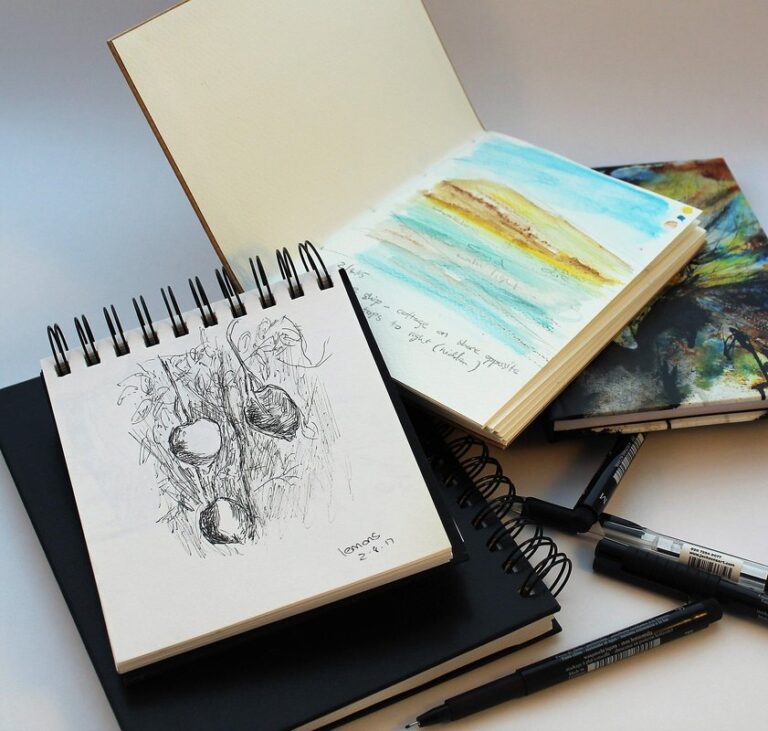
Exploring Different Themes and Genres
Let’s dive into some exciting sketchbook ideas that cater to various interests, from fantasy landscapes to everyday cityscapes, and discover what themes and genres spark your creativity.
Nature-Inspired Art
Drawing inspiration from nature can be incredibly fulfilling and versatile. You can create stunning artworks by capturing the intricate details of plants, trees, flowers, and landscapes in your sketchbook. To get started, consider exploring different techniques for conveying texture, color, and movement.
For texture, try layering thin lines to mimic the rough bark of a tree or the soft petals of a flower. You can also experiment with hatching and cross-hatching to achieve more depth and dimensionality. For example, use a range of shading techniques to capture the intricate patterns on a leaf or the gnarled branches of an ancient oak.
When it comes to color, observe how light filters through leaves, casting dappled shadows on the ground below. Experiment with soft pastels or watercolors to achieve delicate, dreamy effects. Consider using warm colors like oranges and yellows to capture the vibrancy of sun-kissed flowers or cool blues to convey the serenity of a misty forest.
To capture movement, focus on dynamic poses and expressive lines. Study the flowing curves of vines, the dancing leaves in the breeze, or the majestic sweep of a mountain range at sunset. Practice capturing these fleeting moments with loose brushstrokes and energetic gestures – it’s all about conveying energy and emotion!
Urban Landscapes and Cityscapes
Drawing urban landscapes and cityscapes can be an exciting way to capture the energy and vibrancy of city life. To start, consider the basics of drawing buildings, streets, and architecture. Begin by sketching simple shapes such as rectangles and triangles to form the basic structure of a building. Pay attention to proportions, making sure that the taller buildings are smaller at the top than they are at the base.
Capture the hustle and bustle of city life by focusing on movement and action in your sketches. Draw people walking down the street, cars driving by, or bicycles weaving through traffic. To add depth and interest to your drawings, include various textures such as brick facades, stone walls, or metal railings. Experiment with different perspectives, from low-angle shots of towering skyscrapers to close-up views of intricate architectural details.
Some tips for capturing the energy of city life in your sketches include:
• Studying the patterns and rhythms of urban design
• Observing how light reflects off buildings and streets
• Incorporating movement and action into your drawings
• Experimenting with different mediums, such as ink or watercolor, to achieve unique textures and effects
Fantasy and Imaginary Worlds
Dive into the realm of fantasy and imagination where mythical creatures and magical worlds await. When sketching fantastical subjects, remember that it’s not just about drawing what you see, but also about creating an immersive experience for yourself and your viewers.
Start by brainstorming a unique fantasy world, complete with its own geography, climate, and inhabitants. For instance, consider designing a dragon’s lair, complete with twisted caves, glittering gemstones, and the majestic beast itself. You could depict a unicorn prancing through a lush meadow or a mermaid swimming in an underwater kingdom.
To add depth to your fantasy world, experiment with different textures and materials. Use bold brushstrokes and vibrant colors to bring the scene to life. Don’t be afraid to get creative and invent new creatures, each with its own distinct characteristics and abilities. By letting your imagination run wild, you’ll create a sketchbook filled with enchanting worlds that transport viewers to another realm.
Consider incorporating patterns, architecture, and landscapes into your fantasy sketches to further enhance the world’s depth and richness.
Using Reference Images and Observation
When searching for inspiration, don’t underestimate the power of looking at real-life reference images to spark your creativity. Observe the world around you, from nature’s textures to cityscapes’ architecture.
Drawing from Life
Drawing from life is an excellent way to improve your observation and drawing skills. It’s not just about sketching anything you see, but rather about observing the world around you and capturing its essence on paper. Let’s start with still-life compositions – a classic subject for beginners and experienced artists alike.
When setting up a still-life arrangement, consider using a variety of shapes, textures, and colors to create visual interest. Observe how light falls on each object, and try to capture the subtle play of shadows and highlights. Practice rendering different types of forms, such as spheres, cylinders, and rectangles, to develop your understanding of three-dimensional space.
Drawing from life also involves observing and capturing textures, which can be achieved by paying attention to details like wrinkles, folds, and patterns. Don’t just focus on the overall shape; instead, try to capture the intricacies of each surface. You might find that a simple subject like an apple can reveal itself as more complex than you initially thought.
When drawing people or animals, remember to observe their posture, movement, and expression. Pay attention to how they interact with their environment, and try to capture the essence of their being. Don’t worry too much about proportions; instead, focus on capturing the underlying structure and movement. The more you practice drawing from life, the more confident you’ll become in your ability to observe and render the world around you.
Working with Photographs and Reference Images
When it comes to improving our sketching skills, one of the most valuable tools we can use is reference images. These images can be photographs, drawings, or even real-life observations, and they serve as a visual guide for us to study and learn from.
To get the most out of reference images, it’s essential to choose them wisely. Look for images that showcase the subject you’re trying to draw from multiple angles, including different lighting conditions and textures. You can find an abundance of reference images online through stock photo websites or social media platforms like Instagram and Pinterest.
Once you’ve selected a reference image, study it carefully to understand its composition, proportions, and details. Use this information to enhance your sketching skills by paying attention to the placement of shapes, lines, and values. You can also experiment with different mediums and techniques to see how they interact with the subject matter.
As you incorporate reference images into your sketches, remember that the goal is not to replicate them exactly but rather to use them as a starting point for your own creative expression.
Experimenting with Different Media and Techniques
Now that you’re feeling confident with your basic drawing skills, it’s time to get creative by experimenting with different media and techniques to add some variety to your sketchbook pages. Try combining traditional methods with digital tools for a unique look!
Watercolor Sketchbook Ideas
Working with watercolors in a sketchbook setting presents a unique blend of challenges and opportunities. On one hand, watercolors can be notoriously unforgiving, as even slight variations in technique or environment can lead to unpredictable results. However, this same unpredictability also means that watercolor sketches often possess a delightful, handmade quality that’s hard to replicate with other media.
To get the most out of your watercolors, focus on creating delicate washes by building up layers gradually. This allows you to control the tone and texture without overpowering the rest of the sketch. To add vibrancy, try layering colors in complementary combinations or using glazing techniques to achieve deep, rich hues.
Experiment with subtle textures by incorporating drybrush strokes or loose gestural marks. These can help balance out the smoothness of the watercolor washes while adding visual interest to your sketches. Remember that practice and patience are key when working with watercolors – don’t be afraid to make mistakes and learn from them as you go!
Mixed Media Collage
When it comes to mixed media collage, the possibilities are endless. This technique allows you to combine different materials and textures to create unique pieces that add depth and interest to your sketchbook pages.
To get started with mixed media collage, begin by gathering a variety of materials such as paper scraps, fabric, found objects, and ephemera like ticket stubs or postcards. Consider combining smooth surfaces like vellum or tracing paper with rougher textures like cardboard or burlap for interesting contrast.
Experiment with layering different materials to create visual interest. For example, try collaging a printed image onto a hand-drawn background or building up layers of paint and markers on top of each other. Don’t be afraid to incorporate three-dimensional objects into your collage by gluing or taping them onto the page.
Some practical tips for incorporating mixed media collage into your sketchbook include:
* Cut out shapes and patterns from magazine cutouts, newspaper clippings, or book pages
* Use glue, tape, or other adhesives to attach materials to your page
* Experiment with different techniques like tearing, folding, or crumpling paper to add texture and interest
* Don’t worry about mistakes – they can often become the most interesting parts of a mixed media piece!
Developing Your Style and Voice
Now that you have a plethora of sketchbook ideas, it’s time to think about how you want to bring your artistic vision to life, developing a unique style and voice in the process.
Finding Your Unique Perspective
Developing a unique perspective in your sketchbook is key to creating artwork that truly reflects your personality. It’s easy to get caught up in trying to emulate the styles of others, but this can lead to a homogenous and uninspired body of work. Instead, focus on experimenting with different techniques and mediums to see what works best for you.
Don’t be afraid to take risks and try new things – it’s often the mistakes that lead to the most interesting outcomes. For example, if you’re trying out a new medium like watercolor or ink, don’t worry if your first attempts are messy and imperfect. This is all part of the learning process, and embracing imperfections can actually add character to your work.
To develop your unique perspective, try setting aside time each week to explore different themes and styles in your sketchbook. You might start by copying a favorite artist’s work, but then gradually move on to experimenting with your own ideas and techniques. Remember that there’s no one “right” way to draw – the most important thing is to have fun and enjoy the process of creating.
Overcoming Fear and Self-Doubt
It’s normal to feel intimidated when starting or continuing a sketchbook practice. Fear of not being good enough can hold you back from experimenting with new techniques and styles. Self-doubt can creep in, making it difficult to trust your creative instincts. However, remember that your sketchbook is for personal growth, learning, and enjoyment – not perfection.
When you’re feeling stuck or uncertain about your art, try reframing your thinking. Instead of focusing on what might go wrong, think about the possibilities of exploration and discovery. Remind yourself that mistakes can lead to new ideas and techniques. As artists like Henri Matisse and Paul Klee did, experiment with unexpected materials and textures.
Take small risks in your sketchbook by trying a new medium or technique each week. This will help build confidence and make you more comfortable with experimentation. As you practice, notice what makes you feel uneasy and try to address it. Are you worried about not being realistic enough? Practice drawing from observation to improve your skills. Are you self-conscious about your lines? Experiment with loose, expressive brushstrokes or gestural drawings.
Don’t be too hard on yourself when things don’t turn out as expected. Celebrate the process and enjoy the journey of learning and growth. Remember that your sketchbook is a safe space for creativity to flourish – it’s okay not to be perfect.
Conclusion and Next Steps
Now that you’ve filled your sketchbook with inspiring ideas, it’s time to reflect on what you’ve created and consider how you can keep the momentum going. Let’s summarize the key takeaways from our journey together.
Putting it All Together
As you’ve explored these inspiring sketchbook ideas and techniques, it’s essential to remember that the most important thing is to keep experimenting and growing as an artist. You’ve learned that observing the world around you, paying attention to details, and practicing different styles can help spark creativity.
Recap your key takeaways: from breaking down complex subjects into simpler forms, to capturing movement and gesture in a few swift lines. Don’t be afraid to mix media and try new techniques – like layering watercolor washes or incorporating collage elements. Your sketchbook is a safe space to fail and learn, so don’t worry about mistakes.
As you continue to draw inspiration from the world around you, remember that growth as an artist happens gradually. Focus on developing your unique style by experimenting with different mediums and techniques. Set aside dedicated time for drawing each day or week – even if it’s just 15 minutes – and be patient with yourself as you refine your skills. By embracing the process and enjoying the journey, you’ll unlock a world of creative possibilities within your sketchbook.
Final Tips and Resources
As you close this chapter on sketchbook ideas, we hope you’re feeling inspired and motivated to continue exploring your creativity. Remember that there’s no one “right” way to use a sketchbook – it’s all about experimentation and having fun.
If you’re looking for more guidance or inspiration, here are some valuable resources to check out:
* Online courses: Websites like Skillshare, Craftsy, and Proko offer a wide range of classes on drawing, illustration, and art fundamentals.
* Communities: Join online forums like DeviantArt or Reddit’s r/learndrawing community to connect with fellow artists, share your work, and get feedback.
* Books: Classics like “The New Drawing on the Right Side of the Brain” by Betty Edwards and “Drawing from Observation” by James McMullan are excellent resources for beginners.
To keep your creative juices flowing, try these final tips:
* Schedule regular sketchbook sessions to stay consistent
* Experiment with different mediums and techniques
* Don’t be afraid to make mistakes – they’re an essential part of the learning process.
Frequently Asked Questions
Can I use my existing sketchbook for these ideas, or do I need a new one?
You can definitely use your existing sketchbook to explore these creative concepts. Start by flipping through the pages and identifying any blank areas that could be filled with a new idea. You might find it helpful to dedicate specific sections of your book to different themes or styles.
How often should I practice drawing from reference images versus observation?
A good balance is to alternate between practicing with reference images (about 2/3 of the time) and observing real-life subjects (about 1/3). This will help you develop both skills and keep your artwork fresh. You can also try combining these approaches, like sketching from life using reference images as a guide.
Can I apply these techniques to non-sketchbook mediums, like painting or digital art?
Yes! The principles and concepts explored in this article are versatile and adaptable to various mediums. Feel free to experiment with different tools and materials while still applying the ideas discussed here – you might find new creative paths opening up as a result.
How do I know which style is “my unique perspective” if I’m just starting out?
Your unique perspective emerges from combining your personal experiences, interests, and artistic experiments. Don’t be afraid to try different styles and genres until something feels truly yours. Be patient, stay open-minded, and remember that it’s okay for your style to evolve over time.
What’s the best way to maintain motivation when facing blank pages or creative blocks?
When faced with a blank page, try reversing the approach by starting with a simple gesture drawing or warm-up exercise. You can also set achievable goals for each session (e.g., fill three pages) and reward yourself for milestones reached.