
Solar flares are intense bursts of energy released from the surface of the sun, capable of affecting Earth’s technology and infrastructure in profound ways. These powerful events can cause communication blackouts, disrupt satellite operations, and even trigger power grid failures on our planet. You might be wondering why solar flares should concern you – after all, they’re a natural phenomenon that occurs far beyond our atmosphere. The truth is, the increasing reliance on technology and space-based systems has made us more vulnerable to the effects of solar activity than ever before. In this article, we’ll explore the causes of solar flares, their potential impacts on Earth’s technology and infrastructure, and what scientists are doing to predict and mitigate these events. By the end of it, you’ll have a better understanding of how solar flares work and what they mean for our daily lives.
What are Solar Flares?
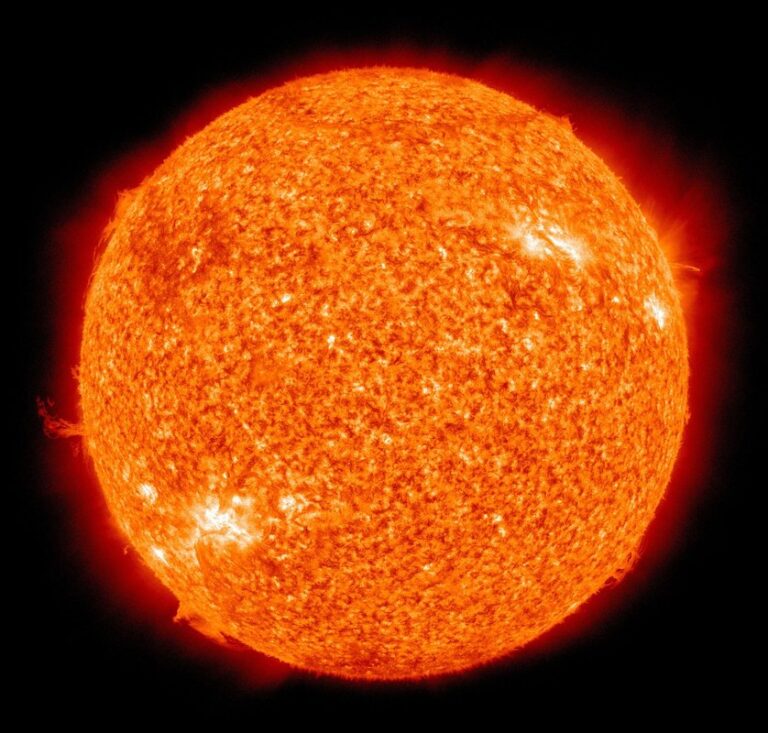
Solar flares are powerful bursts of energy that erupt from the surface of the sun, and understanding their basics is essential to grasping the rest of the phenomenon. We’ll break down what causes these intense events.
Definition and Formation
Solar flares are intense and sudden releases of energy from the Sun’s corona, the outer atmosphere of the star. This phenomenon is caused by the buildup and release of magnetic energy in the solar plasma, a state of matter where ions and free electrons coexist. The underlying physics behind flare generation involves the interaction between magnetic fields and charged particles.
At the heart of solar flares lies magnetic reconnection, a process where oppositely directed magnetic field lines break and reconnect, releasing a massive amount of energy in the form of light and heat. This energy release is so intense that it can be millions of times more powerful than the Sun’s normal output. To put this into perspective, a small solar flare can emit as much energy as 10 billion nuclear bombs exploding simultaneously.
Solar flares are not limited to a single location; they can affect large areas of the Sun’s corona. They often occur near sunspots, which are cooler regions on the Sun’s surface where intense magnetic activity is taking place. By understanding the definition and formation of solar flares, scientists can better predict when and where these events might occur, helping to mitigate their impact on our technology and infrastructure.
Types of Solar Flares
Solar flares are classified into three main categories based on their X-ray flux level, ranging from weakest to strongest: C-class, M-class, and X-class events. C-class solar flares are the smallest, producing relatively minor effects on Earth’s space weather. They typically have a low impact on our planet, but can still cause some disturbances in radio communications.
M-class solar flares are significantly stronger than C-class events, emitting more energetic particles that can affect satellite operations and increase radiation exposure for astronauts in space. During an M-class flare, the X-ray flux level increases by a factor of 10 or more compared to C-class events. The impact on Earth’s technology and infrastructure is usually moderate, but still requires monitoring.
X-class solar flares are the largest and most intense type of solar flare, emitting enormous amounts of energy that can cause significant disruptions to satellite communications, power grids, and even global navigation systems. X-class flares occur relatively infrequently, but when they do, their impact can be severe and far-reaching. Understanding the different types of solar flares is crucial for predicting and preparing for these events.
Causes and Triggers of Solar Flares
Solar flares are complex events, and understanding what triggers them is crucial to predicting their impact on Earth’s magnetic field. We’ll examine the key factors that contribute to solar flare activity.
Magnetic Reconnection
Magnetic reconnection is a complex process that occurs when changes in the Sun’s magnetic field trigger solar flares. At the heart of this phenomenon are twisted magnetic loops, known as flux ropes, that build up energy within the Sun’s corona. When these loops become unstable, they can suddenly release this pent-up energy through a magnetic reconnection event.
This process is often described as a “magnetic switch” where the opposing magnetic fields merge and break apart, releasing an enormous amount of energy in the form of heat, light, and charged particles. The exact mechanisms behind magnetic reconnection are still not fully understood, but scientists have identified several key factors that contribute to its onset.
These include coronal mass ejections (CMEs), sunspot activity, and changes in the Sun’s internal rotation rate. A decrease in the Sun’s internal rotation rate can lead to a buildup of magnetic field lines, which eventually snap back into place during a reconnection event. By understanding these factors, scientists can better predict when solar flares are likely to occur.
Other Triggering Factors
Sunspot groups are a significant contributor to solar flare activity. These groups of intense magnetic activity can be thousands of kilometers across and contain numerous smaller sunspots. When multiple sunspots within a group become unstable, they can release a burst of energy as a solar flare. The larger the sunspot group, the greater the likelihood of a major flare event.
Coronal mass ejections (CMEs) are another factor that can enhance solar flare activity. CMEs are massive clouds of plasma and magnetic field that erupt from the sun’s corona, often following a solar flare. While not all CMEs produce flares, those that do can lead to more intense radiation and charged particle emissions.
The combination of sunspot groups and CMEs can create conditions ripe for major solar flares. For example, in 2012, a massive X-class flare occurred when a large sunspot group was struck by a powerful CME. Understanding the relationship between these factors is crucial for predicting and preparing for potential solar flare events.
Solar physicists closely monitor sunspot activity and track CMEs to anticipate such combinations. By analyzing these data points, researchers can issue timely alerts and forecasts to mitigate potential disruptions caused by solar flares.
Effects on Space Weather
Solar flares can significantly impact space weather, causing disruptions to Earth’s magnetic field and upper atmosphere. This leads to spectacular aurora displays and potential radio blackouts.
Radiation and Charged Particles
Solar flares emit an enormous amount of energy into space, which manifests as radiation and charged particles. These particles can reach speeds of up to 1 million kilometers per hour, making them a significant threat to spacecraft and astronauts. One notable example is the International Space Station, which has had to take evasive action on several occasions due to solar flare activity.
The charged particles emitted during solar flares can cause radiation storms in space. This can be particularly hazardous for long-duration space missions, where prolonged exposure to radiation can increase the risk of cancer and other health problems. For instance, astronauts on the Apollo 16 mission were exposed to a significant amount of radiation from a solar flare during their lunar stay.
A spacecraft’s design and shielding can help mitigate this issue, but it’s not always possible to fully protect against solar flare activity. Space agencies and manufacturers must carefully plan for these events when designing missions and equipment.
Geomagnetic Storms and Aurorae
Solar flares can induce geomagnetic storms by sending a massive amount of charged particles towards Earth. This influx of energy interacts with our planet’s magnetic field, causing it to vibrate and oscillate. As a result, the magnetic field lines stretch and become distorted, leading to a geomagnetic storm.
During these events, the Earth’s magnetic field becomes weaker in certain areas, allowing solar winds to penetrate deeper into the atmosphere. This phenomenon can cause spectacular aurora displays at lower latitudes, including regions that are typically not visible to most people, such as near the equator or at low altitudes. The vibrant colors and patterns of the aurorae are a result of the interaction between the solar winds and atmospheric gases.
Auroral activity is closely tied to geomagnetic storms. By monitoring space weather forecasts, scientists can predict when aurora displays will be visible in these regions. For example, during the 2012 St. Patrick’s Day storm, auroras were seen as far south as Florida. Knowing when and where to expect these displays allows for more accurate planning of space missions and satellite operations, ultimately minimizing disruptions caused by solar flares.
Impact on Earth’s Technology and Infrastructure
Solar flares have a profound impact on our technological systems, causing widespread disruptions to communication networks and satellite operations. We’ll examine these effects in more detail.
Disruptions to Satellite Communications
Solar flares can have a profound impact on satellite communications, leading to disruptions and potential losses. When a solar flare hits Earth’s magnetic field, it releases a massive amount of energy in the form of electromagnetic radiation. This radiation can overwhelm the electronic systems of satellites, causing them to malfunction or even fail entirely.
Satellites rely on complex navigation systems, which use precise timing and positioning information to guide spacecraft and facilitate global communication networks. Solar flares can interfere with these systems by generating intense radio-frequency interference (RFI), which can cause signal degradation and loss of satellite functionality.
The consequences of solar flare-induced disruptions to satellite communications are significant. Global Positioning System (GPS) satellites, for example, rely on precise timing signals to provide location information to users worldwide. If these signals are disrupted or lost due to a solar flare, GPS navigation could become unreliable or unavailable. This has potential implications for transportation systems, emergency services, and other critical infrastructure that relies on satellite-based communication networks.
Power Grid Vulnerability
Geomagnetically induced currents (GICs) pose a significant threat to power grids worldwide. These currents occur when geomagnetic storms caused by solar flares induce electrical currents in long-distance transmission lines. The effect is most pronounced during intense geomagnetic storms, which can cause GICs to surge through the grid.
A single transmission line may be affected, but GICs can also cascade across multiple systems, leading to widespread power outages. The 1989 Quebec blackout and the 2003 Eastern US blackout are prime examples of the devastating impact GICs can have on the power grid. Utilities in the United States and other countries take measures to mitigate these effects, including installing protective devices that can limit the flow of GICs.
However, despite efforts to harden the grid against geomagnetic storms, the potential for widespread disruption remains. The scale of a severe geomagnetic storm is difficult to predict, but utilities must be prepared for a range of scenarios. Regular maintenance and upgrades can help minimize the risk of power grid damage during a solar flare-induced geomagnetic storm.
Historical Events and Notable Solar Flares
Some of the most significant solar flares occurred during historical events, causing widespread disruptions to communication systems. We’ll examine a few notable examples that highlight the impact of these intense energy releases.
Carrington Event (1859)
The 1859 Carrington Event was a massive solar flare that caused widespread disruptions to the telegraph system across North America and Europe. On September 1-2, 1859, British astronomer Richard Carrington observed a brilliant white light emanating from sunspot group 4353. Just hours later, the electromagnetic pulse generated by the flare fried telegraph systems, causing equipment to malfunction or catch fire.
The impact of the Carrington Event was significant, with reports of spontaneous combustion of telegraph wires and equipment. The event also caused spectacular aurora displays at lower latitudes than usual, with observers in Cuba and Hawaii witnessing the phenomenon. Today, scientists estimate that a similar event would cause billions of dollars in damages to modern technological infrastructure.
The Carrington Event serves as a reminder of the potential risks posed by solar flares. It highlights the importance of preparedness and infrastructure resilience in the face of space weather events. Utilities and technology providers can learn from this historical example, taking steps to protect their systems from geomagnetically induced currents (GICs) that can cause equipment damage. By understanding the Carrington Event’s impact, we can better prepare for future solar flare activity and minimize disruptions to our critical infrastructure.
Recent Solar Flare Activity
In recent years, there have been several notable solar flare events that have captured the attention of space weather enthusiasts and scientists. One such event was the X20-class solar flare that occurred on August 24, 2012. This massive flare emitted a huge amount of radiation, including X-rays and gamma rays, which affected Earth’s magnetic field and caused geomagnetic storms.
Another significant event was the X1.0-class solar flare that hit Earth’s magnetic field on September 10, 2017. This flare triggered a strong aurora display in the Northern Hemisphere, visible to observers in Canada and Alaska. The flare also disrupted high-frequency radio communications between North America and Europe for several hours.
In both cases, space weather forecasting agencies provided critical warnings about the impending solar flares, allowing scientists and engineers to take precautions to mitigate their effects on Earth’s technology and infrastructure. For example, satellite operators were able to reorient their spacecraft to minimize radiation exposure, while power grid managers took steps to reduce the risk of geomagnetically induced currents (GICs) that could damage equipment.
These recent solar flare events highlight the importance of continued monitoring and research into space weather phenomena. By understanding the causes and effects of solar flares, we can better prepare for future events and protect our technological infrastructure from potential disruptions.
Mitigation Strategies and Preparations
To minimize potential disruptions, it’s essential to understand how to prepare for and mitigate the effects of a significant solar flare on your daily life. We’ll explore practical steps you can take to stay safe.
Space Weather Forecasting
Space weather forecasting has made significant strides in recent years. Government agencies and research institutions have developed sophisticated systems to predict solar flare activity, including the Space Weather Prediction Center (SWPC) at the National Oceanic and Atmospheric Administration (NOAA). These centers monitor solar activity 24/7 and issue forecasts for geomagnetic storms, radiation levels, and other space weather events.
Despite advancements, forecasting limitations persist. Current models struggle with predicting the timing and intensity of individual solar flares. The SWPC’s Space Weather Forecast Model, for instance, has improved forecast accuracy but still faces challenges in predicting the onset of major events. Researchers are working to integrate more data sources, including solar observations from spacecraft and ground-based telescopes.
To provide earlier warnings, scientists are exploring new approaches, such as machine learning algorithms that can analyze historical solar flare patterns and predict future activity. Private companies like Spaceweather.com also contribute to space weather forecasting by providing near-real-time solar flare monitoring and alerts to the public and other stakeholders.
Infrastructure Protection
Developing more resilient power grids is crucial to protecting against solar flare-induced disruptions. This involves implementing smart grid technologies and incorporating advanced materials into transmission lines and distribution infrastructure. For instance, some utilities have begun using high-temperature superconductors to increase the efficiency of power transmission.
Another critical area of focus is communication systems. Solar flares can cause widespread radio blackouts, disrupting emergency services and critical infrastructure operations. To mitigate this risk, experts recommend implementing backup communication systems that use alternative frequencies, such as satellite-based networks or Very High Frequency (VHF) radios.
It’s also essential to identify and prioritize critical infrastructure components vulnerable to solar flare-induced disruptions. This may involve conducting risk assessments and developing contingency plans for emergency scenarios. Some organizations have established incident response teams to quickly respond to and mitigate the effects of a solar flare on their operations.
Conclusion
As we conclude our exploration of solar flares, it’s essential to summarize the key takeaways. Solar flares are intense bursts of energy that release magnetic fields from the sun’s surface. These events can cause spectacular light displays and even affect Earth’s magnetic field. However, they also pose a significant threat to technological systems and satellite communications.
To mitigate this risk, scientists closely monitor solar flare activity using specialized instruments like magnetometers and coronagraphs. By tracking these events, we can predict when a flare might be imminent, allowing us to take precautions such as adjusting satellite orbits or shielding sensitive equipment.
Ultimately, understanding solar flares is crucial for protecting our technological infrastructure and ensuring the stability of global communication networks.
Frequently Asked Questions
Can I predict when and where a solar flare will occur?
Yes. While predicting the exact timing and location of a solar flare is still challenging, scientists use various models and monitoring tools to forecast space weather conditions, including solar flares. These forecasts can help astronomers and space agencies prepare for potential disruptions.
How do I protect my power grid from geomagnetically induced currents (GICs) caused by solar flares?
To mitigate the effects of GICs on your power grid, consider implementing surge arresters or other protective devices designed to absorb or divert geomagnetically induced currents. Regular maintenance and monitoring of your grid’s infrastructure can also help identify potential vulnerabilities.
What if a massive solar flare like the Carrington Event were to occur today? Would it have a significant impact on our modern technology?
Yes, a solar flare of that magnitude would likely cause widespread disruptions to modern technology, including communication networks, satellite systems, and power grids. However, thanks to advancements in space weather forecasting and infrastructure protection strategies, the impacts could be mitigated with proper planning and preparedness.
Can I use solar flares for energy generation or as a source of radiation?
No, it’s not feasible to harness the energy from solar flares for practical applications due to their intense and variable nature. While solar flares can produce energetic particles and radiation, these are not suitable for direct energy production. However, researchers continue to study the underlying physics behind solar flare generation in search of new insights.
How do I know if a solar flare is affecting my spacecraft or satellite?
Monitoring tools and space weather forecasts can provide alerts and notifications about impending solar flares and their potential effects on your spacecraft or satellite. Regularly checking these resources, along with implementing protective measures such as shielding or radiation hardening, can help minimize the risks associated with solar flares.