
Every few nights, stargazers around the world have been spotting long trails of light streaking across the sky. Dubbed “Starlink trains,” these persistent formations are being caused by SpaceX’s rapidly expanding satellite internet constellation. As more and more satellites join the network, concerns about their impact on the environment and our ability to enjoy a clear night sky continue to grow. But what exactly is behind this phenomenon, and how does it relate to the broader ambitions of SpaceX’s Starlink project? In this article, we’ll explore the science behind these “trains,” examine the environmental implications of such a massive deployment, and take a closer look at the future of satellite internet. By the end of this article, you’ll have a deeper understanding of what these Starlink trains are, why they’re happening, and how they fit into the larger picture of space-based connectivity.
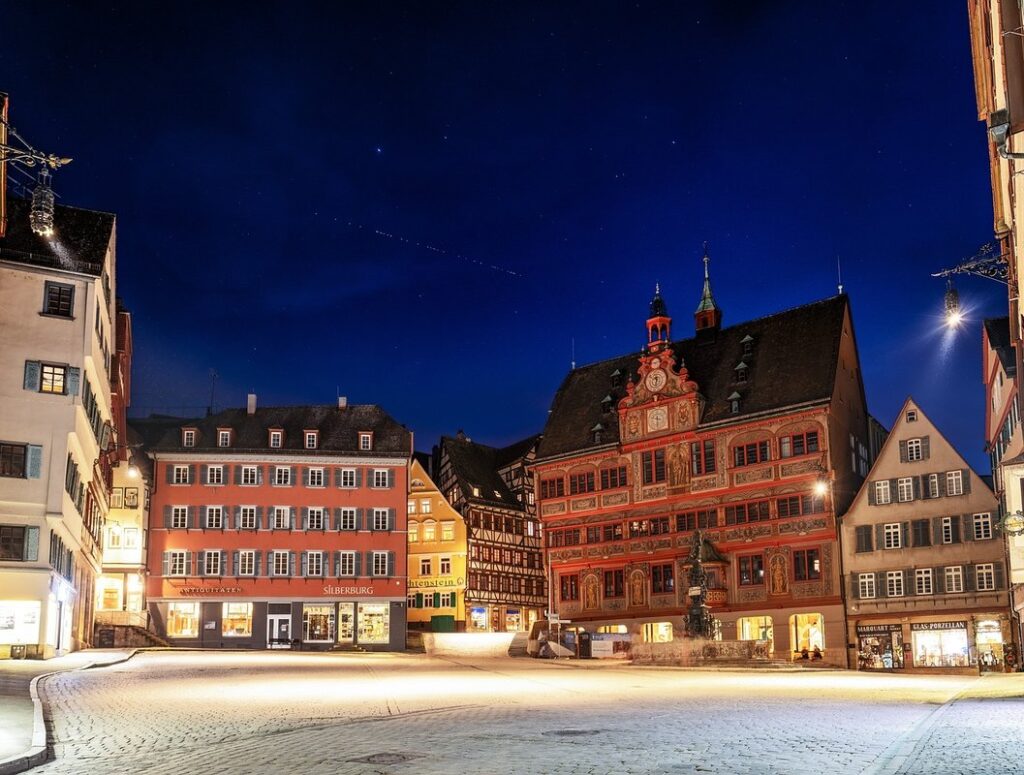
What is a Starlink Train?
You might be wondering what causes those streaks of light across the sky, and we’re here to explain exactly what a Starlink train is: a series of satellites orbiting the Earth. We’ll break down this phenomenon in more detail below.
Defining a Starlink Train
A Starlink train is a series of satellites launched by Elon Musk’s SpaceX as part of the company’s ambitious internet constellation project. These satellites are designed to provide global internet coverage through a network of low Earth orbit (LEO) satellites. However, when seen from Earth, they appear as a moving line or “train” of bright objects traversing the night sky.
The phenomenon is caused by the synchronized movement of multiple satellites in close proximity to one another, which can create an illusion of a single, glowing streak across the sky. This occurs because the satellites are launched in batches and then deployed into orbit in a specific sequence, allowing them to maintain precise formation and communication with each other.
When viewed through binoculars or a telescope, Starlink trains often appear as a string of small, bright dots moving rapidly across the sky. The exact number of satellites visible at any given time depends on various factors, including atmospheric conditions and the observer’s location. Observers should note that not all Starlink trains are created equal; some may be more visible than others due to differences in satellite brightness or their specific orbital paths.
Causes of Starlink Trains in the Night Sky
The increased frequency of Starlink trains in the night sky can be attributed to several factors. One primary reason is the accelerated deployment of satellites by SpaceX, with thousands more expected to launch in the coming years. This exponential growth has led to an unprecedented number of satellites orbiting Earth, increasing the likelihood of spotting a train-like formation.
The design of these satellites also plays a significant role. Starlink satellites are launched into polar orbits at an altitude of around 550 kilometers, which allows them to provide global coverage while minimizing the need for additional launches. However, this means that they appear as a long trail of lights across the sky when viewed from a single location.
The combination of these factors – rapid deployment and strategic orbiting – has contributed to the rising visibility of Starlink trains in recent months. As the constellation continues to grow, it’s essential for astronomers and stargazers alike to be aware of this phenomenon and take steps to mitigate its impact on night sky observations.
The Science Behind Starlink Trains
Let’s take a closer look at what makes those Starlink trains so bright and visible in our night sky, and explore the science behind their striking appearance. From constellations to satellites, we’ll break down the key factors at play.
Orbital Mechanics and Satellites’ Movement
Satellites in the Starlink constellation orbit Earth at an average altitude of around 550 kilometers. However, their speed is much higher than you might expect for something moving through space: they zip along at approximately 27,400 kilometers per hour, or roughly 7.6 kilometers per second. This velocity allows them to complete one full orbit in about 90 minutes.
But what’s crucial to understanding the Starlink train phenomenon is not just their speed but also their inclination – the angle at which they’re positioned relative to Earth’s equator. The majority of Starlink satellites are placed into a polar orbit, meaning they pass over both the north and south poles as part of each revolution. This polar orientation enables them to cover more ground in less time, contributing to the distinctive train-like appearance that can be seen streaking across the sky.
Keep in mind that these specifics can vary depending on the individual satellite’s mission requirements or the specific constellation’s design parameters. Nonetheless, understanding these orbital mechanics is key to grasping why and how Starlink trains appear as they do.
Visibility Factors: Atmospheric Conditions and Satellite Brightness
Atmospheric conditions play a significant role in determining the visibility of Starlink trains. Clear skies with minimal cloud cover are essential for spotting these satellite formations. In fact, a study by the National Oceanic and Atmospheric Administration (NOAA) found that atmospheric clarity is one of the most critical factors affecting astronomical observations.
When it comes to satellite brightness, several factors come into play. The reflectivity of the satellites’ surfaces, primarily aluminum or white paint, contributes to their visibility. A higher albedo (reflectivity) means a brighter appearance in the night sky. Additionally, the angle at which sunlight hits the satellite’s surface affects its brightness. When sunlight is directly reflected off the satellite’s surface, it appears more vibrant.
Typically, Starlink satellites are brightest when they’re in the right ascension between 20° and 30°. This range allows for optimal illumination of the satellite’s reflective surfaces. However, even with favorable atmospheric conditions and high reflectivity, visibility is often compromised by other factors like light pollution and moon phase. To increase your chances of spotting a Starlink train, find a location with minimal artificial lighting and wait for a new moon phase.
Observing and Photographing Starlink Trains
Capturing a Starlink train on camera requires patience and the right timing, but with some preparation, you can successfully photograph these streaks of light in the night sky. Understanding their movement patterns is key to getting that perfect shot.
Tips for Visual Observation
To spot a Starlink train, timing is crucial. These trains typically appear 90 minutes after sunset and are most visible when the satellites pass over a dark location with minimal light pollution. To maximize your chances of spotting one, find a spot with an unobstructed view of the eastern sky for at least 30 minutes before the predicted time.
Choose a location with low horizon obstruction, such as a hill or a spot away from buildings and trees. This will allow you to see the train from its earliest stages to its final descent below the horizon. Bring binoculars or a telescope to enhance your view, but keep in mind that too much magnification can make it harder to track the movement.
If possible, observe from a location with minimal atmospheric interference, such as above 1,000 feet elevation where air is typically thinner and clearer. Be prepared for short viewing periods – most Starlink trains last around 2-3 minutes before disappearing below the horizon. Make sure you have an unobstructed view of the eastern sky during this time to get a good glimpse of the train’s passage.
Capturing Starlink Train Photos: Equipment and Techniques
To capture high-quality images of Starlink trains, you’ll need a camera with manual settings and a wide-aperture lens. A full-frame DSLR or mirrorless camera is ideal, as they offer better low-light performance and image quality. A 24-70mm f/2.8 or similar zoom lens will provide the necessary reach and aperture to freeze the satellite’s motion.
A longer focal length can help separate the satellites from background light pollution, but be aware that this may also make it more challenging to track multiple satellites simultaneously. For best results, use a tripod to ensure stable camera settings and minimize blur caused by hand movement or camera shake.
When capturing Starlink train photos, consider using a slower shutter speed (around 1-2 seconds) to create a sense of motion and blur. This can add drama to your images and make them more visually appealing. Experiment with different aperture values to balance the brightness of the satellites against background light pollution.
Environmental Concerns and the Debate Around Starlink
As you consider the impact of Starlink on our night sky, concerns around its environmental effects have sparked a heated debate among experts and enthusiasts alike. We’ll take a closer look at these issues.
Light Pollution and Disruption to Astronomy
The increased number of satellites in low Earth orbit has significant implications for stargazing and astronomy as a whole. One of the most notable effects is light pollution, which occurs when artificial light from these satellites illuminates the night sky and disrupts our ability to observe celestial bodies. This is particularly problematic for astronomers who rely on dark skies to conduct their research.
For instance, the brightness of a Starlink satellite can outshine a star with a magnitude of 8 or higher, making it difficult to study faint objects in the galaxy. Furthermore, the constant trail of satellites moving across the sky creates a persistent source of light pollution that can be seen even from locations far removed from urban areas.
To put this into perspective, consider the example of Mauna Kea, one of the world’s premier stargazing sites. Astronomers at this location have reported seeing Starlink trains on numerous occasions, which has compromised their ability to observe certain celestial events. As the number of satellites in orbit continues to grow, it is essential for astronomers and space companies to work together to mitigate these effects and preserve the integrity of our night sky.
Impact on Aviation and Space Exploration Safety
Satellite collisions pose a significant risk to aviation and space exploration safety. With thousands of satellites now orbiting Earth, there’s an increased likelihood of accidents involving these objects. According to NASA, there are over 500,000 pieces of debris currently in orbit around our planet, ranging from small fragments to entire defunct satellites. When two or more satellites collide, the resulting debris can become a hazard for operational spacecraft and satellites.
For instance, in 2007, a Chinese anti-satellite missile test generated over 3,000 pieces of debris that continue to pose a threat to active satellites. Similar incidents have occurred with Starlink satellites themselves, such as in March 2021 when two of its satellites collided with each other, creating new debris.
This space debris also interferes with aircraft navigation systems, posing another risk to aviation safety. The US Air Force tracks thousands of pieces of debris that could potentially interfere with military and civilian aircraft operations. As the number of satellites increases, so does the likelihood of collisions and subsequent disruptions to critical infrastructure.
The Future of Starlink and its Implications for Night Skies
As we look ahead, it’s essential to consider how Starlink will continue to evolve and impact our night skies, potentially changing the way we experience the celestial landscape.
Projected Growth and Deployment Timelines
SpaceX has been steadily expanding its Starlink constellation since 2019, with thousands of satellites launched into orbit to provide global internet coverage. According to Elon Musk’s latest updates, the company aims to deploy over 42,000 satellites by the mid-2020s. This ambitious plan will see an average of one launch per week for the next few years.
The timeline for deployment is as follows: SpaceX plans to reach a total of 1,500 operational satellites in the first phase, which should be completed by the end of 2023. The second phase involves deploying the remaining satellites, with a target completion date set for 2025. It’s worth noting that these numbers are subject to change based on market demand and regulatory approvals.
To put this into perspective, consider that the International Telecommunication Union (ITU) has assigned SpaceX nearly 1,500 orbital slots for its Starlink constellation. With multiple launches happening concurrently, SpaceX will need to carefully manage satellite deployment and de-orbiting to avoid collisions and minimize environmental impact. As the network expands, it’s essential for astronomers and space enthusiasts to stay informed about launch schedules and deployment milestones to anticipate potential disruptions in the night sky.
Mitigating Effects: Efforts to Reduce Satellites’ Visibility and Environmental Impact
SpaceX has acknowledged concerns about the increasing visibility of Starlink satellites in the night sky. To address these issues, the company is implementing various measures to reduce the satellites’ brightness and mitigate their impact on astronomy. One such effort involves equipping the satellites with a “drag sail” or “de-orbiting sail,” which will help them disintegrate and burn up in the Earth’s atmosphere more quickly after reaching the end of their operational lifespan.
Additionally, SpaceX has partnered with the American Meteorological Society (AMS) to develop a system that can predict the visibility of Starlink satellites for astronomers. This collaboration aims to provide accurate forecasts of satellite passes, allowing scientists to plan their observations accordingly.
SpaceX is also exploring the use of darker-colored coatings on future Starlink satellites, which could reduce their reflectivity and make them less visible in the night sky. While these efforts are promising, it’s essential for both SpaceX and astronomers to continue collaborating to find solutions that balance the benefits of Starlink with the need to preserve the natural beauty of our skies.
By implementing such measures, SpaceX demonstrates its commitment to mitigating the environmental impact of its satellite constellation while continuing to expand global internet access.
Frequently Asked Questions
Can I photograph Starlink trains in cities with heavy light pollution?
Yes, you can still capture images of Starlink trains in cities with heavy light pollution. While the train’s visibility may be reduced, using a camera with good low-light capabilities and a wide-angle lens can help to reveal its presence.
How do I know if a Starlink train is visible from my location tonight?
To determine if a Starlink train is visible from your location, check online tools such as Stellarium or SkySafari, which can provide predictions based on your latitude and longitude. You can also consult websites like Heavens-Above for real-time visibility forecasts.
What’s the best way to track Starlink trains over long periods?
To track Starlink trains over extended periods, consider using software like Satellite Tracker or Orbitron, which allow you to predict satellite passes and set reminders for optimal viewing times. These tools can also help you monitor the train’s movement and plan your observations.
Can I use a standard camera lens to capture high-quality images of Starlink trains?
While it is possible to capture images with a standard camera lens, using a specialized astrophotography lens or a telephoto lens can significantly improve image quality by reducing distortion and increasing magnification. Consider investing in a lens with a focal length between 100mm to 200mm for optimal results.
How do I report Starlink train sightings that are not visible due to poor atmospheric conditions?
If you spot a Starlink train but it’s obscured by clouds or haze, consider reporting your observation online through platforms like Spotting Scope or Astronomical Observatories. This helps scientists and researchers document satellite activity even when visibility is limited.