
The waxing crescent moon is one of the most recognizable and influential lunar phases, yet its significance extends far beyond just aesthetics. As this slender sliver of light grows in the night sky, it has a profound impact on our daily lives, from the tides that shape our coastlines to the agricultural cycles that nourish our communities. The waxing crescent moon also plays a crucial role in navigation, helping mariners and travelers alike to chart their courses through treacherous waters. In this article, we’ll delve into the science behind the waxing crescent moon, exploring its effect on the ocean’s tides, the rhythms of nature, and our own cultural practices. We’ll examine how this lunar phase has been revered and respected across cultures, from ancient civilizations to modern times, and what it can teach us about the interconnectedness of our world.
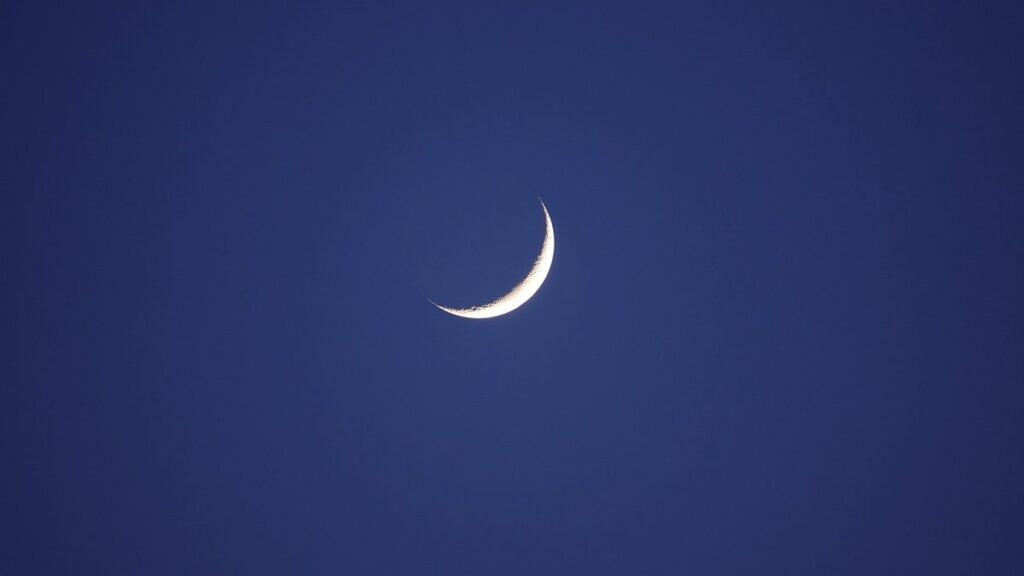
What is a Waxing Crescent Moon?
So, what exactly is a waxing crescent moon? In this next part of our guide, we’ll break down the definition and key characteristics of this lunar phase.
Characteristics of a Waxing Crescent Moon
As you begin to observe the waxing crescent moon, you’ll notice its distinct appearance. At this lunar phase, the moon is growing larger and appears as a small sliver of light on the right side of the sky. Its shape resembles a curved horn or a tiny crescent, which is where it gets its name from.
In terms of size, the waxing crescent moon is much smaller than the full moon, but still noticeable in the night sky. As it waxes (grows), the lunar crescent will gradually increase in size and brightness over the next few nights. The position of the moon also changes, as it moves away from the Sun’s right side and towards the western horizon.
To observe a waxing crescent moon, find a clear view of the sky about 30 minutes after sunset when the sun has dipped below the horizon. Bring binoculars or a telescope to get a closer look at this beautiful lunar phase. Note that the best time for viewing is usually around 10-14 days into the lunar cycle, as the moon will appear largest and most distinct during this period.
Importance of Identifying a Waxing Crescent Moon
Identifying a waxing crescent moon is crucial for various groups of people who rely on lunar cycles. For astronomers, recognizing this phase marks the beginning of the waxing cycle, which allows them to track the Moon’s increasing illumination and position. This information helps astronomers predict celestial events like eclipses and plan their observations.
Farmers also benefit from identifying a waxing crescent moon as it signals the end of the new moon phase and the start of the waxing period. During this time, the Moon’s gravitational pull on the oceans has a slight increase, leading to higher tides. This knowledge is essential for farmers who need to plan their planting and harvesting schedules according to lunar cycles.
In addition to astronomers and farmers, individuals interested in lunar cycles can also appreciate the significance of identifying a waxing crescent moon. By tracking this phase, they can develop a deeper understanding of the Moon’s behavior and its impact on our daily lives. For instance, they may notice patterns in tidal activity or changes in plant growth that correlate with specific lunar phases.
By recognizing the importance of identifying a waxing crescent moon, we can appreciate the intricate relationship between the Moon and various aspects of our world.
The Science Behind the Waxing Crescent Moon
As we explore the waxing crescent moon, let’s delve into the fascinating science behind its increasing brightness and growing shape in the night sky. We’ll examine the key astronomical factors at play.
Lunar Cycle Phases
As we explore the waxing crescent moon, it’s essential to understand the broader lunar cycle and how this phase fits into the bigger picture. The lunar cycle is divided into eight distinct phases, each with its own unique characteristics. Let’s take a closer look at these phases to gain a deeper appreciation for the waxing crescent.
The new moon marks the beginning of the lunar cycle, when the side of the moon facing Earth is not illuminated by the sun. This phase is often considered the most challenging for stargazers, as it requires patience and timing to catch the moon’s reappearance.
As the days pass, the first quarter moon emerges, representing a 90-degree angle between the sun, earth, and moon. This phase is an excellent opportunity to observe the moon’s increasing brightness and to note its position in the night sky.
The full moon is perhaps the most recognizable phase, when the entire face of the moon is illuminated by the sun. However, don’t be fooled – a full moon can also bring out the blue moon phenomenon, which occurs when there are two full moons within a single month. This event can lead to some fascinating astronomical events and observations.
The last quarter moon comes next, followed by another new moon and the cycle begins anew. The key takeaway is that each phase has its own unique beauty and significance, making it essential for astronomers and amateur stargazers alike to appreciate and observe these distinct periods in the lunar cycle.
Tidal Forces and the Waxing Crescent Moon
As the waxing crescent moon begins to emerge from the darkness of the night sky, its gravitational pull has a profound effect on our planet’s oceans and tides. The tidal forces caused by the moon’s gravity are a fascinating phenomenon that can be observed and studied during this lunar phase.
The waxing crescent moon’s gravitational pull causes the ocean water to bulge out in two areas: one on the side of the Earth facing the moon and the other on the opposite side of the globe. This creates two high tides and two low tides each day, with the highest high tide occurring when the moon is directly overhead and the lowest low tide happening when it’s at its farthest point from the Earth.
To illustrate this concept, imagine a bowling ball placed on a trampoline, representing the Earth. When you place another bowling ball nearby, it will create a depression in the trampoline, simulating the bulge of ocean water caused by the moon’s gravity. This analogy helps to visualize the tidal forces at play during the waxing crescent moon phase.
As the waxing crescent moon continues to grow, its gravitational pull increases, amplifying the tidal forces and resulting in more pronounced high and low tides. By paying attention to these changes, astronomers and amateur stargazers alike can gain a deeper understanding of the moon’s influence on our planet’s oceans.
Observing the Waxing Crescent Moon
As you begin to observe the waxing crescent moon, it’s essential to understand how to spot and track its growth from one day to the next in the night sky. This section provides tips on observing the waxing crescent moon with ease.
Best Times to Observe the Waxing Crescent Moon
To make the most of observing the waxing crescent moon, it’s essential to know when and where to look. The optimal viewing times vary depending on your location, but generally, the best time is shortly after sunset when the moon is highest in the sky.
In the Northern Hemisphere, the waxing crescent moon rises in the east-northeast around 30-60 minutes after sunset. As it moves higher in the sky, its brightness increases, making it easier to spot. For those in the Southern Hemisphere, the opposite is true – the moon sets in the west-southwest just before sunrise.
When observing the waxing crescent moon, consider your location’s latitude and longitude to determine the best viewing time for your area. You can use online tools or mobile apps that provide lunar data and forecasts tailored to your location.
During these optimal viewing times, find a spot with minimal light pollution to get the most out of your observation experience. Bring binoculars or a telescope to get a closer look at the moon’s surface features, such as craters and mountains.
Equipment Needed to Observe the Waxing Crescent Moon
To observe the waxing crescent moon in detail, you’ll need some essential equipment. While it’s possible to spot the waxing crescent moon with the naked eye, using a pair of binoculars can enhance your viewing experience significantly.
Binoculars are an excellent starting point for observing the waxing crescent moon. Look for a pair that is 7x or 10x magnification power and has a wide field of view (around 300-400 feet). This will allow you to see more of the moon’s surface in one glance.
If you’re serious about lunar observation, consider investing in a telescope. A beginner-friendly reflector telescope with an aperture of 3-4 inches should suffice for observing the waxing crescent moon. You’ll also need a tripod to stabilize the telescope and prevent shakiness during viewing.
In addition to your chosen optical aid, you’ll also need a moon filter to enhance contrast and reduce glare. A high-quality moon filter can make a significant difference in your viewing experience, allowing you to observe finer details on the moon’s surface.
Cultural Significance of the Waxing Crescent Moon
As you gaze up at the growing crescent moon, have you ever stopped to think about its cultural significance? Let’s explore how this lunar phase has been revered and celebrated across different cultures around the world.
Mythology and Folklore
The waxing crescent moon has been a source of fascination and reverence across cultures for centuries. In many ancient civilizations, this lunar phase was seen as a symbol of growth, renewal, and hope. For example, the ancient Mesopotamians associated the waxing crescent with the goddess Ishtar, who embodied fertility and protection.
In Hindu mythology, the waxing crescent moon is connected to the god Chandra, who rides across the sky on a chariot pulled by seven horses. This mythological tale reflects the moon’s journey through the zodiac signs, where its phases are influenced by the celestial dynamics of the solar system. Similarly, in some African cultures, the waxing crescent is seen as a symbol of abundance and prosperity.
As we explore the cultural significance of the waxing crescent moon, it becomes clear that its symbolism varies across cultures but remains rooted in themes of growth, renewal, and fertility. By understanding these diverse interpretations, we can gain a deeper appreciation for the waxing crescent’s significance and find ways to connect with this lunar phase on a personal level.
In many cultures, the waxing crescent moon is associated with planting seeds or beginning new projects, reflecting its connection to growth and renewal. To incorporate this symbolism into your own life, try starting a new project or endeavor during the waxing crescent phase, when the moon’s energy is believed to support expansion and progress.
Modern-Day Celebrations and Traditions
In modern times, the waxing crescent moon continues to inspire and influence various celebrations and traditions around the world. For instance, during the Islamic month of Ramadan, Muslims observe the waxing crescent moon as a symbol of growth and renewal, marking the beginning of this sacred period.
Similarly, in some cultures, the first sighting of the waxing crescent moon is believed to signal the start of a new cycle of life and fertility. In ancient Mesopotamia, for example, the Babylonians would hold festivals to honor their gods and goddesses as the moon grew from its new phase into a crescent shape.
In many Eastern cultures, the waxing crescent moon is associated with good fortune and prosperity. In China, it’s not uncommon to see decorations featuring the image of a growing moon during Lunar New Year celebrations.
You can incorporate the waxing crescent moon into your own celebrations by paying attention to its phases and planning festivities accordingly. Consider hosting a full-moon viewing party or organizing a family outing under the rising crescent light.
Practical Applications of the Waxing Crescent Moon
As you continue to learn about the waxing crescent moon, let’s dive into its practical applications and explore how it can influence your daily life, from navigation to agriculture.
Agriculture and Farming
For centuries, farmers have been using the waxing crescent moon to plan and execute their agricultural activities. This lunar phase is particularly beneficial for planning planting, as it indicates a period of increasing moisture in the soil. Farmers use this information to plant crops that require ample water, such as corn and soybeans.
The waxing crescent moon also influences the germination process, allowing farmers to optimize their planting schedules. For instance, studies have shown that planting seeds during the waxing crescent moon phase can result in higher crop yields compared to other lunar phases.
Farmers often use this information to plan harvesting as well. As the waxing crescent moon reaches its peak, it’s a signal for farmers to harvest crops that are ready for picking. This approach allows them to capitalize on optimal moisture levels and prevent over-maturity, which can lead to reduced crop quality.
Practically, farmers can use this knowledge by observing the lunar cycle and adjusting their planting and harvesting schedules accordingly. By aligning their agricultural activities with the waxing crescent moon phase, they can increase yields, reduce waste, and optimize resource utilization – a valuable insight for any farmer looking to improve their productivity.
Navigation and Maritime Use
Throughout history, sailors and navigators have relied on the waxing crescent moon for guidance. This lunar phase was crucial for maritime travel as it signaled the end of the night’s darkness and marked the beginning of a new day. In ancient times, mariners used the waxing crescent to estimate their latitude by observing its altitude above the horizon. By comparing the moon’s position with known stars, sailors could determine their distance from the equator.
One notable example is the Polynesian navigators who expertly traversed the Pacific using the waxing crescent as a primary reference point. They would chart their course by observing the moon’s phase and position in relation to the surrounding islands. This skill was passed down through generations, enabling them to establish extensive trade routes.
For those interested in trying this method themselves, consider the following: Identify a familiar landmark or star pattern on your horizon. Then, observe the waxing crescent at dawn, noting its position relative to these references. With practice and patience, you’ll develop an understanding of how to use the moon’s phase for navigation purposes.
Conclusion: Appreciating the Waxing Crescent Moon
As you’ve learned about the waxing crescent moon’s significance and observation tips, now it’s time to appreciate its beauty in our daily lives. Let’s explore how to cultivate a deeper connection with this lunar phase.
Recap of Key Points
As we conclude our journey through the waxing crescent moon phase, let’s recap the key points that will help you better understand and appreciate this lunar wonder.
We began by exploring the characteristics of the waxing crescent moon, noting its distinct shape and increasing illumination as it rises in the eastern sky. We also delved into the science behind this phase, explaining how the moon orbits the Earth and our perspective on it changes throughout the month.
Observing the waxing crescent moon is a unique experience that requires patience and attention to timing. To maximize your chances of spotting it, we recommended identifying the correct viewing times based on your location and the moon’s position in the sky. We also emphasized the importance of using binoculars or a telescope for a closer look.
Beyond its scientific significance, the waxing crescent moon holds cultural and spiritual value for many societies around the world. In some traditions, it’s seen as a symbol of renewal and new beginnings, while others associate it with fertility and abundance. Whatever your personal connection to this lunar phase may be, we hope that our guide has inspired you to explore its significance in a more meaningful way.
In practical terms, understanding the waxing crescent moon can also inform your daily life. For example, if you’re planning an outdoor event or activity, knowing when and where to observe the moon can help ensure it doesn’t interfere with your plans. Similarly, being aware of the moon’s cycles can influence your decision-making regarding planting, harvesting, or other activities tied to its rhythms.
By embracing a deeper appreciation for this lunar phase, you’ll not only expand your knowledge but also tap into its inherent beauty and power. Remember, the waxing crescent moon is an ever-changing wonder that invites us to slow down, observe, and connect with nature’s cycles in a more profound way.
Frequently Asked Questions
How can I use the waxing crescent moon to improve my navigation skills?
The waxing crescent moon is an excellent time to practice celestial navigation, allowing you to chart your course through treacherous waters more accurately. To do this, find a clear view of the moon and note its position in relation to nearby stars or constellations. Use a sextant or a phone app to measure the angle between the moon’s crescent and the horizon. This information can be used to estimate your latitude and longitude.
What are some common myths about the waxing crescent moon?
Many people believe that the waxing crescent moon has no impact on our daily lives, but this couldn’t be further from the truth. The waxing crescent moon influences ocean tides, agricultural cycles, and even our cultural practices. Be aware of these misconceptions and explore the fascinating ways in which the waxing crescent moon affects our world.
Can I observe the waxing crescent moon during the day?
Yes, while the waxing crescent moon is most visible at night, it can also be seen in the early morning or late evening hours when the sun’s light isn’t too overpowering. Take advantage of these opportunities to observe the moon’s growth and plan your nighttime stargazing accordingly.
How do I know if the waxing crescent moon is visible from my location?
Check a lunar calendar or use a planetarium app to determine when the waxing crescent moon will be visible from your area. Consider factors like light pollution, weather conditions, and time of year to ensure optimal viewing opportunities.
Can the waxing crescent moon have an impact on my daily routine?
Yes, by understanding the waxing crescent moon’s influence on ocean tides and agricultural cycles, you can plan your daily activities accordingly. For example, schedule fishing trips during times when the tides are more favorable, or harvest crops when the moon is in its most beneficial phase.