
Are you ready to unlock the wonders of the night sky with your very own pair of binoculars? Choosing the right binoculars for stargazing can be a daunting task, but don’t worry, we’ve got you covered. In this comprehensive guide, we’ll walk you through the essential types and features to look out for when selecting binoculars specifically designed for astronomy.
Whether you’re a beginner or an experienced skywatcher, understanding how to use your binoculars effectively is crucial for optimal viewing. We’ll delve into the world of stargazing with binoculars, covering the techniques and tips you need to know to get the most out of this hobby. From selecting the right magnification power to navigating the night sky, our guide will give you a solid foundation in using binoculars for stargazing like a pro.
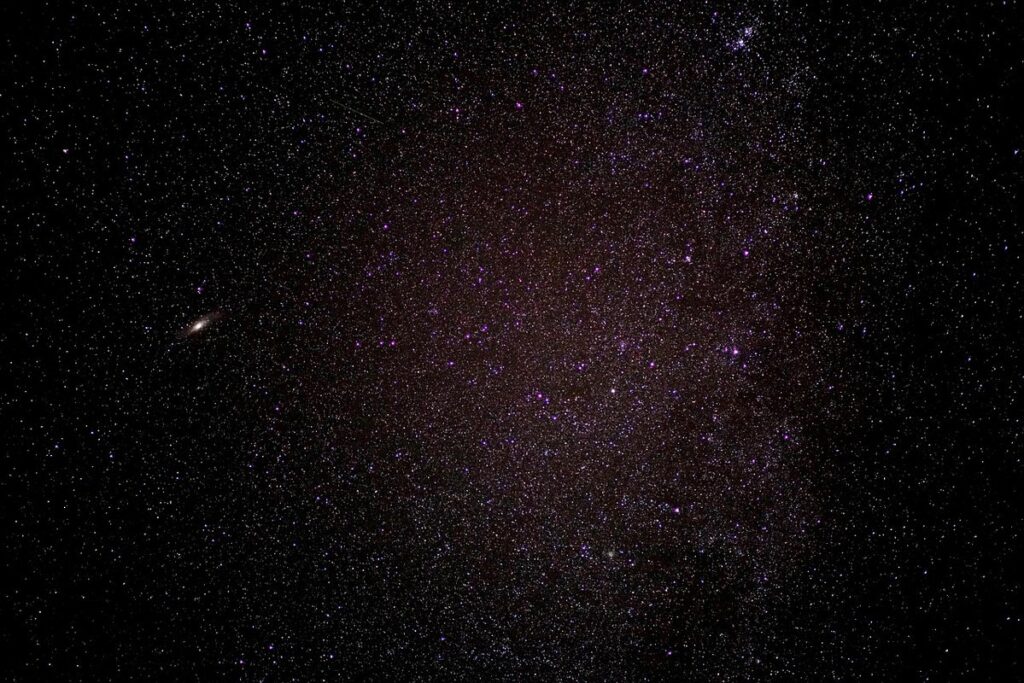
Choosing the Right Binoculars
Choosing the right binoculars is crucial for stargazing, so let’s dive into the key factors to consider when selecting the perfect pair for your celestial adventures.
Understanding Your Options: Types of Binoculars for Stargazing
When it comes to stargazing with binoculars, you’ll find that there are several types to choose from, each with its unique features and price points. As a beginner, understanding the options can be overwhelming, but don’t worry – we’ve got you covered.
Firstly, let’s talk about the most common types of binoculars for stargazing: Porro Prism Binoculars, Roof Prism Binoculars, and Folding Binoculars. Porro Prism Binoculars are a great all-rounder, offering excellent image quality and durability at an affordable price (around $50-$100). However, they can be bulky and may not be the best option for travel.
Roof Prism Binoculars, on the other hand, are more compact and lightweight, making them ideal for backpacking or traveling (price range: $100-$300). They’re also easier to use in low-light conditions due to their phase correction coating. Folding Binoculars are perfect for extreme portability and convenience (around $200-$500), but may compromise on image quality.
When choosing the right binoculars, consider your budget, intended usage, and personal preferences. For example, if you plan to spend hours gazing at the stars in a fixed location, Porro Prism Binoculars might be the way to go. However, if you’re always on-the-go or prioritize compactness, Roof Prism or Folding Binoculars could be your best bet. Remember, investing in a good pair of binoculars will elevate your stargazing experience and help you spot more celestial wonders.
Key Features to Consider When Buying Binoculars for Stargazing
When buying binoculars for stargazing, there are several key features to consider. Image stabilization is a crucial aspect to look for, as it enables you to view celestial objects with greater clarity and precision, even when the stars are moving. This feature is particularly useful for observing planets, comets, or asteroids that require precise tracking.
The magnification power of your binoculars should also be carefully considered. While higher magnification may seem more appealing, a good balance between 7x to 10x magnification and a wide field of view will allow you to observe more celestial objects at once. A wider objective lens size (typically above 30mm) is essential for allowing more light in, which is crucial for observing fainter stars and other celestial bodies.
Ultimately, the best binoculars for stargazing are those that offer a balance between image stabilization, magnification power, and objective lens size. By considering these factors, you can make an informed decision and select binoculars that will enhance your stargazing experience and help you navigate the night sky with greater ease.
Budget-Friendly Options: Affordable Binoculars for Beginners
If you’re new to stargazing or just starting out with binoculars, it’s understandable that budget can be a concern. Don’t worry; there are plenty of affordable options available for entry-level binoculars perfect for gazing at the stars.
When shopping on a tight budget, consider 7x magnification as a sweet spot – it balances image quality and affordability without breaking the bank. For instance, the Celestron Travel Binocular is an excellent value proposition, offering 7x magnification and a sturdy build at under $50.
Another factor to keep in mind is prism quality. While some budget binoculars may skimp on this aspect, it’s essential for clear and sharp images. Look for brands that use phase-corrected prisms or BAK-4 glass, which can make a significant difference in image quality.
Lastly, don’t get caught up in fancy features like waterproofing or extra-low dispersion (ED) glass – these are nice-to-haves but not essential for beginner stargazers. Your main priority is to get a good pair that’s easy to use and provides clear images of the night sky.
Setting Up Your Observation Station
Before you start gazing at the stars, let’s set up your observation station with the right equipment and a comfortable viewing area to ensure a magical experience. This is where you’ll find essential tips for setting up shop.
Preparing Your Location: Tips for Optimal Stargazing
Choosing a dark-sky location is crucial for optimal stargazing with binoculars. Light pollution from cities and towns can wash out faint celestial objects, making it challenging to observe the night sky. To minimize light pollution, look for locations at least 20 miles away from urban areas. National parks, remote countryside, or designated dark-sky preserves are excellent options.
When preparing your observation station, consider atmospheric conditions like humidity, temperature, and wind speed. Humidity can distort your view through the binoculars, so try to find a location with low humidity levels. Temperature fluctuations can also affect image quality, so choose a spot that is relatively stable in temperature. Wind speed should be minimal, as it can cause vibrations in the binoculars.
To ensure optimal viewing, place your binoculars on a sturdy tripod or mount. This will help stabilize them and reduce shake caused by hand movement. Also, consider using a camera adapter to attach your smartphone to the binoculars for better image quality. Place any additional equipment, like red light flashlights or star charts, within easy reach but not directly in the viewing area.
Using Tripods and Mounts for Stable Observations
When it comes to stargazing with binoculars, having a stable observation station is crucial for clear and precise views. This is where tripods and mounts come into play. A sturdy tripod can help you maintain steady views of the night sky, while a mount can provide even more flexibility and precision.
To choose the right tripod or mount for your needs, consider the following factors: weight capacity, stability, adjustability, and ease of use. Look for a tripod with a wide base and adjustable legs to ensure stability on uneven terrain. Some tripods also come equipped with built-in levelers, which can be helpful for ensuring your binoculars are perfectly aligned.
When setting up your observation station, make sure to place the tripod or mount on a firm, level surface. Take a moment to adjust the tripod’s height and position to ensure that you’re comfortable and able to view the night sky without strain. With a stable setup in place, you’ll be free to focus on enjoying the beauty of the stars above.
Basic Stargazing Techniques
Let’s get started on some basic stargazing techniques that will help you make the most of your binoculars and unlock the night sky. First, we’ll cover how to properly hold and aim your binoculars.
Finding Your Way Around the Night Sky: Constellations and Navigation
As you begin to explore the night sky with your binoculars, it’s essential to understand the basics of navigation. Constellations serve as a map, guiding you through the vast expanse of stars. Start by familiarizing yourself with the most prominent constellations: Orion, Cassiopeia, and Ursa Major. These ‘winter’ constellations are relatively easy to spot due to their bright stars.
Use these landmarks to locate other celestial objects. For example, the North Star (Polaris) is part of the Little Dipper’s handle in Ursa Minor, which points towards the true north. Similarly, Orion’s Belt is aligned almost perfectly with the three brightest stars in Cassiopeia. By learning to recognize these patterns, you’ll develop a sense of direction and be able to navigate through the night sky.
Practice observing these constellations regularly to become more comfortable with their locations. With time and practice, you’ll develop an intuitive understanding of how they relate to one another, making it easier to locate other stars and celestial objects.
Scanning and Observing: Tips for Effective Stargazing
When scanning the night sky with binoculars, it’s essential to move slowly and deliberately, tracking the movement of celestial objects. This technique is called “panning” and can help you locate objects like planets, asteroids, or comets that are moving across the sky. To pan effectively, start by identifying a fixed point in the distance, such as a tree or a building. Then, slowly move your binoculars towards the target, keeping it centered in your field of view.
As you gaze through your binoculars, it’s crucial to develop depth perception – the ability to judge distances and sizes of celestial objects. To do this, try looking at a star cluster or nebula and then focusing on a specific object within it. By doing so, you’ll be able to estimate the distance between stars and get a sense of the scale of the universe.
By combining panning with depth perception, you can visualize distant stars as points in space rather than just dots on a screen. This technique takes practice, but with time and patience, you’ll be able to pinpoint even the faintest celestial objects in the night sky.
Advanced Techniques for Enhanced Observations
As you become more comfortable with your binoculars, it’s time to take your stargazing skills to the next level with advanced techniques that will help you spot even more celestial wonders. Let’s explore some expert methods for enhanced observations.
Using Binoculars to Observe Planetary Details
When using binoculars to observe planetary details, it’s essential to understand how magnification and optical configurations can enhance your views. For instance, a 7×50 pair of binoculars may not provide the same level of detail as a 10×42 pair when observing the moon or planets.
To get the most out of your binoculars, look for ones with high-quality optics that provide sharp images and minimal distortion. You can also experiment with different magnifications to find what works best for you. Some popular options include 7×50, 10×40, and 12×50 binoculars.
When observing the moon, use a lower magnification (around 6-8x) to take in its overall shape and features. Higher magnifications can make it difficult to keep the image steady, especially if you’re using a tripod or other stabilizing equipment.
In contrast, planets like Jupiter and Saturn benefit from higher magnifications (10-12x). This allows you to see more detail in their cloud patterns and ring structures.
Capturing Images with Binoculars: A Guide to Astrophotography
Capturing images with binoculars may seem like an impossible task, but with the right equipment and techniques, you can unlock a new world of astrophotography possibilities. One of the most popular options for attaching a camera to binoculars is using a binocular adapter or a universal camera mount. These adapters come in various sizes and types, so it’s essential to choose one that fits your specific binocular model.
When setting up your camera attachment, ensure that it’s securely fastened to prevent any vibrations or movements during image capture. To achieve the best results, use a tripod or a monopod to stabilize your setup. This will help minimize shake and allow you to focus on capturing high-quality images.
For optimal image capture, choose a low-light mode or set a slower shutter speed to allow more light into your camera. Keep in mind that longer exposure times may require additional support for the binoculars, such as a sturdy tripod or bean bag.
When experimenting with astrophotography through binoculars, start by capturing shorter exposures and gradually increase the duration as you become more comfortable with the process. Practice makes perfect, so don’t be discouraged if your initial attempts yield less-than-stellar results – keep trying, and you’ll eventually refine your skills.
Overcoming Common Challenges
You’ve got a clear view of the stars, but are you struggling to find your favorite constellations? This section will tackle common challenges and provide expert tips for making the most out of your stargazing sessions.
Dealing with Atmospheric Conditions: Tips for Clearer Views
When using binoculars for stargazing, atmospheric conditions can play a significant role in determining the quality of your views. Haze and fog are common culprits that can obscure your vision, while extreme temperatures can also impact the performance of your binoculars. To overcome these challenges, it’s essential to understand how to adjust your equipment and adapt to changing environmental conditions.
When facing haze or fog, try to position yourself in a spot with minimal obstruction and use a wider field of view to compensate for the reduced clarity. For instance, you can place your binoculars on a tripod to stabilize them and use a pair of wide-angle binoculars (7×50 or 10×42) to capture more of the sky.
In extreme temperatures, ensure that your binoculars are protected from direct sunlight or cold air. If it’s extremely hot or humid, consider using a lens cover or rain guard to prevent moisture buildup on the lenses. Similarly, if it’s very cold, keep your binoculars away from drafts and avoid touching the lenses with cold hands.
To achieve clearer views in any condition, maintain a stable viewing platform and focus on adjusting your binoculars’ eyepiece rather than trying to move them around.
Troubleshooting: Identifying and Fixing Common Binocular Issues
When using binoculars for stargazing, you may encounter issues that hinder your experience. A clear image is essential for observing celestial objects. If the image appears blurry or distorted, check if the lenses are clean and free of debris. Use a soft cloth to wipe away any dirt or moisture.
Mechanical problems can also affect performance. Check if the binoculars’ adjustments are loose or stuck. Tighten any screws or apply lubricant as needed. If the issue persists, it may be due to worn-out parts. Consider consulting the manufacturer’s guidelines for maintenance and repair.
Another common problem is difficulty adjusting the focus. Ensure that you’re focusing on a bright object and adjust the binoculars slowly. You can also try setting the focus to infinity and then fine-tuning from there. Regular cleaning and storage can help prevent mechanical issues. Store your binoculars in a protective case when not in use.
By identifying and resolving these common issues, you’ll be able to fully appreciate the wonders of the night sky through your binoculars.
Frequently Asked Questions
What are the most essential accessories I need to get started with stargazing using binoculars?
To start observing the night sky effectively, you’ll need a few additional tools beyond your binoculars themselves. A sturdy tripod is crucial for stable observations, and consider investing in a red light or flashlight to preserve your night vision. You may also want to look into a moon filter to enhance the visibility of celestial objects.
Can I use my smartphone with my binoculars for stargazing?
Yes, you can use your smartphone with your binoculars to capture images or videos of the night sky. Many smartphones have built-in image stabilization and high-quality cameras, making them ideal for capturing moments during your stargazing sessions.
What are some common issues I may encounter while using my binoculars for stargazing?
One common issue is blurry vision due to atmospheric conditions like humidity or pollution. Try using a dust cover to protect your lenses, and consider investing in a high-quality tripod for more stable observations. Additionally, keep in mind that moonlight can sometimes overwhelm the view – try adjusting your settings or observing during periods of minimal moonlight.
How do I adjust my binoculars’ focus when looking at distant objects like planets?
To focus on distant objects using your binoculars, start by adjusting the diopter setting to your personal preference. Then, use the coarse and fine adjustment knobs to bring your target into sharp focus. If you’re observing a planet, try moving your binoculars slightly left or right to compensate for any minor distortions.
Can I use my binoculars for astrophotography if I don’t have extensive experience with photography?
While prior experience can be helpful, it’s not necessary for basic astrophotography using binoculars. Start by capturing images during the day and experimenting with different settings to understand how your equipment responds. When transitioning to night shots, take advantage of smartphone apps or software that can help you optimize your exposure settings for clearer views.