
As you gaze up at the night sky, have you ever stopped to notice the phases of the moon? One particular phase that’s both fascinating and awe-inspiring is the waxing gibbous moon. This beautiful sight has captivated humans for centuries, not just because of its breathtaking appearance, but also due to its significant cultural and astronomical importance. In this article, we’ll delve into the world of lunar phases and explore what makes the waxing gibbous moon so special. We’ll examine its cultural significance across various societies, as well as its astronomical importance in tracking time and understanding our planet’s movements. Whether you’re an astronomy enthusiast or simply someone who appreciates the beauty of nature, this article will provide you with a deeper appreciation for the waxing gibbous moon and its place in our night sky.
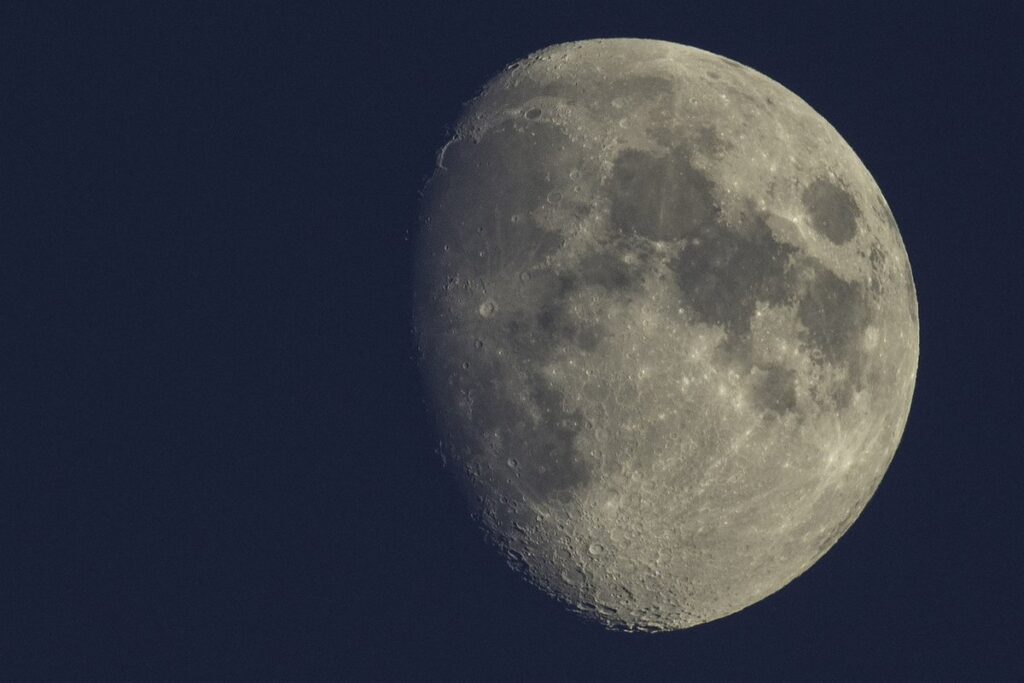
What is a Waxing Gibbous Moon?
So, you’re curious about what makes a waxing gibbous moon unique. In this next part, we’ll break down exactly how and when it appears in our night sky.
Definition and Characteristics
A waxing gibbous moon is a lunar phase where the moon appears to be growing larger and fuller as it moves through its orbit around the Earth. This phase occurs when the moon is more than half full but not yet fully illuminated, displaying an impressive arc of light on the night sky. The term “gibbous” originates from the Latin word for “hump-backed,” which aptly describes the moon’s shape during this phase.
One key characteristic of a waxing gibbous moon is its increasing brightness, making it a prominent feature in the evening or nighttime sky. It’s essential to note that the duration and timing of each lunar phase vary slightly due to the Earth’s elliptical orbit around the sun. The waxing gibbous moon differs from other phases like the full moon, where the entire face is illuminated, and the waning crescent, where only a sliver of light remains. Understanding these differences helps astronomers and stargazers alike plan their observations and appreciate the ever-changing lunar cycle.
How to Identify a Waxing Gibbous Moon
To identify a waxing gibbous moon, you need to look for specific key features that set it apart from other lunar phases. One of the main indicators is its size. As the moon moves through its orbit around the Earth, it appears larger and fuller as it approaches full moon. This is because more and more of its illuminated surface is facing our planet.
Another crucial feature is brightness in the sky. A waxing gibbous moon will shine brighter than a first-quarter moon but still appear smaller than a full moon. You can estimate the size by observing how much of the moon’s illuminated face is visible from your location. The moon’s position relative to the horizon and its distance from the Sun also play significant roles in determining its visibility.
The best time to observe a waxing gibbous moon is typically around 7-10 days before it reaches full moon. Be sure to take note of the lunar cycle, as this phase occurs during the middle stages of the moon’s illumination. With patience and attention to these factors, you can easily identify a waxing gibbous moon in the night sky.
You can also use online astronomical tools or mobile apps that provide real-time lunar data and visualizations to help confirm your observations. By combining these methods with regular observation, you’ll become more adept at recognizing the distinctive characteristics of this fascinating lunar phase.
The Importance of Lunar Cycles
Let’s take a closer look at why lunar cycles are so significant, and how understanding them can deepen your connection to the natural world. We’ll explore their importance together in this next section.
Understanding the Phases of the Moon
The moon’s phases are a crucial aspect of its lunar cycle, playing a significant role in various aspects of our lives. Understanding these phases can be quite fascinating and informative. Let’s explore each phase in detail.
The new moon marks the beginning of the lunar cycle, where the moon is not visible from Earth due to its position between the Earth and the sun. This phase has great significance as it is considered an ideal time for setting intentions and making plans for the future.
Following the new moon comes the crescent phase, which is characterized by a thin sliver of light on one side of the moon. This marks the beginning of the waxing cycle, where the moon appears to be growing in size.
As we approach the first quarter phase, the moon’s illuminated area increases to 50%, making it easier to spot in the sky. The gibbous phase that follows this is an interesting one, with more than half of its illumination visible from Earth.
The full moon marks the peak of the waxing cycle and occurs when the entire face of the moon is illuminated by the sun’s rays. This phase has a profound impact on our lives, affecting things like tides, sleep patterns, and even our emotions.
Beyond the full moon lies the waning gibbous phase, where the illuminated area decreases once more. The final phases include the last quarter, waning crescent, and finally, back to the new moon – completing the lunar cycle.
How Lunar Cycles Affect Tides and Ocean Behavior
As you gaze at the waxing gibbous moon, have you ever wondered how it affects the ocean’s tides and marine life? The lunar cycle plays a crucial role in shaping our coastlines and ecosystems. When the moon is waxing (growing fuller), its gravitational pull on Earth’s oceans increases, causing higher high tides and lower low tides. This phenomenon is known as the “tidal range.” For example, during spring tides (when the moon is at its fullest or new phase), the tidal range can be as much as 10 feet higher than during neap tides.
This fluctuation in water levels has a significant impact on coastal communities and ecosystems. Higher high tides can cause flooding and erosion, while lower low tides can expose sensitive habitats and marine life to predators. To mitigate these effects, residents and businesses near the coast must be aware of the tidal patterns and take necessary precautions during full moon phases. You can check local tide charts or apps to plan your activities accordingly. By understanding the waxing gibbous moon’s influence on ocean tides, we can better appreciate its importance in shaping our planet’s ecosystems.
Characteristics of a Waxing Gibbous Moon
As you observe the waxing gibbous moon, several distinct characteristics become apparent, including its increasing brightness and expanding size in the night sky. Let’s take a closer look at these unique features.
Size and Brightness
As the waxing gibbous moon approaches full moon, you’ll notice a significant increase in its size and brightness. This is due to the growing angle of the sun’s light reflecting off the moon’s surface, making it appear larger and brighter in the night sky. The effect on atmospheric conditions and climate can be quite noticeable too.
One of the most striking effects is the change in tidal patterns. As the moon grows in size, its gravitational pull on Earth’s oceans increases, leading to more pronounced high and low tides. This can cause coastal flooding, especially during full moon events. In some parts of the world, this can be a major concern for residents living near coastlines.
In addition to tidal changes, the increasing brightness of the waxing gibbous moon can also impact local climate conditions. The extra light at night can interfere with nocturnal animal behaviors, while also affecting human sleep patterns and circadian rhythms. So, if you’re planning an outdoor adventure during this phase, be sure to take these factors into consideration when choosing your itinerary.
Moon’s Illuminated Fraction
As we explore the characteristics of a waxing gibbous moon, it’s essential to understand how this lunar phase is illuminated by the sun. The illumination pattern of our moon is determined by its position relative to the Earth and the Sun. When a waxing gibbous moon occurs, about half of the moon’s illuminated surface is facing the Earth, while the other half is still in shadow.
This phenomenon can be attributed to the lunar geometry, which is governed by the laws of astronomy. As the moon orbits the Earth, different amounts of its illuminated surface are exposed to our planet. In a waxing gibbous phase, the increasing amount of sunlight on the moon’s surface creates an elongated and irregular shape that appears larger than the quarter moon but smaller than the full moon.
To visualize this process, imagine holding a lamp with a curved shade. As you move the lamp around a sphere (representing the Earth), different areas of the sphere will be illuminated at various times. Similarly, the sun’s rays illuminate different portions of the moon as it moves through its orbit. By grasping this solar illumination pattern, we can better appreciate the waxing gibbous moon’s unique characteristics and the ever-changing lunar landscape.
Cultural Significance and Symbolism
As we delve deeper into the waxing gibbous moon, let’s explore its cultural significance and symbolism, a rich tapestry of meanings woven across various traditions.
Historical and Mythological Associations
Across various civilizations and time periods, the waxing gibbous moon has been imbued with rich cultural and mythological significance. In ancient Greek mythology, for instance, the waxing gibbous moon was associated with the goddess Selene, who rode across the sky each night in her chariot. This lunar phase was seen as a harbinger of good fortune and prosperity.
Similarly, in many Indigenous cultures, the waxing gibbous moon is considered a time of growth and expansion. It’s believed to represent the maturation process, where seeds are planted and nurtured until they bloom into something beautiful. In some African cultures, the waxing gibbous moon is associated with the goddess Yemaya, who embodies fertility and abundance.
In many Eastern cultures, including China and Japan, the waxing gibbous moon is considered a symbol of renewal and rejuvenation. It’s believed to have purifying properties, washing away impurities and negative energies. By tuning into these cultural associations, we can tap into the symbolic meaning of the waxing gibbous moon in our own lives.
As you observe the waxing gibbous moon, take a moment to reflect on its significance in your own culture or personal experiences. How does this lunar phase resonate with you? Can you tap into its energy for growth and expansion?
Modern-Day Significance and Pop Culture
The waxing gibbous moon has become an integral part of modern-day pop culture, with its captivating presence being depicted across various art forms. In literature, the waxing gibbous moon is often used to symbolize growth and transformation. For instance, J.R.R. Tolkien’s “The Lord of the Rings” features a pivotal scene where Frodo and Sam navigate through the perilous land under the light of a waxing gibbous moon. The author uses this astronomical phenomenon to convey the themes of resilience and determination.
In music, artists like Kendrick Lamar and Taylor Swift have referenced the waxing gibbous moon in their songs, often using it as a metaphor for progress and evolution. Moreover, films such as “The Princess Bride” and “Harry Potter” showcase the waxing gibbous moon in pivotal scenes, emphasizing its significance in storytelling.
In art, the waxing gibbous moon has been depicted by various artists, including Vincent van Gogh’s “Starry Night,” which features a prominent depiction of the waxing gibbous moon. These examples demonstrate how the waxing gibbous moon transcends its scientific significance and becomes an integral part of our cultural narrative.
You can also appreciate the beauty of the waxing gibbous moon in your daily life by observing it from your backyard or a nearby open space. By doing so, you’ll be able to connect with the celestial body on a deeper level and understand why it has become such an integral part of modern pop culture.
Astronomy and Space Exploration
As we continue our journey through the fascinating world of the waxing gibbous moon, let’s delve into the realm of astronomy to explore how lunar phases influence space exploration.
Lunar Observations and Photography
Observing the waxing gibbous moon requires a combination of technical expertise and attention to timing. As the moon continues its journey towards full illumination, it becomes increasingly challenging for amateur astronomers to capture high-quality images. However, with the right equipment and knowledge, anyone can attempt to observe and photograph this magnificent sight.
One key challenge when observing a waxing gibbous moon is dealing with excessive light pollution. Since the moon is already significantly illuminated, it’s essential to find a location with minimal light interference to avoid overexposing your images. To minimize this issue, try observing during the blue hour – just before dawn or after dusk – when the sky is still relatively dark.
To capture stunning photographs of the waxing gibbous moon, invest in a camera with manual focus and adjustable aperture settings. A telephoto lens (at least 200mm) will help you frame the moon without distorting its image. Be sure to set your camera’s ISO sensitivity low (100-400) and shutter speed medium to slow (1/125s – 1/250s). Practice makes perfect, so don’t be discouraged if your first attempts yield subpar results. With patience and persistence, you’ll soon become skilled at capturing the beauty of a waxing gibbous moon.
The Impact of Space Exploration on Our Understanding of the Moon
Space exploration has significantly enhanced our comprehension of the moon’s phases. One pivotal example is the Apollo program, which not only allowed humans to walk on the lunar surface but also provided an unparalleled opportunity for scientists to study the moon up close. During these missions, astronauts collected extensive data on the moon’s topography, composition, and geological history.
The findings from the Apollo program have had a profound impact on our understanding of the moon’s phases. For instance, we now know that the moon’s rotation is synchronized with its orbit around Earth, causing it to appear as if it is “waxing” or increasing in size over time. This phenomenon is particularly evident during the waxing gibbous phase, where the moon appears larger and fuller in the night sky.
Ongoing lunar research initiatives, such as NASA’s Artemis program, continue to shed light on the moon’s phases and geology. These missions have provided a new generation of scientists with valuable data and insights into the moon’s composition and evolution.
Conclusion: Appreciating the Waxing Gibbous Moon
As we’ve explored the waxing gibbous moon’s phases and significance, it’s time to appreciate its majestic beauty and impact on our daily lives now. Let’s reflect on how this lunar phase can enrich our understanding of the natural world.
Recap of Key Points
Understanding the waxing gibbous moon is crucial for appreciating its significance in our daily lives. Let’s recap the key points discussed in this article: The waxing gibbous moon phase occurs after the first quarter moon and before full moon, typically lasting three to four days. During this time, the illuminated portion of the moon increases steadily.
Key characteristics of the waxing gibbous moon include its prominent visibility in the night sky and its influence on tides. As the moon continues to grow in brightness, it’s essential to note that the best viewing times for the waxing gibbous moon are usually around midnight to 3 am when the moon is highest in the sky.
Understanding these details can help you plan your stargazing sessions or appreciate the lunar cycle more effectively. To put this into practice, try observing the waxing gibbous moon at different stages of its growth and note how it changes over time. By doing so, you’ll gain a deeper appreciation for the waxing gibbous moon’s unique characteristics and its importance in our night sky.
Final Thoughts on Lunar Appreciation
As we conclude our exploration of the waxing gibbous moon, it’s essential to acknowledge the profound impact lunar cycles have on our daily lives and the world around us. Beyond its aesthetic appeal, the moon’s gravitational pull influences ocean tides, stabilizes Earth’s axis, and affects plant growth and agricultural patterns.
Continued astronomical research is crucial for a deeper understanding of these intricate relationships. By studying the waxing gibbous moon and other lunar phases, scientists can refine climate models, improve weather forecasting, and develop more accurate predictions for natural disasters like tsunamis.
As individuals, we can also appreciate the beauty of lunar cycles by making time to observe the night sky. Try setting aside a clear evening to watch the waxing gibbous moon rise over your horizon. Take note of its gradual increase in brightness and how it affects the surrounding environment. This simple act can foster a greater connection with nature and encourage a sense of wonder at the universe’s vast mysteries.
Frequently Asked Questions
What are some practical tips for observing a waxing gibbous moon?
To observe a waxing gibbous moon, try to find a spot with an unobstructed view of the eastern horizon just after sunset. Bring binoculars or a telescope to get a closer look at the moon’s surface features. Be patient and allow your eyes to adjust to the darkness for better visibility.
Can I take pictures of a waxing gibbous moon?
Yes, you can capture stunning images of a waxing gibbous moon with a camera or smartphone. Use a tripod to stabilize your device and adjust the settings for optimal exposure and focus on the moon’s surface. Consider using a wide-angle lens or a telephoto lens to emphasize the moon’s texture and details.
How does the waxing gibbous moon affect my sleep schedule?
The presence of a waxing gibbous moon in the night sky has no direct impact on your sleep schedule. However, some people believe that lunar cycles can influence their circadian rhythms or cause insomnia. If you’re concerned about your sleep patterns, consult with a healthcare professional for personalized advice.
What’s the best way to track and observe the waxing gibbous moon across different months?
To track the waxing gibbous moon, use a lunar calendar or mobile app that provides accurate predictions of the moon’s phases. Plan your observations according to the moon’s position in the sky and adjust for time zones if necessary. Be prepared to spend multiple nights observing the same phase as it progresses.
Can I observe a waxing gibbous moon during daylight hours?
No, it is not possible to observe a waxing gibbous moon during daylight hours due to the Earth’s rotation and the sun’s position in the sky. Wait for nighttime or just after sunset when the moon is visible above the horizon.