
Lunar eclipses are rare and awe-inspiring events that capture the imagination of stargazers worldwide. In 2027, astronomy enthusiasts will have a unique opportunity to witness one of these celestial wonders, and it’s essential to be prepared. A lunar eclipse occurs when the Earth passes between the sun and the moon, casting a shadow on the lunar surface. This phenomenon is relatively rare because it requires the precise alignment of the three celestial bodies – the Earth, moon, and sun. To make the most of this event, you’ll need to understand the different types of lunar eclipses that occur, as well as some basic astronomy science behind them. Our guide will cover everything from prediction methods to safety tips for observing the eclipse, ensuring you’re equipped with the knowledge needed to appreciate this rare occurrence.
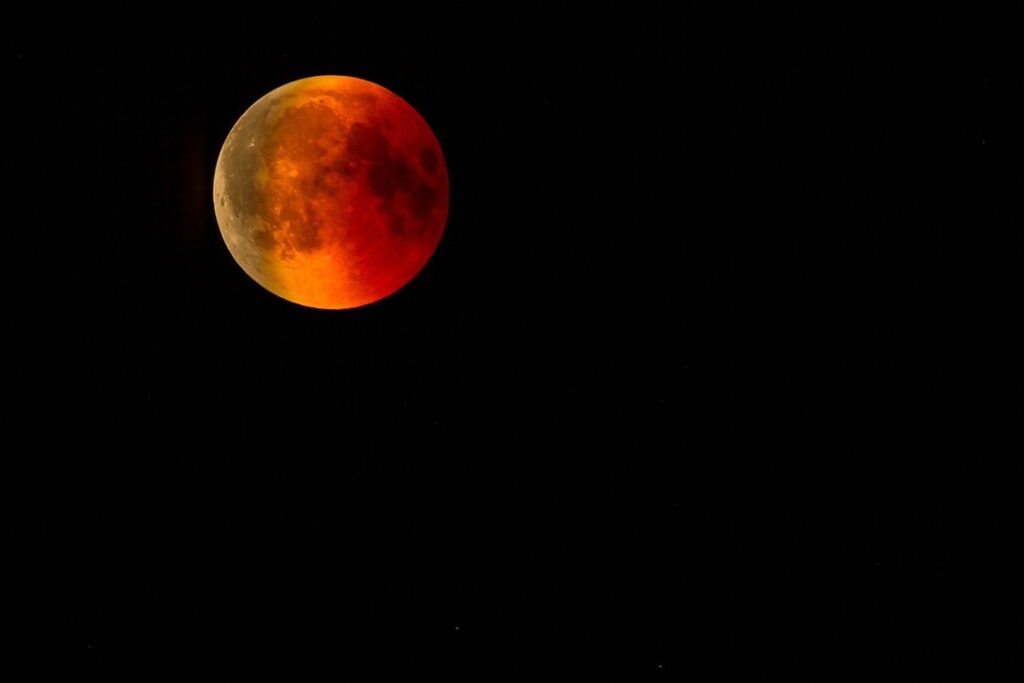
What is a Lunar Eclipse?
A lunar eclipse occurs when Earth passes between the sun and the moon, blocking the sun’s light from reaching the moon. This rare alignment is a spectacular sight to behold for stargazers worldwide.
Types of Lunar Eclipses
Lunar eclipses come in three main types, each with distinct characteristics and visual effects. The most common type is a penumbral lunar eclipse, where the Moon passes through the Earth’s partial shadow. This results in a subtle darkening of the Moon’s surface, often imperceptible to the naked eye. Next, there are partial lunar eclipses, where only a portion of the Moon enters the Earth’s umbra, causing a noticeable but incomplete coverage of the Moon’s disk.
Total lunar eclipses, on the other hand, occur when the entire Moon passes through the Earth’s umbra, casting a reddish hue over the lunar surface. This is often referred to as a “Blood Moon.” A total lunar eclipse can last anywhere from 30 minutes to several hours, depending on the specific alignment of celestial bodies involved.
Each type of lunar eclipse offers astronomers and sky enthusiasts unique opportunities for observation and study. Understanding these differences helps in predicting and preparing for future eclipses, including Lunar Eclipse 2027.
How Rare are Lunar Eclipses?
Lunar eclipses are significantly less frequent than solar eclipses. This is because the Moon’s orbit is tilted at an angle of about 5 degrees with respect to the Earth’s orbit around the Sun, which means that the Moon typically passes above or below the Earth’s shadow during a new moon. To witness a lunar eclipse, the Moon must be in the right position in its elliptical orbit, aligned almost perfectly between the Earth and the Sun. This alignment is what makes lunar eclipses relatively rare.
Several factors contribute to their rarity. The first is the Moon’s distance from the Earth. Because the Moon is about 239,000 miles away, it appears small enough in the sky that its shadow falls only partially on the Earth’s surface. Additionally, the Earth’s atmosphere scatters sunlight during a lunar eclipse, making it harder for the Sun’s light to reach the Earth’s surface and create an ideal viewing condition.
A combination of these factors makes lunar eclipses about 4 times rarer than solar eclipses.
The Science Behind Lunar Eclipses
Lunar eclipses are a rare and awe-inspiring phenomenon, and understanding their science is key to appreciating their beauty. Let’s take a closer look at the celestial mechanics that make these events possible.
Moon’s Orbit and Earth’s Shadow
The moon’s elliptical orbit around Earth has a significant impact on the formation of shadows during a lunar eclipse. This is because the moon’s distance from our planet varies throughout its orbit, affecting the alignment of the sun, Earth, and moon. When the moon is at its closest point (perigee), it appears larger in the sky, while at its farthest point (apogee), it appears smaller.
As a result, the moon’s shadow on Earth’s surface also varies in size. During a lunar eclipse, the moon passes through Earth’s umbra, which is the darker inner part of our planet’s shadow. The shape and size of this umbra determine whether the eclipse will be partial or total. A larger moon at perigee can produce a wider umbra, increasing the likelihood of a total lunar eclipse.
For example, the 2027 lunar eclipse occurs when the moon is near its perigee, making it an ideal candidate for a total lunar eclipse. Understanding the moon’s elliptical orbit and how it affects shadow formation provides valuable context for predicting and observing this rare celestial event.
Refraction and Eclipse Visibility
Atmospheric refraction plays a crucial role in determining visibility during lunar eclipses. When light from the Earth’s shadow passes through the atmosphere, it is refracted, or bent. This bending effect can magnify or reduce the apparent size of the Moon’s disk, depending on the temperature and humidity levels in the air.
The impact of refraction on eclipse visibility can be significant. A small change in atmospheric conditions can make a noticeable difference in how clearly you see the eclipse. In general, cooler temperatures and lower humidity tend to result in better viewing conditions, as the atmosphere refracts light less.
Factors affecting visibility from different locations include the altitude and latitude of the observer’s position. Observers at higher elevations typically have clearer views due to less atmospheric interference. Similarly, those living near the equator often experience more frequent clear skies than those closer to the poles. When planning your viewing location for Lunar Eclipse 2027, consider these factors to maximize your chances of a clear view.
Lunar Eclipse 2027: Prediction and Forecasting
We’ll be taking a closer look at the prediction and forecasting of the lunar eclipse, including key dates and celestial events you won’t want to miss. Get ready for an in-depth analysis of what’s to come.
Eclipse Path and Timings
The predicted path of totality for the lunar eclipse in 2027 spans a significant portion of the globe. For those within this narrow path, the eclipse will be visible in its entirety, offering an unparalleled viewing experience. Major cities located along the path include Tokyo, Japan; Seoul, South Korea; and Hong Kong.
To give you a better idea of when to expect the eclipse, here are some key timings for major cities worldwide: New York City (12:00 AM – 3:30 AM EST), Los Angeles (9:00 PM – 1:20 AM PST), London (4:00 AM – 8:15 AM GMT), and Sydney (2:00 PM – 6:30 PM AEST). Keep in mind that these times are approximate, as the path of totality can shift slightly due to atmospheric conditions.
If you’re planning to observe the eclipse from a location outside of the path of totality, you’ll still be able to witness some phase of the eclipse. However, the experience will be different, and the timing may vary significantly depending on your specific location. Be sure to check local forecasts for more accurate information about when to expect the eclipse in your area.
Weather Conditions and Observing Tips
When viewing the lunar eclipse 2027, it’s essential to consider the weather conditions and plan accordingly. A clear sky will significantly enhance your experience, but even a few clouds can impact visibility. If possible, choose locations with minimal cloud cover, such as high-altitude areas or spots far from urban centers.
Some optimal locations for viewing the lunar eclipse 2027 include national parks, remote mountain ranges, and designated Dark Sky Preserves. These areas often have minimal light pollution, allowing you to see more of the eclipse’s details. Consider visiting places like Big Bend National Park in Texas, USA, or La Palma in the Canary Islands, which are known for their exceptional stargazing conditions.
To minimize light pollution, find locations with no streetlights or nearby cities. If you can’t escape urban areas entirely, look for spots with a wide-open view of the sky and minimal obstructions. Bring binoculars or a telescope to get a closer look at the eclipse’s details, but be sure to use proper eye safety precautions.
Historical Significance of Lunar Eclipses
Lunar eclipses have been observed and recorded by ancient cultures for centuries, offering a glimpse into their spiritual, astronomical, and mythological beliefs. We’ll explore how these events have shaped human understanding of the universe throughout history.
Cultural and Mythological Associations
Lunar eclipses have been imbued with a range of cultural and mythological meanings across various civilizations. In ancient China, lunar eclipses were believed to signal the descent of the moon goddess into the underworld, while in many indigenous cultures, they are associated with the return of ancestors from the spirit world. Similarly, in some African traditions, lunar eclipses are seen as a sign of spiritual renewal and rebirth.
In Western cultures, lunar eclipses have often been viewed as omens or harbingers of doom. The ancient Greeks, for instance, believed that a lunar eclipse could signal the death of a king or other high-ranking official. Conversely, in some Asian cultures, lunar eclipses are seen as auspicious events that bring good fortune and prosperity.
It’s worth noting that these diverse interpretations often reflect the specific astronomical and mythological contexts of each culture. By understanding these associations, we can gain a deeper appreciation for the cultural significance of lunar eclipses and their enduring impact on human imagination and expression. The study of such mythologies also underscores the universal fascination with the night sky and our collective quest to make sense of celestial events that captivate and mystify us.
Notable Lunar Eclipse Events
One of the most notable lunar eclipse events was the Blood Moon tetrad of 2014-2015. This series of four consecutive total lunar eclipses occurred within a short period, with each event taking place about six months apart. The tetrad had significant cultural and scientific implications, as it coincided with various astronomical events and celestial alignments. The Blood Moon tetrad was observed by millions worldwide, sparking widespread interest in astronomy and astrology.
A more recent notable event is the 2019-2020 annular solar eclipse series, which included a total lunar eclipse on January 21, 2019. This event was significant because it coincided with a rare celestial alignment involving Jupiter and Saturn. The eclipse also had cultural and mythological associations, as some indigenous cultures in South America considered it an omen of change.
In terms of scientific impact, the total lunar eclipse that occurred on September 28-29, 2015, helped scientists study the Moon’s exosphere and its interaction with solar winds. This event provided valuable insights into the Moon’s composition and geological processes. By studying these notable events, astronomers can refine their predictions for future eclipses and gain a deeper understanding of our celestial neighbors.
Viewing the Lunar Eclipse 2027 Safely
To view the lunar eclipse safely, you’ll need to take some precautions to protect your eyes from the intense light and UV radiation emanating from the moon. We’ll walk you through what to do.
Eye Safety Precautions
When viewing a lunar eclipse, it’s essential to prioritize eye safety. The moon’s brightness during an eclipse can be deceivingly high, leading some observers to neglect proper eye protection. However, looking directly at the sun or moon during an eclipse can cause serious eye damage, including solar retinopathy.
To safely view the lunar eclipse 2027, you’ll need specialized eye protection. Choose glasses that meet international safety standards for viewing solar eclipses (ISO 12312-2). These glasses are designed to block out 99.999% of both UVA and UVB radiation, as well as intense visible light. Avoid using regular sunglasses or homemade filters, which can provide inadequate protection.
Before purchasing eclipse glasses, ensure they meet the required safety standards by checking for a certification label from organizations like NASA or the American Academy of Ophthalmology. Some common features to look for in safe viewing glasses include:
- A filter that blocks 99.999% of both UVA and UVB radiation
- A clear view of the eclipse image
- A durable, protective frame to prevent scratches or damage
Remember, it’s always better to err on the side of caution when protecting your eyes during a lunar eclipse. If you’re unsure about the safety of your viewing equipment, consider observing from a distance with binoculars or a telescope equipped with a solar filter.
Best Practices for Observing from Home or in Public
To set up an optimal viewing experience from home, choose a location with minimal light pollution and obstructions. If possible, position yourself near a window or outside to maximize visibility. Consider investing in a telescope or binoculars for a closer look at the lunar eclipse.
When observing in public spaces, find a spot away from streetlights and other bright sources of light. Many libraries, observatories, and planetariums often host viewing events during eclipses – check local listings for these opportunities. If you’re planning to observe with a group, designate a quiet area for viewers to minimize distractions.
In public places, be mindful of your surroundings and respect fellow observers’ space. Bring earplugs or headphones if loud crowds might disrupt your experience. For both home and public viewing, dress warmly, as it can get chilly while waiting for the eclipse to reach its peak.
For optimal visibility, use a red light flashlight or dim red lamp to preserve night vision. Avoid using flash photography or sharing photos during the event, as this may ruin the experience for others around you.
Conclusion: The Significance of Lunar Eclipse 2027
Now that we’ve explored the science and spectacle behind lunar eclipse 2027, it’s time to examine its profound implications on our planet. Let’s consider how this rare event may shape our understanding of the universe.
Reflections on the Event’s Scientific Importance
The lunar eclipse in 2027 offers a unique opportunity for scientists to study celestial mechanics and gain valuable insights into the Earth-Moon system. By observing the eclipse’s path and duration, researchers can refine their understanding of the Moon’s orbit and its interaction with the Earth’s shadow. Additionally, the eclipse provides a chance to test current models of lunar motion and refine our predictions for future eclipses.
One potential area of discovery is in the realm of tidal interactions between the Earth and Moon. By analyzing the eclipse’s timing and duration, scientists can better understand the complex dance of gravitational forces that shape the tides on our planet. This knowledge has practical applications in fields such as oceanography and coastal engineering.
The lunar eclipse 2027 also presents an opportunity for astronomers to study the effects of the Earth’s atmosphere on the eclipse’s visibility. By comparing observations from different locations, researchers can gain insights into the refractive properties of the atmosphere and improve their understanding of atmospheric phenomena. This information is essential for predicting future eclipses and optimizing viewing conditions for stargazers worldwide.
Final Thoughts on Witnessing this Rare Event
Witnessing a rare lunar eclipse is an experience that can leave even the most seasoned stargazers with a deep sense of awe and wonder. The opportunity to bear witness to such a celestial event serves as a poignant reminder of our place within the vast expanse of the universe. It’s a chance to step back from our daily lives and gaze upon the intricate web of celestial mechanics that governs our existence.
As we watch the Moon dance across the sky, its normally steady light gradually fading into a soft, ethereal glow, it’s impossible not to feel a sense of reverence for the beauty and complexity of creation. This rare event invites us to reevaluate our relationship with the universe, to reconsider our position within the grand tapestry of existence.
In this moment, we’re reminded that even the most seemingly mundane aspects of life – like the passage of time or the cycles of nature – are all part of a much larger cosmic narrative. By witnessing a lunar eclipse, we’re encouraged to adopt a more expansive perspective on our lives and our place in the universe.
Frequently Asked Questions
What if it’s cloudy on the day of the lunar eclipse in my area?
Yes, clouds can still affect visibility during a lunar eclipse. However, since lunar eclipses occur at night, you may have a better chance of spotting one through breaks in the cloud cover or by observing from a location with minimal cloud cover.
Can I use my smartphone’s camera to capture high-quality images of the lunar eclipse?
Yes, many smartphones can take excellent photos during a lunar eclipse. Make sure your phone is fully charged and has a tripod for stabilization. Adjust your camera settings for low-light conditions and experiment with different angles and compositions.
How do I know if the lunar eclipse will be visible from my specific location within a city or town?
Referring to the eclipse path and timings information in our guide, you can check if your location falls within the predicted path of totality. Additionally, consider consulting online tools or local astronomy clubs for more detailed information on visibility and viewing tips.
Can I participate in lunar eclipse events organized by my local community or astronomy club?
Yes, many communities and astronomy clubs host public viewings and events during lunar eclipses. These can be a great way to connect with others who share your interest and learn from experienced astronomers. Check with local organizations for event details and participation requirements.
What if I experience eye discomfort or vision disturbances after viewing the eclipse through my glasses?
If you experience any unusual eye sensations or vision issues, discontinue observing and consult an eye care professional as soon as possible. However, in most cases, properly fitted and certified eclipse glasses will prevent damage to your eyes during a lunar eclipse.