
Blood moons have long been shrouded in mystery and intrigue, captivating human imagination across cultures and centuries. The rare lunar event, also known as a tetrastage or tetrad blood moon, occurs when the full moon takes on a reddish hue due to atmospheric conditions. While some view it as an omen of disaster or apocalypse, others see it as a spectacle of nature’s beauty. But what lies behind this phenomenon? In reality, blood moons are a result of complex astronomical events and Earth’s unique position in space. This article will separate fact from fiction, exploring the science, astrology, and cultural significance of blood moons, and examining their impact on human affairs. By the end of this exploration, you’ll have a deeper understanding of these spectacular lunar events and be able to appreciate their beauty without getting caught up in myths and misconceptions.
What is a Blood Moon?
So, you’re curious about blood moons and want to know what makes them so special? Let’s start by explaining what causes these rare and awe-inspiring lunar events.
Defining the Phenomenon
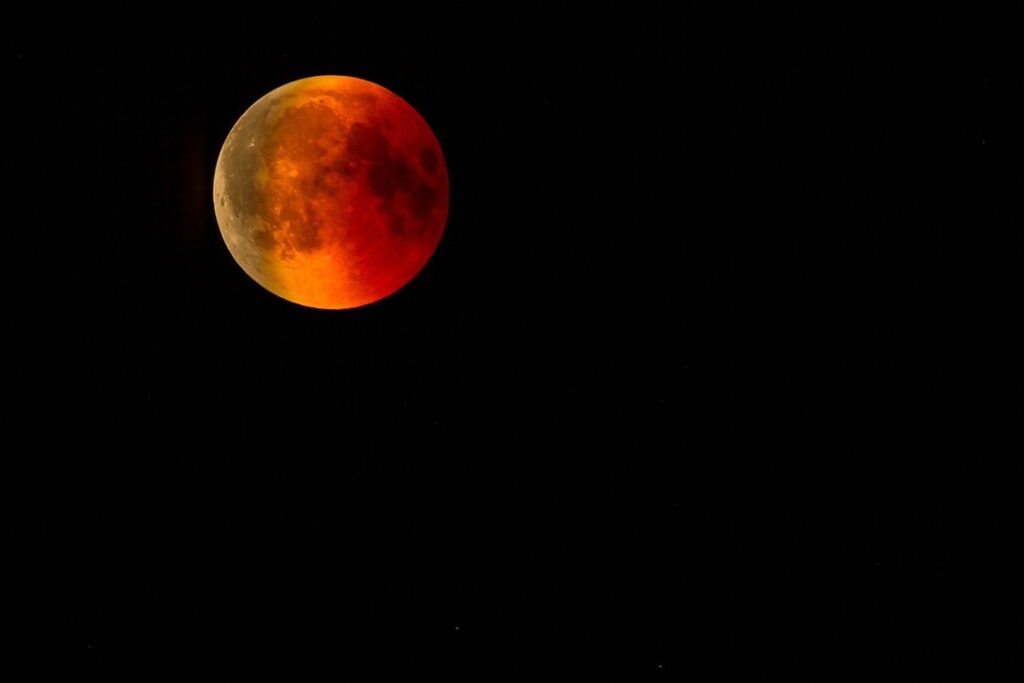
A blood moon occurs when the Earth passes between the sun and the moon during a full lunar eclipse. This alignment causes the Earth’s shadow to fall on the moon’s surface, casting an orange or reddish hue due to atmospheric scattering of sunlight. The resulting image is often referred to as a “blood moon” because of its distinctive appearance.
There are three types of eclipses that can produce a blood moon: penumbral, partial, and total lunar eclipses. Penumbral eclipses occur when the Earth’s shadow falls on a relatively small portion of the moon’s surface, causing a subtle darkening effect. Partial eclipses happen when only part of the moon passes through the Earth’s shadow, resulting in a patchy or streaked appearance. Total eclipses are the most striking type, as they allow sunlight to pass directly through the Earth’s atmosphere and cast an intense red glow on the moon.
The frequency of these events is relatively rare due to the precise alignment required between the Earth, sun, and moon. However, when a blood moon does occur, it can be observed from anywhere on the night side of the Earth as long as the weather permits clear visibility.
Historical and Cultural Significance
Blood moons have captivated human imagination across cultures and throughout history. In ancient Mesopotamia, lunar eclipses were believed to signal the wrath of the gods, while in China, they were associated with the dragon’s fury. Similarly, in many Indigenous cultures, blood moons are seen as a time for spiritual renewal and healing. The Celts, on the other hand, believed that during a blood moon, the veil between the worlds was at its thinnest, allowing for communication with ancestors and spirits.
In some African cultures, blood moons are linked to fertility rituals, where women would perform ceremonies to ensure a bountiful harvest. In contrast, in many Western societies, lunar eclipses have been viewed as ominous signs of impending doom or disaster. The association between blood moons and supernatural events can be attributed to the rarity and unpredictability of these celestial occurrences.
A key takeaway from exploring the cultural significance of blood moons is that each civilization has imbued this phenomenon with its unique values and symbolism. By examining these diverse perspectives, we gain a deeper understanding of how our collective experiences are shaped by our environments and traditions.
Blood Moon in Astrology
When a Blood Moon occurs, astrologers take note of its intense energy and possible effects on our lives, which we’ll explore next. This phenomenon often holds significant meaning for those who believe in the power of astrology.
Lunar Cycles and Astrological Influences
In astrology, lunar cycles play a significant role in shaping human affairs. Eclipses, which occur when the Earth passes between the Sun and the Moon, are particularly influential events. Astrologers believe that eclipses disrupt the natural flow of energy and trigger profound changes in individuals and societies.
During an eclipse, the Moon’s usual gentle light is replaced by a blood-red glow, symbolizing transformation and renewal. This phenomenon is often associated with heightened emotional intensity, increased sensitivity to one another, and a greater awareness of the interconnectedness of all things. Astrologers believe that eclipses have a profound impact on our collective psyche, influencing global events, politics, and even the course of personal relationships.
In many cultures, eclipses are seen as portals to other dimensions or realms of consciousness. They’re believed to offer opportunities for spiritual growth, healing, and introspection. As we prepare for an impending blood moon eclipse, it’s essential to consider how its energies might manifest in our lives. By tuning into the lunar cycle and acknowledging the astrological influences at play, we can tap into the transformative power of this phenomenon and harness its potential for personal and collective evolution.
Planetary Alignments and Their Impact
During a blood moon, certain planetary alignments are believed to have a profound impact on astrological events. One of these alignments is when the Moon passes through the Earth’s shadow and aligns with Mars, Jupiter, or Saturn. This phenomenon is known as an opposition, where two celestial bodies appear on opposite sides of the Earth.
When this alignment occurs during a blood moon, it can amplify the emotional intensity of the event. The increased gravitational pull from these planetary interactions is thought to heighten the emotional resonance of the eclipse. For example, if the blood moon aligns with Mars, it may intensify feelings of passion and conflict. Alternatively, an alignment with Jupiter could bring about a sense of expansion and growth.
Astrologers also consider the aspect patterns formed by the planets during a blood moon. One significant pattern is the square aspect, where two or more planets form a 90-degree angle. This configuration can create tension and friction, leading to dramatic events or power struggles. By understanding these planetary alignments and their implications, individuals can better prepare themselves for the potential astrological influences that may arise during a blood moon.
Science Behind the Blood Moon
The Blood Moon’s eerie glow is more than just a spectacle, it’s also a result of a rare lunar alignment that affects the Earth’s shadow. This phenomenon is what makes the Blood Moon so extraordinary and scientifically fascinating.
Eclipse Mechanics
A lunar eclipse occurs when the Earth passes between the Sun and the Moon, blocking the sunlight that normally reflects off the Moon’s surface. This can only happen during a full moon, when the Moon is on the opposite side of the Earth from the Sun. As the Earth blocks the direct sunlight, the Moon takes on a reddish hue, earning it the name “Blood Moon.”
The process begins when the Moon reaches its apogee, or farthest point from the Earth. As the Earth moves into the path of the Sun’s light, the shadow falls on the Moon’s surface. There are three phases to this eclipse: the penumbral phase, where the Moon is partially covered by the Earth’s shadow; the partial phase, where a significant portion of the Moon’s surface is in shadow; and the total phase, where the entire Moon is eclipsed.
During a Blood Moon, the Moon appears reddish due to the scattering of sunlight through the Earth’s atmosphere. This effect is similar to what happens during sunrise or sunset on Earth, when the light scatters and takes on a reddish color.
Spectacular Visuals: Photography Tips and Tricks
When capturing a blood moon, you’ll want to prioritize equipment with good low-light performance. A full-frame camera is ideal for its ability to gather more light and produce sharper images in dim conditions. Consider using a lens with a wide aperture (like f/2.8 or lower) to let in as much light as possible.
For photography techniques, focus on the horizon where the earth’s shadow falls on the moon’s surface. Use a tripod to stabilize your camera and prevent blur from camera shake. Bracket your shots to capture a range of exposures, then merge them later using HDR software. This technique helps preserve detail in both the bright lunar highlights and dark shadows.
Aim for a 1-2 second exposure time to allow enough light to enter without overexposing the image. You can also experiment with longer exposures (up to 10 seconds) to create a more dreamy, ethereal effect. Keep an eye on your camera’s settings and adjust as needed – you may need to tweak your white balance or ISO depending on the time of day and atmospheric conditions.
Remember to keep shooting before and after the eclipse for interesting cloud formations and lunar edge effects.
Folklore, Mythology, and Superstitions
The blood moon has been shrouded in mystery for centuries, sparking a rich tapestry of folklore and superstitions that still captivate us today. Let’s explore some of these fascinating stories.
Ancient Beliefs and Rituals
In ancient cultures, blood moons were often associated with omens and portents of doom. The Greeks believed that a blood moon signaled the gods’ displeasure, while the Romans thought it was an unfavorable sign for military campaigns. Similarly, many indigenous cultures in North America viewed the blood moon as a time for spiritual renewal and self-reflection.
In some African cultures, a blood moon is seen as a signal to prepare for war or defend against external threats. For example, during the Dogon people’s summer solstice celebration, they would often hold rituals to ward off evil spirits, which were believed to be most active during a blood moon. In many Native American tribes, a blood moon was considered a time for vision quests and spiritual journeys.
When interpreting ancient beliefs surrounding blood moons, it’s essential to consider the cultural context in which they emerged. For instance, many ancient cultures believed that lunar eclipses disrupted the natural balance between light and darkness, leading to chaos and disorder. By understanding these historical perspectives, we can gain a deeper appreciation for the rich cultural significance of the blood moon phenomenon.
Modern-Day Superstitions and Fears
Many people today associate blood moons with ominous predictions of doom and catastrophe. This widespread fear is not entirely new, but it has gained momentum through social media and online platforms. Some believe that a blood moon is an omen for natural disasters, wars, or even the end of the world.
These modern-day superstitions are often rooted in a misunderstanding of earlier folklore and mythology surrounding lunar eclipses. In many ancient cultures, blood moons were indeed seen as significant events that warranted attention and respect. However, these beliefs were often tied to specific cultural contexts and spiritual practices, rather than apocalyptic predictions.
To put the fear of blood moons into perspective, consider this: most people are more likely to experience anxiety or superstition about a blood moon than actually face any negative consequences. This is not to downplay the significance of lunar eclipses, but rather to encourage readers to approach these events with a balanced and nuanced perspective. By separating fact from fiction and understanding the cultural context behind our fears, we can appreciate the beauty and mystery of the blood moon without succumbing to unfounded superstition.
Blood Moon in Popular Culture
The blood moon has long been a source of fascination, making appearances in various forms of media and entertainment. From literature to film, it’s a striking visual motif that captures our imagination.
Literature and Artistic Representations
Notable depictions of blood moons can be found in various forms of literature. For instance, in Stephen King’s “The Eyes of the Dragon,” a blood moon serves as an ominous sign for impending doom. Similarly, in Rick Riordan’s “Percy Jackson and the Olympians” series, a lunar eclipse is portrayed as a moment of great power and danger.
In art, the blood moon has been a recurring theme, often symbolizing chaos and upheaval. The iconic painting “The Great Wave off Kanagawa” by Hokusai features a red moon rising over the ocean’s turbulent waves. This representation reflects the traditional Japanese association of lunar eclipses with bad luck and calamity.
In music, the blood moon has been referenced in various genres, from heavy metal to electronic dance music. For example, the band Metallica’s song “Blood Moon” describes a sense of foreboding and darkness associated with the phenomenon.
Films like “The Seventh Seal” (1957) and “28 Days Later” (2002) also feature blood moons as harbingers of disaster or supernatural events. These examples illustrate how the cultural significance of blood moons has been represented across different mediums, often tapping into our collective fascination with the unknown and the mysterious.
Symbolism and Metaphor in Media
Blood moons have captivated audiences for centuries, inspiring a wide range of creative works that draw upon their symbolic significance. In literature, the blood moon is often used to convey themes of chaos and destruction, as seen in Rick Riordan’s Percy Jackson series, where a blood moon heralds the arrival of monsters from mythological times.
In film, the symbolism of the blood moon is frequently tied to supernatural or apocalyptic events. For example, in the movie “The Twilight Saga,” the blood moon serves as a catalyst for the main character’s transformation into a vampire. These examples demonstrate how the blood moon can be used as a metaphor for the unknown, the uncontrollable, and the transformative.
The use of blood moons in media also speaks to their cultural significance. By tapping into these symbolic associations, creators can tap into the audience’s collective imagination, conjuring emotions and reactions through the evocative power of this celestial event. When crafting your own creative works, consider how you can harness the symbolic weight of the blood moon to enhance your narrative or convey a specific message.
Blood Moon: Separating Fact from Fiction
As we separate fact from fiction, let’s take a closer look at some of the most common misconceptions surrounding blood moons and their supposed significance in various cultures.
Debunking Common Myths and Misconceptions
Blood moons have long been shrouded in mystery, but some claims about their effects on human behavior are simply unfounded. One common myth is that blood moons trigger widespread chaos and destruction. However, there’s no scientific evidence to support this notion. In fact, numerous studies have shown that lunar eclipses do not correlate with increased crime rates or social unrest.
Another misconception is that blood moons can cause people to behave erratically or experience unusual physical effects. Some claim that the full moon itself has a direct influence on human behavior, but most experts attribute these supposed effects to the placebo effect or confirmation bias. In reality, the lunar cycle doesn’t have a tangible impact on our daily lives.
To put these misconceptions into perspective, consider this: there’s no concrete evidence linking blood moons to specific events or catastrophes throughout history. While it’s true that some notable events have coincided with blood moons, these instances are anecdotal and don’t provide conclusive proof of any causal relationship.
When assessing claims about the effects of blood moons, it’s essential to separate fact from fiction by examining the available evidence and considering alternative explanations for observed phenomena.
Real-World Impacts of Lunar Eclipses
Lunar eclipses can have significant real-world impacts, extending beyond their spectacular visual effects. One notable consequence is disruptions to satellite communications. During an eclipse, satellites in orbit around Earth may experience temporary signal loss or degradation due to the Moon’s shadow blocking sunlight. This can affect various industries that rely on satellite connectivity, such as navigation systems for aviation and maritime.
Another area affected by lunar eclipses is scientific research. Space agencies and scientists often use lunar eclipses as opportunities to study the Earth’s atmosphere and the Moon’s interaction with it. However, these events also pose challenges for ongoing research projects. For instance, some telescopes may need to be temporarily shut down or adjusted during an eclipse to avoid overexposure to the bright sunlight.
Lunar eclipses can also impact astronomical observations, as they often coincide with specific planetary alignments and celestial events. Researchers must carefully plan their observations around these events to maximize data collection and minimize disruptions.
Frequently Asked Questions
Can I see a blood moon from anywhere on Earth?
Yes, a blood moon is visible from any location where the lunar eclipse occurs, but visibility depends on atmospheric conditions and local time. A clear horizon and minimal light pollution are essential for optimal viewing.
How do I know if a blood moon has any significant astrological influence on my personal life or events?
While some people believe that blood moons can have an impact on human affairs, there is no concrete evidence to support this claim. Astrological influences can vary greatly depending on individual birth charts and specific planetary alignments. For more insight, consult with an experienced astrologer.
Can I photograph a blood moon during the daytime, or do I need specialized equipment?
While it’s technically possible to capture images of a blood moon during the day, you’ll require specialized equipment such as a polarizing filter or a camera with exceptional low-light sensitivity. These tools help reduce glare and enhance color accuracy, but may not guarantee stunning results without proper planning.
What if I experience technical issues while trying to photograph a blood moon – can I recover my images?
Yes, most modern cameras allow for manual adjustments during exposure to minimize the impact of technical issues. Additionally, editing software like Adobe Lightroom or Photoshop can help correct common problems such as overexposure or noise. Regularly practice your photography skills and stay up-to-date with the latest techniques to ensure successful image capture.
Can I use my smartphone to photograph a blood moon, or do I need a DSLR?
You can use a smartphone to capture a blood moon, but it may not provide the same level of quality as a DSLR camera. Smartphones often struggle in low-light conditions, and their small sensors can result in noise and reduced color accuracy. Consider investing in a good-quality tripod and camera lenses for optimal results.