
Lunar eclipses are one of the most spectacular celestial events that occur when Earth passes between the sun and the moon, casting a shadow on our natural satellite. This rare phenomenon has fascinated people for centuries, with ancient cultures often imbuing it with spiritual significance. For you, as an astronomy enthusiast or simply someone who appreciates the beauty of nature, witnessing a lunar eclipse can be a once-in-a-lifetime experience that’s both awe-inspiring and humbling. But how do these eclipses occur? What’s involved in preparing for observation, and what science lies behind this rare event? In our comprehensive guide, we’ll explore the causes, preparation methods, and cultural significance of lunar eclipses, providing you with a deeper understanding of this celestial spectacle and practical tips on how to safely witness and record it.
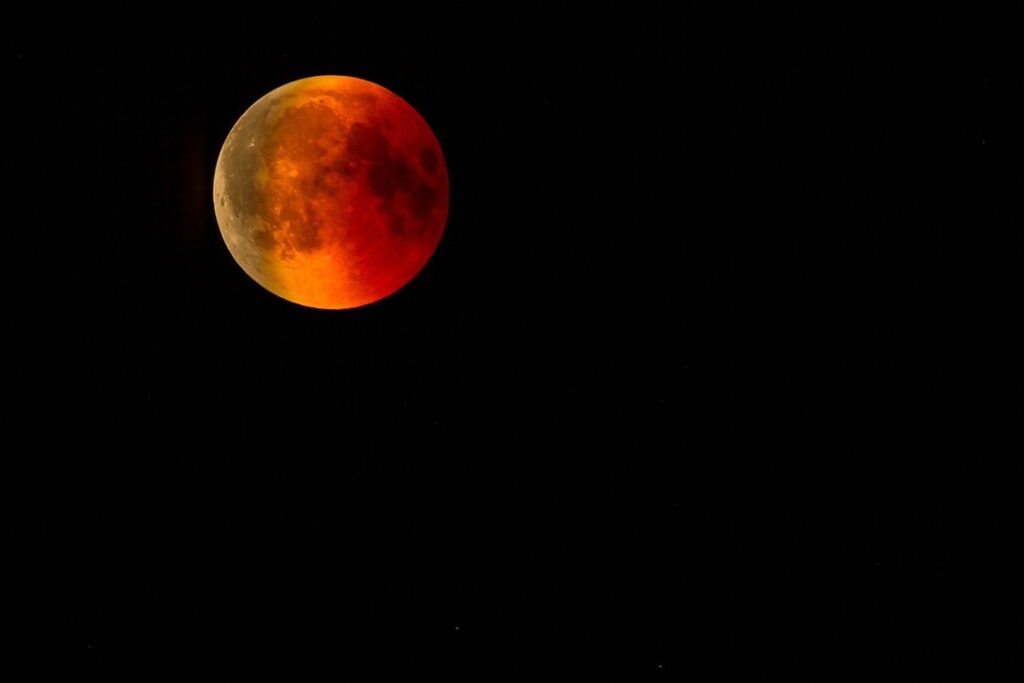
What is a Lunar Eclipse?
A lunar eclipse occurs when Earth passes between the sun and the moon, blocking the sunlight that normally reflects off the moon’s surface. This unique alignment of celestial bodies is essential to understanding these rare events.
Definition and Types of Lunar Eclipses
A lunar eclipse occurs when the Earth passes between the Sun and the Moon, blocking the sunlight that normally reflects off the Moon’s surface. This can happen only during a full moon, when the Moon is on the opposite side of the Earth from the Sun. There are two main types of lunar eclipses: penumbral and partial eclipses.
Penumbral eclipses occur when the Moon passes through the Earth’s penumbra, or partial shadow. This causes a subtle darkening of the Moon’s surface, often making it appear as though the Moon is wearing a faint halo. Penumbral eclipses are typically not as noticeable as partial eclipses and can be challenging to spot.
Partial eclipses occur when the Moon passes through the Earth’s umbra, or complete shadow. This causes a portion of the Moon’s surface to darken, creating a distinctive “bite” shape. Partial eclipses are often visible from a wider area than total solar eclipses but may not be as dramatic in appearance.
It’s worth noting that only a small percentage of full moons result in a lunar eclipse, making them relatively rare events.
Causes of Lunar Eclipses
A lunar eclipse occurs when the Earth’s shadow falls on the Moon. This happens during a full moon, but only when the Sun is also positioned at a specific angle relative to the Earth and the Moon. The Earth’s shadow has two parts: the umbra, which is the darker inner shadow, and the penumbra, which is the lighter outer shadow.
When the Moon passes through the Earth’s umbra, it experiences an umbral eclipse, often referred to as a total lunar eclipse. This occurs because the entire face of the Moon is covered by the Earth’s dark shadow. However, when the Moon only partially enters the umbra or penumbra, we see a partial lunar eclipse.
The alignment required for a lunar eclipse is quite precise: the Sun, Earth, and Moon must be in a straight line, with the Earth positioned between the Sun and the Moon. This can only happen during a new moon phase when the Moon is on the opposite side of the Earth from the Sun. The specific geometry of this alignment triggers a series of events that lead to a lunar eclipse.
Preparation for a Lunar Eclipse Observation
Before observing a lunar eclipse, it’s crucial to prepare yourself and your equipment properly. Make sure you have the right gear and know how to use it to capture stunning images of this rare celestial event.
Equipment Needed for Viewing
To safely observe a lunar eclipse, you’ll need specific equipment to enhance your viewing experience and minimize eye strain. A pair of binoculars is an excellent starting point, providing a closer look at the Moon’s surface during the eclipse. Choose 7x or 10x magnification for optimal results.
If you have access to a telescope, use it with caution: lunar eclipses are best observed with lower magnifications (around 100x) to prevent over-illumination of the image. A tripod is essential for stabilizing your binoculars or telescope, allowing for smooth adjustments and minimizing vibrations that can blur your view.
Additional accessories like a moon filter or solar viewing glasses may also be beneficial during lunar eclipses. Moon filters reduce glare and enhance contrast, making it easier to observe the Moon’s surface details. Solar viewing glasses protect your eyes from intense sunlight reflected off the Moon’s surface during the eclipse’s early stages.
For optimal results, choose equipment with good optical quality and a sturdy build. Consider manual focus mechanisms and smooth-adjusting eyepieces for comfortable viewing sessions.
Best Locations and Times to Observe
Lunar eclipses can be observed from anywhere on Earth where the Moon is above the horizon. However, optimal viewing locations have minimal light pollution to maximize visibility of the eclipse. Dark-sky preserves and remote areas far from city lights are ideal. Places like Mauna Kea in Hawaii, La Palma in the Canary Islands, or Atacama Desert in Chile offer exceptional conditions.
When planning your observation, consider local time zones. The Moon’s path across the sky varies by location, so timing is crucial for catching the eclipse at its peak. Check lunar eclipse paths and times specific to your area using online tools like NASA’s Eclipse Website or mobile apps like TimeAndDate.com. Typically, a 2-3 hour window around the predicted peak time offers the best viewing opportunities.
For example, during the 2015 lunar eclipse, observers in New York witnessed the Moon at its deepest point of eclipse (penumbral umbral transition) just after midnight on April 4th. Similarly, those in Los Angeles saw it occur about an hour earlier due to their location’s westward offset from NYC. Be sure to adjust your schedule according to your local time zone for a more precise and enjoyable experience.
The Science Behind Lunar Eclipses
Lunar eclipses are fascinating events that occur when Earth passes between the sun and the moon, casting a shadow on our lunar neighbor. In this section, we’ll explore the physics behind this rare phenomenon.
Moon’s Orbit and Eclipse Cycles
The Moon’s elliptical orbit around Earth has a significant impact on the frequency and timing of lunar eclipses. This elliptical shape means that the Moon’s distance from Earth varies throughout the month, with its closest approach, or perigee, occurring every 27.3 days. As a result, the Moon appears larger in the sky during these periods, which is crucial for lunar eclipses to occur.
The alignment of the Sun, Earth, and Moon also plays a critical role in determining when a lunar eclipse will take place. When the Moon passes through the Earth’s shadow during its closest approach, it can be partially or totally eclipsed. The frequency and timing of these events are determined by the specific geometry of the Earth-Moon-Sun system.
To put this into perspective, consider that most lunar eclipses occur when the Moon is at or near perigee, which typically occurs about once every 29.5 days. However, not all close approaches result in an eclipse – the Moon must also be aligned with the Sun and Earth’s shadow at the right moment for a lunar eclipse to occur.
Tidal Forces During a Lunar Eclipse
During a lunar eclipse, tidal forces play a crucial role in shaping ocean tides and coastal regions. As the Earth, Moon, and Sun align, the gravitational pull of these three celestial bodies creates a complex interplay that affects our planet’s oceans. The Moon’s gravity causes bulges in the Earth’s oceans, but when it’s positioned between the Earth and the Sun during an eclipse, the solar gravitational force cancels out some of this effect.
As a result, tidal forces are reduced or even reversed in coastal areas. This can lead to unusual tidal patterns, such as lower-than-expected high tides or higher-than-expected low tides. For example, during the 2015 lunar eclipse, observers reported unusually low tides in certain regions, allowing people to walk on exposed beach areas that were normally underwater.
For those interested in observing and recording a lunar eclipse, understanding tidal forces can be essential for predicting coastal behavior. By knowing what to expect from tidal patterns, you can better plan your observation and photography efforts. Keep an eye out for unusual tidal fluctuations during the next lunar eclipse – it’s a fascinating phenomenon that showcases the complex interplay between celestial bodies and our planet’s oceans.
Observing and Recording a Lunar Eclipse
As you prepare to witness a lunar eclipse, it’s crucial to know how to safely observe and record this rare celestial event. We’ll guide you through the steps to capture every moment of this breathtaking spectacle.
Witnessing the Eclipse
When witnessing a lunar eclipse, it’s essential to prioritize eye safety. The prolonged exposure to moonlight can cause eye strain and discomfort. To minimize these effects, try to observe the eclipse from a distance of at least 2-3 meters (6-10 feet) away from your viewing spot. This will allow you to appreciate the spectacle without straining your eyes.
You should also wear sunglasses with a UV protection filter during the eclipse. While it may seem counterintuitive to wear sunglasses when observing the moon, this can help reduce glare and eye strain. However, make sure to remove them immediately after the eclipse ends, as they can interfere with your ability to see the moon’s details.
Another crucial aspect of witnessing a lunar eclipse safely is to maintain good posture. Avoid leaning forward or tilting your head upwards for extended periods, as this can cause fatigue and discomfort. Instead, take regular breaks to stretch and rest your eyes.
Photography Tips for Capturing the Event
To capture the breathtaking beauty of a lunar eclipse through photography, you’ll need a camera with manual settings and a wide-angle lens. A tripod is essential for stabilizing your camera during long exposures. Begin by setting your camera to its lowest ISO (typically 100 or 200) to minimize noise. Use an exposure time between 20-30 seconds, depending on the moon’s brightness and the camera’s sensitivity.
For optimal results, use a wide-angle lens with a focal length of around 10-24mm. This will allow you to capture the entire eclipse in one shot. Shoot in RAW format to preserve maximum image data for post-processing. Consider using a remote shutter release or the camera’s timer to minimize camera shake during exposure.
Post-processing techniques can enhance your photos. Start by adjusting brightness and contrast to bring out details in the moon’s surface. Apply a subtle vignette to emphasize the eclipse’s center. If necessary, use a graduated filter to balance the exposure between the bright moon and darker sky.
Cultural Significance of Lunar Eclipses
Lunar eclipses have been a source of fascination and awe for cultures around the world, often carrying significant symbolic meaning and spiritual significance. We’ll explore some of these intriguing cultural interpretations next.
Historical and Mythological Associations
Lunar eclipses have been imbued with significance across various cultures and civilizations. In ancient Mesopotamia, for instance, a lunar eclipse was seen as an omen of conflict or war. Similarly, the Chinese attributed such events to the dragon that swallows the moon. In Norse mythology, the wolf Fenrir was said to be devouring the sun or the moon during eclipses.
The ancient Greeks associated lunar eclipses with the wrath of Selene, the goddess of the moon. In contrast, some indigenous cultures in North America viewed these events as a time for spiritual renewal and communion with nature. The Inca Empire believed that a lunar eclipse signaled the presence of the jaguar spirit, while others saw it as an opportunity to make sacrifices and appease their deities.
Understanding these diverse mythologies can provide valuable context for appreciating the cultural significance of lunar eclipses. By exploring the various associations and meanings attributed to these events across history, we can gain a deeper appreciation for the ways in which our collective human experience is intertwined with the night sky.
Modern-Day Celebrations and Traditions
Lunar eclipses continue to captivate people around the world with their breathtaking beauty and mystique. In modern times, various cultures and communities have developed unique celebrations, festivals, and rituals to commemorate these rare events. For instance, in some Native American tribes, lunar eclipses are believed to signal a time for spiritual renewal and cleansing.
In Japan, the eclipse is often associated with the legend of the “Tsuki-yomi,” where the moon god is said to be devoured by his sister, Amaterasu. During an eclipse, Japanese communities come together to pray for good harvests and prosperity.
In modern-day India, lunar eclipses are considered a significant event in Hindu mythology, often associated with the demon Rahu’s attempt to swallow the sun or moon. Many Indians participate in elaborate rituals, including chanting, meditation, and puja (worship) ceremonies to ward off evil spirits and ensure good fortune.
These contemporary celebrations not only reflect the enduring fascination with lunar eclipses but also highlight their symbolic significance as a time for introspection, renewal, and spiritual growth.
Frequently Asked Questions
Can I see a lunar eclipse from anywhere on Earth?
Yes, as long as the eclipse is visible from your location, you can observe it. However, the visibility of the eclipse depends on factors like the Moon’s orbit and the timing of the eclipse in relation to your local time zone.
How do I know if a lunar eclipse is safe for my camera equipment?
Lunar eclipses don’t produce intense light or radiation that could damage your camera equipment. However, it’s essential to use proper camera settings and techniques to capture high-quality images during an eclipse. Consult online resources or photography guides for specific tips.
What are the effects of a lunar eclipse on satellite communications?
Satellite communications can be affected by the Moon’s shadow during a lunar eclipse, but the impact is typically minimal. The main concern is the temporary loss of signal strength due to increased radiation and atmospheric interference. This usually resolves itself once the Moon moves out of its shadow.
Can I photograph a lunar eclipse with just my smartphone?
Yes, you can capture high-quality images of a lunar eclipse using your smartphone. Use a tripod or a stabilizing device to minimize camera shake, and adjust your camera settings accordingly. Experiment with different modes, such as manual focus or long exposure, to achieve the best results.
Will a lunar eclipse affect the tides in my coastal area?
The effects of a lunar eclipse on ocean tides are usually negligible. However, during an eclipse, the Moon’s gravitational pull is slightly altered, which can cause subtle changes in tidal patterns. These changes are typically imperceptible and don’t pose any significant concerns for coastal residents or marine activities.