
When trying to identify birds in flight or perched on a distant branch, it can be challenging to determine their species. However, one valuable technique is recognizing birds by their silhouette, which can reveal a wealth of information about their shape, size, and even behavior. By paying attention to these distinctive outlines, you can significantly improve your bird identification skills and increase the chances of spotting various species on your next outdoor excursion.
This article will provide expert tips on how to recognize different bird silhouettes in various habitats, including forests, wetlands, and backyards. We’ll also explore the importance of considering a bird’s behavior, such as its foraging habits or courtship displays, when trying to determine its identity based on silhouette alone. By mastering these skills, you’ll be able to identify birds with confidence, even at a distance, and develop a deeper appreciation for the fascinating diversity of birdlife.
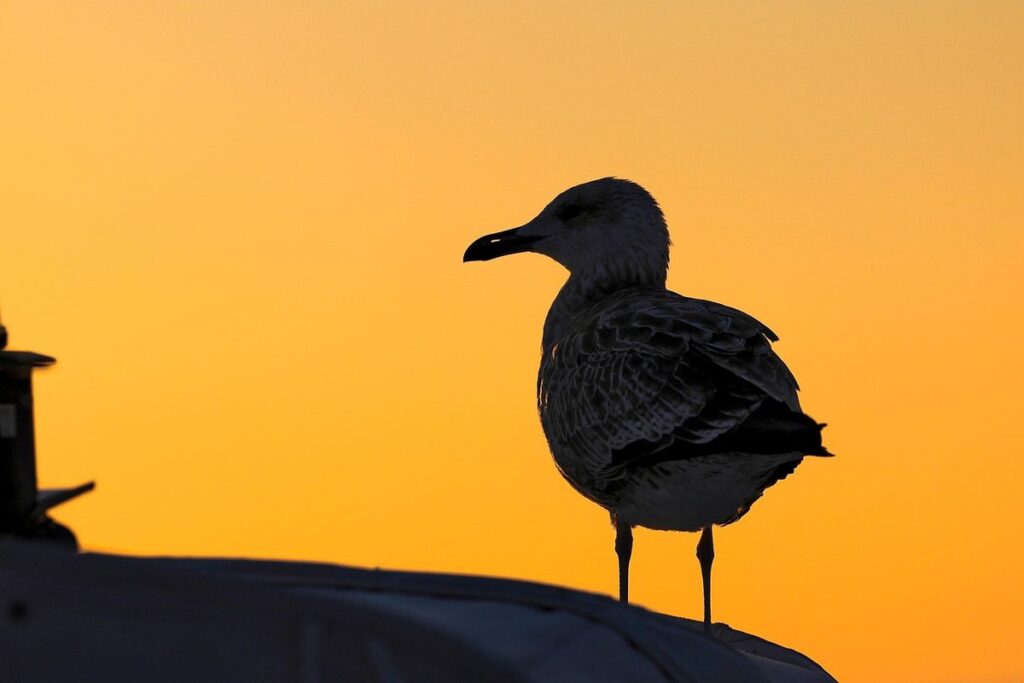
Understanding Bird Silhouettes
To identify birds by silhouette, understanding their distinctive shape and proportions is key. Let’s examine how to accurately read a bird’s outline to make more confident field identifications.
The Importance of Shape and Size
When recognizing bird silhouettes, it’s essential to consider both shape and size. These two factors can be crucial in differentiating between similar species, making silhouette recognition a vital skill for bird identification.
For instance, the silhouette of a Red-winged Blackbird is easily distinguishable from that of a Common Grackle due to its distinctive shape: a stout body with a long tail and pointed wings. In contrast, the grackle’s silhouette appears more elongated with a longer body and shorter tail. Even though both birds can have similar plumage colors, their silhouettes are quite distinct.
When trying to identify a bird by silhouette, take note of its overall shape, including the proportions of its body parts, such as the length of the beak, wings, and tail relative to its body. This attention to detail will help you differentiate between species that may share similar colors or patterns but have distinct silhouettes. By paying close attention to these characteristics, you can improve your chances of accurate bird identification.
Identifying Key Features
When identifying a bird’s silhouette, it’s essential to consider multiple features beyond just its shape and size. Look for posture: is the bird standing upright, leaning forward, or perched with its body angled? This can be particularly useful for distinguishing between species within the same family.
Pay attention to plumage patterns as well. Are there distinct markings or colors that help identify the bird? In some cases, a single striking feature like a bright red head or yellow belly can be enough to narrow down the possibilities.
Size is also crucial, but it’s not just about absolute measurements. Compare the bird’s size relative to other birds in its habitat or nearby landmarks. For example, if you see a small bird perched on a large branch, it may appear even smaller than it actually is.
When examining a silhouette, consider the overall proportions of the bird’s body. Is the head relatively large compared to the body? Are the wings long and pointed or short and rounded? These subtle details can help you make more accurate identifications. By focusing on these key features, you’ll become better equipped to identify birds by their silhouettes.
Habitat and Behavior
Understanding a bird’s habitat and behavior is crucial for accurate identification by silhouette, as it can reveal key characteristics that set species apart. Knowing these patterns will help you narrow down possibilities.
Seasonal Migrations and Habitats
When observing birds by silhouette, it’s essential to consider how a bird’s habitat and migratory patterns can influence its appearance. Some birds undergo significant changes seasonally, making their identification more challenging.
For instance, the Baltimore Oriole transforms from a sleek, gray-backed bird during migration to a vibrant orange-and-black songster in its summer breeding grounds. Similarly, the Western Tanager’s plumage shifts dramatically, with males transitioning from bright red and yellow to a more subdued orange-yellow during winter months.
The Rufous Hummingbird is another example of a bird that changes its appearance seasonally. Its iridescent throat feathers become less prominent during migration, making it harder to identify at first glance.
To accurately ID birds by silhouette when considering seasonal migrations, familiarize yourself with the species’ typical habitats and known migratory routes. This knowledge will help you anticipate how their silhouettes may change over time. For example, if you’re in an area where a particular bird is known to migrate through during a specific season, be prepared for its appearance to differ from what you might expect based on its breeding or wintering grounds.
Nocturnal and Diurnal Birds
When observing bird silhouettes, it’s essential to consider whether the bird is nocturnal or diurnal. Nocturnal birds, which are active at night, have distinct adaptations for navigating and hunting in low-light conditions. Their silhouettes often feature large eyes, a flat face, and a short beak, allowing them to gather visual information with minimal light. Owls, for example, have an exceptional ability to rotate their heads and binocular vision that helps them pinpoint prey.
In contrast, diurnal birds are active during the day and tend to have silhouettes that prioritize visibility and maneuverability. Their eyes are usually positioned on the sides of their head, providing a wide field of view and exceptional peripheral vision. Diurnal birds also often have longer beaks and more streamlined bodies, allowing for efficient flight and foraging.
When trying to identify a bird by silhouette, keep in mind these differences between nocturnal and diurnal species. A short, broad beak and large eyes might indicate a nocturnal bird, while a long, pointed beak and sleek body may suggest a diurnal one. By recognizing these adaptations, you can refine your bird ID skills and make more accurate silhouettes-based identifications.
Bird Groupings and Families
Bird groupings and families can greatly simplify the process of identifying birds by silhouette, helping you categorize similar species together. This section will cover the key bird groups to focus on when using silhouette ID techniques.
Waterbirds and Wading Birds
Waterbirds and wading birds have some of the most distinctive silhouettes in the bird kingdom. Herons, egrets, and ibises are prime examples, with their long legs and necks giving them a stately appearance. These birds often stand still for extended periods, scanning the water below for prey, which makes their silhouette take on a particularly static shape.
When identifying these birds by silhouette, look for the characteristic S-curve of the neck and the long legs extending far beyond the body. Herons, in particular, tend to have a more compact body than egrets, while ibises often have a slightly curved beak. The angle of their legs can also provide clues: herons typically hold theirs straight out, while egrets bend theirs slightly.
In flight, waterbirds like these take on a different silhouette altogether. Their long necks and legs are tucked in, making them appear more compact and streamlined. However, the distinctive shape of their wings – often with a subtle notch or curve at the tip – can still give away their identity. By paying attention to these details, you can develop a keen eye for identifying waterbirds and wading birds by silhouette.
Songbirds and Sparrows
Songbirds and sparrows are some of the most challenging groups to identify by silhouette due to their varying head shapes, wing patterns, and tail lengths. One key characteristic is the shape of the head, which can be flat, rounded, or even triangular. For example, the warbler’s distinctive white eye ring and black throat patch make its silhouette instantly recognizable.
Some songbirds have distinctive wing markings that set them apart from others. The American robin, for instance, has a distinctive red breast and a long, flat tail that makes it easy to distinguish in flight. On the other hand, some sparrows have relatively short tails and more rounded wings, making their silhouettes appear more compact.
When identifying songbirds by silhouette, pay close attention to the shape of the beak and head. Some birds have notably long or short beaks, which can give them a unique appearance in flight. The size and proportion of these features also vary between species, so it’s essential to consider multiple viewpoints to get an accurate identification.
In general, songbirds tend to have more rounded silhouettes than other groups, making them less distinctive at a distance. However, the presence of specific markings or beak shapes can make a big difference in identification.
Advanced Silhouette Identification Techniques
To take your silhouette identification skills to the next level, we’ll explore expert techniques for accurately distinguishing between similar bird species based on their silhouettes. This involves subtle shape analysis and comparison of key features.
Considering Multiple Viewpoints
When attempting to identify a bird’s silhouette, it’s essential to consider multiple viewpoints. Observing birds from various angles can reveal additional features that may not be apparent when viewed head-on. For example, looking at a bird’s profile can highlight the shape and length of its tail, while viewing from above or below can showcase the shape of its wings and body.
Notice how different angles can emphasize distinct aspects of a bird’s silhouette. Take the Common Loon, for instance: viewed from the side, its long neck and head are prominent, whereas from directly behind, the distinctive shape of its back and tail feathers become more apparent.
To practice observing multiple viewpoints, try sketching or photographing birds from various angles. This exercise will help you develop a more nuanced understanding of how different features emerge when viewed from different perspectives. As you become more comfortable with this technique, you’ll find that it greatly enhances your ability to identify silhouettes accurately.
Size and Proportion
When observing a bird’s silhouette, understanding its size and proportion relative to other objects or birds can be a crucial factor in identification. By comparing the bird’s shape and size to surrounding features, you can make more accurate assessments about its species.
For example, consider a bird perched on a fencepost. If it’s roughly the same height as the post or slightly smaller, that’s a good indication of a small bird species like a sparrow or finch. On the other hand, if the bird appears to be half the length of the post or more, it could be a larger bird such as an owl or hawk.
Another key consideration is proportion. Note how the bird’s wingspan compares to its body size. A bird with long, narrow wings in relation to its body may be a seabird like a gull or albatross. Conversely, a bird with shorter, more rounded wings might be a songbird or warbler.
When evaluating size and proportion, consider multiple viewpoints – not just straight on but also from the side and above. This will give you a better sense of the bird’s overall shape and how it relates to its environment.
Troubleshooting Common Mistakes
We’ve all been there: confidently identifying a bird, only to realize later that it was actually something else entirely. Let’s tackle some common mistakes and learn how to avoid them in our bird ID journey.
Misidentification Due to Similar Species
When identifying birds by silhouette, one of the most common mistakes is misidentifying species due to their similarity. Birds like the Great Crested Flycatcher and the Western Kingbird share many physical characteristics, making it easy to confuse them.
Pay close attention to beak shape and length: the Great Crested Flycatcher has a distinctive, curved bill, while the Western Kingbird’s is more pointed. Additionally, note the wing shape – the flycatcher’s wings are rounded at the tip, whereas the kingbird’s are squared off.
Another pair that can cause confusion is the Downy Woodpecker and the Hairy Woodpecker. In silhouette, they appear similar in size and overall shape, but upon closer inspection, the Hairy Woodpecker has a longer bill and a more uniform black-and-white striped back. The Downy Woodpecker’s stripes are more variable.
To avoid misidentification when dealing with similar species, it’s essential to study their unique characteristics beyond just shape and size. Consult field guides that highlight specific features, or observe birds in the wild over time to develop your skills in distinguishing between closely related species.
Environmental Factors Affecting Silhouettes
When observing a bird’s silhouette, it’s essential to consider the environmental factors that can impact its appearance. Lighting conditions, for instance, can greatly affect how a bird’s shape and size are perceived. Overcast skies or harsh direct sunlight can make birds appear larger or more distorted than they actually are.
Weather also plays a significant role in altering silhouettes. Flocks of waterfowl may appear as a uniform mass against the sky on a calm day, but on windy days, their individual silhouettes become more defined. In contrast, strong winds can scatter birds across the sky, making it challenging to discern their shapes.
Vegetation and topography can also influence how we see bird silhouettes. Trees or hills can create shadows that make it difficult to gauge a bird’s size or shape. Moreover, different types of vegetation can reflect light in unique ways, adding an extra layer of complexity when attempting to identify birds by silhouette. To account for these variations, take note of the conditions under which you’re observing the bird and try to observe from multiple angles whenever possible.
Putting It All Together: Tips for Effective Bird ID by Silhouette
Now that we’ve covered the basics of identifying birds by silhouette, let’s put your new skills to the test with some practical tips and techniques to help you confidently identify species in the field.
Creating a Personalized Identification Guide
A personalized identification guide is an essential tool for any serious birdwatcher. To create one, start by gathering information on the species found in your area, including their silhouettes, habitats, and behaviors. Organize this data into a clear and concise format, using categories such as shape and size, plumage patterns, beak shape, and leg length.
For each species, include key identification features, such as distinctive markings or coloration. Consider adding photographs or illustrations of the birds in various poses to help you better recognize their silhouettes. You can also include notes on any common mistakes to watch out for when identifying specific species.
To make your guide even more effective, review and update it regularly. This will help you stay familiar with the shapes and sizes of the birds in your area, as well as any changes in their habitats or behaviors that may affect identification. By having a personalized guide at hand, you’ll be better equipped to identify birds by silhouette, even in challenging conditions or when viewing from a distance.
Consider breaking down larger categories into subcategories, such as waterbirds and songbirds, to make your guide more manageable and easier to use in the field.
Advanced Silhouette-Recognition Exercises
To further develop your silhouette-recognition skills, try these advanced exercises. One exercise is to observe a series of bird silhouettes and identify specific species based on distinctive characteristics such as beak shape or wing pattern. For example, you might look at images of shorebirds and try to distinguish between sandpipers and plovers.
Another challenge is to create your own “silhouette cards” by drawing or printing pictures of various bird species against a uniform background. This will help you become more familiar with the unique shapes and proportions of different birds. For instance, compare the silhouette of an American Robin to that of a Northern Mockingbird – notice how their body shapes differ.
You can also try creating a “silhouette bingo” game by marking images of various bird species on bingo cards and challenging yourself or others to identify as many species as possible based solely on their silhouettes. This interactive exercise will help you develop your ability to quickly recognize and distinguish between different bird silhouettes.
Frequently Asked Questions
What If I Still Can’t Tell Birds Apart After Practicing Silhouette Recognition Exercises?
When practicing silhouette recognition exercises and still struggling to tell birds apart, revisit the article’s emphasis on considering multiple viewpoints and understanding size and proportion. Pay attention to any bird species that consistently elude you and research their distinctive silhouettes in more detail. You can also try combining silhouette recognition with other ID techniques, such as listening for unique calls or observing beak shapes.
Can I Use Silhouette Recognition for Bird Identification at Night?
Yes, silhouette recognition is still applicable for identifying birds at night, especially if you know the bird’s typical nocturnal behavior and its adaptations for night vision. However, it may require more attention to other visual cues like eye shine or reflective surfaces on plumage.
What If I Notice a Bird’s Silhouette Changes Over Time Due to Molting?
Molting can indeed alter a bird’s silhouette, often causing temporary misidentification. To account for this variation, keep track of the timing and patterns of molting in specific species and adjust your identification accordingly during those periods. Consult local birding resources or online forums for more information on seasonal molting patterns.
Can Silhouette Recognition Be Used to Identify Birds in Flight?
While silhouette recognition can be challenging with birds in flight due to their dynamic postures, it’s not impossible. When observing flying birds, pay attention to distinctive wingbeats, tail shapes, and plumage patterns. Practice using multiple viewpoints while a bird is in motion to better grasp its overall shape and size relative to other objects or birds.
What If I Encounter a Bird Species That Doesn’t Fit Any Standard Silhouette Description?
When encountering an unfamiliar bird species that doesn’t match any standard silhouette description, refer back to the article’s section on considering multiple viewpoints. Analyze the bird’s posture, plumage patterns, and size in relation to its environment, taking note of any distinctive features or unusual characteristics. Don’t hesitate to consult local expert opinions or online resources for further guidance on identifying this species.