
Jupiter’s four largest moons, Io, Europa, Ganymede, and Callisto, have long fascinated astronomers and stargazers. These celestial bodies offer a unique glimpse into the vastness of our solar system and their distinct characteristics make them a thrilling subject to study. If you’re eager to spot these visible Jupiter moons in the night sky, but aren’t sure where to begin, this article is for you. With the right equipment, timing, and location, observing Io, Europa, Ganymede, and Callisto can be an accessible and rewarding experience. This guide will walk you through the best time and place to observe these moons using binoculars or telescopes, highlighting their unique features and behaviors. By the end of this article, you’ll have a solid understanding of how to locate and appreciate Jupiter’s four largest moons in all their glory.
Understanding Jupiter’s Moon System
Let’s take a closer look at the fascinating world of Jupiter’s moons, starting with the four largest and most easily visible from Earth: Ganymede, Callisto, Io, and Europa. These massive satellites offer a glimpse into Jupiter’s unique moon system.
Introduction to Jupiter’s Moons
Jupiter’s extensive moon system is a marvel of our solar system. With a staggering 92 confirmed moons, it’s one of the most impressive collections of celestial bodies in the cosmos. To put this number into perspective, Saturn has around 83 known moons, while Uranus and Neptune have much smaller systems with only 27 and 14 moons respectively.
The sheer size and diversity of Jupiter’s moons are a result of its unique formation history. As the gas giant formed from a disk of material surrounding it, the leftover debris eventually coalesced into tiny bodies that orbited Jupiter. Over time, these small moons grew in size through collisions with other objects and gravitational interactions. Today, we have a system that includes everything from tiny irregularly-shaped rocks to massive worlds like Ganymede and Callisto.
One of the most striking characteristics of Jupiter’s moon system is its immense scale. The largest four moons, Io, Europa, Ganymede, and Callisto, are among the biggest objects in the solar system, even surpassing some of the smaller planets in size. This diversity and scale make Jupiter’s moon system an exciting area of study for astronomers and planetary scientists.
Orbital Patterns and Classification
Jupiter’s moons are categorized into three main groups based on their orbital characteristics: inner, middle, and outer. The four largest inner moons – Io, Europa, Ganymede, and Callisto – exhibit distinct orbital patterns due to Jupiter’s massive size and gravitational influence. These gas giants have relatively circular orbits with low eccentricity.
Io leads the group in its proximity to Jupiter, while Callisto is at a greater distance. This order is significant because it affects their orbital periods, tidal heating, and internal dynamics. For example, Io orbits closest to Jupiter, resulting in intense tidal forces that drive volcanic activity and geological processes. Europa’s subsurface ocean, on the other hand, benefits from its stable, relatively slow orbit.
Understanding these orbital patterns helps astronomers categorize moons and predict behavior. The Amalthea group is another example of an orbital classification, with smaller inner moons following distinct paths influenced by Jupiter’s gravitational forces. When observing Jupiter’s moons, keep in mind that their orbital characteristics can affect visibility, brightness, and viewing opportunities. Note the positions of Io, Europa, Ganymede, and Callisto to maximize your moon-gazing experience.
Observing Jupiter’s Moons from Earth
You can spot four of Jupiter’s largest and brightest moons, Io, Europa, Ganymede, and Callisto, without any special equipment, making them a great target for backyard astronomers. These four are also relatively easy to distinguish from each other.
Binoculars and Telescopes for Moon Viewing
When it comes to observing Jupiter’s moons from Earth, having the right binoculars or telescope is crucial. You’ll want to consider two key factors: magnification power and aperture size.
A good starting point for beginners is a pair of 7×50 or 10×50 binoculars. These provide a decent magnification level without being too expensive. However, if you’re serious about observing the finer details of Jupiter’s moons, a telescope with an apochromatic lens will serve you better. Aim for a minimum aperture size of 70mm to capture more light and resolve the subtle features on the moons’ surfaces.
A telescope with a larger aperture, such as 100mm or 150mm, can provide even greater detail. But keep in mind that larger telescopes require more stable mounts and are often heavier, making them more difficult to transport. When choosing your equipment, also consider the type of eyepiece you’ll need. A lower power eyepiece (around 30-40x) will help you observe the brighter moons like Io and Europa, while a higher power eyepiece (60-80x) can reveal more detail on smaller moons.
Best Time and Location for Observation
When observing Jupiter’s moons from Earth, timing and location play crucial roles. The best time to observe is when Jupiter is at opposition, which occurs every 13 months as our planet passes through its orbit. This alignment allows for optimal viewing conditions, with the sun behind Jupiter and the light reflecting off its moons.
During this period, consider observing around midnight or early morning hours when the sky is typically clearer. Avoid times when the moon is full, as the bright lunar light can overpower the reflected light from Jupiter’s moons. Conversely, a crescent or gibbous moon can actually enhance visibility by casting shadows on Jupiter’s disk.
Choose a location with minimal light pollution and an unobstructed view of the southern horizon. Many observatories and planetariums offer stargazing events during opposition periods, providing access to professional-grade telescopes and expert guidance. If you’re observing from home, try to position yourself in an area with minimal obstructions and take advantage of online resources and mobile apps that help track planetary alignments and optimal viewing times.
The Four Largest Moons: Io, Europa, Ganymede, and Callisto
Among Jupiter’s largest moons, four stand out for their unique characteristics and fascinating features. Let’s take a closer look at Io, Europa, Ganymede, and Callisto, each with its own distinct personality.
Io: Volcanic Activity and Surface Features
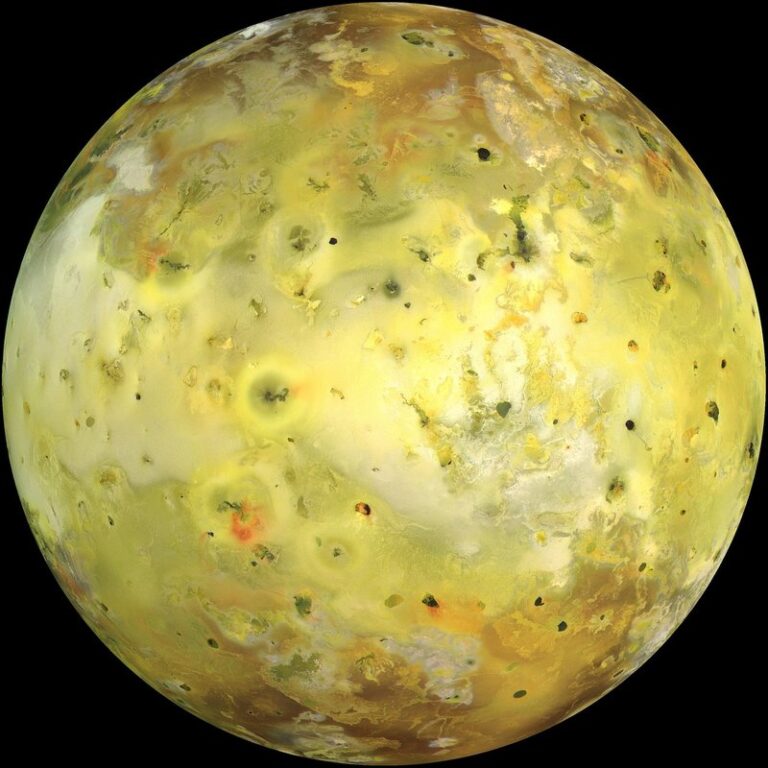
Io’s surface is a geological wonderland of volcanic activity and unique features. The moon’s crust is pockmarked with over 400 active volcanoes, each one a testament to Io’s incredible heat budget. These volcanoes are not just passive vents; they’re explosive, producing massive plumes of ash and lava that can reach heights of up to 200 kilometers.
Io’s surface is also characterized by extensive lava flows, which have shaped the moon’s terrain over millions of years. The most notable feature is the “Lava Flow Field,” a vast expanse of solidified lava that stretches for hundreds of kilometers. This area is thought to be one of the youngest on Io, with some estimates suggesting it formed as recently as 10 million years ago.
Recent studies suggest that Io may have a subsurface ocean, similar to those found on Europa and Ganymede. While this idea is still theoretical, it could provide valuable insights into the moon’s internal heat budget and geological processes. The presence of such an ocean would also raise interesting questions about Io’s potential for life.
Europa: Ice Crust and Subsurface Ocean
Europa’s icy crust is approximately 15-20 kilometers thick, a result of tidal heating caused by Jupiter’s gravitational pull. This process creates internal heat and tectonic activity beneath the surface. Scientists believe that beneath this ice layer lies a global ocean, potentially up to 100 kilometers deep, which could be home to life. The moon’s subsurface ocean is thought to be in contact with Europa’s rocky core, providing the necessary energy and nutrients for microbial life.
The scientific interest surrounding Europa’s subsurface ocean stems from its potential for hosting life beyond Earth. NASA’s Hubble Space Telescope has detected water vapor plumes erupting from Europa’s surface, suggesting that liquid water exists beneath the ice crust. Future missions, such as the Europa Clipper, aim to explore this moon in more detail and determine whether conditions are suitable for life.
Researchers also study Europa’s subsurface ocean for insights into its formation and evolution. The moon’s unique composition and geological history offer clues about the early solar system. By exploring Europa, scientists can gain a better understanding of how moons form and evolve over time, shedding light on the mysteries of our cosmic neighborhood.
Ganymede: Largest Moon in the Solar System
Ganymede is a marvel of celestial engineering, boasting its own magnetic field, which is surprisingly strong considering its size. This self-sustaining magnetic field is a trait shared by only one other object in the solar system: Jupiter itself. The implications are profound – it suggests that Ganymede may have a molten iron core at its center, similar to Earth’s. But what’s even more intriguing is the possibility of a subsurface ocean hidden beneath its icy crust. Scientists believe this ocean could be warmed by tidal heating, caused by Jupiter’s gravitational pull.
Water ice has been discovered on Ganymede’s surface, which is a critical component in understanding its composition. The presence of water suggests that the moon may have had a more hospitable environment in the past, potentially even supporting life. This idea has sparked significant interest among astrobiologists and planetary scientists, who are eager to study Ganymede further. In fact, NASA’s Europa Clipper mission is expected to shed more light on the subsurface oceans of Jupiter’s moons, including Ganymede’s mysterious ocean.
Callisto: Surface Features and Geological History
Callisto is the outermost of Jupiter’s four largest moons, and its surface features reveal a complex geological history. The moon’s surface is characterized by impact craters, which cover over 90% of its surface, indicating that Callisto has been geologically inactive for billions of years. This lack of tectonic activity means that the moon’s crust has not been significantly altered since its formation.
In contrast to Io and Europa, Callisto has no evidence of recent volcanic or tectonic activity, suggesting a fundamentally different internal structure. The surface features of Callisto are thought to have formed as a result of meteorite impacts, which created the craters that dominate the landscape. Some notable examples include the Asgard and Valhalla crater complexes.
The geological history of Callisto is closely tied to its early solar system environment. Scientists believe that Callisto was one of the first objects in the Jupiter system to form, potentially providing insights into the moon’s early composition and evolution. By studying Callisto’s surface features and geological history, researchers can gain a better understanding of how the outer planets and their moons formed and evolved over time.
Smaller Moons and Their Significance
Among Jupiter’s many moons, some of its smallest are surprisingly significant, offering a glimpse into the planet’s complex formation history. Let’s take a closer look at these tiny titans.
Amalthea and Thebe: Inner Moons with Unique Characteristics
Amalthea and Thebe are two of Jupiter’s inner moons with distinct characteristics. Amalthea is notable for its highly eccentric orbit, which brings it as close as 181,000 kilometers to Jupiter’s cloud tops and as far as 182,000 kilometers away. This unusual orbit causes Amalthea to experience extreme variations in temperature, from -150°C at perijove (closest approach) to -120°C at apojove (farthest distance). Thebe, on the other hand, has a more circular orbit but is smaller and denser than Amalthea.
Both moons have surface features that make them scientifically interesting. Amalthea’s surface is characterized by a series of dark streaks, which are thought to be caused by the moon’s unique orbital pattern and its interaction with Jupiter’s magnetic field. Thebe, meanwhile, has a heavily cratered surface, indicating a geologically inactive history.
Astronomers have been particularly interested in studying these two moons because they provide insights into Jupiter’s early formation and evolution. By examining Amalthea’s eccentric orbit and Thebe’s cratered surface, scientists can gain a better understanding of the moon-forming process in our solar system.
Himalia and Elara: Irregular Moons with Complex Orbits
Himalia and Elara are two of Jupiter’s irregular moons, characterized by their complex and unpredictable orbital patterns. Unlike the larger, more regular moons like Io and Europa, these smaller bodies have highly eccentric orbits that take them far from the planet’s equatorial plane. Himalia’s orbit, for example, is tilted at an angle of about 173 degrees relative to Jupiter’s equator, causing it to spend most of its time in the southern hemisphere.
Elara, on the other hand, has a more extreme orbit, with a semi-major axis that varies by as much as 20% over the course of its 259-day orbital period. This results in Elara being at its closest point (perijove) about every 10 months, when it can be seen as a small, faint dot near Jupiter’s southern pole. Both Himalia and Elara are thought to have formed independently of the larger moons, possibly from smaller objects that were captured by Jupiter’s gravity.
Observing these irregular moons requires patience and a good understanding of their orbital patterns. Amateur astronomers often use computer software to predict the timing and location of perijove events for Elara and Himalia, allowing them to catch a glimpse of these elusive worlds as they pass close to Jupiter.
Jupiter’s Moon System in Context
Jupiter’s moons are part of a vast and complex system that’s essential for understanding their unique characteristics. Let’s take a closer look at how they fit into this incredible celestial context.
Formation Theories and Current Research
Researchers continue to unravel the mysteries of Jupiter’s moon system formation through various theories and ongoing studies. The giant planet is thought to have formed with a large disk of gas and dust, known as a protoplanetary disk, which eventually coalesced into its numerous moons. One prominent theory suggests that Jupiter’s massive size and gravitational influence played a significant role in the capture of smaller bodies, including asteroids and comets, which then became its moons.
Another theory proposes that Jupiter’s moon system formed through a process called “moon formation by giant planet migration.” This involves the inward movement of gas giants like Jupiter due to interactions with the surrounding disk material. As they migrated towards the star, their gravitational influence would have shaped the remaining material into distinct orbits and characteristics.
Current research focuses on studying the moon systems of other gas giants in our solar system, such as Saturn and Uranus. By comparing these systems to Jupiter’s, scientists aim to understand the universal processes that govern planetary formation and evolution. Ongoing missions like NASA’s Europa Clipper and the European Space Agency’s JUICE mission will further shed light on the complex relationships within our solar system, providing valuable insights into the formation of Jupiter’s moon system in particular.
Implications for Understanding Planetary Systems
Studying Jupiter’s moons offers a unique window into the formation and behavior of planetary systems throughout the universe. The vast size and complex orbital patterns of Jupiter’s satellite system make it an ideal subject for astronomers seeking to understand the dynamics that shape other planetary systems.
Theoretical models suggest that the large gas giants in our solar system, like Jupiter, formed through a process known as core accretion. This theory proposes that massive planets coalesce from a disk of material surrounding their star, with the gas giant’s mass drawing in additional material over time. Observations of Jupiter’s moons provide crucial evidence for this model, as many of its satellites are thought to have formed from captured asteroids or comets.
Moreover, studying the orbital patterns and tidal locking of Jupiter’s moons can reveal insights into the stability and longevity of planetary systems. For example, the tidal heating that occurs in Io’s interior due to Jupiter’s gravitational pull is likely a common phenomenon in other exoplanet systems. By exploring these phenomena, astronomers can gain a deeper understanding of how planetary systems evolve over time, informing our search for life beyond Earth.
Frequently Asked Questions
Can I observe Jupiter’s moons with my smartphone?
Yes, there are mobile apps that can help you locate and track the positions of Jupiter’s moons in real-time. These apps often utilize your phone’s location services to provide information on when and where to look for the moons.
What if it’s cloudy or dark outside? Are there any alternatives?
While clear skies and darkness are ideal for observing the moons, you can still use online planetarium software or apps that simulate astronomical views. These tools allow you to visualize the night sky and track celestial objects in real-time, even when viewing conditions are poor.
How do I know if a particular moon is at its best visibility?
The visibility of Jupiter’s moons depends on their orbital positions relative to Earth. Look for online resources or planetarium software that provide detailed schedules and predictions for lunar eclipses, planetary alignments, and optimal viewing times. This information will help you plan your observations during peak visibility periods.
What if I’m observing the moons but can’t spot any details? Is something wrong with my equipment?
Yes/No. It’s not uncommon to have trouble spotting moon surface features, especially for beginners. Check that your telescope or binoculars are properly aligned and adjusted for optimal magnification power. Practice observing different lunar surfaces will help you develop the skills needed to identify finer details.
Can I use a camera to capture images of Jupiter’s moons?
Yes, using a camera can be an excellent way to record observations and track changes in the moon’s surface features over time. However, ensure that your camera is properly attached to a stable tripod or mount to minimize image blur caused by camera shake or uneven surfaces.