
Jupiter’s vast system of moons is a fascinating topic that has captivated astronomers and space enthusiasts for centuries. With a whopping 79 known moons orbiting the largest planet in our solar system, there’s no shortage of intriguing features to explore. From the volcanic surface of Io to the distant, icy world of Himalia, each moon has its own unique characteristics that offer valuable insights into the formation and evolution of our cosmic neighborhood. As we continue to study these celestial bodies, scientists are also looking for signs of life beyond Earth – a prospect that is particularly promising in the case of Europa, one of Jupiter’s largest and most mysterious moons. In this article, you’ll discover the unique features, orbital patterns, and potential for life among Jupiter’s moons, from the innermost to the outermost reaches of the Jovian system.
The Discovery and History of Jupiter’s Moons
Jupiter, our largest planet, has a remarkable collection of moons that have captivated astronomers for centuries. This section delves into their discovery and history, from ancient observations to modern-day exploration.
Early Discoveries and Naming Conventions
Galileo Galilei is credited with discovering four of Jupiter’s largest and most notable moons in 1610. Using his homemade telescope, he observed these moons, which would later be named Io, Europa, Ganymede, and Callisto. This discovery marked a significant turning point in the history of astronomy, as it provided evidence for the Copernican heliocentric model.
Galileo’s observations also led to the development of naming conventions for Jupiter’s moons. Initially, they were referred to by their numbers (I, II, III, and IV), but later assigned more descriptive names. Io was named after the Greek priestess who caused Zeus (Jupiter) to fall in love with her, Europa was named after a Phoenician princess abducted by Zeus, Ganymede was named after the beautiful youth who became cupbearer to Zeus, and Callisto was named after one of Zeus’ lovers.
These names were chosen based on their mythological associations with Zeus. The Greek mythology surrounding these moons has been passed down through the centuries and continues to hold significance in modern astronomy. By understanding the origins of Jupiter’s moon names, astronomers can gain insight into the cultural context that influenced early observations and discoveries.
The Io-Europa-Ganymede Callisto (IEGC) Group
The Io-Europa-Ganymede Callisto (IEGC) group is a subset of Jupiter’s 92 confirmed moons, distinguished by their unique characteristics and orbital patterns. This quartet of moons – Io, Europa, Ganymede, and Callisto – are the largest and most massive objects in the Jupiter system after the planet itself.
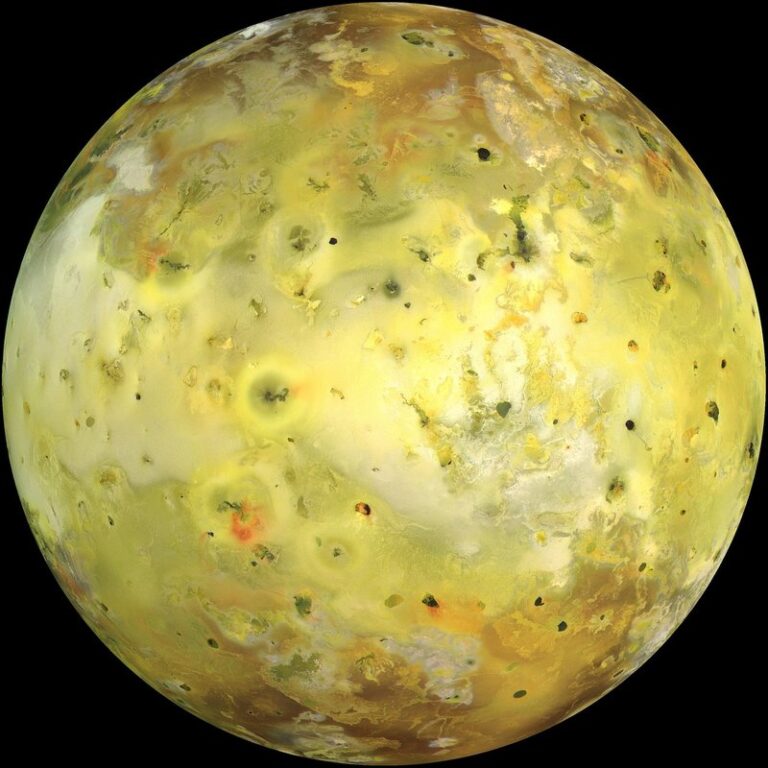
Io, the innermost moon, is characterized by its intense volcanic activity, with hundreds of volcanoes and a surface covered in lava flows. Its orbital period is just under 42 hours, which results in extreme tidal heating due to Jupiter’s gravitational pull. Europa, on the other hand, boasts a smooth, icy crust covering a possible liquid water ocean beneath. Its orbital eccentricity causes it to have a more stable climate than Io.
Ganymede and Callisto exhibit distinct differences as well. Ganymede has its own magnetic field, making it the only moon in the solar system with this feature. Callisto’s surface is heavily cratered, suggesting that it has remained largely unchanged since its formation. The IEGC group’s orbital patterns are also noteworthy: their orbits are not perfectly coplanar and have notable eccentricities, which contribute to their unique tidal heating mechanisms.
Amalthea to Himalia: The Inner and Outer Moons
Amalthea to Himalia: these moons occupy a unique position within Jupiter’s extensive lunar system. Comprising 16 smaller, irregular moons, this group is distinct from the larger, gas-rich planets like Io and Europa. Amalthea, the innermost of this subgroup, orbits at just 181,400 kilometers from Jupiter’s center. Its orbital period is a mere 0.498 Earth days, which translates to an extremely close proximity to Jupiter’s gravitational influence.
In contrast, the outer moons in this group, such as Himalia and Elara, exhibit more distant orbits with longer periods. These irregular moons are thought to be captured asteroids or Kuiper Belt Objects that were swept up by Jupiter’s gravity over time. Their highly eccentric paths suggest a complex orbital history, with possible resonances influencing their motion.
While less studied than the larger Io-Europa-Ganymede Callisto (IEGC) group, the inner and outer moons offer valuable insights into Jupiter’s capture mechanisms and the diversity of its lunar system. By examining these smaller bodies’ properties and behaviors, scientists can gain a deeper understanding of Jupiter’s influence on its surroundings and the processes that shaped our solar system.
Composition and Formation of Jupiter’s Moons
Let’s take a closer look at how Jupiter’s moons were formed, as well as their unique composition, which is unlike anything else in our solar system.
Io’s Volcanic Activity and Geological Features
Io is characterized by its extremely high volcanic activity, with hundreds of volcanoes and a surface covered in lava flows. This unique feature is due to Io’s internal heat source, which is generated by tidal forces caused by Jupiter’s gravitational pull. As a result, Io experiences intense heating, resulting in widespread volcanic activity and a surface that is constantly being reshaped.
The most notable geological feature on Io is the presence of volcanic calderas, large depressions formed by massive volcanic eruptions. These calderas are surrounded by mountains and valleys created by lava flows and volcanic debris. The surface of Io also features extensive lava flows, which have filled impact craters and formed new landscapes.
The processes that shape Io’s surface include tidal heating, volcanism, and tectonics. Tidal heating generates internal heat through friction caused by Jupiter’s gravitational pull. Volcanic activity shapes the surface through eruptions of molten rock and ash. Tectonic activity also plays a role in shaping Io’s surface, particularly through the creation of fault lines and the movement of crust.
Io’s unique geological features make it an fascinating subject for study, providing insights into the complex processes that shape the surfaces of Jupiter’s moons.
Europa’s Icy Crust and Possible Subsurface Ocean
Europa’s icy crust is one of its most distinctive features. The surface is composed primarily of water ice, with a few exceptions like the Conamara Chaos region where ice plumes rise above the surrounding terrain. This ice layer is estimated to be around 10-15 kilometers thick in some areas, making it one of the thickest icy crusts in our solar system.
Beneath this surface, scientists believe there may be a liquid water ocean. This possibility was first suggested by NASA’s Galileo spacecraft, which imaged Europa’s subsurface in the late 1990s and early 2000s. The data indicated that Europa has a significant amount of internal heat, likely generated by tidal forces caused by Jupiter’s gravitational pull.
As a result, scientists propose that this heat could be melting ice at the bottom of the crust, creating a liquid water ocean beneath. This ocean is thought to be in contact with Europa’s rocky core, which could provide the necessary energy for life to exist. The presence of such an ocean makes Europa an attractive target for future astrobiological research and exploration missions, such as the proposed NASA mission to explore Jupiter’s icy moons.
Ganymede’s Magnetic Field and Atmospheric Composition
Ganymede’s magnetic field is one of its most distinctive features. Unlike Earth’s, which is generated by the movement of molten iron in its core, Ganymede’s magnetic field is induced by Jupiter’s own magnetic field. When Jupiter’s magnetic field interacts with Ganymede’s interior, it creates a weak but detectable magnetic field around the moon.
This interaction also affects Ganymede’s atmospheric composition. The moon has a very thin atmosphere, composed mostly of oxygen and carbon dioxide. However, the solar wind, which is a stream of charged particles emitted by the Sun, erodes this atmosphere over time. As a result, Ganymede’s surface appears to be relatively free of atmospheric effects.
In contrast to its lack of atmosphere, Ganymede does have evidence of geological activity in the form of grooved terrain and craters. The moon’s interior is thought to be made up of a mixture of rock and ice, which could be indicative of a subsurface ocean. This ocean, if it exists, would be similar to those found on Europa and Enceladus, and could potentially harbor life.
Ganymede’s unique combination of magnetic field and atmospheric composition makes it an interesting subject for study in the field of astrobiology.
Jupiter’s Moons in Context: Orbital Patterns and Interactions
Jupiter’s four largest moons, Io, Europa, Ganymede, and Callisto, have orbital patterns that are intricately linked to each other. Understanding these relationships is crucial for grasping the unique dynamics of Jupiter’s moon system.
The Gravitational Influence on Moon Orbits
Jupiter’s massive gravity plays a dominant role in shaping the orbits of its moons. The gravitational influence is so strong that it causes tidal locking, where one side of a moon constantly faces Jupiter while the other side perpetually faces away. This effect is evident in the innermost Galilean moons, Io and Europa, which have tidally locked rotation periods.
In addition to tidal locking, orbital resonance also occurs among some of Jupiter’s moons. For instance, the 1:2:4 orbital ratio between Io, Europa, and Ganymede respectively creates a delicate balance that maintains their stability in orbit. This intricate dance is a direct result of Jupiter’s gravitational influence on its moons.
The gravitational pull also causes Jupiter’s moons to experience tidal acceleration, which gradually increases their orbital periods over time. However, this effect is more pronounced for smaller moons closer to Jupiter. For example, Amalthea experiences significant tidal acceleration due to its proximity to the planet. Understanding these gravitational interactions provides valuable insights into the complex dynamics governing Jupiter’s moon system.
Moons’ Effects on Jupiter’s Rotation and Magnetic Field
Jupiter’s moons have a profound impact on its rotation and magnetic field. The gravitational influence of the largest four moons – Io, Europa, Ganymede, and Callisto – causes Jupiter’s equatorial bulge to rotate slightly slower than its polar regions. This effect is most pronounced in the case of Io, which has a highly eccentric orbit that creates strong tidal forces on the planet.
As a result, Jupiter’s rotation period varies slightly depending on the position of these large moons. For example, when Io and Europa are aligned with Jupiter’s equator, their combined gravitational pull slows down the planet’s rotation by about 1% over a period of several years. Conversely, when Ganymede and Callisto are in opposition to Jupiter’s equator, their combined effect is negligible.
Jupiter’s magnetic field also interacts with its moons’ orbits, causing subtle changes in the planet’s overall magnetic topology. The strong tidal forces from Io and Europa create localized distortions in Jupiter’s magnetic field lines, which can be detected by spacecraft instruments. These interactions provide valuable insights into the complex relationships between Jupiter, its massive moons, and the solar system as a whole.
Observing and Exploring Jupiter’s Moons
As we continue our journey through the fascinating world of Jupiter’s moons, let’s take a closer look at the unique features of these celestial bodies and how to observe them effectively. We’ll examine the best ways to explore each moon’s surface and composition.
Telescopic Observations: Past, Present, and Future
Telescopic observations of Jupiter’s moons have a rich history spanning centuries. Initially, Galileo Galilei observed four of Jupiter’s largest moons – Io, Europa, Ganymede, and Callisto – using his telescope in 1610. These early discoveries marked the beginning of systematic studies on Jupiter’s moon system. Over time, astronomers employed various techniques to gather more information about these celestial bodies.
In recent years, advanced telescopes have enabled scientists to study Jupiter’s moons in greater detail. For instance, the Hubble Space Telescope has captured stunning images and spectra of Europa’s icy crust and Ganymede’s magnetic field. Similarly, the Very Large Telescope (VLT) has provided high-resolution observations of Io’s volcanic activity.
Future prospects for telescopic research on Jupiter’s moons include continued use of next-generation telescopes like the James Webb Space Telescope and the Giant Magellan Telescope. These instruments will allow astronomers to probe the subsurface oceans of Europa and Ganymede, potentially shedding light on their habitability. Moreover, advancements in computational models and machine learning algorithms will facilitate more accurate predictions and simulations of Jupiter’s moon system.
Spacecraft Missions to Jupiter’s Moons
Spacecraft missions have greatly expanded our understanding of Jupiter’s moons. The Galileo spacecraft, launched in 1989, is one of the most notable missions to visit Jupiter’s moons. Between 1995 and 2003, it orbited Jupiter and made numerous flybys of several moons, including Io, Europa, Ganymede, and Callisto. The mission revealed geysers on Io, a possible subsurface ocean on Europa, and evidence of water vapor plumes on Ganymede.
Future missions are also planned to explore Jupiter’s moons in more detail. NASA’s Europa Clipper mission is scheduled to launch in the mid-2020s and will focus on studying Europa’s habitability. The mission will use a flyby approach to gather data on the moon’s subsurface ocean, ice shell, and possible signs of life.
Another notable mission is the JUICE (JUpiter ICy moons Explorer) mission, launched by the European Space Agency in 2022. It will explore Jupiter’s icy moons Ganymede, Europa, and Callisto over a period of three years. The mission aims to study these moons’ subsurface oceans and possible habitability.
These missions demonstrate the importance of continued exploration and research on Jupiter’s moons, which can provide valuable insights into their composition, geology, and potential for life.
The Significance of Studying Jupiter’s Moons
Let’s take a closer look at why studying Jupiter’s moons is crucial for expanding our understanding of the solar system and its mysterious celestial bodies. By examining these moons, scientists can gain valuable insights into the formation and evolution of our cosmos.
Unlocking Secrets of the Solar System’s Formation
Studying Jupiter’s moons holds a crucial key to understanding the solar system’s formation and evolution. By examining the properties of these celestial bodies, scientists can gain valuable insights into the processes that shaped our cosmic neighborhood.
One of the most significant aspects of Jupiter’s moons is their diverse compositions, which provide a window into the early stages of planetary formation. Io, for example, has a massive iron core, while Europa has a thick icy crust covering a possible subsurface ocean. These variations in composition and structure offer clues about how planets formed and evolved over billions of years.
The gravitational interactions between Jupiter’s moons also offer a unique opportunity to study the effects of tidal heating on planetary bodies. This process, which occurs when one body’s gravity causes another to heat up due to friction, is thought to have played a significant role in shaping the solar system’s early development.
Scientists can use these insights to better understand how our own planet came to be. By studying the unique characteristics of Jupiter’s moons and their roles within the solar system, researchers can develop more accurate models of planetary formation and evolution, ultimately shedding light on the mysteries of our cosmic past.
Potential for Life and Habitability on Jupiter’s Moons
The possibility of life existing on Jupiter’s moons is a tantalizing prospect that has captivated scientists for decades. One of the key conditions necessary for habitability is liquid water, and several of Jupiter’s moons are thought to have subsurface oceans that could potentially support life. Europa, in particular, is considered a prime candidate due to its thick icy crust covering a global ocean estimated to be up to 100 km deep.
Ganymede also has a subsurface ocean, although it’s not as large as Europa’s. Scientists believe that the moon’s magnetic field and tidal heating could provide the energy needed to support life in this ocean. Io, on the other hand, is too hot for liquid water to exist, but its volcanic activity could potentially create habitable environments in certain areas.
For life to thrive on these moons, a stable energy source, nutrients, and a protective environment would be necessary. These conditions are still purely theoretical, and further research is needed to determine if they can actually support life. However, the prospect of discovering life beyond Earth’s solar system is an exciting one, and studying Jupiter’s moons is a crucial step in understanding the possibility of extraterrestrial life.
Frequently Asked Questions
Can I observe Jupiter’s moons with my backyard telescope?
Yes, it is possible to observe Jupiter’s moons with a decent backyard telescope. To do so, you’ll need to locate Jupiter and its moons in the night sky, then use a planetarium software or mobile app to determine which moon is visible and when. Keep in mind that some of the smaller moons may be challenging to spot due to their brightness.
How long would it take for a spacecraft to reach Jupiter’s largest moon, Ganymede?
The journey time to Ganymede depends on the specific spacecraft design and mission parameters. However, using current technology, a trip to Ganymede could take anywhere from 2 to 5 years, depending on factors like propulsion system efficiency and gravitational assists.
What are some potential risks or challenges associated with searching for life on Jupiter’s moons?
One of the primary concerns is the harsh radiation environment surrounding Jupiter, which could damage both spacecraft electronics and biological samples. Additionally, the extreme temperatures on some moons, such as Europa’s surface temperature being around -160°C, pose significant challenges for any potential biosignatures.
Can I use data from NASA’s Juno mission to study Jupiter’s moons?
While the primary focus of the Juno mission is on Jupiter itself, the spacecraft has also provided valuable insights into the magnetic field and radiation environment surrounding the planet. However, more targeted missions or observations would be necessary to gather detailed information about the moons themselves.
Are there any plans for future missions to explore Jupiter’s smaller, irregular moons?
Yes, several space agencies and organizations have proposed or are currently planning missions to study some of Jupiter’s smaller moons in greater detail. For example, NASA is considering a mission to explore Amalthea and Thebe, while the European Space Agency has discussed plans for a mission to explore Himalia.
Can I conduct my own research on Jupiter’s moons using publicly available data?
Yes, NASA and other space agencies often release large datasets related to their missions, including those focused on Jupiter’s moons. You can use these resources to analyze orbital patterns, magnetic fields, or other phenomena of interest. However, be aware that processing and interpreting such complex data requires significant expertise in relevant scientific disciplines.
Are there any resources available for students or individuals interested in learning more about Jupiter’s moons?
Yes, numerous educational resources are available online, including NASA’s Solar System Exploration website, planetary science courses on Coursera or edX, and research papers published through arXiv. These can provide a solid foundation for understanding the complexities of Jupiter’s moon system.
Can I use data from spacecraft missions to study Europa’s subsurface ocean?
While current missions like Hubble Space Telescope have provided valuable insights into Europa’s surface and subsurface ice crust, more targeted missions or observations would be necessary to gather detailed information about the potential liquid water ocean beneath its surface. Future missions like NASA’s Europa Clipper mission are planned to explore this very possibility.
Are there any concerns regarding contamination of Jupiter’s moons with Earth-based organisms?
Yes, one of the primary concerns when exploring other celestial bodies is preventing the contamination of potential biospheres with Earth-based microorganisms. This issue has been taken seriously by space agencies and researchers planning missions to explore Jupiter’s moons, who take extensive precautions to ensure cleanliness and minimize the risk of contamination.
Can I use machine learning algorithms to analyze data from Jupiter’s moon missions?
Yes, with sufficient computational power and expertise in machine learning, you can apply various algorithms to process and analyze large datasets related to Jupiter’s moons. However, keep in mind that developing effective models requires significant experience with both planetary science and machine learning techniques.
Are there any ongoing or proposed missions specifically focused on searching for life on Europa?
Yes, the NASA’s Europa Clipper mission is currently planned to launch in the mid-2020s and will focus on exploring Europa’s subsurface ocean in detail. Additionally, a possible future lander mission could potentially be sent to explore the surface of Europa and search for signs of biological activity.
What are some key differences between the IEGC group of moons and the smaller, irregular moons like Amalthea?
The primary difference lies in their orbital characteristics and composition. The IEGC group (Io, Europa, Ganymede, Callisto) is a distinct set of larger, more massive moons with unique features such as Io’s volcanic activity or Europa’s subsurface ocean. In contrast, smaller moons like Amalthea exhibit irregular orbits and are thought to have formed differently due to Jupiter’s intense gravitational influence.
Can I use data from spacecraft missions to study the potential for life on Ganymede?
While current missions have provided valuable insights into Ganymede’s magnetic field and atmospheric composition, more targeted missions or observations would be necessary to gather detailed information about potential biosignatures. Research has focused primarily on understanding Ganymede’s subsurface ocean and the conditions necessary for life to exist.
Are there any collaborations between space agencies or researchers exploring Jupiter’s moons?
Yes, international collaborations are common in planetary science research. NASA often partners with European Space Agency (ESA), as well as other organizations like the Canadian Space Agency (CSA) or the Russian Federal Space Agency (Roscosmos). These partnerships allow for shared resources and expertise to tackle complex scientific questions related to Jupiter’s moons.
Can I simulate orbital patterns of Jupiter’s moons using numerical models?
Yes, you can use computational tools and numerical models to simulate orbital patterns of Jupiter’s moons. Researchers often employ various software packages or programming languages (such as Python or MATLAB) to model the complex gravitational interactions between Jupiter and its moons.
Are there any potential hazards associated with landing on Jupiter’s moons?
Yes, several hazards exist when considering landings on Jupiter’s moons. For instance, extreme temperatures, radiation exposure, and the lack of atmosphere can all pose significant challenges for both human exploration and robotic missions.