
Reflection nebulas are vast interstellar clouds that shroud young stars, concealing their fiery cores. These ethereal formations play a crucial role in our understanding of the universe’s evolution and birthplaces of new stars. The structure of these nebulas, comprising gas and dust, holds secrets about the formation of celestial bodies. When light from nearby stars illuminates these clouds, it scatters, creating a kaleidoscope of colors that captivate astronomers and sky gazers alike. Beyond their aesthetic appeal, reflection nebulas offer valuable insights into the cosmos. This article will explore the characteristics, astronomical significance, and cultural impact of these enigmatic formations, delving into their role in shaping our comprehension of the universe’s vast expanse. By the end of this journey through the realm of reflection nebulas, you’ll be able to understand the intricate processes that govern their formation and behavior.
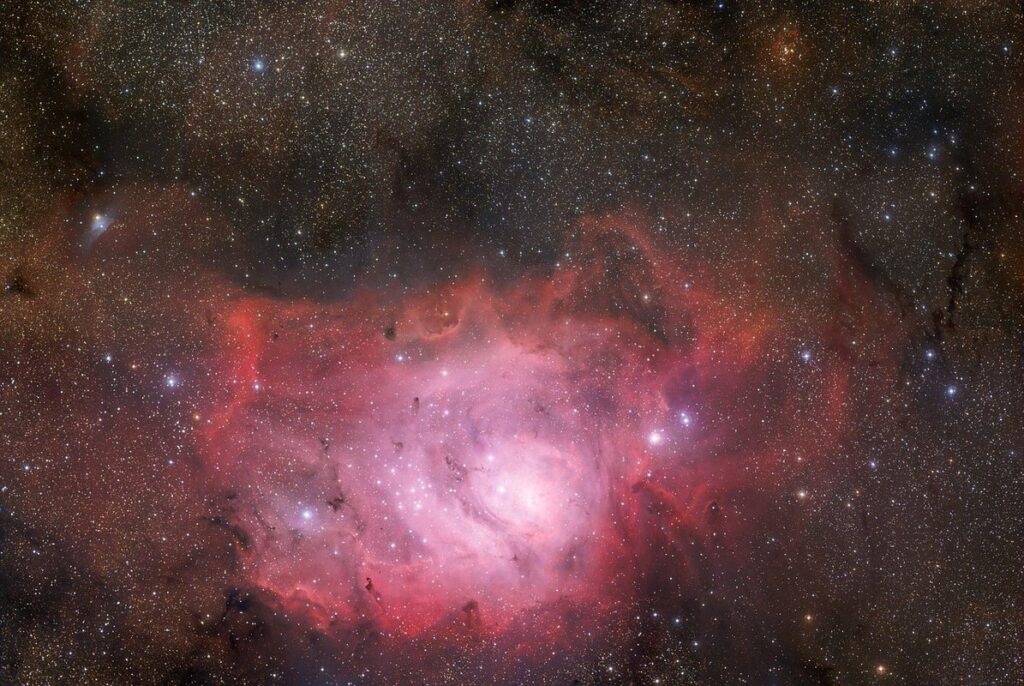
What are Reflection Nebulae?
Let’s take a closer look at what reflection nebulae actually are: they’re vast, interstellar clouds of gas that reflect the light of nearby stars.
Types of Nebulae
Reflection nebulae are just one type of a broader category known as nebulae. Nebulae can be broadly classified into several types based on their composition and structure. The main categories of nebulae are emission nebulae, absorption nebulae (also known as dark nebulae), and reflection nebulae themselves.
Emission nebulae, such as the Orion Nebula, emit light due to the energy released by newly formed stars or other ionizing sources within them. On the other hand, dark nebulae are dense clouds of gas and dust that block the light from background stars, creating dark patches in the sky. These can also play a role in star formation.
There are other types of nebulae as well, including planetary nebulae, which form when a star exhausts its fuel and expels its outer layers into space. Supernova remnants and Wolf-Rayet nebulae are also distinct categories with unique characteristics. Understanding these different types is essential for appreciating the complex processes that shape our universe and creating new opportunities for research and observation.
Formation and Structure
Reflection nebulae form when nearby stars emit intense radiation that illuminates surrounding gas and dust. This process occurs when a massive star is born or dies, causing it to release an enormous amount of energy into its surroundings. The radiation from these stars excites the gas and dust particles, making them glow.
The radiation from the star can take many forms, including ultraviolet (UV) light and X-rays. These high-energy photons interact with the surrounding gas, causing it to heat up and emit light across a wide range of wavelengths. This is why reflection nebulae often appear as bright, diffuse clouds in telescopic images.
The structure of a reflection nebula is influenced by the nearby star’s radiation pattern. For example, if the star is relatively cool and stable, its radiation may be more evenly distributed, creating a uniform glow across the surrounding gas. In contrast, hotter stars tend to have more intense radiation patterns, leading to complex structures and features within the nebula.
The relationship between a reflection nebula and its nearby star can provide valuable insights into stellar evolution and the interaction between massive stars and their environments. By studying these interactions, astronomers can gain a deeper understanding of the processes that shape our universe.
Characteristics of Reflection Nebulae
Reflection nebulae are distinct from other types of nebulae due to several key characteristics. One of the most notable features is their color, which tends to be a pale blue or gray hue. This is because they reflect the light of nearby stars, rather than emitting their own light like emission nebulae do.
In terms of size and shape, reflection nebulae can vary greatly. Some are small and compact, while others stretch across vast distances, often taking on irregular shapes as they interact with surrounding gas and dust clouds. The Eagle Nebula (M16) is a notable example, featuring a large, star-forming region surrounded by a wispy network of gas.
Another key characteristic is the presence of dark lanes or filaments within reflection nebulae. These are denser regions of gas and dust that can block the light from nearby stars, creating striking visual contrasts. By studying these characteristics, astronomers can gain insights into the complex interactions between stars, gas, and dust in our galaxy.
Observing and Studying Reflection Nebulae
Observation is key to understanding these cosmic wonders, so let’s explore how astronomers study reflection nebulae up close. We’ll take a closer look at the techniques used to analyze their composition and structure.
Telescopes and Observation Techniques
A suitable telescope for observing reflection nebulae is one with a large aperture to gather enough light and reveal the subtle details of these objects. Apertures ranging from 4-12 inches (10-30 cm) are often used, although larger ones can provide even more impressive views. In terms of focal length, a shorter focal ratio (such as f/6 or f/8) is generally preferred for nebulae observation.
Some common telescope types for reflection nebula study include refractors, reflectors, and catadioptric systems. Refractors are ideal for their high image quality and ability to resolve fine details in the nebula’s structure. Reflectors, on the other hand, offer a larger aperture at a lower cost, making them a popular choice among amateur astronomers.
In addition to telescopes, various observation techniques can enhance one’s experience with reflection nebulae. Using narrowband filters (such as H-alpha or OIII) can help isolate specific wavelengths of light and reveal more intricate details in the nebula’s texture. Exposure times should be carefully planned, allowing for sufficient integration time to capture the fainter features without overexposing brighter areas.
Astronomers often employ specialized equipment like image intensifiers or electron multiplying cameras (EMCCDs) to gather data on reflection nebulae. These tools enable researchers to detect and study subtle variations in light intensity within these objects, providing valuable insights into their physical properties.
Astronomical Tools for Research
Astronomers rely on a range of advanced tools and technologies to research and analyze reflection nebulas. One crucial tool is computer simulations, which allow scientists to model the behavior of gas and dust within these nebulae. These simulations help researchers understand the complex interactions between radiation, chemistry, and magnetic fields that shape the structure and appearance of reflection nebulas.
Spectroscopy is another essential technique used in studying reflection nebulas. By analyzing the light emitted by these objects, astronomers can determine their chemical composition, temperature, and velocity. This information provides valuable insights into the physical processes occurring within the nebulae, such as star formation and gas dynamics.
Some of the key aspects of spectroscopy include measuring the intensity and profile of spectral lines, which indicate the presence of specific elements or ions. Researchers also use spectroscopic data to map the distribution of these elements across the nebula. By combining spectroscopic results with computer simulations, astronomers can build a more comprehensive understanding of reflection nebulas and their role in shaping our galaxy’s evolution.
Discovering New Reflection Nebulae
New reflection nebulas are typically discovered through large-scale surveys, such as the Sloan Digital Sky Survey (SDSS) and the Digitized Sky Survey. These projects use advanced imaging technology to map vast regions of the sky, often uncovering previously unknown celestial objects. Citizen science projects also play a significant role in discovering new reflection nebulas.
For example, the Zooniverse platform has hosted several citizen science projects focused on identifying nebulae and other astrophysical phenomena. These projects allow volunteers to classify images of the night sky, helping scientists identify potential targets for further study. By leveraging the efforts of thousands of individuals, these projects have led to numerous discoveries of new reflection nebulas.
The role of large-scale surveys and citizen science projects is crucial in expanding our understanding of reflection nebulas. As new technology becomes available, we can expect even more comprehensive surveys of the sky and further contributions from volunteers worldwide. When analyzing images or participating in citizen science projects, it’s essential to consider the following:
- Look for faint, diffuse objects that may be indicative of a nebula
- Pay attention to surrounding stars, as they often illuminate reflection nebulas
- Be aware of the color palette used in imaging, as different wavelengths can highlight distinct features within nebulas
Famous Reflection Nebulae
Among the many breathtaking examples of reflection nebulas, some stand out for their sheer grandeur and mystique. Let’s take a closer look at these legendary formations that have captured astronomers’ imaginations for centuries.
The Eagle Nebula (M16)
The Eagle Nebula (M16) is one of the most iconic reflection nebulae in the night sky. Located approximately 6,500 light-years away in the constellation Serpens, it’s a stunning example of interstellar gas and dust illuminated by nearby stars. The nebula’s unique feature is the “Pillars of Creation,” three towering columns of dense gas and dust that are slowly being eroded by intense radiation from hot stars.
These pillars are not only breathtakingly beautiful but also hold secrets about star formation and the life cycle of massive stars. The Pillars of Creation are thought to be incubators for new star birth, with material collapsing under gravity to form protostars. The process is complex and still not fully understood, making the Eagle Nebula an important target for ongoing research.
Observing the Eagle Nebula requires a moderate-sized telescope and patience, as the nebula’s subtle features can be difficult to discern. However, with the right equipment and viewing conditions, you can witness the majestic pillars and appreciate their importance in the grand scheme of cosmic evolution. The Eagle Nebula is an awe-inspiring reminder of the beauty and mystery that lies at the heart of our universe.
The Carina Nebula (NGC 3372)
The Carina Nebula (NGC 3372) is one of the most recognizable and awe-inspiring reflection nebulae. Located in the southern sky, it’s a sprawling complex of gas and dust illuminated by intense starlight. At its heart lies the massive star cluster Eta Carinae, which has undergone several supernova-like explosions in recent history.
Eta Carinae is itself an enigmatic object, with a mass estimated to be around 100-150 times that of our sun. Its erratic behavior has captivated astronomers for centuries, and it remains one of the most closely watched stars in the sky. The nebula’s vibrant colors are due in part to the presence of complex organic molecules, such as polycyclic aromatic hydrocarbons (PAHs), which are formed when gas and dust interact with radiation from nearby stars.
One of the Carina Nebula’s most striking features is its irregular shape, which reflects the chaotic environment surrounding Eta Carinae. This region is home to intense star formation, with newly born stars bursting forth in a blaze of light and energy. The Carina Nebula serves as a reminder of the dynamic, ever-changing nature of these celestial wonders.
Other Notable Reflection Nebulae
One notable reflection nebula is NGC 281, located about 10,000 light-years away in the constellation Cassiopeia. It’s a vast, star-forming complex with multiple ionization fronts and distinct shock waves. This nebulosity is particularly striking due to its unique structure, which resembles a butterfly or a dragonfly.
Another notable example is RCW 49, situated near the center of the Milky Way in the constellation Centaurus. It’s an active star-forming region with intense radiation from young stars illuminating the surrounding gas and dust. RCW 49 is particularly interesting due to its unusual shape and the presence of multiple protostellar objects.
The Orion Nebula (M42) also deserves mention, although it’s more of a mixed-type nebula that exhibits both reflection and emission characteristics. Its striking horsehead-shaped region is actually an absorption feature created by dense interstellar gas. The surrounding nebulosity is illuminated by the intense radiation from O-type stars, making M42 one of the most iconic and studied objects in the night sky.
These three examples demonstrate the diversity and complexity of reflection nebulae, each offering unique insights into the processes that shape our universe.
Advanced Aspects of Reflection Nebulae
As we continue our journey into the realm of reflection nebulae, let’s now explore some of the more complex features that make these celestial objects so fascinating. We’ll examine the intricacies of their structure and behavior.
Ionization and Chemistry
Reflection nebulas are complex environments where ionization and chemistry play a vital role. Hydrogen is ionized by UV radiation from nearby stars, creating a region with an average electron temperature of around 10,000 Kelvin. This process affects the surrounding gas, causing it to become partially ionized, resulting in a mix of neutral and ionized species.
As particles move through these nebulae, they interact with magnetic fields, influencing the chemistry that occurs within them. The presence of molecules like carbon monoxide and sulfur can provide insight into the nebula’s temperature and density. For instance, observations of the Carina Nebula suggest that it contains a significant amount of molecular gas.
To further understand these processes, scientists analyze the spectral lines emitted by the nebulae. By comparing these lines to laboratory measurements, researchers can infer the chemical composition of the gas within the nebulae. This information is crucial for understanding the dynamics and evolution of reflection nebulas, shedding light on their mysterious beauty.
Magnetic Fields and Turbulence
Magnetic fields play a crucial role in shaping the structure and evolution of reflection nebulae. These fields can be incredibly strong, with some studies suggesting they’re as powerful as 10 microgauss or even stronger. This intense magnetism influences the way gas and dust particles interact within the nebula, causing them to move in complex patterns.
Turbulence also has a significant impact on the formation of reflection nebulae. When gas and dust collide, they create shockwaves that compress and heat up nearby material, causing it to emit light. This turbulence can lead to the creation of intricate structures and patterns within the nebula.
To understand how magnetic fields and turbulence interact, astronomers often use simulations and modeling techniques. These tools allow researchers to recreate the complex processes occurring within reflection nebulae, helping them better grasp the underlying mechanisms driving their formation and evolution.
In some cases, strong magnetic fields can even lead to the suppression of star formation within a nebula. By altering the way gas and dust condense and collapse, these fields can change the trajectory of a star’s development.
Simulations and Modeling
Computational models play a crucial role in understanding the complex behavior of reflection nebulae. Researchers employ various numerical simulations to mimic the interactions between radiation, gas, and dust within these vast interstellar clouds. One key approach is the use of radiative transfer codes, which account for the absorption and scattering of light by dust grains. These models help scientists study the distribution of elemental abundances, temperature gradients, and density fluctuations in reflection nebulae.
However, computational models have limitations when it comes to replicating the intricate dynamics within these objects. For instance, current simulations struggle to accurately capture the effects of turbulent mixing and magnetic field interactions on the overall structure and evolution of reflection nebulae. Moreover, the treatment of dust grain properties and radiation transfer processes remains a subject of ongoing research.
Despite these challenges, future studies will likely focus on developing more sophisticated models that incorporate advanced treatments of gas-dust interactions and radiative feedback effects. This may involve the use of machine learning algorithms to improve simulation accuracy or the development of high-performance computing frameworks for large-scale numerical experiments.
Reflection Nebulae in Culture and History
Reflection nebulae have fascinated humans for centuries, influencing art, literature, and science throughout history. We’ll explore some of the most notable examples of their cultural impact.
Ancient Observations and Legends
Ancient cultures were fascinated by nebular phenomena, including reflection nebulas. In many ancient civilizations, these vast interstellar clouds were seen as omens, divine messengers, or even harbingers of doom. For example, the ancient Greeks associated nebulas with their gods and goddesses, while the Chinese saw them as signs of good fortune. The Mayans, on the other hand, believed that nebulas were connected to the underworld.
The Babylonians recorded observations of a nebula in the constellation Orion around 1500 BCE. Similarly, ancient Greek astronomers like Aristarchus of Samos and Hipparchus noted the presence of nebulas in their observations. These early records demonstrate an awareness and curiosity about these enigmatic celestial bodies. However, it wasn’t until the development of modern astronomy that scientists began to understand the true nature of reflection nebulas.
Some ancient legends still hold sway today. For instance, the “Pillars of Creation” in the Eagle Nebula have been associated with the mythical Pillars of Hercules. These stories may seem far-fetched now, but they reflect humanity’s enduring fascination with the beauty and mystery of nebular phenomena.
Modern Representations in Art and Media
Reflection nebulae have long been a source of fascination for artists, writers, and filmmakers. In modern times, they continue to inspire creative interpretations across various mediums. One notable example is the 2014 film “Interstellar,” which features a stunning visual representation of the Pillars of Creation in the Eagle Nebula (M16). The film’s use of advanced visual effects allowed viewers to witness the intricate details of the nebula’s structure and dynamics.
In art, reflection nebulas have been depicted as ethereal, otherworldly landscapes. Artists such as H.R. Giger and Syd Mead have used nebulae as backdrops for their futuristic scenes, infusing them with a sense of mystery and wonder. More recently, digital artists have created stunning renderings of reflection nebulas using software like Blender and Adobe After Effects.
When creating art or media inspired by reflection nebulas, consider the following tips: pay attention to color palette and lighting effects; experiment with different textures and materials to convey the nebula’s complex structure; and don’t be afraid to get creative with your interpretation – after all, the beauty of reflection nebulas lies in their unique, unpredictable nature.
Impact on Astronomy and Society
Studying reflection nebulas has significantly advanced our understanding of the universe’s mysteries. One key area where reflection nebulas have made a profound impact is in the study of star formation and evolution. By observing the birthplaces of stars, astronomers can gain insights into the processes that shape these celestial bodies.
For instance, the discovery of protostars within reflection nebulas has revealed the complex interplay between magnetic fields, gas, and dust during the early stages of star formation. These findings have led to a greater understanding of how stars acquire their angular momentum and how this affects their overall structure.
In addition to advancing our knowledge of astrophysics, studying reflection nebulas also has broader societal implications. The intricate beauty and majesty of these nebulae have captivated artists, writers, and the general public alike, inspiring a sense of wonder and awe about the universe’s vastness and complexity.
Frequently Asked Questions
Can I observe reflection nebulae with my home telescope?
Yes, many reflection nebulas can be observed with a moderate-sized backyard telescope. However, it’s essential to note that the visibility of these objects often depends on their brightness and distance from Earth. For optimal viewing, look for nebulas within our galaxy or near bright stars.
How do I know if a nebula is a reflection nebula or an emission nebula?
The primary distinction between these two types lies in their spectral characteristics. Reflection nebulas tend to appear as dark lanes or patches against bright starlight, whereas emission nebulas glow with a distinct color due to ionized gas. Consult astronomical charts and data sheets for the specific type of nebula you’re observing.
Can I use computer simulations to model complex chemistry within reflection nebulas?
Yes, computational models can accurately simulate the intricate chemical processes occurring within these celestial objects. Researchers often employ specialized software packages that account for factors like radiation, magnetic fields, and turbulent flows. By leveraging these models, scientists gain valuable insights into nebular evolution and stellar interactions.
What if I’m trying to observe a reflection nebula but it’s hidden behind thick clouds or atmospheric interference?
When observing nebulas in areas with poor visibility, try using specialized telescopes or binoculars designed for low-light conditions. Alternatively, consider using astronomical software that allows you to simulate the view of an object at different wavelengths or under various atmospheric conditions.
Can I create art inspired by reflection nebulae without needing extensive astronomy knowledge?
While a basic understanding of nebular properties can enhance your creative work, it’s not necessary for artistic purposes. Many artists have successfully interpreted and visualized these celestial wonders using imagination and inspiration from astronomical data and images. Focus on conveying the ethereal beauty and mystery that these nebulas evoke in your art.