
Star clusters are breathtaking celestial formations that have captivated astronomers for centuries. You might be familiar with the stunning beauty of the Hyades or Pleiades, two of the most prominent examples of star clusters in our galaxy. But what exactly are these clusters, and how do they form? In this article, we’ll explore the fascinating process of star cluster formation, evolution, and eventual dispersal into the vast expanse of space. By examining these cosmic entities, we can gain valuable insights into our galaxy’s structure and the universe’s overall evolution. As we delve into the world of star clusters, you’ll discover how they’re not just beautiful sights in the night sky, but also crucial to understanding the complex dynamics of the cosmos. By the end of this article, you’ll have a deeper understanding of these remarkable formations and their significance in the grand scheme of the universe.
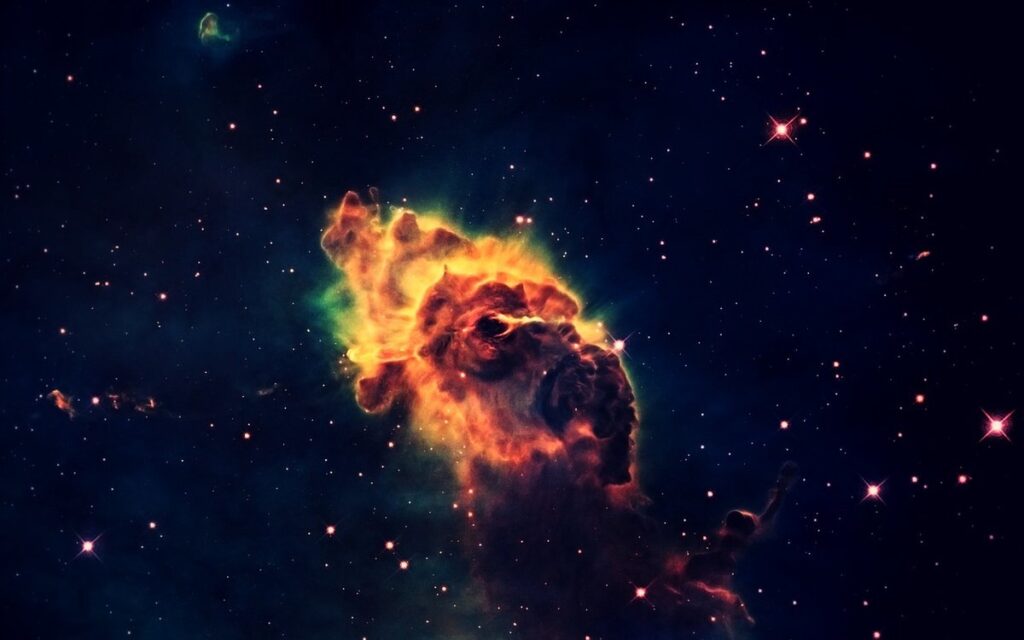
What are Star Clusters?
Let’s start by exploring what star clusters actually are, and how they’re formed from the same material as our solar system. You’ll see that these groups of stars have a surprisingly familiar origin story.
Formation and Types
Star clusters are born from the collapse of giant molecular clouds within our galaxy. These cloud collapses occur when a region of space is rich in gas and dust, often triggered by supernovae explosions or the passage of nearby stars. As the material collapses under its own gravity, it begins to spin faster and faster, eventually fragmenting into smaller regions that will give rise to new stars.
There are two main types of star clusters: open clusters and globular clusters. Open clusters are loose aggregations of stars held together by their mutual gravity, typically containing between a few dozen to a few hundred stars. They tend to be relatively young, with ages ranging from a few million to a billion years. Globular clusters, on the other hand, are tightly bound, spherical collections of hundreds of thousands to millions of stars. These older clusters can live for up to 13 billion years, making them some of the oldest objects in our galaxy.
Understanding the differences between these two types is crucial for astronomers studying star cluster evolution and the history of our galaxy. By examining their ages, compositions, and spatial distributions, scientists can gain insights into the processes that shape the formation and development of star clusters.
Characteristics of Open Clusters
Open clusters are distinct from globular clusters in several key characteristics. One of their defining features is youthfulness – they tend to be younger than globular clusters, with an estimated age range of 100 million to a few billion years. This relatively short lifetime allows them to contain a smaller number of stars compared to the hundreds of thousands found in globular clusters.
In terms of size, open clusters are typically smaller and more dispersed, containing between a few hundred to several thousand stars. These stars can be spread out over vast distances, sometimes spanning tens or even hundreds of light-years across. This dispersal is partly due to their younger age, as the stars within these clusters have not yet had time to reach the dense, tightly packed configurations seen in globular clusters.
The smaller size and dispersed nature of open clusters make them more difficult to detect from a distance. However, they are often found near bright star-forming regions or nebulae, which can aid in their identification.
Characteristics of Globular Clusters
Globular clusters are distinct from open clusters due to their age, size, and proximity to us. They are typically older than open clusters, with some dating back over 10 billion years. This is because they formed during the early days of our galaxy’s evolution. In contrast, open clusters tend to be younger, often barely hundreds of millions of years old.
One notable characteristic of globular clusters is their massive size. Comprising hundreds of thousands to millions of stars packed into a relatively small region, these clusters are truly cosmic behemoths. To put this in perspective, the largest known globular cluster, Omega Centauri, contains over 10 million stars within its core.
Their proximity to us also sets globular clusters apart from open clusters. As we’ll explore further in later sections, our galaxy’s central regions contain many of these massive star clusters, making them relatively easy to observe and study.
The Life Cycle of Star Clusters
As star clusters are born, live, and eventually die, understanding their life cycle is crucial to grasping the entire process of star formation. We’ll examine the stages of a cluster’s existence in more detail below.
Birth and Protostar Formation
When a giant molecular cloud collapses under its own gravity, it triggers a chain of events that ultimately leads to the formation of stars and star clusters. As the cloud collapses, it begins to spin faster, causing the material to flatten into a disk shape around the center. This process is known as accretion.
The flattened disk shape is critical for star formation because it allows the material at the center to continue collapsing while also providing a stable platform for new stars to form. As more and more material accumulates at the center, it eventually becomes so dense that nuclear fusion begins to occur, marking the birth of a protostar.
The protostar then undergoes a series of rapid changes as it collapses under its own gravity. This process can take anywhere from 10,000 to 500,000 years, depending on the size and mass of the star cluster being formed. As the protostar continues to collapse, its surface temperature increases until nuclear fusion ignites in the core.
Main Sequence and Stellar Evolution
As stars exhaust their fuel, they leave the main sequence and evolve into different stages. The main sequence is a critical phase in a star’s life cycle, where it fuses hydrogen into helium in its core. However, once the hydrogen fuel is depleted, the star begins to expand and cool, becoming a red giant. This process can cause significant changes to the cluster’s appearance, as the red giants become more prominent and even engulf nearby stars.
The exact path a star takes after leaving the main sequence depends on its mass. More massive stars tend to end their lives in spectacular supernovae explosions, sometimes leaving behind neutron stars or black holes. In contrast, less massive stars like our sun will exhaust their fuel and shed their outer layers, becoming white dwarfs.
For astronomers studying star clusters, understanding stellar evolution is crucial for accurately dating the cluster’s age. By analyzing the properties of its member stars, such as their luminosity and surface temperature, scientists can infer when the cluster was formed and how it has changed over time. This information provides valuable insights into the cluster’s history and helps researchers better understand the underlying astrophysical processes that shape our universe.
Dispersal of Star Clusters
As star clusters age and mature, they begin to disintegrate due to several factors. One primary cause is tidal interactions with our galaxy’s gravitational field. Imagine a cluster situated near a spiral arm or a dense stellar region – the gravitational forces exerted by these surroundings can stretch and distort the cluster, eventually causing its stars to break free. This process, known as tidal disruption, can happen gradually over millions of years.
Stellar mass loss also plays a significant role in the dispersal of star clusters. As individual stars within the cluster exhaust their fuel, they shed mass through stellar winds or supernovae explosions. This loss of mass weakens the cluster’s gravitational hold on its constituent stars, allowing them to drift apart. External perturbations from nearby galaxies or other astrophysical events can further accelerate this process.
To put these processes into perspective, consider a globular cluster like Omega Centauri, which has already experienced significant tidal disruption and is slowly dispersing over time. The remaining clusters in the Milky Way will likely follow similar paths, eventually dispersing their stars throughout the galaxy. This understanding of star cluster dispersal highlights the dynamic nature of our galaxy’s evolution.
Observing and Studying Star Clusters
To get a better understanding of star clusters, it’s essential to observe them through telescopes and study their behavior over time. We’ll take a closer look at the methods astronomers use for this purpose.
Telescopes and Instrumentation
Astronomers use a range of telescopes and instruments to study star clusters. Optical telescopes are often used for observations in visible light, allowing researchers to examine the cluster’s stars, gas, and dust distribution. Infrared telescopes come into play when studying cooler objects within the cluster, such as red giants or protostars. These longer wavelengths penetrate interstellar dust more effectively.
Radio telescopes can also be employed to observe star clusters, particularly those with active nuclei or strong magnetic fields. They’re useful for detecting molecular gas and monitoring the cluster’s evolution over time. Additionally, interferometric techniques combine signals from multiple radio antennas to create high-resolution images of the cluster.
Some notable examples of instruments used in studying star clusters include the Hubble Space Telescope and the Atacama Large Millimeter/submillimeter Array (ALMA). These tools provide unprecedented detail and resolution for researchers seeking to understand the complex dynamics within star clusters.
Data Analysis and Simulation
To accurately interpret observations and simulate star cluster behavior, scientists rely on sophisticated software and data analysis tools. These digital instruments enable researchers to tease out patterns and relationships within complex datasets, helping them to identify trends that might otherwise go unnoticed.
Some of the most widely used software for analyzing star cluster data includes packages like Astropy and PyRAF. These tools allow users to perform tasks such as spectral analysis, photometry, and spatial modeling with ease. By utilizing these resources, researchers can efficiently process vast amounts of observational data, ultimately gaining a deeper understanding of star cluster properties.
Simulation software, on the other hand, enables scientists to model the behavior of star clusters under various conditions. This might involve exploring how different environmental factors – such as tidal forces or supernovae explosions – affect star cluster dynamics. Researchers can use these models to predict future outcomes, refine existing theories, and even inform the design of observational campaigns.
By combining observations with simulations, scientists can build more comprehensive pictures of star clusters and their place within the galaxy. This integrated approach not only enhances our understanding of individual clusters but also sheds light on broader astrophysical processes.
Key Research Questions and Debates
Researchers are actively exploring several key research questions and debates surrounding star clusters. One critical area of investigation is the formation mechanism of globular clusters, which are thought to have formed through a combination of gas collapse and mergers with smaller clusters. However, simulations suggest that these processes may not be sufficient to explain the observed properties of these ancient clusters.
Another debate centers on the role of environmental factors in shaping star cluster evolution. Studies indicate that clusters located in regions of high stellar density or near massive molecular clouds are more likely to experience disruption and tidal stripping. In contrast, clusters situated in quieter environments appear to retain their structural integrity for longer periods.
To better understand these complex processes, researchers often rely on detailed simulations and data analysis from telescopic observations. These studies frequently employ techniques such as star counting, color-magnitude diagrams, and radial velocity measurements to constrain models of cluster formation and evolution. By addressing these research questions and debates, scientists can gain a more nuanced understanding of the intricate relationships between star clusters, their environments, and the larger cosmic context.
Star Clusters in Our Galaxy
Let’s take a closer look at some of the most impressive star clusters within our own Milky Way galaxy, such as the Pleiades and Hyades. These stunning celestial formations are just a short astronomical distance from us.
The Milky Way’s Star Cluster Population
The Milky Way’s star cluster population is a diverse and extensive group of stellar associations. These clusters are classified into two main categories: open clusters and globular clusters. Open clusters, such as the Hyades and Pleiades, are relatively young and loosely bound, with hundreds to thousands of stars gravitationally connected. Globular clusters, like Omega Centauri, are older and much more densely packed, comprising tens of thousands to millions of stars.
Our galaxy’s star cluster population is not only diverse in terms of age and size but also in its distribution throughout the Milky Way. Some star clusters reside near the galactic center, while others are scattered across the disk or even found in the halo region. This dispersed nature of star clusters contributes significantly to the overall structure and evolution of our galaxy.
In fact, star clusters play a crucial role in shaping the Milky Way’s morphology. They can trigger the formation of new stars through gravitational interactions, influence the distribution of gas and dust, and even affect the motion of nearby stars.
Notable Examples: Hyades, Pleiades, and Omega Centauri
The Hyades, Pleiades, and Omega Centauri are some of the most well-known star clusters in our galaxy. Located in various regions of the Milky Way, these clusters offer a unique opportunity to study different astrophysical processes. The Hyades cluster, for example, is a young open cluster that provides insights into the early stages of stellar evolution.
Observations of the Pleiades have revealed a complex interplay between stellar interactions and the cluster’s overall dynamics. This has led researchers to investigate the effects of tidal forces on star clusters. Meanwhile, Omega Centauri stands out as one of the largest globular clusters in our galaxy, with an estimated 10 million stars.
These notable examples demonstrate the importance of studying individual star clusters in detail. By examining their unique characteristics and properties, scientists can gain a deeper understanding of various astrophysical processes that shape the evolution of our galaxy. In particular, researchers have used these clusters to investigate topics such as stellar formation, dynamics, and population studies.
The Role of Star Clusters in Understanding the Universe
Understanding star clusters is more than just a matter of science – it’s a window into the birth and evolution of our entire universe. Let’s explore how these groups of stars reveal secrets about cosmic history.
Cosmic Context and Evolutionary Processes
Star clusters serve as a cosmic laboratory for studying the evolution of our galaxy and the universe at large. By observing the birth, life cycle, and eventual dispersal of star clusters, astronomers can gain insights into the processes that shape the structure and composition of galaxies. The formation of new stars within these dense aggregations of stars is closely tied to the gravitational collapse of gas and dust in the surrounding interstellar medium.
This process is influenced by various factors, including the density of the cluster’s parent cloud, the presence of magnetic fields, and the role of stellar winds and supernovae explosions. The resulting star clusters can take on distinct characteristics, such as a tight, regular distribution of stars or a more irregular, diffuse morphology.
Astronomers study these differences to better understand the interplay between internal dynamics and external environmental influences on cluster evolution. By comparing observations of star clusters across various ages, sizes, and locations within our galaxy, researchers can reconstruct the cosmic context in which these systems formed and evolved over billions of years. This knowledge has far-reaching implications for understanding not only the life cycle of individual star clusters but also the larger-scale dynamics governing galaxy formation and evolution.
Connections to Other Astrophysical Phenomena
Star clusters are not isolated entities but rather part of a larger cosmic tapestry. Understanding them provides crucial insights into related astrophysical phenomena, such as dark matter and dark energy. These mysterious components make up approximately 95% of the universe’s mass-energy budget, yet their nature remains unknown. By studying star clusters, scientists can gain clues about these enigmas.
For instance, the distribution of stars within star clusters is influenced by dark matter’s gravitational effects. Observations have shown that star clusters in regions with high dark matter concentrations tend to have more tightly packed cores and broader, slower-moving halos. This relationship highlights the importance of considering dark matter when analyzing star cluster dynamics.
Dark energy, on the other hand, affects the expansion of the universe, which has implications for the formation and evolution of star clusters. As the universe expands, galaxies move away from each other, and star-forming regions become less densely packed. This process can lead to changes in star cluster populations over cosmic timescales.
Frequently Asked Questions
Can I observe star clusters in my backyard with a telescope?
Yes, many open and globular clusters can be observed with a moderate-sized telescope. However, the visibility of these objects may depend on factors like your location’s light pollution level, atmospheric conditions, and the time of year.
How long does it take for a new star cluster to form after a giant molecular cloud collapses?
The formation process can occur within tens of millions to hundreds of millions of years, depending on various factors such as the size of the cloud and the presence of external perturbations. This timeframe allows for the gradual collapse of gas and dust into denser regions.
What role do star clusters play in helping us understand dark matter?
Star clusters are often used as “cosmic laboratories” to study the effects of dark matter on galaxy evolution. By analyzing the motions of stars within these clusters, scientists can better comprehend how dark matter influences their structure and behavior.
Can I find star clusters similar to the Hyades or Pleiades in my own telescope?
Yes, with a decent-sized telescope (around 6-8 inches) and proper observing conditions, you might be able to spot some of the smaller open clusters. However, the Hyades and Pleiades are relatively bright and larger clusters; finding exact replicas may require more advanced equipment or professional guidance.
How do astronomers account for external perturbations when studying star cluster evolution?
Researchers use sophisticated simulations and data analysis tools to model the complex interactions between star clusters and their environment. These models help scientists understand how factors like galactic tidal forces, supernovae explosions, and nearby molecular clouds can affect a cluster’s lifetime and behavior.