
The Messier Catalogue is one of the most iconic collections in astronomy, comprising 103 deep-sky objects that can be spotted with even modest telescopes. For amateur astronomers, it’s a treasure trove of fascinating targets to explore and study. Galaxies like M31 and M87, nebulae such as the Lagoon and Omega, and star clusters like M13 and M44 are just a few examples of the breathtaking wonders waiting to be discovered. But what makes these objects so special? How can you observe them effectively using astrometry and photometry techniques? In this article, we’ll take a closer look at the history, characteristics, and observation methods of Messier objects, providing expert advice on how to make the most of your stargazing experience. By the end of this guide, you’ll be equipped with the knowledge to identify and study these celestial marvels like never before.
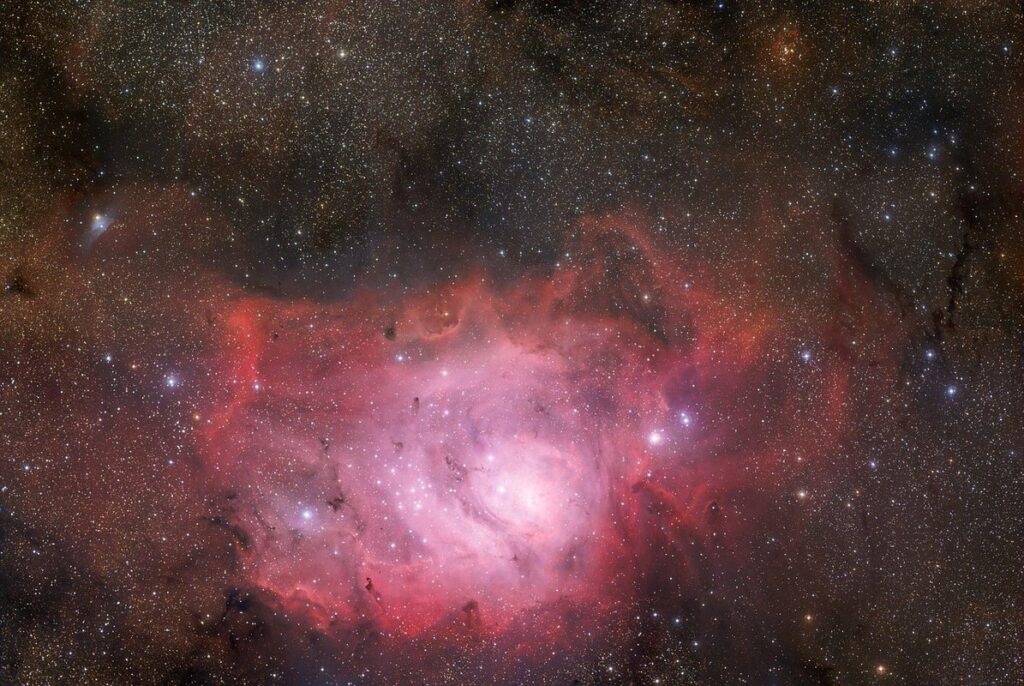
What are Messier Objects?
Let’s start by defining what Messier objects are, as understanding their origin and characteristics is key to appreciating these celestial wonders. This brief overview will set the stage for further exploration of these fascinating astronomical targets.
Introduction to Messier Catalog
The Messier catalog is a collection of deep-sky objects compiled by French astronomer Charles Messier in the 18th century. To understand its significance, it’s essential to consider the historical context in which it was created. At that time, astronomers were primarily focused on identifying and cataloging celestial objects that might be mistaken for comets.
Messier’s original intention was not to create a comprehensive catalog of deep-sky objects but rather to compile a list of objects that he encountered while searching for comets. He was concerned about losing time in verifying the existence of known objects, which would distract from his primary goal of finding new comets. As a result, he created a list of 103 objects that could be mistaken for comets, including nebulae, star clusters, and galaxies.
The Messier catalog has since become a fundamental resource for astronomers and astrophotographers. Its significance lies not only in its historical value but also in the fact that it provides a standardized system for identifying and cataloging deep-sky objects. The 103 objects listed in the catalog have been designated with unique numbers, making them easily identifiable and accessible to researchers worldwide.
Characteristics of Messier Objects
The Messier catalog includes a diverse range of celestial objects, each with its own unique characteristics. Galaxies, such as spiral and elliptical galaxies, are massive systems composed of stars, gas, and dust. These galaxies can be hundreds of thousands to billions of light-years away from Earth. Some notable examples include the Andromeda Galaxy (M31) and the Milky Way‘s closest major galaxy neighbor, Triangulum (M33).
Nebulae, on the other hand, are vast interstellar clouds of gas and dust that can give birth to new stars. They can appear as bright patches or dark silhouettes against the surrounding sky. The Orion Nebula (M42) is a well-known example of a nebula, while the Carina Nebula (NGC 3372) is another notable one.
Star clusters are groups of stars born from the same molecular cloud and share similar ages and chemical compositions. These clusters can be open or globular in nature. The Pleiades (M45) and the Hyades are examples of open star clusters, while Omega Centauri (NGC 5139) is a prominent globular cluster.
Understanding these characteristics helps astronomers and observers alike to appreciate the diversity within the Messier catalog.
Types of Messier Objects
The Messier catalog is a treasure trove of celestial wonders, and there are several distinct types of objects to explore, each with its own unique characteristics and beauty. Let’s start by examining the different categories that make up this fascinating universe.
Galaxies: Spirals and Ellipticals
Spiral galaxies are characterized by their sweeping arms of stars and gas, which are responsible for star formation. These arms can be classified into different types, including grand design spirals with prominent arms and flocculent spirals with more irregular arms. An example is the Whirlpool Galaxy (M51), a grand design spiral galaxy that is visible to the naked eye on a clear night.
Elliptical galaxies, on the other hand, are egg-shaped and contain older stars. They can be divided into three subtypes: E0, which have no central bar; E1-E7, which have increasingly pronounced bars; and S0, which resemble spiral galaxies but lack distinct arms. The giant elliptical galaxy Messier 87 (M87) is a prominent example of an elliptical galaxy in the Messier catalog.
Some key differences between spirals and ellipticals include their composition and evolutionary stage. Spirals are typically more massive and contain younger stars, while ellipticals are older and less massive. This can be attributed to the different rates at which stars form and die in these galaxies.
Nebulae: Birthplaces of Stars
Nebulae are vast interstellar clouds of gas and dust that give birth to new stars. The Messier catalog contains several types of nebulae, each with distinct characteristics and evolutionary stages. One notable example is the Eagle Nebula (M16), a star-forming region in the constellation Serpens. This nebula is a dense cloud of gas and dust that has collapsed under its own gravity, triggering the formation of new stars.
The process begins when a giant molecular cloud collapses, causing material to accumulate at its center. As this material continues to collapse, it heats up, eventually igniting nuclear fusion reactions within the core. This marks the birth of a new star, which will then disperse into space as it matures. The Carina Nebula (M17) is another prominent example, featuring numerous young stars and intense radiation from massive O-type stars.
Nebulae can be divided into several subtypes, including emission nebulae, reflection nebulae, and dark nebulae. Each type has distinct characteristics, such as the presence of ionized gas or dust extinction. By studying these nebulae, astronomers can gain insight into the star formation process and the evolution of galaxies.
Observing Messier Objects
As you begin observing Messier objects, it’s essential to know how to locate them and set up your equipment for optimal viewing. This section will walk you through the steps to get started.
Equipment and Settings for Observation
When observing Messier objects, having the right equipment and settings is crucial for a successful viewing experience. Start with a telescope or binoculars capable of at least 50mm to 100mm aperture size, as smaller instruments may not provide enough magnification or resolution.
For telescopes, consider a focal length between 300mm to 600mm to balance between magnification and portability. Aperture is more important than focal length, but a shorter focal length can make the instrument easier to handle for beginners. Binoculars, on the other hand, offer an advantage in terms of portability and ease of use.
Software such as Stellarium or SkySafari can be useful in planning your observation session by providing detailed information about Messier object locations, times, and visibility. You may also consider a red light flashlight to preserve your night vision while navigating the equipment or observing at dawn or dusk.
Tips for Visualizing and Imaging Messier Objects
When it comes to visualizing and imaging Messier objects, a good starting point is to understand the technical requirements of each object. For example, nebulae like M42 (Orion Nebula) require longer exposures and narrower filters to capture their delicate details, while galaxies like M31 (Andromeda Galaxy) can be imaged with shorter exposures and wider filters.
To begin imaging a Messier object, it’s essential to choose the right equipment. A sturdy tripod is crucial for maintaining stability, especially when using larger telescopes or longer focal lengths. Additionally, consider investing in a camera specifically designed for astrophotography, as these often feature built-in cooling systems and other features tailored for capturing faint celestial objects.
When selecting software for image processing, opt for programs that support the specific file format used by your imaging device. Common choices include Adobe Photoshop and Autostakkert. It’s also helpful to familiarize yourself with basic editing techniques, such as adjusting brightness and contrast, to enhance the visibility of delicate features in your images.
History of Discovery
The history of discovering Messier objects is a fascinating tale that spans centuries, from ancient civilizations to modern-day astronomers. We’ll take you on a journey through time to explore how these celestial wonders were first identified and cataloged.
Charles Messier’s Contributions
Charles Messier’s Contributions to Astronomy are still felt today. As a French astronomer, he is best known for creating the Messier Catalog of deep-sky objects. Between 1764 and 1781, Messier compiled this list of 103 celestial objects that were mistaken for comets. His catalog included various types of deep-sky objects like nebulae, star clusters, galaxies, and other features.
The significance of Messier’s work lies in its simplicity and practicality. The catalog was designed to help astronomers quickly identify and locate these deep-sky objects with minimal equipment. This accessibility made it easier for scientists to conduct further research on the properties and behavior of these celestial bodies. His observations also laid the foundation for future studies, allowing later generations of astronomers to build upon his findings.
Messier’s Contributions are still valued today due to their foundational nature. His catalog remains a fundamental reference for amateur and professional astronomers alike. Many popular astronomy apps and software programs continue to use Messier’s Catalog as a basis for locating deep-sky objects in the night sky.
Other Notable Astronomers Involved in Messier Object Research
Many astronomers have contributed to our understanding of Messier objects beyond Charles Messier himself. One notable example is William Herschel, who discovered several new Messier objects and made significant observations about their properties. He was particularly interested in the binary star systems associated with some Messier objects.
Other astronomers who have made important contributions include John Herschel (William’s son), who cataloged many deep-sky objects, including some that are now part of the Messier Catalog. Friedrich Wilhelm Argelander also observed and measured the positions of several Messier objects, providing valuable data for later astronomers.
These researchers, among others, have helped to refine our understanding of Messier objects through their observations and discoveries. Their contributions demonstrate the collaborative nature of astronomical research, where multiple scientists build upon each other’s findings to advance knowledge in the field.
Advanced Topics
As we venture into the realm of advanced topics, you’ll learn how to identify and observe the most complex and fascinating Messier objects that lie beyond the beginner’s reach. These include rare binary systems, globular clusters, and other extraordinary celestial wonders.
Astrometry: Measuring the Positions of Messier Objects
Astrometry is a fundamental aspect of astronomy that involves measuring the positions and movements of celestial objects. When it comes to Messier objects, accurate astrometry is crucial for understanding their orbits and dynamics within our galaxy. To perform astrometry on Messier objects, astronomers use specialized software and equipment that can precisely determine an object’s position in the sky.
One key technique used in astrometry is the measurement of right ascension (RA) and declination (DEC). These coordinates allow astronomers to pinpoint a Messier object’s location within the celestial sphere. To measure RA and DEC, astronomers use techniques such as spectroscopy or interferometry, which involve analyzing the light emitted by the object.
Astrometric data for Messier objects is essential for predicting their future positions in the sky. This information can help astronomers plan observations, identify potential conjunctions with other celestial bodies, and even predict the timing of occultations. By combining astrometric data with photometric measurements (covered in a subsequent section), researchers can gain a more comprehensive understanding of Messier objects’ behavior over time.
Astrometry for Messier objects is typically performed using large telescopes or specialized instruments like the Very Long Baseline Array (VLBA). These tools enable astronomers to achieve high precision and accuracy in their measurements.
Photometry: Measuring the Light from Messier Objects
Photometry is a crucial aspect of studying Messier objects, as it allows astronomers to understand their luminosity and energy output. This measurement involves quantifying the amount of light emitted by an object at specific wavelengths, which can reveal valuable information about its composition, size, and even evolutionary stage.
To apply photometry to Messier objects, astronomers use specialized software that can analyze digital images or spectra collected from telescopes. Tools like Astrometry.net and Aladin allow users to measure the flux of light emitted by an object within a specific aperture, providing accurate photometric data. Additionally, custom-written scripts in languages such as Python can be employed for more complex analyses.
When selecting equipment for photometry, consider the type of Messier object you’re studying. For example, nebulae often require longer exposure times to capture sufficient light, while stars and galaxies may be observed with shorter exposures due to their brighter luminosity. Familiarize yourself with your telescope’s capabilities and adjust settings accordingly to optimize data collection.
Conclusion and Future Directions
As we wrap up our journey through the Messier Objects, let’s take a moment to summarize key findings and discuss exciting possibilities for further exploration of these celestial wonders.
Recap of Key Concepts and Takeaways
A comprehensive understanding of messier objects involves grasping their fundamental characteristics. These objects are primarily composed of galaxies and nebulae, with a smaller number being star clusters or other miscellaneous celestial entities. Galaxies can be broadly categorized into spirals and ellipticals, each possessing distinct structural features that distinguish them from one another.
Spiral galaxies are characterized by their sweeping spiral arms, where new stars are born, while elliptical galaxies have more uniform distributions of matter and light. Nebulae, on the other hand, serve as birthplaces for new stars and are often associated with intense radiation and high temperatures. Understanding these types is crucial for accurately identifying messier objects during observation.
The article has also explored the role of astrometry in measuring the positions of messier objects, which involves precise calculations to determine their locations within the sky. This information can be used to identify patterns or relationships between different celestial bodies. Furthermore, photometry – a technique for measuring light from these objects – has been discussed as another essential tool for researchers and observers alike.
Ultimately, by combining this knowledge with practical observational techniques, readers can enhance their exploration of messier objects and contribute meaningfully to ongoing research in this field.
Future Research Opportunities in Messier Objects
The study of Messier objects has been a cornerstone of astronomy for centuries, and ongoing research continues to uncover new insights into their nature and behavior. Emerging technologies such as advanced spectroscopy and machine learning algorithms are expanding our understanding of these celestial bodies.
One promising area of research is the application of artificial intelligence (AI) to Messier object classification. By analyzing vast datasets of astronomical observations, AI can identify patterns and features that may elude human observers. For example, AI-powered systems have already been used to categorize galaxies by their morphological types with high accuracy.
Other areas ripe for exploration include the use of space-based telescopes, such as the James Webb Space Telescope (JWST), to study Messier objects in unprecedented detail. JWST’s advanced optics and infrared sensitivity will allow astronomers to probe the formation of stars and planetary systems within these objects. Additionally, the development of new telescope arrays, like the Square Kilometre Array (SKA), promises to revolutionize our understanding of galaxy evolution by providing high-resolution images and spectra of Messier galaxies.
Frequently Asked Questions
What if I’m new to astronomy and don’t have access to a large telescope? Can I still observe Messier objects?
You can definitely start observing Messier objects without a large telescope. Binoculars or even a good pair of naked-eye binoculars can help you spot some of these deep-sky wonders. You can also consider using mobile apps that simulate the view through a telescope, which can be a great starting point.
How do I choose between astrometry and photometry when working with Messier objects? Which method is more suitable for beginners?
Both methods are useful in their own ways, but if you’re just starting out, photometry might be a better fit. It’s generally easier to measure light emitted by celestial objects than to track their precise positions. Start with photometry and see how it helps you understand the properties of Messier objects.
Can I use images from online resources or must I create my own astrophotography? What are the benefits and drawbacks of each approach?
While using online images can be a good starting point, creating your own astrophotography offers many advantages. It allows you to develop skills in handling equipment, processing images, and appreciating the nuances of capturing celestial objects.
When is it best to observe Messier objects – during full moon or new moon? What are the implications for my observations?
New moon is generally preferred because a dark sky enhances your ability to see faint details. However, if you’re observing bright objects like star clusters or nebulae, a bit of moonlight might not make a significant difference.
Can I use software specifically designed for astrophotography and image processing to enhance my observations? What are some popular tools?
Yes, there are many excellent software options available that can help you process your images, correct for noise, and even simulate the view through different telescopes. Some popular choices include Adobe Photoshop, Autostakkert!, and PixInsight.