
When you’re out for a walk in the woods or simply strolling through your neighborhood, have you ever stopped to consider the trees that surround you? You might not think twice about their leaves, but they hold a wealth of information. The shape, margin, venation, color, and texture of tree leaves can be used to identify species with remarkable accuracy. However, this skill often eludes even the most avid nature enthusiasts. With a little practice and knowledge, though, you’ll be able to confidently tell apart oak from maple or pine from spruce. This comprehensive guide will walk you through the key characteristics to look for in tree leaves, providing you with the tools to accurately identify species. By the end of this article, you’ll know how to use leaf traits to determine the type of tree you’re looking at.
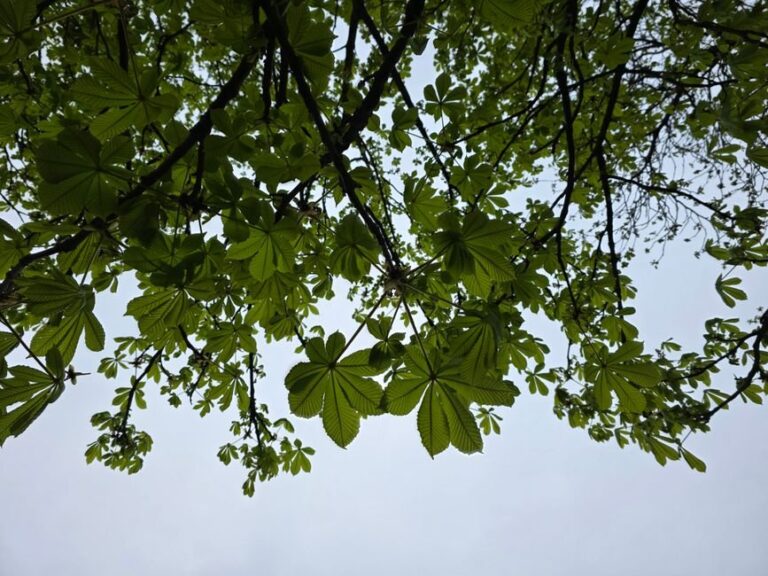
Understanding the Basics of Leaf Identification
To get started on tree identification by leaves, it helps to understand the basic characteristics that make leaves unique and useful for identification. This includes observing leaf shape, size, arrangement, and other distinctive features.
Leaf Shape and Size Variations
Leaf shape and size play significant roles in identifying tree species. While leaf shape can be more variable than size, it often remains consistent within a particular species. Ovate and lanceolate are two common shapes found across various tree families. The ovate shape is typically rounded at the tip with a broader base, while lanceolate leaves taper towards the apex with a narrower base. Some trees have leaves that are linear or narrow-ovate in shape.
Leaf size can also provide clues to identification. For example, the American Sycamore has large, coarsely toothed leaves that can reach up to 12 inches long, while the Red Maple’s leaves are much smaller, typically between 3 and 5 inches long. The proportions of leaf length to width also offer important information. Some trees have narrow, elongated leaves, such as the Silver Birch, which has leaves with a ratio of 4:1 (length to width).
When observing leaf shape and size, it’s essential to consider the overall proportions rather than just focusing on one characteristic. This comprehensive approach will help you distinguish between similar species and narrow down the possibilities in your tree identification process.
Leaf Margin and Arrangement Patterns
Leaf margins refer to the edges of a leaf and can be classified into three main types: entire, serrated, and toothed. Entire leaves have smooth edges, while serrated leaves have a saw-toothed appearance with small notches along their margin. Toothed leaves have more pronounced points or teeth along their edge.
The arrangement of leaves on a stem is also an important characteristic for identification. Leaves can be opposite, alternate, or whorled. Opposite leaves occur in pairs on either side of the stem, while alternate leaves are arranged singly on either side of the node (the joint where a leaf meets the stem). Whorled leaves occur in clusters around the stem.
When observing leaf margins and arrangements, pay attention to any irregularities, such as notches or gaps. These can be indicative of specific tree species. For example, oak trees often have lobed or deeply toothed leaves, while maple trees typically have serrated leaves with prominent teeth. By noting these characteristics, you can begin to narrow down the possibilities for a particular tree’s identity and make more informed decisions about its classification.
Identifying Trees Based on Leaf Venation
Leaf venation patterns can be a reliable way to identify trees, so let’s take a closer look at how to use them to narrow down your tree search. This involves examining the arrangement of veins on the leaf.
Vein Patterns: Key Features to Observe
When examining leaf venation patterns, you’re likely to encounter three main types: parallel veins, netted veins, and brochidodromous veins. Each of these patterns offers valuable clues for identifying specific tree species.
Parallel veins are characterized by a single row of large veins that run along the length of the leaf blade. This pattern is typical in trees with broad leaves, such as oak (Quercus spp.) and beech (Fagus spp.). In contrast, netted veins form a network of smaller veins that crisscross the leaf surface. This pattern is often found in trees like maple (Acer spp.) and ash (Fraxinus spp.).
Brochidodromous veins exhibit an intermediate trait between parallel and netted veins. They are found in trees like walnut (Juglans spp.) and hickory (Carya spp.). Understanding these vein patterns can help you narrow down the possibilities when identifying a tree based on its leaf venation.
When observing leaf venation, it’s essential to note that some species may exhibit hybrid or intermediate traits. For example, some maple species may display both parallel and netted veins in different parts of the same leaf.
How to Count Leaf Veins for More Accurate Identification
To count leaf veins accurately, start by selecting a fresh, healthy leaf with minimal damage. Place the leaf on a flat surface and gently hold it in place with one hand. Use the other hand to locate the primary vein, which is usually thicker and more prominent than the secondary veins.
Next, identify the point where the primary vein meets the leaf’s edge. This junction is often a good starting point for counting veins. Begin counting the number of parallel veins that originate from this junction, moving both towards the tip of the leaf and along its margins. Be sure to include any smaller veins that branch off from the larger ones.
To avoid overcounting or undercounting, focus on visible veins only. A good rule of thumb is to count at least three main veins on each side of the primary vein. If you’re still unsure, try counting the number of veins in a specific pattern, such as counting every third vein from the primary junction.
It’s also essential to note that some tree species have distinctive venation patterns, so take detailed notes and consider using a camera or sketching the leaf’s veins for future reference.
Examining Leaf Coloration and Texture
Let’s take a closer look at how leaf coloration and texture can help you narrow down tree species, often serving as distinctive identifying features. We’ll examine these characteristics in more detail to refine your identification skills.
Color Variations: From Green to Other Shades
When examining leaves for identification purposes, it’s not just green leaves you’ll encounter. While most leaves are indeed green, variations in shade can provide valuable clues about a tree’s species and habits. Some trees have leaves that are a darker or lighter green than average, while others display more muted tones like yellow, red, or even purple.
The significance of these color variations lies in their relationship to the tree’s environment. For example, trees growing in areas with intense sunlight often develop leaves with thick cuticles or waxy coatings to prevent water loss – a trait that can manifest as a more vibrant green color. Conversely, trees struggling to absorb nutrients may produce leaves with yellow or pale tones.
Other colors like red and purple are typically associated with specific tree species, such as the Red Maple (Acer rubrum) or the Purple Leaf Plum (Prunus cerasifera). By paying attention to these color variations, you can begin to narrow down a tree’s identity and make more informed observations. To do so effectively, it’s essential to consider not only the overall hue but also any subtle nuances in leaf coloration – such as hints of yellow or orange undertones.
Leaf Surface Features: Smooth, Hairy, or Waxy
Leaves can have a wide range of surface textures and features, often providing critical clues for identifying tree species. One notable characteristic is the presence or absence of hairs on the leaf surface. Hairy leaves, also known as pubescent leaves, typically feel rough to the touch and are found in many deciduous trees, such as oak (Quercus spp.) and hickory (Carya spp.). In contrast, smooth-leaved trees like maple (Acer spp.) and birch (Betula spp.) lack hairs.
Another feature is the presence of a waxy or resinous coating on the leaf surface. This characteristic is often associated with coniferous trees, such as pine (Pinus spp.) and spruce (Picea spp.), which have leaves covered in a sticky substance called terpenes. These coatings can help protect the leaves from water loss and insect damage.
To distinguish between these textures, examine the leaf surface under magnification if necessary. Look for patterns or ridges on hairy leaves that may indicate the presence of trichomes – specialized hairs that provide additional protection against environmental stressors.
Considerations for Identification Challenges
When identifying trees by leaves, it’s not uncommon for individuals to encounter challenges that can make the process more difficult than expected. These obstacles may arise from various factors such as leaf similarity among different species.
Distinguishing Between Similar Species
Distinguishing between similar species is one of the most challenging tasks in leaf identification. This challenge arises when two or more tree species share a high degree of similarity in their leaves, making it difficult to identify them with certainty. For example, the American Beech and the European White Birch both have smooth, dark green leaves with serrated margins, but they can be easily confused.
To overcome this challenge, examine the leaf venation patterns closely. Although similar species may share some similarities in vein patterns, there are often subtle differences that can aid in identification. For instance, the American Beech typically has more prominent and raised veins compared to the European White Birch. Additionally, consider the overall shape of the leaves, including the size, orientation, and attachment to the stem.
When studying similar species, it’s also essential to note any variations within a single species. These variations can be influenced by factors such as climate, soil quality, or geographic location. By considering these nuances, you can develop a more informed understanding of the tree’s characteristics and make a more accurate identification.
The Role of Other Plant Characteristics in Identification
When examining a tree’s leaves for identification, it can be challenging to distinguish between similar species. In such cases, other plant characteristics come into play to confirm identification and resolve potential ambiguities. One of the most useful features is the bark, which can vary significantly from one species to another.
For example, the smooth gray bark of an American Beech tree (Fagus grandifolia) contrasts sharply with the rough, scaly bark of a Red Maple (Acer rubrum). Similarly, the bright yellow flowers of a Silver Maple (Acer saccharinum) can be seen in spring, whereas a Sugar Maple (Acer saccharum) produces more subtle reddish-yellow blooms. Fruit is another key characteristic: some trees, like the Walnut (Juglans spp.), produce distinctive nuts, while others, such as the Oak (Quercus spp.), produce acorns.
When using these features to confirm identification, it’s essential to consider their timing and visibility. For instance, bark patterns may be more apparent on mature trees, whereas flowers and fruit are typically visible in spring or summer. By incorporating multiple plant characteristics into your identification process, you can increase the accuracy of tree identification.
Advanced Techniques for Leaf Identification
Now that you’ve honed your leaf identification skills, it’s time to take them to the next level by learning advanced techniques for precise tree classification. This includes analyzing subtle differences in shape and color.
Microscopic Analysis: A Closer Look at Leaf Structure
To examine leaf structure under magnification, a hand lens or a stereo microscope is typically used. The hand lens provides a 10-20x magnification, allowing for a closer look at the leaf’s surface features and minor details. A stereo microscope, on the other hand, offers higher magnification (up to 100x) and allows for a more detailed examination of the leaf’s internal structure.
When using a hand lens or stereo microscope, it’s essential to clean the leaf thoroughly before analysis to avoid any distractions caused by dirt or debris. This can be done by gently brushing off loose particles with a soft-bristled brush. To facilitate comparison between leaves, take note of the magnification used and ensure that the same focal plane is maintained for all observations.
Some key features to examine under magnification include stomatal density, vein thickness, and trichome distribution. Stomatal density can indicate whether a leaf is drought-tolerant or sensitive. Vein thickness can provide information on the plant’s water-carrying capacity. Trichomes may be absent or present in varying densities, which can influence light absorption and reflectance patterns.
DNA Barcoding and Its Role in Tree Identification
DNA barcoding is a powerful tool for identifying trees with high accuracy. This technique involves extracting a short DNA sequence from an organism’s genome and using it as a unique identifier. In tree identification, DNA barcoding can be particularly useful when dealing with closely related species or when leaves are damaged or difficult to obtain.
Researchers have identified specific regions of the plant genome that contain enough variation to serve as effective identifiers. One such region is the Internal Transcribed Spacer (ITS) of the nuclear ribosomal RNA gene. This ITS region has been widely adopted for DNA barcoding and has proven to be a reliable marker for identifying plants, including trees.
One potential application of DNA barcoding in tree identification is in conservation efforts. By quickly and accurately identifying species, researchers can monitor populations and track changes in ecosystem composition over time. This information can inform management decisions and help protect threatened or endangered species. Additionally, DNA barcoding can aid in the study of phylogenetic relationships between different species, providing insights into evolutionary history and helping to resolve taxonomic disputes.
Frequently Asked Questions
Can I use leaf identification to identify trees in winter when they don’t have leaves?
Yes. While leaves are often the primary means of tree identification, other plant characteristics like bark, buds, and twig morphology can be used during the winter months. For example, some trees develop distinctive patterns on their bark or produce showy buds that can aid in identification.
How accurate is leaf venation counting for identifying specific tree species?
Leaf venation counting can be an effective method for identifying certain tree species, but its accuracy depends on several factors, including the complexity of the vein pattern and the observer’s level of experience. To improve accuracy, it’s essential to follow proper techniques for counting veins, as described in the article.
What if I’m still unsure about a particular tree identification after using all these characteristics?
That’s not uncommon! Tree identification can be challenging, especially when dealing with similar species or variations within a single species. In such cases, consider consulting multiple field guides, seeking guidance from an experienced botanist or arborist, or using DNA barcoding to confirm the identification.
Can I use leaf identification techniques for non-woody plants like ferns and grasses?
While the article focuses on tree identification, many of the principles discussed can be applied to other plant groups. However, each plant group has its unique characteristics, so it’s essential to research specific identification techniques for ferns, grasses, or other non-woody plants.
How do I know when to rely on leaf venation patterns versus other characteristics like color and texture?
The choice between relying on leaf venation patterns, color, texture, or other characteristics depends on the specific tree species being identified. In general, it’s best to consider multiple characteristics together to arrive at a confident identification. For example, if a tree has distinctive leaf venation but also exhibits unusual coloration, combine these factors for a more accurate assessment.