
Winter tree care can be a challenge, especially when trying to make informed decisions about management without clear signs of growth. Many people assume that tree buds are inactive during winter months, but in reality, they’re just dormant and waiting for the right conditions to burst forth with new life. Accurately identifying these tiny structures is crucial for early season detection of plant diseases and pests. As a tree care professional or enthusiast, you need to know how to spot healthy vs. unhealthy buds, which can be tricky at this time of year. This article will guide you through the process of accurately identifying winter tree buds, helping you improve productivity and make informed decisions about tree management. By learning to identify these key signs, you’ll be better equipped to take proactive steps in protecting your trees from disease and promoting healthy growth.
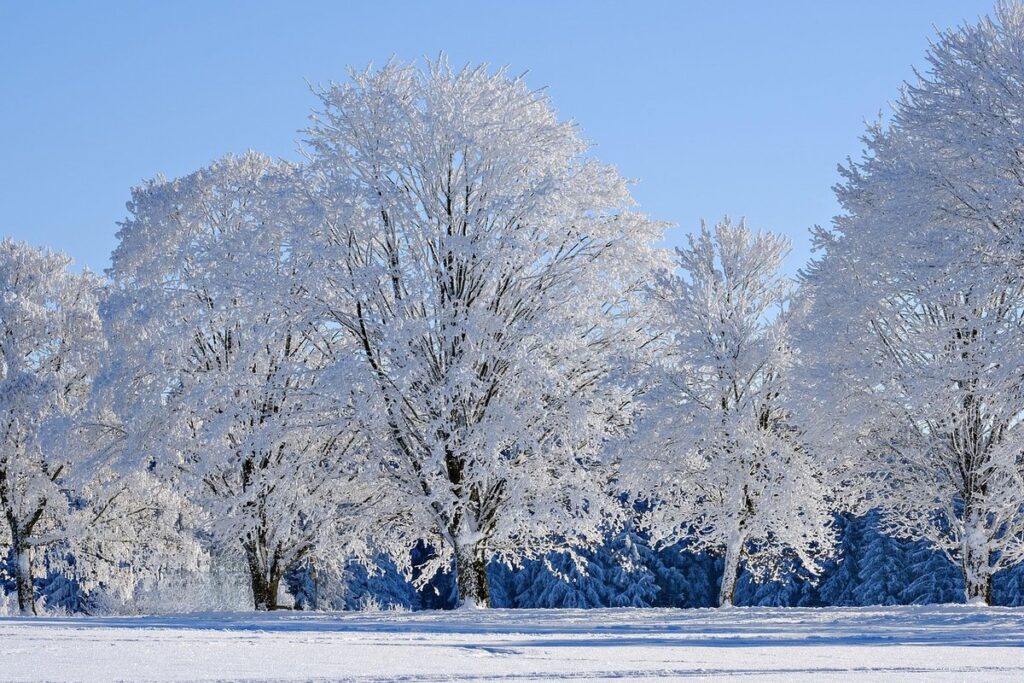
Understanding the Importance of Winter Tree Bud Identification
Identifying tree buds in winter can be a challenging task, but understanding their importance will help you develop your observation skills and appreciate these often-overlooked structures. By learning to identify them, you’ll become a more confident winter naturalist.
Why Identify Tree Buds in Winter?
Identifying tree buds during winter is crucial for early season detection and diagnosis of plant diseases. One key advantage of identifying tree buds in winter is that it allows you to catch potential issues before they spread throughout the tree or even the entire forest. For instance, certain fungal infections can cause deformed or discolored buds, which are easier to spot during the winter months when most trees are dormant.
In deciduous trees, winter bud identification can also help diagnose nutrient deficiencies, such as nitrogen deficiency, which often manifests as pale or undersized buds. By recognizing these symptoms early on, you can take corrective measures to address the issue before it affects the tree’s growth in the spring.
Moreover, identifying potential problems during the dormant season reduces the risk of spreading diseases through pruning or other maintenance activities. This is particularly important for coniferous trees, which are often more susceptible to disease when their buds begin to swell in the late winter or early spring.
Benefits of Early Season Tree Assessment
Conducting a thorough assessment of trees at the beginning of the growing season offers several advantages for tree managers and arborists. Early identification of buds can inform crucial management decisions, such as pruning or fertilization schedules. By recognizing bud characteristics early on, you can pinpoint potential issues before they become more serious problems during the growing season.
For instance, identifying buds that are swollen or discolored can signal a pest or disease issue, allowing for timely intervention and minimizing damage to the tree. Conversely, healthy buds indicate optimal growing conditions and can guide decisions about pruning or thinning strategies. A thorough early-season assessment also helps optimize resource allocation, ensuring that maintenance efforts focus on trees with the greatest need.
Furthermore, accurate identification of bud characteristics during this period enables more effective planning for seasonal changes in tree growth patterns. By understanding the developmental stages of buds at the beginning of the growing season, you can anticipate and prepare for subsequent growth spurts or dormancy phases.
Preparing for Winter Tree Bud Identification
As you prepare for winter tree bud identification, it’s essential to understand how different tree species store energy and buds to ensure accurate identification. Familiarize yourself with key characteristics like bud size and arrangement.
Essential Tools and Equipment
To accurately identify tree buds in winter, you’ll need a few essential tools and equipment. Start with a pair of binoculars to observe tree crowns from a safe distance without disturbing the trees or risking injury to yourself. This is particularly useful for spotting coniferous trees, which often grow tall and can be difficult to reach.
A hand lens or magnifying glass is also crucial for close-up observation. Look for buds with distinctive scales, cones, or other features that distinguish them from deciduous trees. Field guides specific to your region’s tree species are essential for reference. Choose ones with clear descriptions, photos, and illustrations of winter tree morphology. Some popular options include “Trees of North America” by Gil Nelson and Fred A. Brose, or the USDA Forest Service’s “Tree Identification Guide.”
Don’t forget to bring a notebook and pencil to record your observations and note any distinctive characteristics you notice. Consider investing in a camera with good macro capabilities for capturing high-quality photos of tree buds. These can be useful for future reference and comparison with field guides.
Best Practices for Observing Winter Tree Buds
When observing winter tree buds, safety and comfort should be top priorities. Start by dressing warmly and wearing protective gear such as gloves to prevent cold temperatures from affecting your ability to handle equipment. Bring a pair of binoculars or a spotting scope to get a closer look at the trees without disturbing them.
When handling equipment like loppers or pruning shears, use caution to avoid accidents. Make sure your tools are in good condition and properly maintained before heading out into the field. Be mindful of weather conditions, avoiding strong winds or icy surfaces that could make it difficult to navigate safely.
Consider visiting tree buds during early morning or late afternoon when sunlight is soft, reducing glare from snow or ice. If you’re observing in a forested area, be aware of your surroundings and keep an eye out for potential hazards like wildlife or slippery terrain. Finally, take breaks to stay hydrated and warm, especially if you’re planning a prolonged observation session.
Coniferous Trees in Winter: Identification Features
Coniferous trees are often easiest to identify by their needles and cones, which remain prominent even under a blanket of snow. Take a closer look at these distinctive features to confidently ID conifers in winter.
Pine (Pinus spp.) Bud Characteristics
Pine tree buds are easily recognizable during winter due to their distinctive shape, size, and coloration. Typically, pine bud scales are long and narrow, often resembling tiny needles. They usually range from 1-3 cm (0.4-1.2 inches) in length, though some species may exhibit slightly shorter or longer buds.
One of the most notable characteristics of pine tree buds is their scale-like appearance. Each bud scale has a small, pointed tip and a smooth, often hairless texture. In many cases, you’ll notice that the bud scales are arranged in an upright position on the twig, resembling tiny, miniature branches.
During winter, pine tree buds tend to retain some of their foliage from the previous growing season. You may see small brown or tan needles attached to the bud scales, which can make identification more challenging if not accounted for. To accurately identify pine tree buds, observe the arrangement and shape of the bud scales, as well as any remaining foliage.
When identifying pine trees in winter, pay close attention to the overall size and coloration of the bud. While some species may exhibit slightly different characteristics, the distinctive scale-like appearance is a key indicator of pine tree buds.
Spruce (Picea spp.) and Fir (Abies spp.) Bud Identification
To identify spruce and fir tree buds, look for distinct characteristics. Spruce buds typically have four to six scales arranged in a quadrangular pattern, often with two larger scales on the top and bottom. The scale arrangement can be symmetrical or asymmetrical, but generally, the scales are similar in size. In contrast, fir bud scales are usually more rounded and often overlap each other.
Examine the coniferous resin canals, which are small channels that transport resin within the tree. In spruce, these canals are usually absent or very rare on the surface of the bud scales. In fir, they may be present but typically not prominent. Note that some species, like Picea mariana, have more developed resin canals.
When observing spruce and fir buds, consider the overall shape and appearance. Spruce buds tend to be smaller and more rounded than fir buds. Fir buds are often larger and more elongated, with a distinctive pointed tip. By paying attention to these unique characteristics – bud scale arrangement and coniferous resin canals – you’ll improve your chances of accurately identifying spruce and fir tree buds in winter.
Deciduous Trees in Winter: Identification Features
When identifying deciduous trees in winter, look for distinctive features such as bud shape and arrangement on the twigs. These characteristics can help you narrow down the possibilities.
Oak (Quercus spp.) Bud Characteristics
Oak tree buds are relatively large and prominent during winter, making them easier to observe. A closer look at these buds reveals distinctive characteristics that aid in identification. Typically, oak buds are 1-2 inches (2.5-5 cm) long and half as wide, with a pointed or oval shape. The bud scales often overlap, forming a protective cap around the dormant leaves.
The leaf scars left behind on the twig when new growth emerges are another key feature to examine. Oak trees tend to have simple, rounded, or elliptical leaf scars that are usually 1/4 inch (6-8 mm) wide and slightly notched at the top. These scars can be quite prominent, especially on younger branches.
When observing oak tree buds in winter, it’s essential to note the arrangement of the bud scales. Typically, these scales are arranged in a spiral pattern around the central bud, with two or three larger scales covering the rest. This distinctive pattern helps distinguish oak from other deciduous trees. Paying attention to these details can help you accurately identify oak tree buds during the winter months.
Maple (Acer spp.) and Elm (Ulmus spp.) Bud Identification
Maple (Acer spp.) tree buds are typically small and rounded, with a smooth, thin bud scale. They usually occur in clusters at the tip of twigs, often accompanied by an axillary bud, which is a small bud located on the underside of the main stem near the twig tip. The arrangement of these scales can be key to identification – they typically overlap one another and often appear closed or folded.
Elm (Ulmus spp.) tree buds are also relatively small but may have a slightly more angular appearance than those found on maple trees. One distinctive feature is the presence of two bud scales, which often resemble tiny leaves themselves. These scales usually overlap each other and sometimes even appear to be folded inwards. In some species, like American elm (Ulmus americana), these scales can be relatively large and prominent.
When examining maple or elm buds, look for this scale arrangement and axillary bud presence. Be aware that young twigs on deciduous trees often have small leaves or cataphylls at the base of each bud – these should not be mistaken for actual bud scales.
Advanced Tree Bud Identification Techniques
Now that you have a solid understanding of basic tree bud identification, let’s take it to the next level by exploring more advanced techniques for precise bud recognition. This includes examining subtle differences in color and shape patterns.
Close-Up Observation: A Key to Accurate Identification
When identifying winter tree buds, it’s essential to examine them up close. This might seem obvious, but many people make the mistake of trying to identify buds from a distance. Without magnification, it can be difficult to distinguish between subtle variations in bud shape, color, and texture.
Use a hand lens or a smartphone with a high-powered camera attachment to get a closer look at the buds. This will help you notice details that might not be visible to the naked eye, such as the arrangement of scales on coniferous buds or the presence of small, raised dots on deciduous buds.
As you observe the buds, take careful notes about their characteristics. Record the shape, size, color, and texture of the buds, as well as any distinctive features like prickles or ridges. It’s also a good idea to note the orientation of the buds on the branch – are they pointing upwards, downwards, or outwards? By taking detailed notes, you’ll be able to refer back to your observations later and compare them with your field guide or other resources. This close-up observation will help you build a more accurate picture of the tree’s identity.
Seasonal Variations in Tree Bud Morphology
Seasonal variations in tree bud morphology can significantly impact accurate identification. As trees transition from one season to another, their buds adapt to the changing environment. For example, coniferous trees like pines and spruces tend to produce smaller, more compact buds during the spring and summer months, whereas in winter, these same trees develop larger, more woody buds that help protect them from cold temperatures.
Deciduous trees also exhibit seasonal changes in bud morphology. In spring, their buds are typically small and greenish-yellow, but by autumn, they swell with stored food reserves, turning reddish-brown or purple. This color change is a result of the breakdown of chlorophyll, which allows other pigments to dominate.
When observing tree buds in winter, it’s essential to consider these seasonal variations. A single observation may not be enough to accurately identify a species; instead, look for patterns and consistencies across multiple seasons. For instance, if you notice that a particular tree develops large, woody buds during the winter months but produces smaller, more delicate buds in spring, this can help narrow down the identification. By taking into account these seasonal changes, you’ll be better equipped to identify trees accurately throughout the year.
Common Challenges in Winter Tree Bud Identification
One of the biggest hurdles in winter tree bud identification is accurately distinguishing between similar-looking buds, which can be a real challenge for even experienced botanists. Let’s take a closer look at some common obstacles you may encounter.
Similarities Between Coniferous and Deciduous Trees
Coniferous and deciduous trees share some striking similarities when it comes to their winter buds. One of the main challenges in identifying tree buds during this time is distinguishing between conifers and broad-leaved trees, particularly when they have similar bud shapes and sizes.
For instance, some oak species (Quercus spp.) have small, rounded buds that resemble those found on pine trees (Pinus spp.). Similarly, the buds of maple (Acer spp.) and elm (Ulmus spp.) can be mistaken for those of spruce or fir (Picea and Abies spp.), due to their similar size and shape. This confusion can be further complicated by factors such as bud orientation and location on the branch.
To overcome this challenge, it’s essential to look beyond just bud shape and size. Consider the overall tree habit, bark characteristics, and any distinctive features like leaf or needle arrangements. For example, if you’re observing a small, rounded bud with scales that resemble those found on pine trees, but the tree itself has smooth, gray bark with deep furrows, it’s likely an oak species rather than a conifer.
When in doubt, consult a field guide or seek guidance from an experienced arborist to ensure accurate identification.
Interpreting Tree Bud Data: A Guide for Beginners
When collecting and analyzing tree bud data, it’s essential to consider how you’ll organize and interpret the information. Start by creating a consistent system for recording observations, such as using a spreadsheet or notebook with clear columns for species, location, date, and notes.
For each observation, take detailed measurements of key characteristics like bud shape, size, color, and arrangement on the stem. Be sure to include photographs or sketches to supplement written descriptions. When storing data, consider using a database or cloud-based storage solution to facilitate collaboration and organization.
During analysis, focus on identifying patterns and trends in your observations. Look for correlations between species-specific characteristics and environmental factors like temperature, humidity, and sunlight exposure. Consider creating a key or chart to help differentiate between similar-looking buds.
When analyzing data, keep in mind that small variations can be significant, especially when distinguishing between closely related species. A small, well-documented dataset with detailed notes is often more valuable than a large, incomplete one with minimal documentation.
Frequently Asked Questions
Can I Identify Tree Buds in Low-Light Conditions?
Yes, but it may be challenging to accurately identify tree buds in very low-light conditions. To overcome this, consider using a spot light or a high-intensity lamp to illuminate the area. Additionally, practice observing winter tree buds in different lighting conditions to develop your skills.
How Do I Store and Organize My Tree Bud Data?
Store your data in a secure location, such as an encrypted digital folder, and organize it using clear labels and categories. Consider creating a spreadsheet or database to facilitate analysis and comparison of different tree species. Regularly back up your data to prevent loss.
Can I Use Winter Tree Bud Identification for Non-Tree Plant Species?
While the techniques outlined in this guide are primarily focused on trees, some principles can be applied to non-tree plant species. However, you’ll need to consult additional resources and adjust your approach accordingly. Be cautious when adapting methods for other plants, as their anatomy may differ significantly from that of trees.
What if I Encounter a Tree Species Not Mentioned in This Guide?
Don’t worry – this guide is not exhaustive! Consult field guides specific to your region or consult with an expert. Familiarize yourself with the unique characteristics of local tree species and practice observing them throughout the year to develop your skills.