
Partial solar eclipses are one of nature’s most awe-inspiring spectacles, offering a rare glimpse into the celestial ballet. You might have caught glimpses of these fleeting events, where the Moon momentarily steals the spotlight from the Sun, but do you know how often they occur or how to safely observe them? As we delve into the world of partial solar eclipses, you’ll learn about their surprising frequency and why it’s essential to understand the importance of this phenomenon. This article will guide you through the dos and don’ts of witnessing these events, from setting up a safe viewing spot to capturing breathtaking photos that freeze time. By the end of this journey, you’ll be equipped with the knowledge to fully appreciate the majesty of partial solar eclipses and perhaps even chase one down in person!
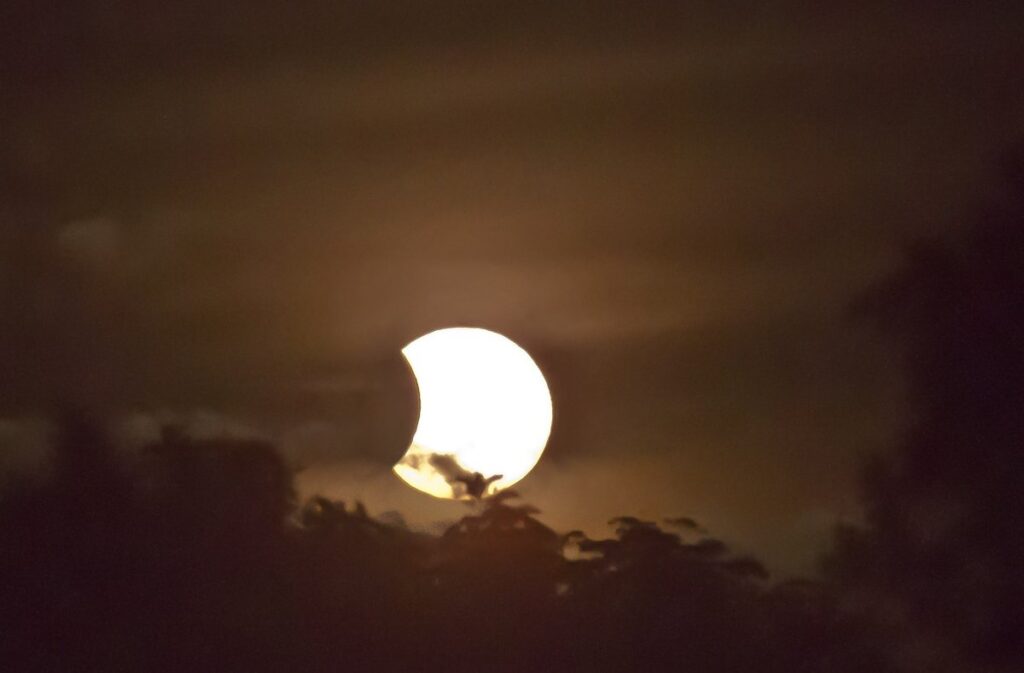
What is a Partial Solar Eclipse?
A partial solar eclipse occurs when the moon moves between the Earth and part of the sun, casting a shadow on only a portion of our planet’s surface. Let’s explore this fascinating phenomenon in more detail.
Definition and Frequency
A partial solar eclipse occurs when the Moon passes directly between the Earth and the Sun, but only partially covers the Sun’s disk. This phenomenon is a result of the Moon’s elliptical orbit, which causes it to appear slightly smaller than the Sun from our vantage point on Earth.
On average, there are 2-5 partial solar eclipses per year, although most go unnoticed due to their frequency and often occurring over oceans or remote areas where they may not be visible. In fact, a total of 73 partial solar eclipses occurred between 1999 and 2018, with many more expected in the coming years.
Partial solar eclipses can occur in any location on Earth, but their visibility depends on factors such as time zone, latitude, and cloud cover. To increase your chances of witnessing a partial solar eclipse, plan ahead by checking astronomical calendars or using specialized apps that track celestial events. Keep in mind that viewing a partial solar eclipse requires proper eye protection to avoid potential damage to your eyesight.
Visible from Earth
A partial solar eclipse is a rare and awe-inspiring celestial event that can be witnessed from specific locations on Earth. One of the most exciting aspects of a partial solar eclipse is its visibility from various parts of the world.
When a partial solar eclipse occurs, the Moon appears to take a small bite out of the Sun’s disk, revealing its outer atmosphere or corona. This phenomenon is visible from anywhere on the Earth where the Moon is above the horizon at the time of the eclipse. However, some locations are better suited for viewing than others due to their geographical position and atmospheric conditions.
For instance, observers in areas with clear skies and minimal atmospheric distortion can enjoy a clearer view of the partial solar eclipse. Additionally, locations near the path of totality or the region where the Moon’s shadow falls on Earth offer the best vantage points for observing the eclipse.
Safety Precautions During a Partial Solar Eclipse
When viewing a partial solar eclipse, it’s crucial to follow essential safety precautions to protect your eyes and skin from potential damage caused by direct sunlight. We’ll walk you through what to do next.
Risks of Direct Gazing
Looking directly at the sun during a partial solar eclipse can cause significant eye damage, including solar retinopathy. This condition occurs when the intense light from the sun damages the retina, potentially leading to permanent vision loss.
During a partial eclipse, the sun’s corona is visible around its edge, but it’s still extremely bright and hazardous to look at directly. The American Academy of Ophthalmology warns that even with specialized solar viewing glasses or handheld solar viewers, there’s still a risk of eye damage if not used correctly.
The risks associated with direct gazing during an eclipse are real and can occur in just a few seconds. To put this into perspective, looking directly at the sun is like staring at a 100-watt light bulb just one foot away from your eyes – it would cause immediate discomfort and potentially long-term damage.
To avoid eye damage, never look directly at the sun without proper protection, such as certified solar viewing glasses or handheld viewers. These devices filter out the harmful UV and infrared radiation that causes eye damage.
Safe Viewing Methods
When viewing a partial solar eclipse, it’s essential to use specialized equipment that protects your eyes from the sun’s intense light. This is where solar viewing glasses and handheld solar viewers come into play.
Solar viewing glasses are designed specifically for safe solar viewing and have several key features that make them effective. Look for certified products that meet international safety standards, such as those set by the ISO or the IEC. These glasses should have a filter that allows only a specific wavelength of light to pass through, reducing the sun’s brightness to a safe level.
Handheld solar viewers are another option for safely viewing a partial solar eclipse. They work similarly to solar viewing glasses but often provide a more magnified view of the sun. Choose handheld solar viewers with a similar certification and filter requirements as solar viewing glasses.
When using either solar viewing glasses or handheld solar viewers, remember to always follow the manufacturer’s instructions for use and any specific guidelines they may provide for safe viewing during an eclipse.
How Partial Solar Eclipses Occur
So you’re curious how partial solar eclipses actually happen? Let’s dive into the details of what causes these rare and awe-inspiring events.
The Role of Moon’s Orbit
The moon’s orbit is a critical component in understanding why partial solar eclipses occur. The moon orbits the Earth in an elliptical path, which means its distance from our planet varies throughout the month. As it moves around us, the moon passes through phases of increasing brightness until it reaches full moon.
When the moon is positioned between the Earth and the sun during a new moon phase, it aligns with the sun’s path. This alignment creates an opportunity for an eclipse to occur. However, due to the elliptical shape of both the Earth’s orbit around the sun and the moon’s orbit around the Earth, the moon often appears smaller than the sun in the sky.
As a result, only a portion of the sun is blocked by the moon, leading to a partial solar eclipse. This alignment can occur when the moon is at or near its apogee (farthest point from Earth) and the sun is near the horizon.
Eclipse Season and Saros Cycle
As you delve deeper into understanding partial solar eclipses, it’s essential to grasp the concept of eclipse season and the saros cycle. These two phenomena significantly impact the frequency and timing of partial solar eclipses.
Eclipse season is a period when the moon’s orbit aligns with Earth’s rotation, allowing for more frequent lunar eclipses. However, since lunar eclipses only occur during full moons, the Earth, Moon, and Sun must be aligned in a straight line for an eclipse to happen. This alignment occurs roughly every 173 days, resulting in a total of about five or six eclipses per year.
The saros cycle plays a crucial role in determining the timing and frequency of these eclipses. The saros cycle is approximately 18 years and 11 days long, after which the Earth, Moon, and Sun return to nearly the same positions relative to each other. This means that after every 18-year period, the same eclipse path will recur, often resulting in a partial solar eclipse. For example, if you experience a partial solar eclipse this year, there’s an 87% chance of another one occurring within 37 years.
The saros cycle can help you predict when and where the next partial solar eclipse is likely to occur. By tracking these cycles, you’ll gain a deeper understanding of the intricate celestial mechanics behind these rare astronomical events.
Observing a Partial Solar Eclipse
To safely observe a partial solar eclipse, you’ll need specialized viewing equipment and to follow some essential precautions to avoid eye damage. This guide will walk you through the process step by step.
Best Locations for Viewing
When it comes to witnessing a partial solar eclipse, the location plays a significant role in determining the clarity and quality of the view. While any part of the Earth can experience a partial solar eclipse, some locations are better suited for optimal viewing due to their atmospheric conditions, terrain, and accessibility.
Ideally, you want to be in an area with minimal cloud cover and a stable atmosphere to ensure clear visibility. Locations near mountains or high-altitude regions often offer clearer skies due to the reduced likelihood of clouds and haze. In contrast, areas near large bodies of water tend to have more atmospheric particles, which can distort the view.
Some popular locations for witnessing partial solar eclipses include the Hawaiian Islands, Arizona in the United States, and parts of Chile and Argentina. These regions typically offer excellent viewing conditions due to their dry climate and minimal cloud cover. When planning your eclipse viewing experience, consider factors like accessibility, accommodation options, and local weather forecasts to ensure a smooth and enjoyable event.
Tips for Capturing Photos or Videos
When capturing photos or videos of a partial solar eclipse, it’s essential to have the right equipment and follow some best practices. First and foremost, make sure you have a solar filter for your camera or smartphone lens. This will prevent damage to your eyes and equipment from direct sunlight.
For photography, consider investing in a DSLR camera with manual focus and adjustable exposure settings. A telephoto lens (at least 200mm) is also recommended to capture the sun’s image without distortion. Use a tripod to stabilize your camera and minimize camera shake.
If you’re shooting video, use a high-frame-rate mode (at least 60fps) to capture smooth footage of the eclipse’s motion. You can also experiment with time-lapse photography or slow-motion clips to showcase the sun’s movement. Remember to keep your equipment in shade as much as possible to prevent overheating.
In terms of smartphone users, some models have built-in solar filters or apps that can help filter out direct sunlight. Experiment with different camera modes and angles to capture stunning visuals of the partial eclipse.
History of Partial Solar Eclipses
Let’s take a fascinating journey through time and explore how partial solar eclipses have been documented and studied over centuries. From ancient civilizations to modern astronomers, we’ll examine the intriguing history of these celestial events.
Ancient Civilizations’ Observations
Ancient civilizations were fascinated by partial solar eclipses, often interpreting them as omens or signs from the gods. One of the earliest recorded observations of a partial solar eclipse dates back to ancient China during the Shang Dynasty (16th-11th centuries BCE). The Chinese astronomer and historian, Sima Qian, documented an eclipse that occurred in 2137 BCE, describing it as “the sun being swallowed by the moon.” This event was seen as a bad omen, leading to widespread panic and social unrest.
In ancient Greece, partial solar eclipses were often associated with mythological events. The Greek historian Herodotus (484-425 BCE) described an eclipse that occurred during the Persian Wars (490 BCE), where the Athenians saw the eclipse as a sign of impending doom for their enemies. Similarly, in Japan, the legend of the sun goddess Amaterasu was said to have originated from a partial solar eclipse.
These observations demonstrate how ancient civilizations viewed partial solar eclipses with a mix of awe and trepidation. By recognizing these cultural perspectives, we can better appreciate the significance of partial solar eclipses throughout history and their enduring impact on human culture.
Notable Recent Events
Partial solar eclipses have been making headlines worldwide in recent years. One notable event was the annular solar eclipse that occurred on July 2, 2019, visible across parts of North America. This eclipse had a significant cultural impact as it coincided with the 50th anniversary of the Apollo 11 moon landing. Many people took to social media to share their experiences and views of the eclipse.
Another recent event is the partial solar eclipse that occurred on October 25, 2021, visible from parts of North America, Europe, and Asia. This eclipse was notable for its rare alignment with the Orionid meteor shower, creating a spectacular celestial display. According to NASA, this eclipse had a path width of approximately 100 miles (160 km) where the eclipse was visible in its entirety.
Recent partial solar eclipses have also sparked scientific interest due to their unique astronomical characteristics. For instance, the May 26, 2020, annular solar eclipse allowed astronomers to study the Sun’s corona and test hypotheses about solar flares. These events demonstrate the importance of monitoring and studying partial solar eclipses for both scientific research and public engagement.
As we continue to observe and understand partial solar eclipses, it’s essential to remember that these events are relatively rare and short-lived. As such, they provide a unique opportunity for people around the world to come together and appreciate the beauty of astronomy.
Science Behind Partial Solar Eclipses
When it comes to partial solar eclipses, you might be wondering what actually causes them – is it a coincidence of celestial bodies or a predictable astronomical event? Let’s take a closer look.
Sun’s Corona and Plasma Dynamics
During a partial solar eclipse, the sun’s corona and plasma dynamics are crucial factors that contribute to its unique beauty. The corona is the outer atmosphere of the sun, extending millions of kilometers into space. Normally invisible due to the bright light of the sun’s surface, the corona becomes visible during an eclipse as it appears as a glowing halo around the darkened disk of the moon.
The plasma dynamics at play are responsible for this phenomenon. The corona is made up of hot, ionized gas (plasma) that emits light across various wavelengths, including those invisible to our eyes. As the moon passes in front of the sun, it blocks direct sunlight, allowing us to see the corona’s soft glow.
The best time to observe the corona and plasma dynamics during a partial solar eclipse is when the moon is almost completely covering the sun’s disk, but not quite. This is known as the “diamond ring effect,” where the sun’s light shines through the moon’s valleys, creating a brilliant ring of light around it.
Implications for Understanding Solar Physics
Observations of partial solar eclipses have significantly contributed to our understanding of solar physics. By studying these events, scientists can gain valuable insights into the dynamic magnetic fields that shape the Sun’s behavior. During a partial eclipse, the Moon partially covers the Sun’s disk, creating an uneven distribution of sunlight on Earth. This phenomenon allows researchers to observe the interaction between the solar wind and the terrestrial magnetic field.
One key area where partial solar eclipses provide crucial data is in the study of coronal mass ejections (CMEs). CMEs are powerful bursts of plasma that can have devastating effects on Earth’s magnetic field, causing geomagnetic storms. By tracking these events during partial eclipses, scientists can better comprehend how CMEs interact with our planet’s magnetic field and develop more accurate predictions for space weather forecasting.
The observation of solar activity during partial eclipses has also led to a deeper understanding of the Sun’s internal dynamics. Researchers have discovered that variations in the Sun’s rotation rate are closely linked to changes in its magnetic field strength. By monitoring these fluctuations, scientists can gain insights into the complex processes governing the Sun’s internal behavior.
In recent years, researchers have employed cutting-edge technologies such as space-based telescopes and high-resolution cameras to capture detailed images of solar eclipses. These advancements have enabled scientists to study the Sun’s behavior in unprecedented detail and gather valuable data on its magnetic field and activity levels.
As we continue to refine our understanding of solar physics through partial solar eclipse observations, researchers are gaining a more nuanced appreciation for the intricate relationships between the Sun’s internal dynamics, magnetic fields, and external influences. By leveraging these insights, scientists can better predict space weather events and mitigate their effects on technological systems and human activities.
Frequently Asked Questions
What time of day should I be prepared to view a partial solar eclipse?
Be ready to observe the eclipse at sunrise or sunset, as this is when the Moon’s shadow falls on the Earth’s surface, creating the partial coverage effect. Plan your schedule accordingly, and try to arrive at your viewing location about 30 minutes before the eclipse begins.
How can I ensure my eyesight isn’t permanently damaged during a partial solar eclipse?
Yes, it’s crucial to wear proper eye protection during a partial solar eclipse. Use certified solar viewing glasses or handheld solar viewers that meet international safety standards (ISO 12312-2). These devices will filter out the intense sunlight and allow you to safely observe the event.
Can I photograph a partial solar eclipse with my smartphone?
Yes, you can capture stunning photos of a partial solar eclipse using your smartphone. Use a tripod for stability, set your camera to manual mode, and use a wide-angle lens or a telephoto zoom to get the best shot. Consider using a solar filter or solar viewing glasses specifically designed for photography.
How often should I check for upcoming partial solar eclipses in my area?
You can easily find information about upcoming partial solar eclipses by visiting websites like NASA’s Eclipse Website or using mobile apps like Sky & Telescope’s Stellarium Mobile. These resources will help you stay informed and plan your viewing schedule in advance.
What if it’s cloudy on the day of a predicted partial solar eclipse – should I reschedule?
No, try to make the most of it! Even though the Moon may be partially covering the Sun, some light will still pass through the clouds. Be prepared for a potentially dimmed view but still enjoy the rare opportunity to witness this celestial event.