
Total solar eclipses are among the rarest and most awe-inspiring celestial events, offering scientists a unique opportunity to study the sun’s corona in unprecedented detail. But what makes these events so significant? For one, they’re incredibly rare – we’re talking once every 360 years or so for any given location on Earth. This scarcity has captivated humans for centuries, with many cultures believing that solar eclipses held mystical powers. As it turns out, there’s some science behind the spectacle too. In this article, we’ll delve into the significance of total solar eclipses and explore how these rare events have led to groundbreaking scientific discoveries – from unlocking the secrets of the sun’s atmosphere to expanding our understanding of the universe itself.
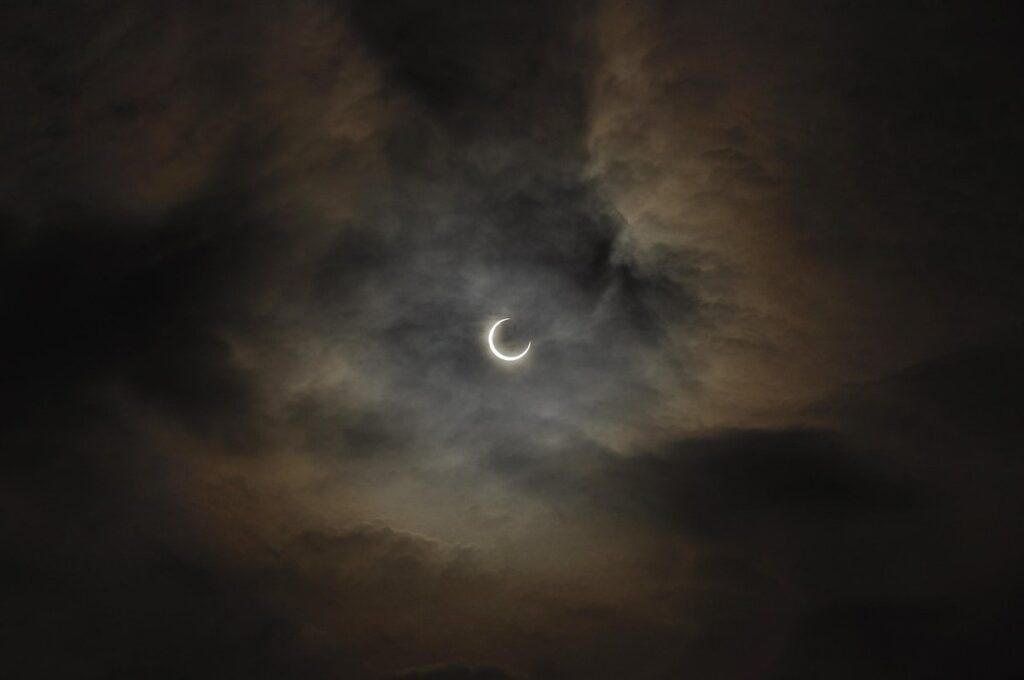
What is a Total Solar Eclipse?
You’re probably wondering what makes a total solar eclipse so special – it’s all about the alignment of the Earth, Moon, and Sun, creating a rare celestial event. Let’s dive into the details of this phenomenon!
Definition and Explanation
A total solar eclipse is one of the most awe-inspiring natural wonders you can witness. It’s an extraordinary phenomenon where the Moon passes directly between the Earth and the Sun, blocking the Sun’s light entirely for a brief period.
This occurs when the Moon is at a specific position in its elliptical orbit around the Earth, allowing it to cast a shadow on our planet. The path of this shadow varies depending on the eclipse’s magnitude and timing, but during a total solar eclipse, observers within the narrow “path of totality” experience a few minutes of complete darkness.
Total solar eclipses are incredibly rare due to the precise alignment required between the Earth, Moon, and Sun. According to NASA, only about two percent of all lunar eclipses result in a total solar eclipse visible from any given location on Earth. To put this into perspective, consider that you would need to live for over 360 years to witness more than one total solar eclipse at your location.
As a result, total solar eclipses are highly sought after by astronomers and sky gazers alike, offering a unique opportunity to observe the Sun’s corona, or outer atmosphere, in incredible detail.
Types of Eclipses
There are several types of eclipses that occur when the Earth, Moon, and Sun align. The main difference between them lies in the extent to which the Moon covers the Sun’s disk.
Partial solar eclipses occur when the Moon only partially covers the Sun’s disk, creating a partial shadow on the Earth’s surface. This type of eclipse is more common than total eclipses, but still relatively rare. Annular eclipses, also known as ring eclipses, happen when the Moon appears smaller than the Sun and creates a ring-like appearance around it.
Total solar eclipses, like the one described in this post, are the rarest and most spectacular type of eclipse. During a total solar eclipse, the Moon completely covers the Sun’s disk, revealing the Sun’s ethereal corona. This breathtaking phenomenon is truly a once-in-a-lifetime experience for many people who get to witness it.
Understanding these different types of eclipses can help you better appreciate their unique characteristics and prepare you to witness one if you ever have the opportunity.
Importance of Total Solar Eclipses in Astronomy
Total solar eclipses are rare and awe-inspiring events that hold significant importance for astronomers and researchers. These brief moments of totality offer a unique opportunity to make scientific discoveries and observations that cannot be replicated on Earth.
Previous total solar eclipses have led to groundbreaking findings, such as the detection of new sunspots and the observation of the Sun’s corona in unprecedented detail. For instance, during the 2017 Great American Total Solar Eclipse, astronomers detected X-rays and gamma rays emitted by the Sun’s corona, which helped scientists better understand the solar wind and its effects on Earth.
Astronomers also use total solar eclipses to study the behavior of stars near the eclipse path, as the sudden blockage of light allows for a more precise measurement of their brightness. By combining these observations with data from space-based telescopes, researchers can gain insights into stellar evolution and the properties of distant stars.
In addition, total solar eclipses provide an ideal setting for testing new technologies and instruments designed to study the Sun’s behavior during extreme events.
The Science Behind Total Solar Eclipses
When it comes to total solar eclipses, scientists rely on complex calculations and celestial alignments to predict these rare events. Let’s dive into the fascinating science behind this phenomenon.
Moon’s Orbit and Eclipse Cycles
At its core, a total solar eclipse is a result of the Moon’s orbit and its unique position relative to Earth and the Sun. The lunar cycle plays a crucial role in determining when an eclipse will occur. An eclipse can only happen during a new moon phase, which occurs when the side of the Moon facing the Earth is not illuminated by the Sun.
However, a new moon alone is not enough for an eclipse to take place. The Earth, Moon, and Sun must align in a specific way, creating a straight line from our planet to the Moon and then to the Sun. This alignment is known as syzygy. When this occurs, the Moon passes directly between the Earth and the Sun, blocking part or all of the Sun’s light.
This precise alignment is what makes total solar eclipses so rare – they can only happen during a narrow window of time when the Earth, Moon, and Sun are aligned in just the right way. In fact, it’s estimated that any given point on Earth will experience only about two to five solar eclipses per century, making them truly breathtaking events to witness.
Eclipse Path of Totality
When a total solar eclipse occurs, it’s only visible within a narrow path on Earth, known as the path of totality. This path is usually limited to specific regions due to the Moon’s shadow having a very narrow width of about 7,000 miles (11,300 km). To put this into perspective, during the August 2017 eclipse, the path of totality spanned only 115 miles (185 km) in some areas.
The path of totality is not fixed and changes with each eclipse event. The reason for this is that the Moon’s shadow moves at a speed of about 1,000 mph (1,600 kph), which means it covers a significant portion of the Earth’s surface during an eclipse. This movement results in different locations experiencing a total solar eclipse every few years.
As the path of totality changes with each event, astronomers and enthusiasts need to plan accordingly to catch a glimpse of this rare phenomenon. To do so, you can check NASA’s website or consult with local astronomy clubs for information on upcoming eclipses and their paths of totality.
Solar Eclipses and Time Zones
When it comes to observing total solar eclipses, time zones play a crucial role in determining optimal viewing locations and times. Since the eclipse path spans across multiple regions, understanding the different time zones can help you maximize your viewing experience.
For example, during a total solar eclipse that occurs over North America, the best viewing spots will be located along the path of totality, which passes through specific states like Oregon, Idaho, and Wyoming. However, these locations will only be in the “Pacific Time Zone.” If you’re on the East Coast, you’ll need to wait for the eclipse to reach that area, which might happen around 1-2 hours later.
To plan your viewing schedule accordingly, consider consulting online tools or apps that display the path of totality and corresponding time zones. You can also join local astronomy clubs or online forums to connect with fellow eclipse enthusiasts who may be sharing their own viewing plans and experiences. By taking into account the time zone differences, you’ll increase your chances of witnessing this rare phenomenon in all its glory.
Preparing for a Total Solar Eclipse
To witness a total solar eclipse, you need to be prepared and take necessary precautions to ensure your safety during this rare celestial event. Let’s break down what you should do before it happens.
Safety Precautions
When witnessing a total solar eclipse, it’s essential to prioritize your eye safety and take necessary precautions to avoid direct sunlight during the eclipse. The most critical step is to use proper eye protection. Obtain a pair of certified ISO 12312-2 compliant solar viewing glasses or handheld solar viewers that meet international safety standards.
These specialized glasses or viewers will protect your eyes from the intense ultraviolet (UV) and infrared (IR) radiation emitted by the sun during an eclipse. Never look directly at the sun with regular sunglasses, as they offer little to no protection against these hazardous rays.
During the eclipse, avoid direct sunlight whenever possible. If you must view the eclipse without proper eye protection, use a pinhole projector or a telescope with a solar filter specifically designed for viewing the sun. These devices will allow you to safely observe the eclipse while preventing damage to your eyes.
Traveling to View the Eclipse
When planning to travel for an eclipse, it’s essential to choose a location with favorable viewing conditions. The path of totality is typically about 100 miles wide and covers a specific region on Earth. Some popular destinations include national parks like Yellowstone and Great Smoky Mountains, which offer unique scenery and relatively clear skies.
Consider the time and distance between your destination and home when planning transportation. Book accommodations well in advance, especially during peak season, as availability is limited. Be prepared for crowds and potentially high prices. Weather conditions can also impact visibility, so keep an eye on forecasts before traveling.
In 2017, over 200,000 people gathered in a single spot to witness the eclipse in Oregon’s Warm Springs Indian Reservation. The event was sold out months prior, emphasizing the importance of early planning. Research and book your trip carefully to ensure a safe and enjoyable experience.
Photography and Observation Tips
Capturing the breathtaking beauty of a total solar eclipse requires more than just a camera and some basic photography skills. To make the most of this rare phenomenon, it’s essential to be prepared with the right equipment, composition ideas, and observational techniques.
When it comes to cameras, you’ll want one that can handle the intense light and capture high-quality images. A DSLR or mirrorless camera is ideal, as they offer manual controls and interchangeable lenses. Don’t forget a solar filter for safe viewing, which should be placed directly over the lens during the eclipse. For smartphones, consider investing in a solar viewer app or a dedicated mobile camera rig.
Composition-wise, focus on incorporating foreground elements that add depth to your images. Trees, hills, or buildings can create striking leads into the eclipsed sun. Consider shooting from multiple angles, such as low-level shots with a wide-angle lens or from above using a telephoto lens. Experiment with slow shutter speeds (around 1/100th of a second) to capture the fleeting moments leading up to totality.
To observe the eclipse itself, find a spot with an unobstructed view and get there early to secure your position. Bring binoculars or a handheld telescope for closer looks at the sun’s corona. Remember to stay safe by using certified solar viewing equipment and following proper eye protection guidelines.
Observing a Total Solar Eclipse: A Personal Account
I was fortunate enough to witness my first total solar eclipse, and I’ll share with you what it was like to stand in the path of totality and experience this rare phenomenon.
Witnessing the Eclipse
Witnessing the eclipse is an experience that stays with you forever. As I stood there, gazing up at the sky, I felt a mix of emotions: excitement, awe, and a hint of fear. The anticipation builds up for weeks or even months, but nothing prepares you for the sheer magnificence of it all.
The moment the moon’s shadow touches the earth is like a switch flipping on. The air seems to vibrate with energy as the light around us changes. It’s as if time itself has slowed down, allowing us to take in every detail. I remember feeling my heart racing and my breath catching in my throat as the sun’s corona burst into view.
What struck me most was the eerie calm that settles over the landscape during a total solar eclipse. The usual sounds of nature are replaced by an unsettling silence, broken only by the occasional shout or gasp from onlookers. It’s a moment when we’re reminded of our place in the universe and the awe-inspiring power of celestial events.
Memories and Reflections
As I reflect on my experience observing the total solar eclipse, I’m reminded of the profound impact it had on me. What struck me most was the sense of awe and wonder that filled the air. The sudden darkness, the eerie silence, and the eerie glow of the corona all combined to create an otherworldly atmosphere.
For me, one of the most memorable moments came when I noticed the way the eclipse affected the light around us. Shadows took on a new dimension, stretching and morphing in ways that were both fascinating and unsettling. It was as if the very fabric of reality had been tweaked.
Looking back, I realize just how much I learned about the universe during those fleeting minutes. The experience was a powerful reminder of our place within the grand scheme of things. As we continue to study these events, scientists are making new discoveries about the behavior of stars and planets.
As you reflect on your own eclipse experience, consider what moments stood out to you. Were there any spiritual or emotional connections that emerged? What did you learn about yourself and the world around you?
Historical Total Solar Eclipses: Notable Events and Observations
From ancient civilizations to modern-day observers, total solar eclipses have captivated people for centuries, leaving a lasting impact on history. Let’s take a look at some of the most notable events and observations that have shaped our understanding of this phenomenon.
Ancient Civilizations and Eclipse Observations
Ancient cultures were fascinated by total solar eclipses, often attributing them to divine intervention. In ancient Mesopotamia, for example, the eclipse was believed to be a sign of impending doom, while the ancient Greeks saw it as an omen of war or natural disasters. Similarly, in ancient China, eclipses were thought to be a warning from the gods.
Notable historical records show that total solar eclipses have been observed and documented throughout history. One famous account is from the Chinese Han Dynasty (206 BCE – 220 CE), where an eclipse was seen as a sign of impending chaos. The Greek philosopher Aristotle also noted that eclipses were a rare phenomenon, occurring only when the moon passes directly between the Earth and the sun.
These ancient observations were often steeped in myth and legend, but they demonstrate a deep understanding of the celestial event’s rarity and significance.
Modern Discoveries and Advancements
Observing total solar eclipses has been instrumental in making significant scientific discoveries about our Sun. One of the most notable advancements is our understanding of the Sun’s corona. During a total solar eclipse, the Moon blocks the Sun’s bright light, allowing us to observe the outer atmosphere of the Sun, which would otherwise be invisible. This phenomenon was first studied during the 1868 eclipse in Australia, and since then, numerous observations have greatly expanded our knowledge of the corona.
We’ve discovered that the corona is not just a thin layer of gas surrounding the Sun but a complex, dynamic system with solar flares and coronal mass ejections. These events can impact Earth’s magnetic field and cause aurora borealis displays. The study of total solar eclipses has also allowed scientists to develop more accurate models for predicting space weather events.
By observing total solar eclipses, we’ve gained valuable insights into the Sun’s behavior and its impact on our planet. These discoveries have far-reaching implications for both scientific research and everyday life, from improved forecasting of space weather to a better understanding of the Earth’s magnetic field.
Conclusion: The Significance of Total Solar Eclipses
As we conclude our exploration of total solar eclipses, let’s take a closer look at their profound impact on science, history, and our collective understanding of the universe.
Recap of Key Points
In conclusion to our exploration of total solar eclipses, let’s revisit the key concepts that make these events so unique and awe-inspiring. A total solar eclipse occurs when the Moon passes directly between the Earth and the Sun, blocking the Sun’s light and revealing the ethereal beauty of the corona. We’ve discussed how the alignment of celestial bodies is crucial for this phenomenon to occur, emphasizing the importance of precise timing and location.
Remember that total solar eclipses are rare events, visible from specific locations on our planet due to the Moon’s shadow having a relatively small path on Earth. This highlights the significance of these events in allowing us to witness an otherworldly spectacle. To make the most of such opportunities, it’s essential to plan ahead, knowing where and when they will occur.
By understanding the science behind total solar eclipses, we can better appreciate their beauty and rarity. Whether you’re a seasoned astronomer or simply someone fascinated by the wonders of the universe, these events offer an unforgettable experience that should not be missed.
Final Thoughts on Witnessing an Eclipse
Experiencing a total solar eclipse is an event that will leave you with unforgettable memories for a lifetime. It’s a rare occurrence that offers a unique opportunity to witness the awe-inspiring beauty of our celestial surroundings. If possible, we encourage readers to seek out this experience and immerse themselves in the wonder of the moment.
Witnessing a total solar eclipse can be a life-changing event that will make you appreciate the fragile balance of our universe’s alignment. It’s an experience that will remind you of how small yet significant your place is within the grand scheme of things. The excitement, anticipation, and sheer magic of watching the moon cover the sun are palpable.
If you ever have the chance to witness a total solar eclipse, don’t hesitate – seize it with both hands! Be prepared for an unforgettable experience that will leave you speechless and yearning for more.
Frequently Asked Questions
Can anyone see a total solar eclipse from anywhere on Earth?
Yes, but the path of totality is usually around 100 miles wide and covers a specific region. To witness a total solar eclipse, you need to be within this narrow path, which is usually announced in advance.
How often can I expect to see a total solar eclipse at my location?
Due to their rarity, total solar eclipses occur once every 360 years or so for any given location on Earth. It’s essential to plan and travel if you want to witness one near your location.
What are the best ways to capture images of a total solar eclipse?
For capturing high-quality images, use specialized solar filters or cameras designed for astrophotography. Also, be prepared for rapidly changing lighting conditions and adjust your camera settings accordingly.
Are there any specific precautions I should take while watching a total solar eclipse?
Always prioritize eye safety by using certified solar viewing glasses or handheld solar viewers with the ISO 12312-2 international safety standard. Never look directly at the Sun without proper protection, as it can cause serious eye damage.
Can I travel to see a total solar eclipse if I’m not an expert in astronomy?
While prior knowledge of astronomy is helpful, it’s not necessary to enjoy and appreciate a total solar eclipse. Many people travel to witness these events solely for their natural wonder and awe-inspiring experience.