
Have you ever stopped to think about the awe-inspiring phenomenon that is a solar eclipse? These rare celestial events have captivated humans for centuries, and yet, many of us know very little about them. In this article, we’ll take a closer look at the science behind solar eclipses, exploring how they occur and why they’re so incredibly rare. We’ll also delve into the importance of these events in understanding astronomy and the role they’ve played throughout history.
We’ll cover everything from calculating eclipse time to observing safely, ensuring you’re prepared for the next big event. Along the way, we’ll touch on some fascinating historical examples of solar eclipses, demonstrating just how significant they are in our quest to understand the universe. Whether you’re an astronomy enthusiast or simply someone who loves a good celestial spectacle, this article will provide you with a deeper appreciation for the beauty and importance of solar eclipse time.
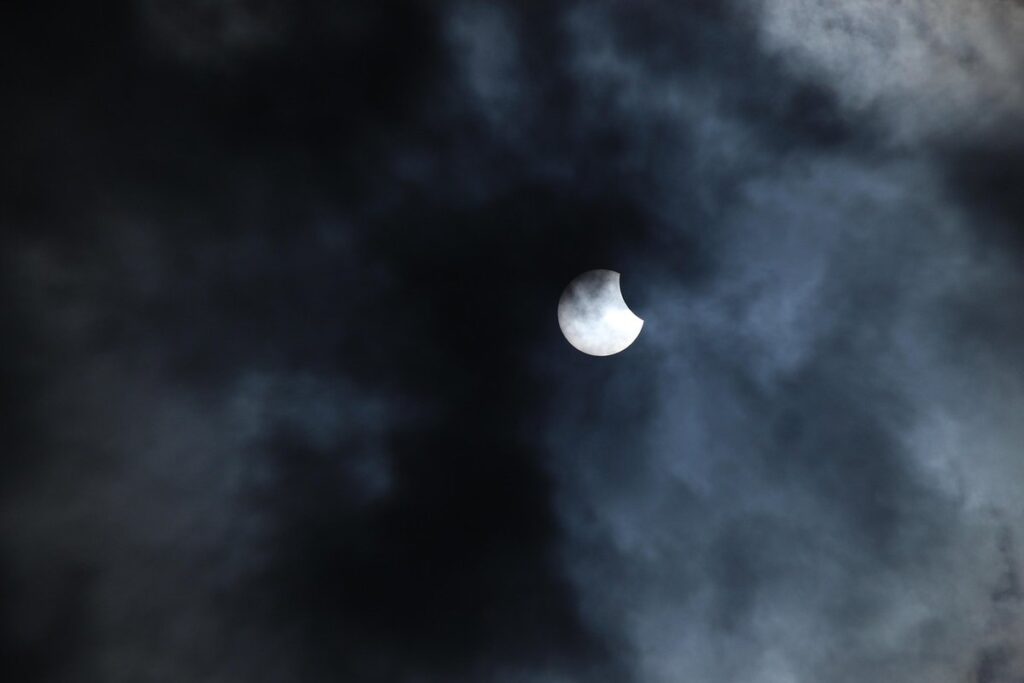
What is a Solar Eclipse?
To truly appreciate the complexity of solar eclipse time, it’s essential to understand what a solar eclipse actually is and how it occurs. A solar eclipse is a rare celestial event where the moon blocks the sun’s light.
Types of Solar Eclipses
There are three main types of solar eclipses that occur on Earth: total, annular, and partial. Understanding these differences is crucial to accurately predicting the timing of a solar eclipse.
A total solar eclipse occurs when the Moon completely covers the Sun’s disk, revealing the Sun’s ethereal corona. This rare phenomenon only happens during a new moon phase when the Moon passes directly between the Earth and the Sun. Total solar eclipses are relatively short-lived, lasting around 2-5 minutes at any given location.
An annular solar eclipse occurs when the Moon appears smaller than the Sun, creating a ring of light around it. This type of eclipse happens when the Moon is at a farther distance from Earth, making its apparent size smaller compared to the Sun’s disk. Annular eclipses are also relatively short-lived and can last for about 5-10 minutes.
Partial solar eclipses occur when only a portion of the Sun is covered by the Moon. This type of eclipse can be seen more frequently than total or annular eclipses, as it occurs when the Moon passes above or below the Sun’s disk. However, even partial eclipses are relatively rare events due to the precise alignment required for them to occur.
How Rare are Solar Eclipses?
Solar eclipses are relatively rare events that occur when the Moon passes directly between the Earth and the Sun. This alignment is necessary for a solar eclipse to happen, but it’s not often that the Moon’s orbit intersects with the Earth’s path around the Sun.
In fact, a total solar eclipse is only visible from a narrow path on the Earth’s surface, usually about 7,000 miles wide. The path of totality changes with each eclipse, and it can be located anywhere on the planet. This means that even if you live in an area where eclipses are frequent, you might not see one for decades.
To put this into perspective, NASA estimates that a total solar eclipse is visible from any given location on Earth about once every 360 years. And when they do happen, it’s usually only visible for a short time – usually around 2-5 minutes. This rarity makes solar eclipses all the more special and exciting events to witness.
Keep in mind that if you’re planning to travel to see an eclipse, you need to be in the right location at the exact right time. With so much to consider, it’s no wonder people get excited about these rare celestial events!
Understanding Eclipse Cycles
So, what exactly are eclipse cycles and how do they impact our ability to witness a solar eclipse? Let’s dive into the fascinating world of celestial mechanics.
Saros Cycle Explained
A Saros cycle is a fascinating phenomenon that plays a crucial role in determining the timing and frequency of solar eclipses over long periods. Named after the Greek astronomer Hipparchus’ supposed discovery, this 18-year, 11-day, and 8-hour cycle affects not only the timing but also the visibility of solar eclipses.
To understand how the Saros cycle works, consider this: each Saros cycle marks a precise alignment of the Sun, Moon, and Earth. During this time, the same eclipse path will be traversed by the Earth’s shadow on the Earth’s surface. This means that if an observer has witnessed a solar eclipse in a particular location during one Saros cycle, they can expect to see another eclipse at nearly the same spot about 6,585.32 days later.
The Saros cycle is significant because it allows astronomers and eclipse enthusiasts to predict with remarkable accuracy when and where future eclipses will occur. By studying historical records of eclipses and aligning them with the current solar year, we can pinpoint locations that will experience another eclipse in just a few decades or centuries from now.
Eclipse Seasonality
When it comes to understanding solar eclipse time, it’s essential to consider the role of seasonality and Earth’s tilt. Eclipse cycles are tied to specific seasons due to the way our planet’s orbit intersects with the Sun’s path across the sky. The alignment of the Earth, Moon, and Sun creates a unique opportunity for an eclipse to occur.
The Earth’s tilt plays a crucial role in determining eclipse visibility. At certain times of the year, when the Earth is tilted towards or away from the Sun, the shadow of the Moon falls on specific regions of our planet. This means that eclipses can only be seen from specific locations on Earth during these times.
For instance, during the spring and fall equinoxes, the Northern Hemisphere is tilted towards the Sun, making it more likely to experience an eclipse. Conversely, the summer and winter solstices favor the Southern Hemisphere for eclipse visibility. By understanding these seasonal patterns, you can better predict when and where eclipses will occur, allowing you to plan your viewing opportunities accordingly.
Calculating Solar Eclipse Time
To calculate solar eclipse time accurately, you’ll need to consider two key factors: your location on Earth and the specific path of totality for each eclipse. Let’s break down these calculations step by step!
Key Factors Influencing Timing
When it comes to calculating solar eclipse time, understanding the key factors that influence its timing is crucial. Earth’s rotation plays a significant role, as it determines the position of the Sun and Moon relative to our planet. The Moon’s orbit is also essential, as its elliptical path around the Earth means that its distance from our planet varies throughout the year.
The Sun’s position in the sky is another critical factor. During a solar eclipse, the Moon must pass directly between the Earth and the Sun, blocking part or all of the Sun’s light. This can only happen when the Sun is at a specific angle in the sky, which is influenced by the time of day and year.
To give you a better idea, let’s consider an example: during a total solar eclipse, the Moon must be in the right position to block 100% of the Sun’s light. This typically happens when the Earth, Moon, and Sun are aligned, known as syzygy. When these celestial bodies align, the timing of the eclipse is determined by the Moon’s orbit and the Earth’s rotation.
Using NASA’s Data for Accurate Timing
When it comes to calculating solar eclipse times with accuracy, NASA and other space agencies play a crucial role. These organizations have developed sophisticated methods for predicting the timing of eclipses using advanced mathematical models and large datasets. For instance, NASA’s Ephemeris System uses precise calculations of celestial body positions to predict lunar and solar eclipses.
To make these predictions available to the public, NASA provides access to its data through various online platforms, including the NASA Eclipse Web Site. This website offers a wealth of information on upcoming eclipses, including detailed maps, animation, and prediction tables. Users can also sign up for email notifications when an eclipse is approaching.
For those interested in using this data for personal or professional purposes, there are several ways to access it. The United States Naval Observatory’s Data Services provides access to NASA’s Ephemeris System data through a web interface, allowing users to download ephemerides (tables of celestial body positions) for specific dates and times.
Keep in mind that accurate timing requires precise calculations and consideration of various factors such as the Earth’s elliptical orbit, Moon’s orbital eccentricity, and Sun’s position. By utilizing NASA’s data and resources, you can gain a deeper understanding of solar eclipse timing and plan your observations accordingly.
How to Observe a Solar Eclipse Safely
When you’re ready to witness the spectacle of a solar eclipse, it’s crucial to do so safely. We’ll walk you through the essential steps to protect your eyes and enjoy this rare event.
Essential Safety Precautions
When observing a solar eclipse, it’s crucial to take essential safety precautions to protect your vision and ensure a safe viewing experience. The most critical aspect of solar eclipse safety is eye protection. Never look directly at the sun during an eclipse without proper eye gear, as this can cause serious damage to your retina.
Use certified solar viewing glasses or handheld solar viewers that meet international safety standards (ISO 12312-2). These specialized devices have filters that block out 99.999% of both UVA and UVB radiation, making it safe to view the eclipse. Some popular brands include NASA-approved Eclipse Solar Viewers and Celestron’s Solar Viewing Glasses.
If you don’t have access to proper eye protection, do not attempt to observe the eclipse with regular sunglasses or other makeshift solutions. These can cause serious eye damage, including solar retinopathy, which can lead to blindness.
When using certified viewers, always follow the manufacturer’s instructions and ensure they fit snugly over your eyes. Also, never share or lend your personal viewing gear, as this can compromise their effectiveness.
Tips for Photographing a Solar Eclipse
When photographing a solar eclipse, timing is everything. To capture high-quality images, you’ll need the right equipment and composition skills. Start with a camera that has good low-light sensitivity and manual controls. A telephoto lens (at least 200mm) will help you safely view the eclipse without looking directly at the sun.
Composition-wise, consider capturing the eclipse’s subtle effects on the surrounding environment – like the shadows cast on trees or buildings. Use a wide-angle lens to showcase the solar corona during totality. Remember to frame your shot with interesting foreground elements, such as people or objects reacting to the eclipse.
Some crucial tips: use a polarizing filter to reduce glare and enhance colors; set your camera to manual focus to avoid any sudden changes in light; and shoot in RAW format for better editing flexibility. Also, practice capturing fast-paced moments during partial phases by using continuous shooting mode.
Historical Significance of Solar Eclipses
Solar eclipses have long been considered omens, portents, and even harbingers of doom throughout history, sparking curiosity and fascination in cultures around the world. Let’s explore their historical significance.
Cultural and Scientific Impact
Solar eclipses have captivated human imagination for centuries, leaving an indelible mark on our cultural and scientific understanding of the universe. Throughout history, these rare events have inspired awe and fear, often being seen as omens or harbingers of doom. For instance, in ancient China, solar eclipses were believed to be a sign of the emperor’s power, while in many indigenous cultures, they were thought to bring about significant spiritual transformations.
However, beyond their cultural significance, solar eclipses have also played a crucial role in shaping our scientific knowledge. The study of these events has led to numerous discoveries and advancements in astronomy. For example, during the 1919 total solar eclipse, Sir Arthur Eddington’s observations provided conclusive evidence for Einstein’s theory of general relativity.
As we strive to understand the intricacies of solar eclipse time, it’s essential to recognize the profound impact these events have had on our collective understanding of the universe. By exploring and learning from the cultural and scientific significance of solar eclipses, we can deepen our appreciation for the natural world and continue to push the boundaries of human knowledge.
Notable Solar Eclipses in History
Solar eclipses have played a crucial role in shaping our understanding of astronomy and celestial events. From ancient civilizations to modern times, these rare occurrences have captivated human imagination and inspired groundbreaking discoveries.
One of the most notable solar eclipses is the one that occurred on May 28, 585 BCE, during a battle between the Medes and the Lydians. The sudden darkness caused by the eclipse led both armies to believe it was an omen from the gods, resulting in an immediate cease-fire. This event not only marked a rare example of a solar eclipse’s impact on human conflict but also highlighted the importance of celestial events in ancient cultures.
Another significant solar eclipse occurred on June 8, 1639, and provided scientists with valuable data for calculating the Earth’s elliptical orbit around the Sun. By studying this eclipse, astronomers like Jeremiah Horrocks were able to confirm Galileo’s theory that Venus goes through phases, just like the Moon.
These events showcase the profound influence solar eclipses have had on human understanding of astronomy and celestial mechanics. They not only captivate us with their rarity but also provide scientists with unique opportunities for observation and discovery.
Conclusion: The Importance of Studying Solar Eclipse Time
Now that you’ve learned how to track and calculate solar eclipse times, it’s essential to understand why studying these events is crucial for astronomers and space enthusiasts alike. In this final section, we’ll explore its importance.
Recap of Key Concepts
In reviewing our discussion on solar eclipse time, it’s clear that understanding this phenomenon is crucial for both scientific research and public awareness. A key takeaway from our exploration of the topic is that solar eclipse times are not merely a rare occurrence but rather a critical area of study with significant implications for fields like astronomy, climatology, and even healthcare.
We’ve delved into the specifics of calculating solar eclipse time using sophisticated algorithms and astronomical data. This level of precision has enabled scientists to better predict and prepare for these events, which in turn allows for more comprehensive research opportunities. Moreover, accurate knowledge of solar eclipse times can inform public health campaigns during periods when the sun’s ultraviolet radiation may be particularly hazardous.
To apply this understanding practically, we encourage readers to consult reliable sources such as NASA or local astronomical societies for information on upcoming solar eclipses and their corresponding times. By staying informed about these events, individuals can appreciate not only the science behind them but also take steps to protect themselves and others during periods of increased UV radiation exposure.
Future Research Directions
As we conclude our exploration of solar eclipse time, it’s essential to consider future research directions that can further our understanding of this phenomenon. One potential area of study is the impact of solar eclipses on the Earth’s atmosphere and climate. Recent research has shown that solar eclipses can alter atmospheric circulation patterns and affect global weather events.
Advancements in technology will undoubtedly play a crucial role in uncovering new insights about solar eclipses. High-resolution imaging and spectroscopy techniques, for instance, could allow us to better analyze the complex dynamics of the Sun’s corona during an eclipse. This information could have significant implications for our understanding of space weather events and their potential effects on Earth.
Another promising area of research is the study of lunar librations, which can affect the timing and visibility of solar eclipses. By developing more accurate models of these phenomena, scientists may be able to predict future eclipses with greater precision. As we continue to advance our knowledge of solar eclipse time, it’s likely that new discoveries will reveal even more about this fascinating topic.
Frequently Asked Questions
How can I accurately calculate the time of a solar eclipse in my location?
To determine the exact timing, consider using online tools like NASA’s Eclipse Website or mobile apps such as Solar Eclipse Pro. These resources allow you to enter your location and receive detailed information about upcoming eclipses, including their duration and peak times.
Can anyone safely observe a total solar eclipse without proper equipment?
No, it is not safe to look directly at a total solar eclipse without specialized solar viewing glasses or handheld solar viewers that meet international safety standards for solar viewing. Make sure to follow essential safety precautions when observing an eclipse.
What are some tips for photographing a solar eclipse safely and effectively?
When capturing the eclipse, use a solar filter on your camera lens and shoot in RAW format to preserve details in both bright and dark areas of the image. Consider experimenting with long exposure times during the partial phases or using a camera’s interval shooting mode.
How can I stay informed about upcoming solar eclipses that are visible from my location?
Sign up for NASA’s Eclipse Website email alerts, follow space-related social media accounts, or subscribe to astronomy newsletters and apps like Sky & Telescope. These resources provide timely information on eclipse timing, paths of totality, and viewing opportunities.
Can I experience the benefits of a solar eclipse if it occurs at night in my time zone?
Yes, though the timing might not be during daylight hours for your location, experiencing the eclipse still allows you to appreciate its significance and learn about astronomy. Consider observing or participating in educational events surrounding the eclipse event, even if you can’t view it directly.