
As you step outside into the evening sky, can you spot the bright light twinkling above? That’s Venus, shining brightly for all to see. But did you know that spotting Venus in the night sky requires a bit of planning and preparation? You’ll want to catch it at its optimal viewing time, usually around sunset or shortly after, when it’s highest in the western sky. To help you navigate this process, we’ve put together a comprehensive guide on how to spot Venus tonight. This article will walk you through the best times to observe Venus, as well as provide tips for setting up your equipment for optimal viewing. By following our expert advice, you’ll be able to locate Venus in no time and appreciate its stunning beauty.
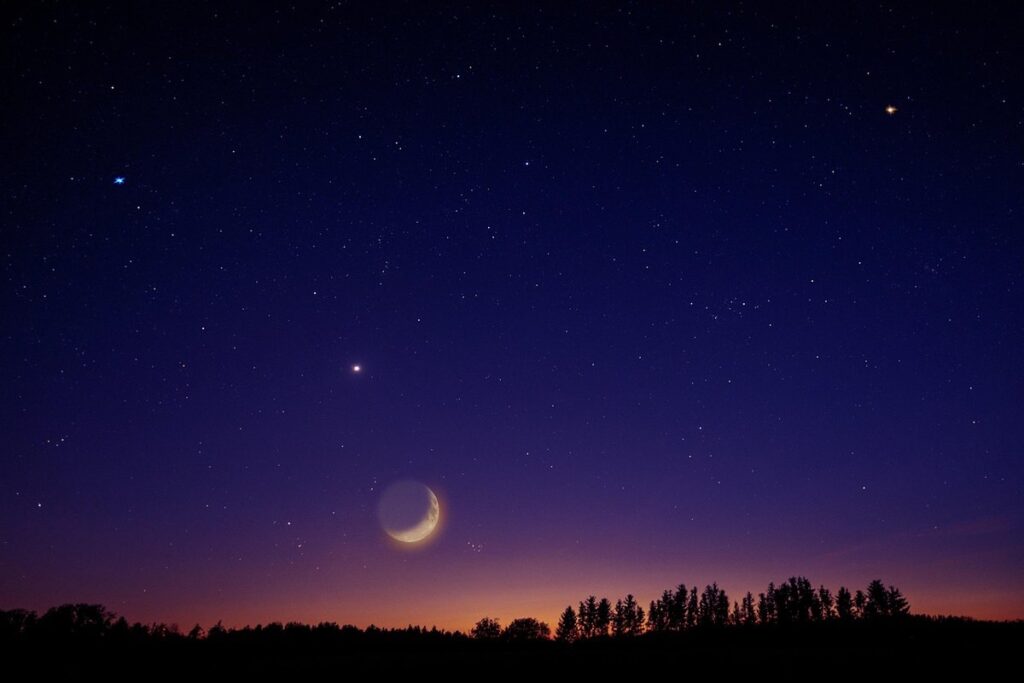
Understanding Venus as an Evening Star
Venus is one of the most recognizable stars in our evening sky, but its unique behavior makes it a bit tricky to understand. Let’s break down what sets Venus apart from other celestial bodies.
Why is Venus Visible in the Evening Sky?
Venus’ unique orbit and proximity to Earth make it visible in the evening sky. At its closest point, called perigee, Venus is only about 25 million miles away from our planet, making it appear as a bright, shining star. This close proximity allows us to see Venus as an evening star more frequently than other planets.
As Earth rotates, different parts of the sky become visible in the evening hours. When Venus is on the opposite side of the Sun, its reflective surface glows brightly in the fading light of day. The combination of its distance from Earth and its position relative to our planet results in a spectacular view that can be seen with the naked eye.
Venus’ orbit is also tilted at an angle that allows it to pass close to Earth’s horizon, making it appear even more prominent in the evening sky. This unique alignment of celestial bodies makes Venus one of the most visible and striking objects in our night sky.
The Science Behind Venus’ Visibility
Atmospheric conditions and observational factors play a significant role in our ability to see Venus in the evening sky. One key factor is the presence of air pollution in urban areas. Even if you have a clear view of the sky, pollutants like particulate matter and nitrogen dioxide can scatter light, making it harder to spot Venus.
Cloud cover is another major obstacle. Thick clouds can completely obscure our view of Venus, while thin cirrus clouds may make it difficult to discern its brightness. To minimize cloud interference, try observing Venus during periods of low humidity or after a storm has passed through the area.
The position of the observer also affects visibility. If you’re viewing from a location with high levels of light pollution, the excess artificial light can wash out the faint glow of Venus. This is why it’s essential to find a dark-sky preserve or a spot with minimal artificial lighting for optimal viewing. Additionally, Venus’ proximity to the horizon can make it appear distorted due to Earth’s atmosphere.
Planning Your Viewing Experience
To maximize your chances of spotting Venus tonight, it’s essential to plan ahead and understand the optimal viewing conditions for the planet. We’ll walk you through the key factors to consider in this section.
Best Time for Viewing Venus
To maximize your viewing experience of Venus, it’s essential to plan around optimal viewing times. These periods vary depending on your location and the time of year. In general, the best time to view Venus is when it’s at its brightest and highest in the sky. This typically occurs about an hour after sunset, but this can change based on your latitude.
In the Northern Hemisphere, for example, Venus is usually visible for most of the night from May to October. However, its visibility decreases as winter approaches due to atmospheric conditions such as pollution and humidity. A clear, dry atmosphere allows you to see more details on the planet’s surface. Conversely, in the Southern Hemisphere, the best viewing times are during our summer months (November to March).
Keep in mind that Venus is a morning star for about 18 months of each year and an evening star for the other six months. So, if you’re trying to view Venus as an evening star, plan accordingly by checking your local sky map or astronomy app. This will give you the most accurate information on when and where to spot Venus in the evening sky.
Identifying Venus in the Sky
To identify Venus in the sky, start by consulting a star chart or downloading a mobile app designed for stargazing. These tools will provide you with a map of the night sky, allowing you to locate Venus among other celestial bodies. For beginners, consider using an app that offers features such as location-based viewing and real-time tracking of planetary positions.
When using a star chart, look for the planet’s symbol or name in the correct position for your location and time. If using a mobile app, enter your location and let the software guide you to Venus’ position. Some apps even offer augmented reality views, allowing you to see Venus superimposed onto the actual sky.
It’s essential to note that Venus is usually visible in the western sky shortly after sunset or in the eastern sky before sunrise. Knowing when to look will significantly increase your chances of spotting the planet. Consider setting a reminder or checking an app for optimal viewing times, ensuring you don’t miss this celestial spectacle.
Observing Venus with the Naked Eye
To spot Venus, you need to know exactly when and where to look, making it a challenge for even experienced stargazers. Here’s how to locate Venus in the night sky without any equipment.
Describing Venus’ Appearance
When observing Venus with the naked eye, you’ll likely be struck by its exceptional brightness. At its peak, Venus can shine at magnitude -4.9, making it one of the brightest objects in the night sky. This intense luminosity is due to its proximity to Earth and the way sunlight reflects off its thick atmosphere.
Venus appears as a white or cream-colored disk, often mistaken for a full moon in the evening sky. However, upon closer inspection, you may notice that its color is slightly hazy, which can be attributed to the dense clouds of sulfuric acid and droplets of water present on its surface.
A useful tip when observing Venus is to note its apparent size in the sky. At opposition, Venus appears as a large disk, often covering an arc of around 30-40 degrees across the sky. Keep in mind that this can vary depending on your location’s latitude and the time of year. To get a better sense of Venus’ actual size, consider using a planisphere or star chart to help you estimate its angular diameter.
Notable Features of Venus
One of the most striking features of Venus is its phases. Like the Moon, Venus appears to change shape as it orbits the Sun, going through a cycle of gibbous, crescent, and full forms. With the naked eye, you can observe these phases over the course of several weeks. The best time for viewing Venus’ phases is when it’s at its closest point to Earth in its orbit, known as inferior conjunction.
You’ll typically notice that Venus appears as a bright, gibbous disk (about 90% illuminated) about two months before and after its closest approach. As it moves away from this point, the disk will gradually shrink until it reaches new crescent phase, at which point you might see only a thin sliver of light.
To spot these phases, look for Venus in the evening sky when it’s highest above the horizon. Bring binoculars or a low-power telescope to enhance your view and get a closer look at the changing shape.
Using Telescopes and Binoculars for Enhanced Viewing
To enhance your viewing experience, we’ll explore how to use telescopes and binoculars effectively to get a closer look at Venus in all its glory tonight. This includes some essential tips on choosing the right equipment.
Setting Up Your Equipment
When setting up telescopes or binoculars for optimal viewing of Venus, it’s essential to start with a stable and level surface. Begin by positioning your equipment on a sturdy tripod or mount to prevent wobbling or vibrations that can blur the image. For beginners, consider using a smaller telescope or binoculars with a wide field of view to help you locate Venus in the sky.
Adjust the focus of your telescope or binoculars carefully, as an overly sharp focus can create a bright ring around the planet due to its thick atmosphere. A rough estimate is to start at 1/3 to 1/2 of the maximum magnification and gradually increase until you achieve a clear image. If using a telescope, ensure the eyepiece is securely attached to prevent it from falling out while observing.
Additionally, consider applying a moon filter or dimming device to reduce the brightness of Venus and improve visibility in brighter skies. Some telescopes also come with built-in filters or adapters that can help enhance your viewing experience. Take the time to familiarize yourself with your equipment’s settings and controls before heading outside to observe Venus tonight.
Tips for Capturing Images of Venus
When capturing images of Venus, it’s essential to consider its brightness and proximity to the Sun. The planet shines at a magnitude of -4.9, making it challenging to capture without overexposing the image. To avoid this, use a neutral density (ND) filter or reduce your camera’s exposure time.
If you’re using a smartphone attachment, adjust the camera’s settings to minimize overexposure. Typically, setting the exposure compensation to -2 or -3 stops should help balance the light. You can also experiment with different focus modes, such as manual or continuous autofocus, to capture Venus’ sharp image.
In addition to adjusting your camera settings, consider the time of day and the planet’s position in relation to the Sun. Aim to capture images when Venus is at a 45-degree angle to the Sun, which reduces the risk of overexposure and produces more detailed results.
For optimal results, use a tripod or stabilizer to keep your camera steady during exposure. This will help prevent blur and ensure that your image captures Venus’ true shape and features. By following these tips, you’ll be able to capture high-quality images of Venus using your camera or smartphone attachment.
Mythology and Cultural Significance of Venus
Venus has captivated human imagination for centuries, inspiring rich mythologies and cultural associations that reflect its otherworldly beauty and mysterious nature. Let’s explore some of the fascinating stories surrounding this celestial body.
Historical Associations with Venus
In ancient Mesopotamia, Venus was associated with the goddess Ishtar, patron deity of love, fertility, and war. Similarly, the Greeks linked the planet to Aphrodite, who embodied erotic love and beauty. This rich mythological heritage has contributed significantly to our cultural perception of Venus as a symbol of romantic passion and aesthetic appeal.
The Roman Empire further cemented this connection by associating Venus with its own goddess, also named Venus. As the patron deity of the Roman aristocracy, Venus represented the epitome of refinement, elegance, and luxury. This association has endured through the centuries, influencing art, literature, and music to this day.
In many cultures, Venus’ visibility in the evening sky has been seen as a harbinger of good fortune, love, or fertility. For instance, in ancient Rome, couples would often gaze at Venus together on their wedding night, seeking blessings for their union. This practice still resonates with people today, who view Venus as a celestial reminder to cherish love and beauty in their lives.
In modern times, we can draw inspiration from these rich cultural associations by embracing the symbolism of Venus as a beacon of hope, passion, and appreciation for life’s beauty.
Symbolism in Modern Times
Venus continues to captivate modern culture with its rich symbolism. The planet’s association with love and beauty remains a staple in art and literature. In her book “The Dispossessed,” Ursula K. Le Guin uses Venus as a symbol of utopia, highlighting the planet’s potential for harmony and balance. Similarly, in the film “Love in the Time of Cholera,” the protagonist’s obsession with Venus is a metaphor for his enduring love.
In contemporary art, Venus has been reimagined through various mediums, from sculpture to photography. For example, Annie Leibovitz’s photograph of Demi Moore pregnant and nude in 1991 was inspired by Botticelli’s “The Birth of Venus.” This reinterpretation speaks to the planet’s timeless appeal as a representation of femininity and fertility.
Venus’ symbolism extends beyond art to social and cultural movements. In feminist theory, the planet is often used as an icon for female empowerment and liberation. As we gaze upon Venus tonight, it’s essential to acknowledge its continued relevance in modern culture, inspiring artists, writers, and thinkers alike. By understanding the planet’s enduring symbolism, viewers can appreciate the rich history behind this evening star.
Tips for Stargazers: Maximizing Your Viewing Experience
To get the most out of your stargazing experience, consider these expert tips on how to optimize your viewing conditions and enhance your celestial encounters. Optimize your equipment and surroundings for a more immersive experience tonight.
Preparing for Clear Skies
Check local weather forecasts and astronomical websites for updates on cloud cover and atmospheric conditions. Clear skies are more likely during periods of high pressure and low humidity. Be aware that temperature inversions can cause haze, especially near coastal areas or urban centers. Avoid viewing Venus when there’s a full moon, as the bright lunar light can overpower the star.
Consider using mobile apps like Dark Sky or Weather Underground to get real-time forecasts for your location. These tools often provide hyperlocal data, which can help you identify the best times for stargazing. When planning your viewing session, prioritize locations with minimal light pollution and obstructions. Even a small clearing in a nearby park or field can offer better views than a crowded urban area.
To increase your chances of clear skies, plan to view Venus during the optimal viewing periods outlined earlier in this guide. If you’re unable to view Venus on the specific nights mentioned, use online resources like the US Naval Observatory’s Data Services or Sky & Telescope’s Interactive Star Chart to find alternative dates with favorable conditions.
Additional Resources for Learning More
If you’re eager to continue exploring the wonders of Venus and astronomy beyond this guide, there are numerous resources available to help you deepen your knowledge. For those looking for a comprehensive introduction, “The Backyard Astronomer’s Guide” by Terence Dickinson and Alan Dyer is an excellent starting point. This book covers the basics of astronomy and provides practical advice for setting up and using telescopes.
For a more in-depth look at Venus specifically, try “Venus: The Bright Planet” by James Kaler. This concise volume offers insights into the planet’s geology, atmosphere, and orbit. If you prefer digital resources, download the SkySafari app or Stellarium software to visualize the night sky and track Venus’ movements.
Join online communities like Astronomy Forum or Reddit’s r/Astronomy to connect with fellow stargazers, ask questions, and share your own observations. These platforms also feature discussions on various astronomy-related topics, including planetary science, astrophysics, and space exploration.
Frequently Asked Questions
How Can I Be Sure My Telescopes or Binoculars Are Set Up Correctly?
When setting up equipment for viewing Venus, it’s easy to overlook small details that can impact image quality. Start by checking the manufacturer’s guidelines and adjust your setup as needed to ensure optimal alignment and focus.
What If It’s Cloudy or Hazy on the Night I’ve Scheduled to View Venus?
Even with the best planning, weather conditions can be unpredictable. Consider having a backup viewing night or location in mind, and check local forecasts before heading out to observe Venus. Some apps also offer cloud cover predictions to help you plan.
Can I Use My Smartphone Camera to Take Good Quality Images of Venus?
Yes. With the right attachments and techniques, your smartphone camera can produce excellent images of Venus. Look for mobile apps that offer advanced features like image stabilization and manual focus control to enhance your results.
What if I’m Unable to See Venus with the Naked Eye Due to Light Pollution in My Area?
Light pollution can indeed make it challenging to spot Venus without optical aid. Consider visiting a dark-sky preserve or using a moon filter on your telescope to reduce light pollution’s impact and improve visibility of the planet.